Eye problems that could be related to COVID


Can COVID-19 affect your eyes?
Are you experiencing sore eyes, itchy eyes or a sensitivity to light, and worry that your symptoms might be a sign of COVID-19? The novel coronavirus may cause eye problems in some patients, but they usually aren’t the first sign you’re sick.
Overall, the most common symptoms of COVID-19, including cough, fatigue, fever, headache, muscle aches and loss of taste or smell, have not been eye-related. But different COVID-19 variants can cause slightly different symptoms.
Doctors are still learning about how the coronavirus affects the eyes. Researchers estimate that around 11% of people who catch COVID-19 have eye symptoms. The most common include:
Eye-related symptoms of coronavirus can also include burning eyes, itchy eyes, sore eyes, eye discharge and swollen eyelids. In some cases, eye problems may be a person’s only symptoms.
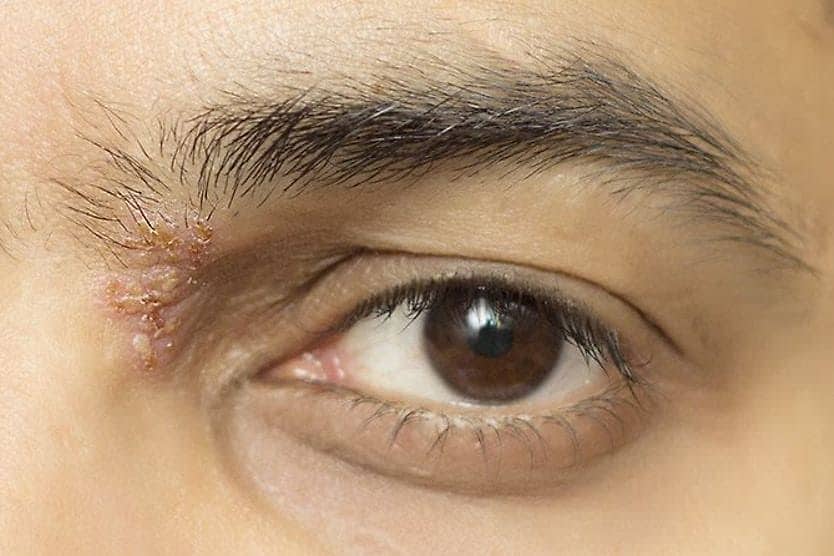
But it’s important to note that an eye issue in a person with coronavirus could actually be caused by something other than the virus. Many COVID-19 eye symptoms resemble allergies and other common conditions. Some coronavirus patients just happen to have unrelated eye issues, so don’t immediately assume you have COVID-19 if your eyes hurt, burn or itch.
Conjunctivitis and COVID-19
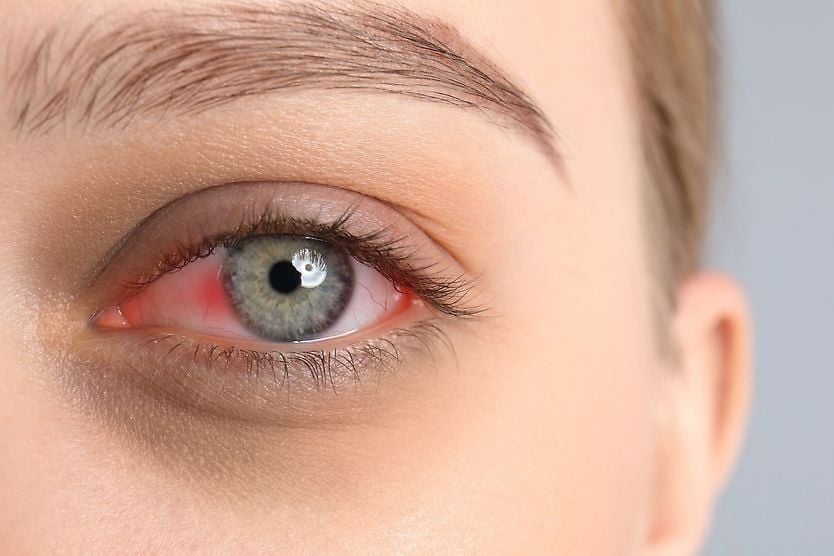
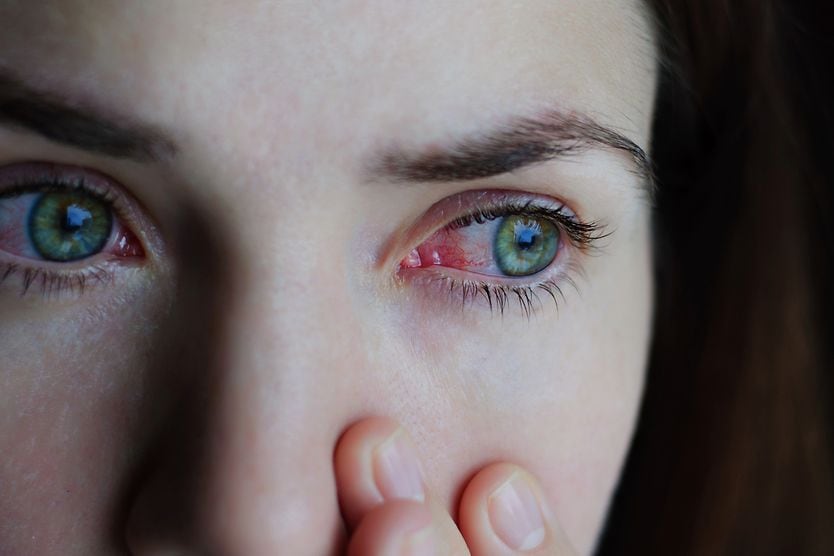
Conjunctivitis (pink eye) is fairly common with coronavirus. Around 88% of the eye symptoms people have with COVID-19 are due to pink eye. Conjunctivitis is inflammation or an infection of the conjunctiva, a thin membrane that covers the whites of the eyes (sclera) and the inside of the eyelids.
Symptoms of viral conjunctivitis, such as that caused by the coronavirus, may include:
- Burning eyes
- Itchy eyes
- Sore eyes
- Red eyes
- Watery eyes
- Photophobia (light sensitivity)
Like any viral conjunctivitis, a COVID-19 eye infection should be considered very contagious. Viral conjunctivitis can be spread by coughing, sneezing and touching your eyes.
Because COVID-19 can spread through the eyes, wearing eye protection, such as COVID-19 goggles or face shields, can protect your eyes from saliva droplets that may contain the virus. The U.S. Centers for Disease Control and Prevention (CDC) continues to recommend eye protection for health care providers during waves of higher transmission.
Someone who gets exposed to coronavirus through the eyes and later tests positive for COVID-19 may or may not develop conjunctivitis.
Runny eyes and COVID-19
Increased eye secretion has been identified in some studies as a possible COVID-19 symptom. Commonly described as “goopy” or runny eyes, eye discharge is made up of mucus, oil and skin cells. Eye discharge found in your eye when you wake up is commonly known as “sleep.”
Some eye discharge is normal — in fact, it plays an important part in eye health because it removes debris and helps to keep the eye healthy. But excess eye discharge, or yellowish discharge, can be a sign of conjunctivitis and many types of eye infections.
Is eye swelling a sign of COVID-19?
Eye swelling may be a symptom of conjunctivitis or a sign of chemosis. Many studies have found that some patients with COVID-19 also had chemosis. Chemosis is the swelling of the conjunctiva, the thin membrane that covers the front of the eye and the insides of the eyelids.
Signs and symptoms of conjunctival chemosis include red eyes, itchy eyes, watery eyes, puffy eyes, swollen eyelids and feeling like you have something in your eye (foreign body sensation). Some patients mays have a red or pink “blister” on the white of the eye.
Watery or teary eyes and coronavirus
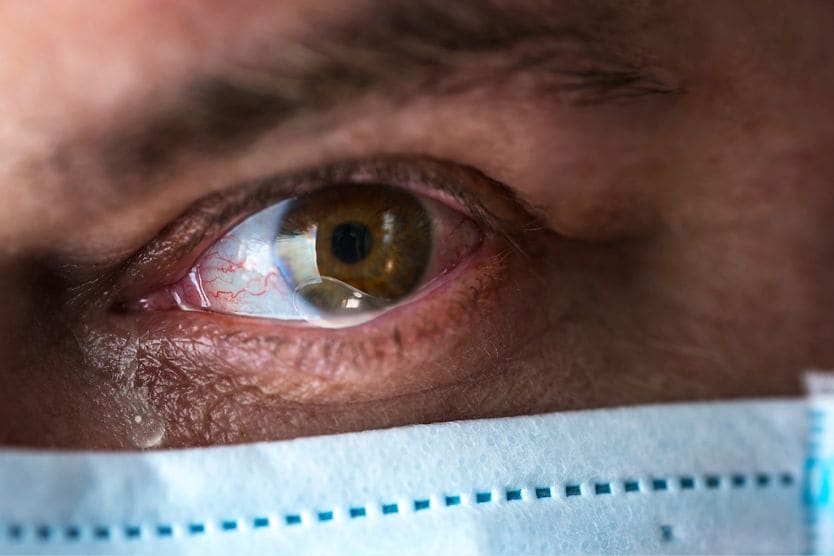
Some coronavirus patients also experience overly watery eyes (epiphora).
If you have epiphora, tears may overflow from your eyes and run down your cheeks. Watery eyes can be caused by a variety of conditions, including bacterial keratitis, corneal ulcers, eye infections, glaucoma and macular degeneration. Excessive tears are also a common symptom of allergies.
Antihistamines, cool compresses, changing contact lenses and taking a break from staring at screens may help resolve watery eyes, but see an eye doctor if the problem persists.
Is eye twitching a symptom of COVID-19?
Eye twitching hasn’t been specifically linked to COVID-19. However, COVID-19 may cause other neurological eye symptoms in some patients. One larger study found that COVID-19 patients had much higher odds of experiencing cranial nerve VI palsy or diplopia compared to common flu patients.
Other serious eye problems have also been linked to COVID-19, but they are less common. They may include:
Not all eye problems linked to COVID-19
Some studies have found that COVID-19-positive patients report certain eye problems at close to the same rate that patients without coronavirus do. In some cases, COVID-19-negative patients actually had a higher rate of certain eye problems than those with the virus.
This means that some reported eye problems may not be related to coronavirus at all.
In other words, it could just be a coincidence that someone has COVID-19 and an eye issue at the same time. This may be the case with eye flashes and floaters, two common eye issues that have been reported by some coronavirus patients.
Eye doctor visits and COVID-19
If you have eye symptoms that may be related to COVID-19, call your eye doctor and describe your symptoms before making an appointment. Let them know over the phone if:
- You may have been exposed to coronavirus
- You’re experiencing coronavirus symptoms
- You’re waiting for coronavirus test results
- You have tested positive for COVID-19
If your eye problem isn’t an emergency, you might need to wait to visit an eye doctor. If you’re cleared to go to the eye doctor, remember to wear a mask. Your eye doctor may also take extra precautions, such as using a special plastic breath shield, when examining your eyes.
READ NEXT: Blurry vision and the COVID-19 coronavirus