Geographic atrophy

What is geographic atrophy?
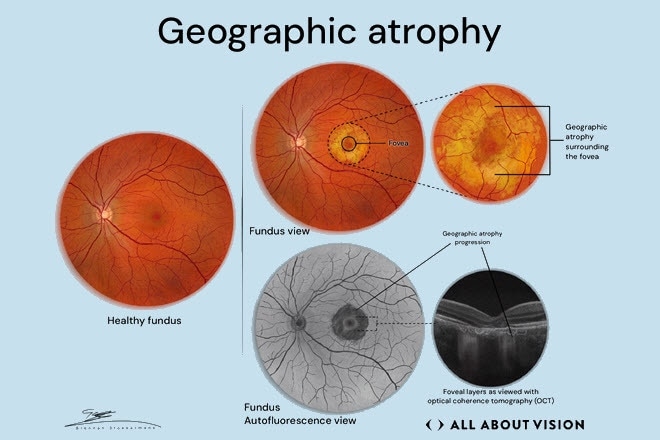
Geographic atrophy (GA) is a late stage of dry age-related macular degeneration that is estimated to affect about 8 million people worldwide. Areas of atrophy (cell death) in the retina resemble a map, which gives the condition its name. These areas can expand and lead to central vision loss.
Age-related macular degeneration (AMD) is a common condition that affects people over 50. It’s a leading cause of central vision loss in older adults. About 30% of people with dry AMD progress to geographic atrophy. While GA usually occurs as a late stage of dry AMD, it may also occur after wet AMD has developed. People with GA remain at increased risk of developing wet AMD.
GA tends to begin outside the fovea, which is the small central part of the retina that provides the clearest vision. At first, people often have good central vision and acuity because the fovea is not yet affected. GA typically affects both eyes.
As the condition progresses and expands to the fovea, early symptoms may include increasing difficulty with reading, cooking, driving and seeing in dim light. Blind spots in central vision, distorted or wavy vision, and further loss of central detail vision can occur over time.
The risk of developing GA increases with age, especially in people with pre‑existing dry AMD. It may also be higher in people who smoke or have cardiovascular disease, diabetes, high cholesterol, obesity or a family history of AMD.
In 2023, the FDA approved two medications to treat geographic atrophy in the United States. Pegcetacoplan was the first to become available, followed by avancincaptad pegol. Both medications work by reducing inflammation in the eye, which can help to slow the disease’s progression and protect remaining vision.
Causes
Geographic atrophy is an advanced stage of dry AMD in which age-related thinning and degeneration of the macula area lead to loss of central visual acuity (sharpness).
The fovea is the tiny, central part of the retina, the light-sensitive tissue that lines the back of the eye. This area is responsible for your sharpest vision, providing the fine detail you need when looking straight ahead. Damage to the fovea and macular area from AMD can lead to a severe loss of visual function.
There are two types of AMD: dry and wet. The condition is further classified into three stages — early, intermediate and advanced — according to guidelines from two landmark AMD studies, the Age-Related Eye Disease Study (AREDS) and AREDS2.
Dry AMD and geographic atrophy
In dry (nonexudative or atrophic) AMD, the macula becomes thinner with age. Small clusters of proteins, called drusen, accumulate under the retina and around the macula. Dry macular degeneration does not involve leakage of blood or other fluids.
As the disease progresses, these proteins enlarge, blocking nourishment to the retina and causing cell death (atrophy) in areas of the retina. These areas of atrophy are called lesions and have clear boundaries that resemble a geographic map, hence the name “geographic atrophy.”
When these areas of atrophy expand into the macula, they can cause significant vision loss with blurry or missing spots in central vision. Peripheral vision is usually less affected in geographic atrophy and age‑related macular degeneration, so people rarely lose all vision.
Most people with AMD (more than 85%) have the dry form, while the wet form accounts for the rest. Dry AMD is often described in three stages:
- Early – Small drusen and subtle pigment changes can be seen in the retina during a dilated eye exam. Most people have no noticeable symptoms and may never progress beyond this stage.
- Intermediate – More or larger drusen and pigment changes are present, and some people begin to notice mild blurriness in central vision, trouble seeing in dim light or slight distortion of straight lines.
- Advanced (late stage) – There are well‑defined areas of cell loss. Symptoms include severe central vision loss with dark or blurry spots, distorted vision, and increasing difficulty seeing and adapting in low‑light conditions. This stage is considered geographic atrophy.
Wet AMD and geographic atrophy
Wet (exudative or neovascular) AMD is called wet because abnormal blood vessels grow under the retina and leak blood and fluid, a process known as neovascularization. This leakage and scarring can damage the macula quickly, so vision loss from wet AMD usually happens faster and can be more severe than with the dry form of AMD.
According to the American Macular Degeneration Foundation and recent studies:
- About 10% to 15% of patients with dry AMD progress to the wet form.
- Up to 18% to 25% of patients with wet AMD may develop macular atrophy within two years or more of anti-VEGF treatment.
- By seven years, up to 98% of patients with wet AMD who were on long-term anti-VEGF therapies developed geographic atrophy.
Treatments for wet AMD focus on slowing the growth of abnormal blood vessels under the retina, reducing fluid and blood leakage and limiting scarring to help preserve central vision.
READ MORE: Choroidal neovascularization (CNV): Symptoms and treatments
Symptoms of geographic atrophy
When the macula is damaged, severe vision impairment can result. Symptoms of geographic atrophy are most often noticeable when looking directly at an object. Vision changes resulting from geographic atrophy may include:
- Blurry or missing areas in central vision
- Dark spots in central vision
- Poor vision in dim light
- Colors appearing dull

While AMD and geographic atrophy do not cause total blindness, they can significantly impact daily life. Common difficulties can include:
- Recognizing faces
- Reading, writing, sewing and crafting
- Using a computer or phone
- Driving
- Preparing meals
Risk factors for geographic atrophy
People with GA in one eye are at a higher risk of developing it in the other eye. Additional risk factors may include:
- Being age 60 or older
- Family history of macular degeneration
- Ultraviolet (UV) exposure
- Tobacco use
- Unhealthy diet
- Obesity
- High cholesterol
- High blood pressure
- Heart disease
- Diabetes
- Caucasian ethnicity
- Light-colored eyes
Studies suggest that smoking can raise the risk of AMD two- to fivefold. High body mass index (greater than 30) makes someone 2.5 times more likely to develop the condition. Age is the biggest risk factor for AMD. Roughly one-third of people 75 years and older are diagnosed with AMD.
READ MORE: 15 ways heart disease affects eye health
Diagnosis
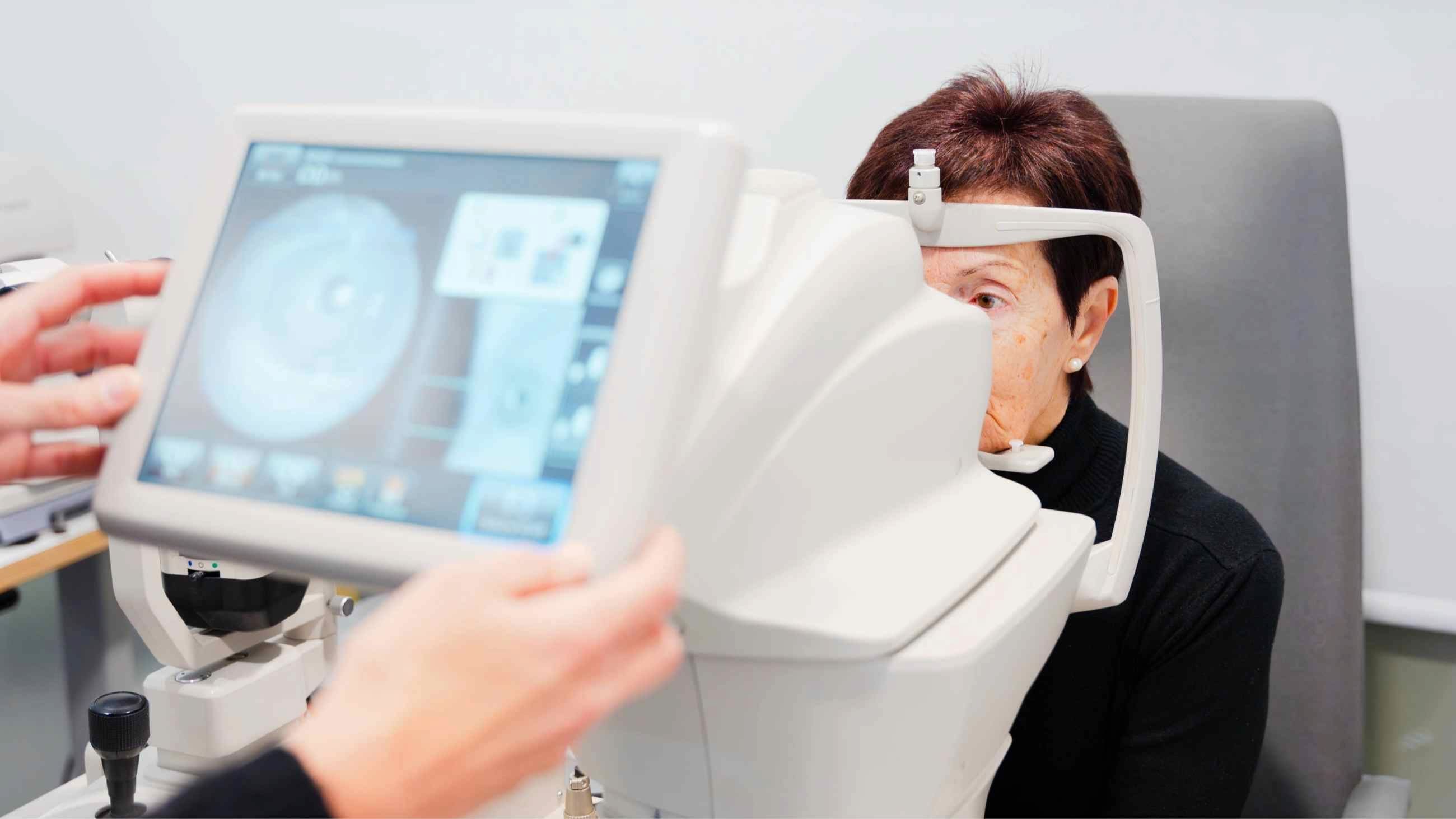
Geographic atrophy is diagnosed based on a person’s symptoms, a dilated eye exam and retinal imaging tests. Common imaging methods include:
- Optical coherence tomography (OCT) – To examine cross‑sectional pictures of the retina and macula and for detecting thinning or loss of retinal layers.
- Optical coherence tomography angiography (OCTA) – To examine the blood vessels of the retina without the need to inject a dye.
- Fundus autofluorescence (FAF) – To detect patterns of natural fluorescence in the retina, which can measure changes in areas of atrophy over time.
- Multifocal electroretinography (ERG) – To measure the retina’s electrical activity.
- Microperimetry – To map visual sensitivity at specific points on the retina, linking areas of atrophy to functional vision loss.
Geographic atrophy treatment
Geographic atrophy lesions that develop outside the fovea (your central vision) can grow quicker than those affecting the fovea itself. Because of this, starting treatment before geographic atrophy reaches your central vision is important.
If you have dry AMD, talk with your eye care team, including your optometrist, ophthalmologist and retina specialist. If your dry AMD advances to geographic atrophy, early treatment may help preserve useful sight.
Two medications, pegcetacoplan and avancicaptad pegol, received FDA approval in 2023 to treat geographic atrophy. These drugs are not intended for early-stage dry AMD. They also do not stop the disease from progressing in the same way that other medications work against wet AMD.
Pegcetacoplan
Pegcetacoplan is an injection given in the back of the eye by an eye doctor. Patients receive injections either every month or every other month. The medication works by targeting specific proteins involved in your immune response. It helps to potentially reduce inflammation and tissue damage that harm the retina.
Two clinical trials examined pegcetacoplan's effectiveness in treating geographic atrophy. Patients with GA who received this medication over a two-year period showed that their lesions grew roughly 20% more slowly.
Longer-term data through five years showed increasing benefit, with monthly treatment slowing lesion growth by approximately 31% and delaying disease progression by an estimated 1.5 years in patients with nonsubfoveal GA.
Avacincaptad pegol
Avacincaptad pegol is given as a monthly eye injection. This medication prevents the buildup of an immune protein that may lead to the formation of geographic atrophy lesions and scarring. Scarring can result in decreased vision.
During clinical trials, avacincaptad pegolslowed geographic atrophy lesion growth by approximately 35%.
Longer-term data from three to five years showed lesion growth reductions of approximately 31% to 40% with continued treatment.
AREDS2 supplements
Eye doctors may recommend a specific vitamin and mineral formula, known as the AREDS2 supplement, for people with intermediate AMD in at least one eye. It has been shown to lower the risk that intermediate AMD will progress to late stages, including geographic atrophy and wet AMD.
This formula contains:
- Vitamin C
- Vitamin E
- Lutein (an antioxidant)
- Zeaxanthin (an antioxidant)
- Zinc
- Copper
More recent analyses of the AREDS and AREDS2 studies also suggest that these supplements can slow the growth of some geographic atrophy lesions.
Formulations of these vitamins are available over the counter at many pharmacies. Talk with your eye care provider before starting any eye vitamins so you can decide together whether this type of supplement may be appropriate for you.
Lifestyle changes
In addition to medical treatments, certain diet and lifestyle changes are often recommended:
- Stop smoking.
- Wear sunglasses to reduce UV exposure.
- Maintain a healthy weight.
- Keep diabetes, high blood pressure and high cholesterol under control.
- Develop a healthy, balanced diet with green, leafy vegetables and omega-3 fatty acids.
Home monitoring
An Amsler grid, which looks like graph paper, is helpful for individuals with AMD and geographic atrophy to monitor changes in their vision. Each eye is tested individually to check for new areas of warped lines, blurriness or dark spots. If any changes are noted, an eye doctor should be contacted immediately.
Another tool for at-home monitoring is currently available. It is an FDA-cleared device for patients with dry AMD to help detect changes in the eye before symptoms become apparent.
When to see a doctor
An individual with the beginning stages of AMD may not experience any symptoms. This is why scheduling routine comprehensive eye exams, particularly for individuals over 50, is important.
Early detection of geographic atrophy is crucial for early treatment. This can help slow down the progression of the disease and preserve useful sight. An eye doctor can monitor any changes in your eye health and provide treatment and strategies to potentially slow down the progression of this condition.
Potential treatments for GA are being studied in clinical trials, and people interested in research options can look up active studies on ClinicalTrials.gov or ask their eye doctor about trials that might be appropriate.
If you’ve been diagnosed with geographic atrophy or AMD, follow your doctor’s recommendations regarding treatments, home monitoring, supplements and follow-up visits.