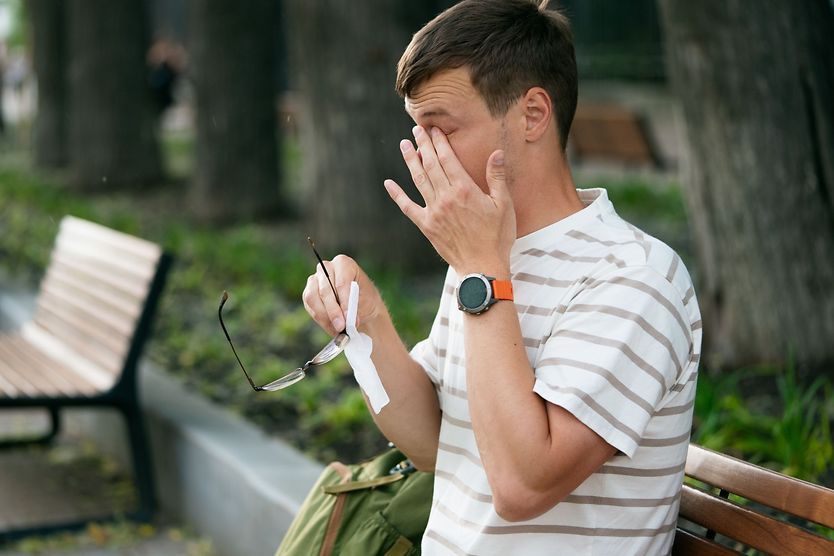
Eye allergies: How to recognize the symptoms and get relief

On this page
What are eye allergies?
Common causes of eye allergies
What are the symptoms of eye allergies?
How are eye allergies diagnosed?
How can you get relief from eye allergy symptoms?
When to talk to an eye doctor
On this page
What are eye allergies?
Common causes of eye allergies
What are the symptoms of eye allergies?
How are eye allergies diagnosed?
How can you get relief from eye allergy symptoms?
When to talk to an eye doctor
What are eye allergies?
Allergies happen when your immune system reacts to certain “harmless” things as though they’re not harmless. Eye allergies are very common. When you have them, your immune system is kicking in to try to rid your eyes of an allergen or irritant. They often have the same causes as seasonal allergies.
The medical term for eye allergies is allergic conjunctivitis. The conjunctiva is a clear membrane that lines your inner eyelids and covers the white part of your eye. This membrane is what becomes inflamed and uncomfortable with eye allergies.
Often, flushing the eyes with a saline solution can help relieve eye allergies. People who have chronic ocular symptoms may need allergy eye drops or other treatments.
LEARN MORE: Eye allergies vs. pink eye
Common causes of eye allergies
Some of the most common causes of eye allergies are seasonal pollens. Different types of pollen are released into the air throughout the year, such as:
- Trees (spring)
- Grasses (summer)
- Weeds (summer and fall)
- Leaf mold (fall)
Other very common causes of eye allergies can be around all year long (perennial allergens). They may be in your home, in some of the products you use or just in your general environment:
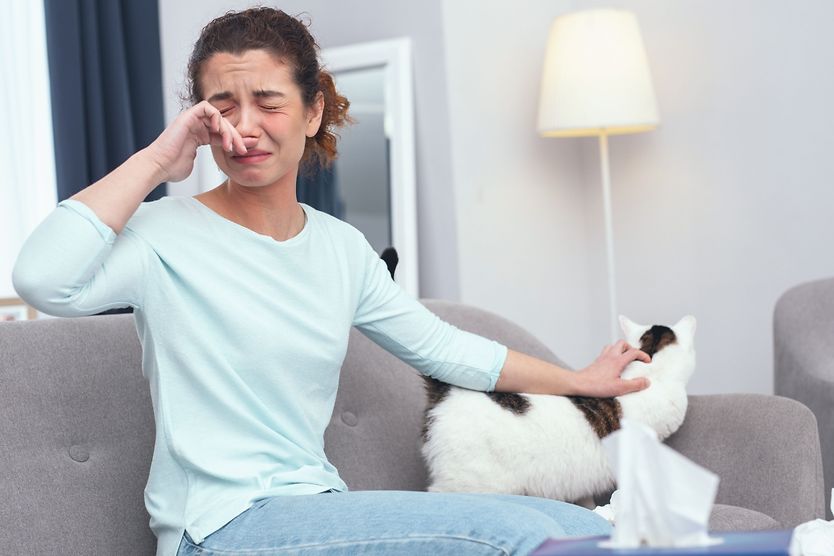
- Pet dander
- Feathers (from pets or in bedding)
- Dust, dust mites and mold
- Perfumes and air fresheners
- Smoke
- Cosmetics used on and around the eyes
What are the symptoms of eye allergies?
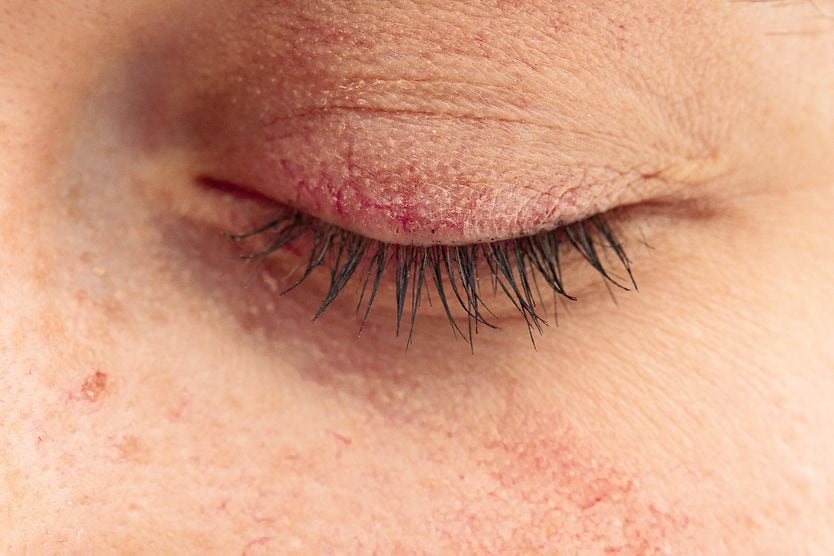
Eye allergies can be very uncomfortable. They usually affect both eyes at once, but not always. For example, if you touch a dog or cat and then touch one of your eyes, only that eye may get itchy. Typical eye allergy symptoms can include:
- Itching
- Redness
- Swelling
- Burning or stinging
- Watering or tearing
- Light sensitivity
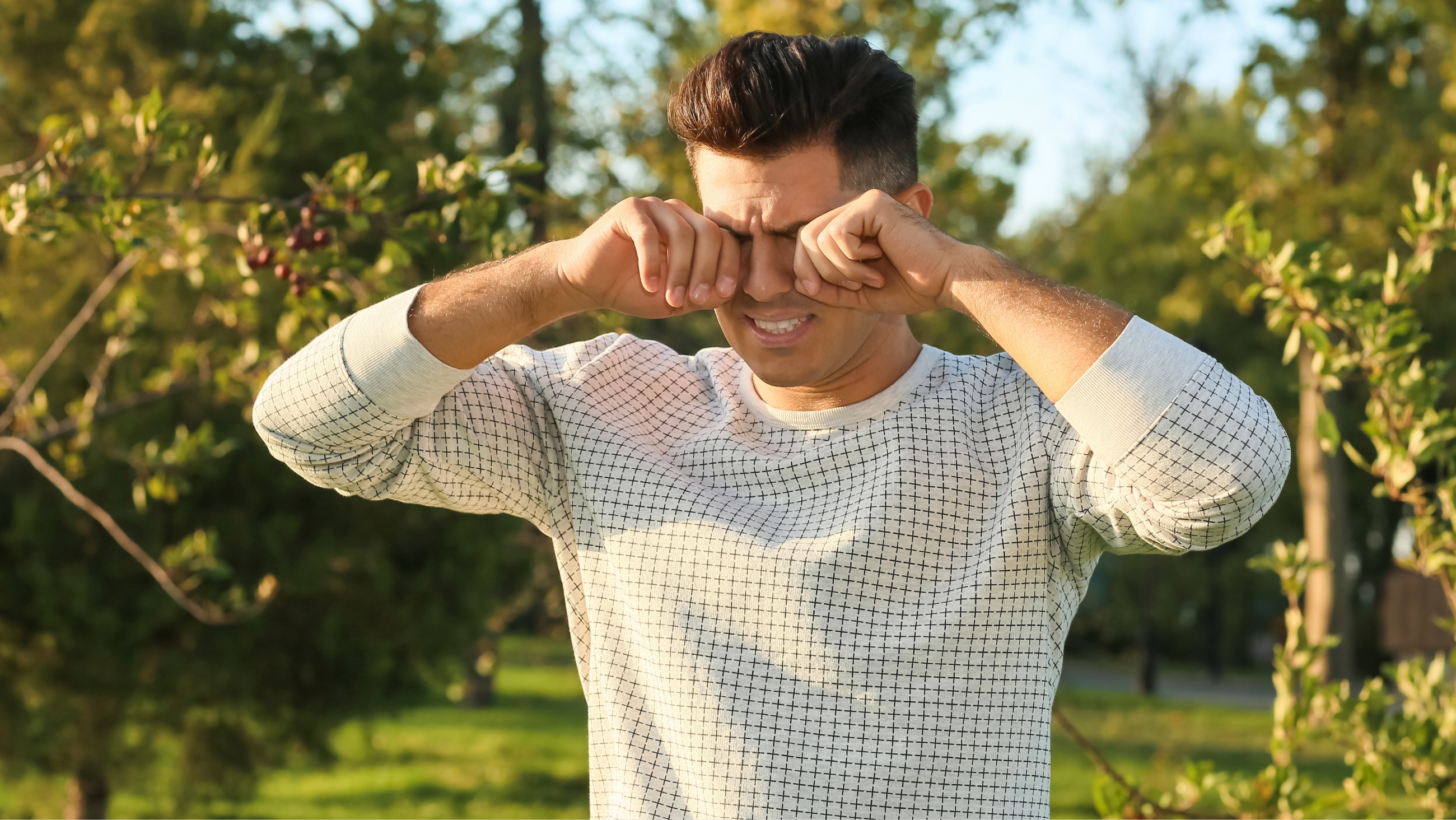
The number one symptom of eye allergies is itchy eyes. In fact, if you have the other ocular symptoms without itching, it’s probably not allergies. Because the immune response is happening in the conjunctiva, it can feel like your whole eye is itchy.
However, it’s important to avoid rubbing your eyes as much as possible. Eye rubbing makes the allergy symptoms worse and can introduce bacteria into your eyes. Rubbing your eyes too hard or too often can also cause damage to the front or back of your eye, including:
- Corneal abrasion
- Astigmatism (from distorting the cornea)
- Keratoconus (from weakening the cornea)
- Retinal tear or detachment
How are eye allergies diagnosed?
Your family doctor or eye doctor can usually tell you if your symptoms are from eye allergies with a quick exam.
They’ll ask some questions about your symptoms, known allergies, recent illnesses or eye injuries, and contact lens use. Then, they’ll examine your eyes and eyelids to look for signs of allergies and to make sure you don’t have an infection or inflammation.
An eye doctor may use a special microscope and bright light (called a slit lamp) to look at your eyes very closely. In some cases, they may also take a cell swab from your eye to tell the difference between allergies, infection and inflammation.
The majority of people won’t need to have an allergy test to diagnose eye allergies. If your symptoms are severe or don’t improve with the usual treatments, your doctor can refer you to an allergist for allergy testing.
How can you get relief from eye allergy symptoms?
Many people can improve their symptoms without needing to see a doctor. For example, a saline eyewash solution can help flush allergens out of the eyes. And applying a cold compress can help soothe swollen, bloodshot eyes.
There are also many lifestyle and environmental changes you can make and at-home remedies you can try, including over-the-counter allergy medications.
For those who don’t get the relief they need, there are also plenty of medical options available through a doctor.
Avoid indoor and outdoor allergens
An effective way to control your eye allergy symptoms is to limit your exposure to allergens as much as possible.
For outdoor allergens:
- Stay indoors when pollen counts are highest (mid-morning and early evening).
- Stay indoors if it’s windy out.
- Keep windows in the home and car closed.
- Wear wraparound sunglasses outdoors to shield your eyes from allergens in the air.
- Change and wash your clothes after being outdoors to avoid spreading pollen inside.
- Wash your hair (if possible) and hands, and carefully wipe your eyelids with a damp cloth after being outdoors.
For indoor allergens:
- Use a dehumidifier and sanitize damp areas frequently to reduce mold.
- Use HEPA (high efficiency particulate air) filters in your heating and air conditioning (and change them frequently).
- Vacuum carpets often to remove dust, pet dander and other allergens.
- Wash your pillowcases and bedding frequently with very hot water to remove dust mites.
- Don’t let pets hang out in your bedroom or sleep in your bed.
- Avoid smoking and vaping, especially indoors.
Other important ways to limit indoor and outdoor exposure to allergens:
- Wash your hands frequently, especially after being outdoors or handling pets.
- Avoid touching your eyes as much as possible, and don’t rub them.
- Consider wearing glasses instead of contact lenses, especially on days with high pollen counts or if you live with pets. Allergens adhere to contacts, so they stay in your eyes as long as the contacts do.
Consider using allergy eye drops (over the counter or prescription)
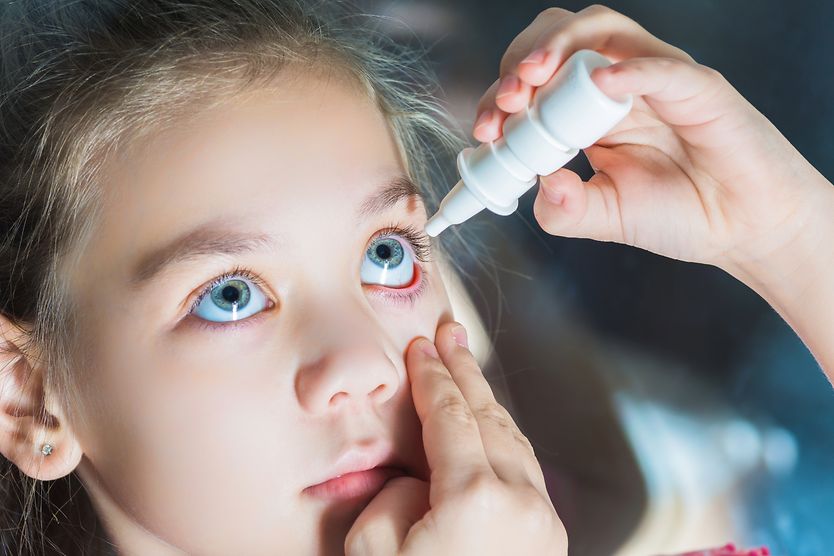
Because eye allergies are common, there are many types of eye drops that can help with symptoms. They each work in different ways, depending on their active ingredient.
Some over-the-counter (OTC) and prescription eye drops specifically target the underlying causes of allergies. Other types may only help with symptoms without addressing the underlying source of the problem.
People with eye allergies can reduce their symptoms with OTC eye drops. But keep in mind that even non-prescription eye drops can lead to serious side effects.
Around 70% of all eye drops contain a preservative called benzalkonium chloride (BAK). With prolonged use, BAK is known to cause ocular surface toxicity. Eye doctors recommend using preservative-free options if you use eye drops more than a few times a week.
Always use eye drops exactly as directed. Never use more than one type from the same drug class without asking your eye doctor. Never use adult allergy eye drops on children or infants without a doctor's advice. Never use human eye drops on any pet without first asking a veterinarian.
Artificial tears (OTC)
These are lubricating or moisturizing eye drops that primarily help to relieve symptoms of eye dryness. They also work well to help flush allergens out of the eyes.
Ocular Decongestants (OTC)
Decongestant eye drops are also called vasoconstrictors or red eye relievers. They help shrink the size of swollen blood vessels to reduce eye redness and inflammation. However, they often cause long-term “rebound” eye redness if used longer than a few days.
Combination eye drops (OTC)
Combination eye drops are a simple way to get more than one type of relief from the same bottle. One of the more common combinations are antihistamine plus a decongestant, artificial tears or both.
Dual-action antihistamine/mast cell stabilizers (OTC)
These eye drops address symptoms in two ways. The antihistamine targets active eye allergy symptoms, and the mast cell stabilizers help to reduce future symptoms.
Antihistamines (prescription only)
Histamines are the part of your allergic response that cause itching, eye watering and redness from swollen blood vessels. Antihistamine eye drops block them from working.
Mast cell stabilizers (prescription only)
Mast cell stabilizers are similar to antihistamines, but they don’t block histamines from working. Instead, they work ahead of time to reduce the amount of histamines released into the body at all. They prevent future symptoms rather than reduce active symptoms.
Non-steroidal anti-inflammatory (prescription only)
Also called NSAIDs, these eye drops are a type of pain reliever. They reduce overall swelling and inflammation from a variety of causes and may also help with itching.
Steroids (prescription only)
Corticosteroid eye drops are also a type of anti-inflammatory pain reliever. These eye drops are typically used short-term to treat severe, acute symptoms. Long-term use can have serious side effects, including high eye pressure, glaucoma and cataracts.
LEARN MORE: Allergy eye drop options
Consider taking allergy medicine (pills or liquids)
Allergy eye drops work directly on the eyes, so they tend to be more effective than oral medication. But using an oral or nasal spray antihistamine in addition to eye drops can be helpful in some cases, as well:
- If you have relatively severe allergy symptoms
- If you have other allergy symptoms, such as sneezing and a runny nose
- If OTC eye drops haven’t helped within a few days
They’re also important options for people who have trouble using eye drops.
When you’re choosing an oral antihistamine to help with eye allergies, it is suggested to review the label. Many types that cause drowsiness also tend to dry your eyes out and can make eye symptoms worse. Poor hydration may make it harder for the eye to flush allergens out of the eye and may increase symptoms.
Therefore, in some cases, eye doctors will recommend that someone stop the allergy pills or look for a non-drowsy version, switch to allergy drops, or consider a nasal allergy spray.
Talk to your doctor about immunotherapy (allergy shots)
If none of the above options brings you enough relief, your doctor can refer you to an allergy specialist. Allergists can perform skin or blood tests to find out exactly which allergens cause the worst of your symptoms.
Depending on your results, they may recommend that you try immunotherapy. A common and effective type of immunotherapy is a series of allergy shots. The shots contain small amounts of the allergens to help you build up immunity to them. Some allergists may also offer sublingual (under the tongue) tablet immunotherapy.
Adjust your contact lens use
Contact lens discomfort is common during allergy season. Wearing contacts when your eyes are already red and irritated from allergies can make them feel even worse.
Before using eye drops for your itchy eyes, check to make sure they are designed for contact lens wear. If not, you'll need to remove your contacts first. After applying the eye drops, wait about 15 minutes before reinserting your contacts.
Contact lenses can also attract and trap the allergens floating around in your environment. As long as you’re wearing the lenses, those allergens stay in your eyes as well. One option is switching to daily disposable contacts that you can throw out after one use.
But often, the simplest remedy is to wear your glasses for a while instead. Give your eyes a break from contact lenses during allergy season, or at least when you have a flare-up.
In some cases, contact lens wearers can develop giant papillary conjunctivitis (GPC). GPC is a less common type of conjunctivitis marked by extra inflamed, bumpy inner eyelids.
It can be due to an allergy, the cleaning solutions or the allergens built up on the lenses. Sometimes, it’s caused just by the friction of blinking against your lenses. GPC can lead to cornea and eyelid damage, so be sure to see an eye doctor if you notice its symptoms.
When to talk to an eye doctor
Many people who have mild to moderate eye allergies may not visit an eye doctor. But if you’ve tried various OTC treatments for a few days with no improvement, it’s recommended to see your eye doctor. They can help you find the most effective eye drops or other options for your specific needs.
Severe or chronic allergy symptoms may only respond to prescription medicine or immunotherapy. It’s also possible that your eye symptoms aren’t from allergies, especially if you don’t have nasal symptoms. Certain eye injuries and many types of eye infections can look just like allergies.
Schedule a visit with your eye doctor if you notice vision changes or any unusual symptoms, even eye allergies that won’t go away. Comprehensive eye exams are the optimal way to keep your eyes and vision healthy.
THINK YOU HAVE EYE ALLERGIES? Find an eye doctor near you
On this page:
What are eye allergies?
Common causes of eye allergies
What are the symptoms of eye allergies?
How are eye allergies diagnosed?
How can you get relief from eye allergy symptoms?
When to talk to an eye doctor
On this page:
What are eye allergies?
Common causes of eye allergies
What are the symptoms of eye allergies?
How are eye allergies diagnosed?
How can you get relief from eye allergy symptoms?
When to talk to an eye doctor