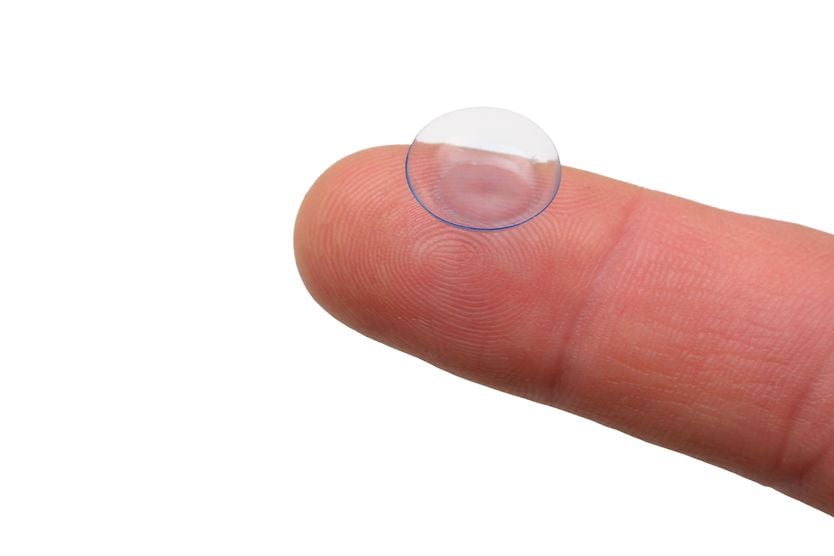
Toric IOL: The intraocular lens implant that can correct astigmatism


What is a toric IOL?
A toric intraocular lens (IOL) is a type of artificial lens placed during cataract surgery specifically designed to also help correct low to high astigmatism. During the procedure, the eye’s clouded natural lens (cataract) is removed, and the IOL takes its place to restore clear vision.
Astigmatism happens when the cornea (the clear dome at the front of the eye) or the lens behind the pupil is unevenly curved. Instead of being shaped like a round basketball, an eye with astigmatism is shaped more like an American football, with one curve steeper than the other. This makes it harder for the eye to focus light onto a single point on the retina (the thin, light-sensitive tissue at the back of your eye), which can cause blurry or distorted vision at any distance.
About one in three people who need cataract surgery also have significant corneal astigmatism. For these people, a toric IOL may have better outcomes than a standard one.
What’s the difference between a toric IOL and a standard IOL?
The standard IOL placed after cataract surgery is the monofocal IOL, which corrects for one type of vision only (distance).
Toric IOLs may also correct for distance only (you might still need glasses or contacts for other distances). These lenses are specifically designed for eyes with astigmatism. Because of this, they may have improved outcomes in reducing any vision problems caused by astigmatism.
Toric versions of presbyopia-correcting IOLs (multifocal, trifocal and extended depth-of-focus, or EDOF, lenses) are also available, and may further reduce dependence on glasses. Your surgeon can help determine which option fits your eyes, lifestyle and goals.
READ MORE about the different types of IOLs
How does a toric lens implant correct astigmatism?
Meridians are imaginary lines drawn across the surface of the cornea, like the lines that split a pie. In an eye without astigmatism, the cornea curves the same along every meridian. In an eye with astigmatism, one meridian is more steeply curved than another. The two are usually 90 degrees apart.
Toric IOLs are designed with different optical powers measured in diopters (D) along different meridians to compensate for the uneven curvature. For the lens to work as intended, the surgeon must rotate it so that its powers line up with the patient’s specific meridians of astigmatism.
Who might be a good candidate for a toric IOL?
Patients who will benefit the most from a toric IOL are those who have cataracts that need to be removed and astigmatism. The surface of the cornea of an ideal candidate should be stable (not affected by severe thinning or bulging), and eye measurements should be consistent.
Toric IOLs are generally not recommended in people with irregular astigmatism. Irregular astigmatism is when the abnormal shape of the cornea is more complex and cannot be corrected with glasses or toric contact lenses. Poorly dilating pupils or previous surgeries may also make a person a less suitable candidate for a toric IOL.
Other conditions that may not make you an optimal candidate for a toric IOL include:
- Preexisting posterior segment pathology – Diseases that affect parts in the back of the eye, such as glaucoma, age-related macular degeneration (AMD) or diabetic retinopathy (DR).
- Zonular instability – When the zonules (fibers that hold the lens of the eye in place) are weak.
Pros and cons of toric lens implants
Toric IOLs can help people with low (0.75 D to 1.50 D) to high (greater than 1.50 D) astigmatism, but there are factors to consider in determining whether they’re right for you.
Advantages of toric IOLs
An intraocular toric lens typically results in better vision and less dependence on visual aids (glasses and contact lenses) over time. The vision improvement tends to be more long-term because the refractive correction is built internally into the lens. This can improve quality of vision and quality of life.
Disadvantages of toric IOLs
Toric IOLs require a lot of specialized measurements, so they are more expensive than standard IOLs. While they can enhance long-term vision, they may only be able to do this for one type of vision (usually distance). Glasses may still be needed for other distances.
There is also the chance that a toric IOL isn’t able to completely fix the refractive error, leaving some residual astigmatism after the surgery.
Are there other ways to correct astigmatism during cataract surgery?
A toric IOL isn’t the only option. For people with smaller amounts of astigmatism — generally below 0.75 to 1.50 diopters — surgeons may consider corneal relaxing incisions instead of, or in addition to, a standard IOL. These procedures use small, precisely placed incisions in the cornea to potentially reshape the curvature of the cornea and reduce astigmatism.
Depending on where the incisions are made, they may be called limbal relaxing incisions (LRIs), peripheral corneal relaxing incisions (PCRIs), or astigmatic keratotomy (AK). They can be made manually with a special blade or with a femtosecond laser. These approaches are often a less expensive way to address mild astigmatism. They are also generally not as effective as a toric IOL, especially for higher amounts of astigmatism. Your surgeon can help you choose which option might fit your visual goals.
How is your astigmatism measured before surgery?
Accurate measurements of your eye are important for placing an IOL. There are many ways astigmatism can be measured, and your surgeon may use multiple.
Ocular biometry
The majority of surgeons use a technique called optical biometry, which uses light waves to take precise measurements of the eye’s length, the curvature of the cornea, and the depth of the front chamber.
Ultrasound-based biometry may still be used in cases where the cataract is so dense that light measurements aren’t possible.
Keratometry
Keratometry can also be measured separately using an instrument called a keratometer. The keratometer can measure the curvature of the cornea by measuring reflected light.
Corneal topography/tomography
Corneal topography measures the front of the cornea. This 2D measurement helps create a “map.” Tomography measures the front and back of the cornea, which helps create a 3D model.
Corneal topography is done using a device that takes pictures of your eyes. It then converts these pictures into color-coded maps. Corneal tomography also takes pictures of your eyes using special techniques to recreate them in 3D.
Refraction
A refraction test is when your eye doctor tests your vision using a series of lenses. The lenses all focus light differently, and they are adjusted until vision is clear.
Another important consideration during pre-operative testing is a healthy, stable tear film and ocular surface. Untreated dry eye disease can distort the corneal measurements used to plan a toric IOL.
LEARN MORE: What to expect in an astigmatism test
What happens during toric IOL surgery?
Toric IOL surgery involves the removal of cataracts and the replacement of your natural lens with the new toric IOL. Cataract surgery is very common, and people usually see improved vision within a few days.
Before surgery
The cornea is marked with special indicators that help the surgeon place the toric IOL. This is done by giving a topical anesthetic (an anesthetic that’s applied to your eye, skin or another surface rather than injected).
Accurate alignment of a toric IOL depends on identifying the steep meridian of the cornea before the lens is placed. Surgeons may use one or both of the following techniques:
- Manual marking – With the patient sitting upright, the surgeon places reference marks on the cornea using a fine ink marker. Sitting up does matter for this part. The eye can rotate slightly when a person lies down, and these marks act as landmarks during surgery.
- Digital (image-guided) marking – Pre-operative images of the eye are loaded onto the surgical microscope. This information takes the place of the manual ink marks by overlaying the astigmatism eye measurements on the screen to make sure there is proper alignment.
Some surgeons prefer to use both methods together. Either approach can produce accurate alignment.
During surgery
The markings made by the surgeon also help them place incisions in the right spots on the cornea. These incisions will normally close without stitches.
Afterward, a “window” is made in the lens capsule (a membrane around the lens in your eye). This is for the removal of the cataract, which is typically done with phacoemulsification (using ultrasound to break up the old lens). The old lens is then taken out via suction. Then, the new lens is inserted through the incisions and aligned.
After surgery
Some surgeons may have protocols where they have the patient rest briefly in a specific position after cataract surgery; however, this can vary, depending on the practice. Correct alignment of the IOL is confirmed using tests, such as refraction and keratometry. You may have multiple appointments with your surgeon in the days and weeks after the surgery. You may also have prescribed eye drops to help prevent infection and inflammation.
It is recommended to follow post-operative instructions, which may include:
- Dose schedules for prescribed eye drops
- Protecting your eyes from water and injury
- Avoiding strenuous physical activity
What are the possible complications of toric lens implants?
In general, the complications for cataract surgery and standard IOL placement can include:
- Blurry vision or visual disturbances (halos, glare)
- Bleeding in your eye
- IOL opacification (when the new IOL becomes cloudy)
- Posterior capsular opacification (when the lens capsule becomes cloudy after placement of the new IOL)
- Short-term increase in eye pressure post-operatively
- Endophthalmitis (rare, but serious intraocular infection and inflammation of the inside of the eye)
- The IOL moving out of place
Other possible issues of toric lens implants may include:
- Cystoid macular edema (CME) – Swelling of the macula, similar to blister-like pockets of fluid.
- Retinal detachment (RD) – An eye emergency where the retina pulls away from the back of the eye. There is increased risk in high myopes (people who are nearsighted).
- Refractive surprise – This scenario can happen when the eye’s refraction after surgery differs meaningfully from the outcome the surgeon planned for. It can leave the patient more nearsighted, farsighted, or astigmatic than intended.
With toric IOLs, astigmatism may not be corrected enough or it might be corrected too much. They also run the risk of being misaligned. Reasons this could happen include:
- Incorrect calculation of the IOL axis
- Incorrect IOL placement
- Rotation of the lens after surgery
Misalignment of an IOL means it might not fully correct for your astigmatism. How much this affects your vision depends on the degree of misalignment or how much the lens may have rotated after surgery.
How much does a toric IOL cost, and is it covered by insurance?
Toric IOLs are considered to be premium lenses and more expensive than standard IOLs. Most insurance providers will cover the standard IOL for cataract surgery, but the higher price of premium lenses is often paid out of pocket.
Toric IOLs are more expensive because precise planning, measuring and alignment are necessary. In general, they can add anywhere from $900 to $1,500 to the cost of a cataract surgery.
SEE RELATED: How much does cataract surgery cost?
How to talk about toric IOLs with your eye doctor
While toric lenses for cataract surgery are more expensive upfront than standard ones, people with astigmatism generally have better outcomes with toric IOLs. They often result in better vision and less reliance on vision aids.
However, these astigmatism-correcting lenses may not be right for everybody. A conversation with an ophthalmologist or optometrist about your medical history, eye health and visual goals can help determine whether a toric IOL is an appropriate option for you.
READ NEXT: Different treatment options for astigmatism