
Do you need bifocal readers?
For many people, turning 40 brings vision changes. The most common is presbyopia, or age-related vision change which reduces the ability to see clearly close up. This can be a daunting challenge, especially for those who already rely on corrective lenses to see faraway distances.
If you need help seeing both far and near, bifocal reading glasses can provide an ideal solution. These lenses have one zone for seeing objects far away and another for reading fine print up close.
How do you know if you need bifocal readers? Your eye doctor can conduct a vision test to determine what sort of correction you need. If you struggle to see far away and to make out those tiny letters at the bottom of the vision test, you’re a candidate for bifocals.
Cost-conscious shoppers can opt for non-prescription reading glasses — bifocal or otherwise. This inexpensive option just might meet your vision needs. However, if you have eye issues, such as astigmatism or different vision in each eye, you’ll probably need custom glasses. “Cheap” bifocal reading glasses might not meet your needs. Read on to learn about your choices.
History and development of bifocal readers
Bifocal glasses date back to 1785, when Benjamin Franklin is credited with designing a pair of eyeglasses that would let him see things up close and far away at the same time. Like many glasses wearers, Franklin became tired of constantly switching between glasses to see clearly, depending on the task (or social event) at hand.
The invention undoubtedly changed the way people would see for centuries to come. And over 200 years later, bifocals are still used by glasses wearers everywhere.
How do bifocal reading glasses work?
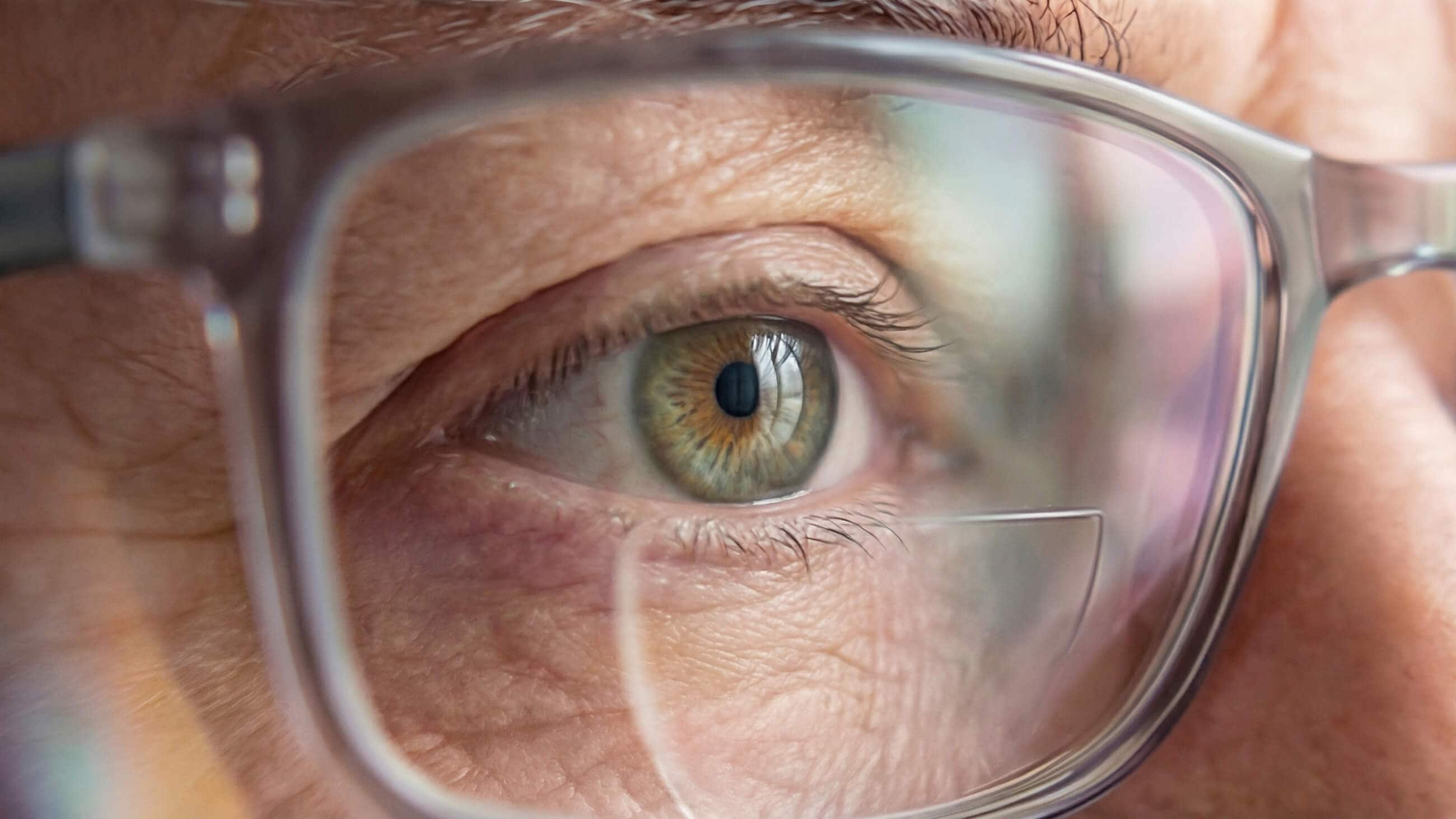
Bifocal lenses have two vision powers in the same lens, fit for the wearer. The top part of the lens helps you see things in the distance, while the area in the bottom half of the lens is designed for near distance, like reading. The two sections are separated by a visible line.
This lower portion of the bifocal lens reduces the effort your eyes use to focus on receipts, smartphone screens, menus and other nearby objects.
Multifocals, such as trifocals and progressives, have an intermediate zone that allows for a smoother transition in your focusing.
Types of bifocal lenses
To find the best bifocal reading glasses for you, you’ll need to know a bit more about the types of lenses and frames available. Bifocal lenses are generally designed the same way. An area of varying size called a “segment,” usually in the lower part of the lens, corrects your near vision. The rest of the lens enhances your distance vision.
In bifocal readers, the segment of the lens devoted to correcting near vision takes one of several shapes:
- A half-moon, also known as a flat-top, straight-top or D segment
- A round segment
- A narrow rectangle, also called a ribbon
- The full bottom half of a bifocal lens, called the Franklin, Executive or E style
Bifocal lenses come in an array of shapes and sizes, with options depending on the frame you choose. Smaller frames with narrower lenses can work well with weaker prescriptions. However, if the lens is too small, there might not be enough room for the bifocal segment, which can cause a prism-like effect or optical distortion, leading to eye strain.
Lined bifocal lenses
Classic bifocal lenses include two different vision powers in one lens. The vision powers are separated by a visible line. A close-up vision lens power is at the bottom, while a distant vision lens power is at the top. Just one set of bifocals provides the wearer with clarity at two distances. No-line bifocals may also be available in some cases.
There are also multifocal lens types, including:
Progressive lenses
Progressives are very similar to standard bifocals, but they don’t have a visible line between the lens powers. Progressives have both near and far powers that are seamlessly separated by an intermediate section in the middle. The intermediate section is for arm’s length visual clarity. Many wearers appreciate the look of a seamless lens.
Computer-style progressive lenses
Computer-style (sometimes called “office”) progressives are a little different from typical progressives. These lenses have added room for intermediate vision. Intermediate vision is about 20 to 25 inches in front of a person’s face, which is usually where a computer screen rests. Computer-style progressives can ease eye strain from staring at a screen. They also allow for a smoother visual transition between different distances.
Pros and cons of bifocal reading glasses
There are several pros and cons to consider before investing in bifocal reading glasses. Here are some examples:
Advantages
Some advantages of bifocal readers include:
- Visual clarity – Bifocal readers provide clear vision for nearby activities, setting them apart from single-power readers.
- Multifunctional – Bifocals allow the wearer to read clearly up close and see from a distance with a simple glance through the upper portion of the lens. This also makes them cost-effective.
Disadvantages
Some disadvantages of bifocal reading glasses include:
- Vision jumps – Two powers in one lens increase the chances of a “vision jump.” This is a visual disruption that occurs as you switch your focus between the two lens segments. This can sometimes cause eye strain.
- No “in-between” vision – Bifocal readers have two sections that are separated by a line. They don’t have a transitional area between the powers, which can be a less seamless visual experience. Speak with your eye doctor about progressives if you prefer a transitional vision power between your near and far vision.
Choosing the right bifocal reading glasses
With so many styles to choose from, it can be difficult to narrow down options for your frames. The following factors can help you find the perfect pair:
- Tap into your personal style when choosing a frame.
- Consider your budget and how much you’d like to spend on bifocal readers.
- Think about what kind of frame material and style you’d be comfortable with.
- Choose a special lens coating that suits your lifestyle.
- Consider bifocal reading sunglasses if you’re an outdoor enthusiast.
Speak with your optician and eye doctor if you have additional questions or need guidance in selecting your bifocal reading glasses.
FAQs about bifocal reading glasses
You may have questions about bifocal reading glasses. Here are some common questions and answers to consider before your next eye appointment:
Are bifocals the same as reading glasses?
No, bifocals and reading glasses are not the same. Bifocals have two vision powers, and reading glasses only have one throughout the lens. Speak with your eye doctor and optician about optimal choices for your vision.
Why bifocal reading glasses?
These types of lenses are typically prescribed for adults approximately aged 40 and older to correct presbyopia, which is the inability of the eyes to focus on close-up items. Presbyopia, unlike farsightedness, is a condition that is a normal part of aging. Even healthy adults with perfect vision will experience these vision changes as they grow older.
Presbyopia is treatable with glasses. And while the problem grows gradually worse over time (until around age 60 to 65), it won’t completely rob you of your vision. If you also need correction for distance vision, bifocal readers can offer the correction you need. The bifocal prescription combines your single-vision correction with a new correction for reading.
SEE RELATED: Can reading glasses ever help see distance?
How do I use bifocal lenses?
Bifocal reading glasses require the wearer to look up through the distance portion of the lens when focusing on a faraway object. When reading or focusing on something within 18 inches of your eyes, you look down and through the bifocal segment of the lens.
Note: Bifocals require a period of adjustment. You’ll have to get used to things, such as walking down stairs — bifocal readers might force you to adjust the angle of your head. However, most people eventually grow accustomed to wearing bifocals all the time.
What types of frames can you get for bifocal reading glasses?
You can choose from a large range of frames for your bifocals. The choice depends, in part, on how you expect to use your glasses. Plastic frames come in a wide variety of colors, styles and prices. However, they’re less durable, meaning they might be better for indoor or limited use.
If you plan to wear your bifocals while working or exercising outdoors, consider a more durable frame. Metal, titanium or alloy frames can withstand more wear and tear. Titanium is the most flexible and lightest material for eyeglass frames. No matter which material you choose, be sure they comfortably fit your face, nose and ears.
What type of lens material should I choose?
The lenses in your bifocal reading glasses likely won’t be made of glass but rather some type of plastic. Polycarbonate lenses and specialized polyurethane-based materials are popular options for impact resistance. These materials are lightweight and resist breaking, so if you spend a lot of time outdoors, these lenses might be ideal choices.
For bifocal wearers with more intense prescriptions, high-index plastic lenses are a slim, lightweight alternative. With their thin profile, high-index plastic lenses can reduce the unflattering appearance of thick-lens glasses.
Will protective coatings help my bifocals last longer?
For prescription bifocal glasses, you have several choices for protective coatings:
- Anti-scratch coatings – Improve the durability of your glasses. Most plastic lenses, including polycarbonate, are prone to scratches, so this coating can protect your investment.
- Anti-reflective coatings – Cut glare and distracting reflections on the surface of your glasses. This type of coating is especially important for wearers who are very nearsighted and need high-index lenses, as this material is more likely to create problematic glare.
- Photochromic lenses – A type of sunglasses lens that helps reduce glare and protect your eyes from harmful UV rays. These tinted bifocal reading glasses darken automatically in sunlight. This is beneficial if you will wear the glasses outside or if you’re particularly sensitive to sunlight.
If you choose custom glasses, your optician can help you choose the protective coating(s) that match your needs.
At what age will I need bifocal reading glasses?
For most people, presbyopia begins at around age 40. It may continue to progress until your 60s.
If you don’t use prescription glasses, you’re likely not to notice presbyopia until your mid-40s. If you’re farsighted, you’ll notice the change to up-close vision a bit earlier.
In some cases, doctors prescribe bifocals to children who have focusing conditions, such as accommodative esotropia (overfocusing causing inward eye misalignment). Reading glasses and bifocals are also sometimes prescribed for children after cataract surgery.
Will reading glasses weaken my eyes?
This is a common concern across all types of vision correction. However, the fear is unfounded. Reading glasses won’t cause your sight to diminish more quickly with age. Presbyopia is age-related visual changes that makes it harder to focus on small print. Delaying the switch to bifocal reading glasses will do nothing to prevent age-related deterioration of your up-close vision.
For most people, the eye’s natural lens continues to become less flexible from approximately the age of 40 into 60. Less flexibility means less ability to focus. As a result, many people continue to adjust their eyeglass prescriptions during these decades.
SEE RELATED: Do reading glasses weaken your eyes?
What if I need bifocal safety glasses?
For workers in some trades, regular bifocal reading glasses might not provide the protection you need. If you work as a carpenter, plumber, mechanic or machinist, you need to see up close, but you also need more impact protection than someone who uses bifocal readers at a desk job.
For the appropriate protection, it is recommended to choose safety eyewear with a high impact rating. The lenses will include the manufacturer’s trademark and a “+.” The frame will be marked “Z87-2+” on the inside of the front and temples.
Should I save money with non-prescription bifocal reading glasses?
There’s nothing wrong with economizing on your readers. Prescription bifocals are more expensive than non-prescription bifocal readers. If you’re apt to break or lose your glasses, or if you simply like to wear different glasses for different situations, over-the-counter glasses can let you build up a collection on the cheap. Note that over-the-counter bifocals may not provide adequate correction for cases like astigmatism or eyes that need different focusing powers.
To test a pair of non-prescription glasses in a store, try grabbing a box with a label or a magazine, and then heading to the rack with the glasses. Try a few different pairs, and see which ones allow you to read clearly.
You’ll also want to test your distance vision with the glasses. It is worth noting, though, that these off-the-shelf glasses might not address your unique vision needs. The cheaper lenses can also come with drawbacks, such as glare, color distortion and optic distortion.
Where can you buy bifocal reading glasses?
Bifocal reading glasses are available at select online retailers, eyeglasses boutiques or through your doctor’s office. Since many bifocal lenses require a prescription, you’ll need to ensure yours is up to date before making a purchase.
Are bifocal readers worth it?
If you’re in your 40s and you already needed vision correction before age-related presbyopia set in, bifocal reading glasses can correct both vision problems. You’ll be able to see near and far with one pair of glasses. Bifocals are convenient — rather than switching between glasses throughout the day, you can address two vision issues with one pair of glasses.
On the other hand, bifocal readers might not be much help if you do most of your reading on screens that are more than arm’s length away.
Nearly everyone will need reading glasses as they age. Whether you need bifocal reading glasses depends on your vision and lifestyle. If you’re uncertain, talk to an eye doctor and optician about whether bifocal lenses are right for you.
READ NEXT: Reading glasses vs. multifocal glasses