Reading glasses vs. multifocal glasses: Which ones should you get?

What’s the difference between readers and multifocal glasses?
Reading glasses help with near vision or seeing objects within arm’s length. They are available over-the-counter (OTC) and by prescription. Prescription multifocal glasses correct a range of vision from near to intermediate (arm’s length or computer) to distance vision. Multifocal lenses come in three main types: bifocals, trifocals and progressives.
Both non-prescription readers and prescription glasses are used to treat presbyopia. This vision condition develops between the ages of 40 and 55. Caused by normal changes in the parts of the eye used for near focusing, presbyopia makes seeing up close more difficult.
Reading glasses
The purpose of reading glasses is to help with close-up activities. These may include reading a book, working on a computer screen, or doing crossword puzzles or needlework. They make it easier to see close up and help prevent eye strain and headaches.
Readers are often the simplest fix for near vision problems. And they are available both OTC and through your eye care provider.
Over-the-counter reading glasses
Not all reading glasses require a prescription. OTC readers are an appropriate place to start if you have never needed prescription lenses and your distance vision is good. Nearly one in every four U.S. adults use OTC readers.
OTC readers are conveniently available off the shelf at chain stores and pharmacies. And they do just one thing: make print appear larger. As they are non-prescription (non-Rx), they cannot correct for any other common vision problems, such as astigmatism.
Glasses magnify smaller print to make it easier to read. Plus, they can be worn over contact lenses to improve near vision.
OTC readers are sold in a range of lens powers from +1.00 up to +3.50 with gradations between levels. Choosing the proper magnification is typically based on age.
People in their early 40s usually start with +1.00. Most in-store OTC reader displays include a chart that lists the recommended power by age.
You can make sure you get the right magnification level by asking your eye doctor for a comprehensive eye exam. An eye exam may also detect other vision and eye health issues.
Prescription reading glasses
As presbyopia progresses with age, you will need to change lens powers to keep pace. If you start with non-prescription readers, chances are you will need prescription lenses at some point in the future.
Prescription reading glasses are also known as single-vision reading glasses. They are an optimal choice when OTC readers are no longer enough and your distance vision is still good.
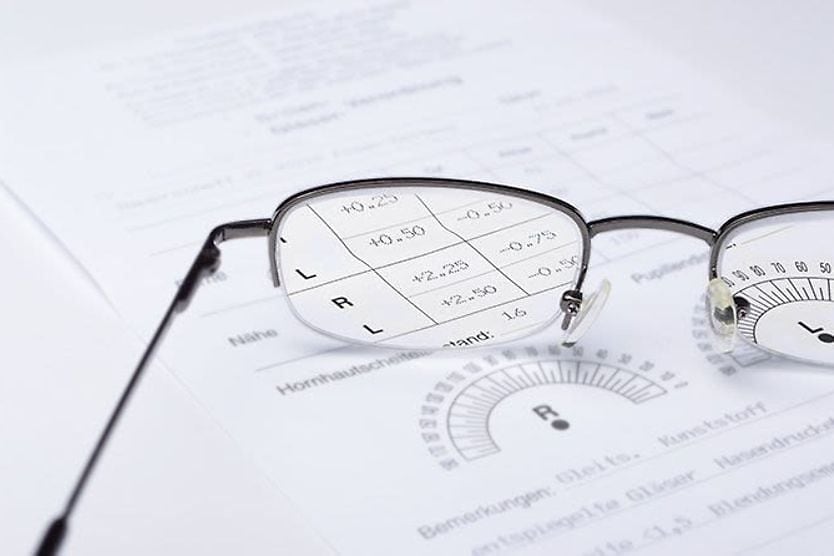
Prescription reading glasses are available in two basic frame styles (full and half). Lenses that photochromic or have an anti-reflective coating are also options to add on. See an eye care provider for a comprehensive eye exam where they will determine your eye prescription. They can help you choose eyeglass lenses custom-made for your specific vision needs.
Multifocal lenses
If you already wear prescription single lens glasses but are having trouble focusing near or far, it’s time to consider multifocal lenses. Your choices include bifocal, trifocal and progressive lenses.
Bifocals
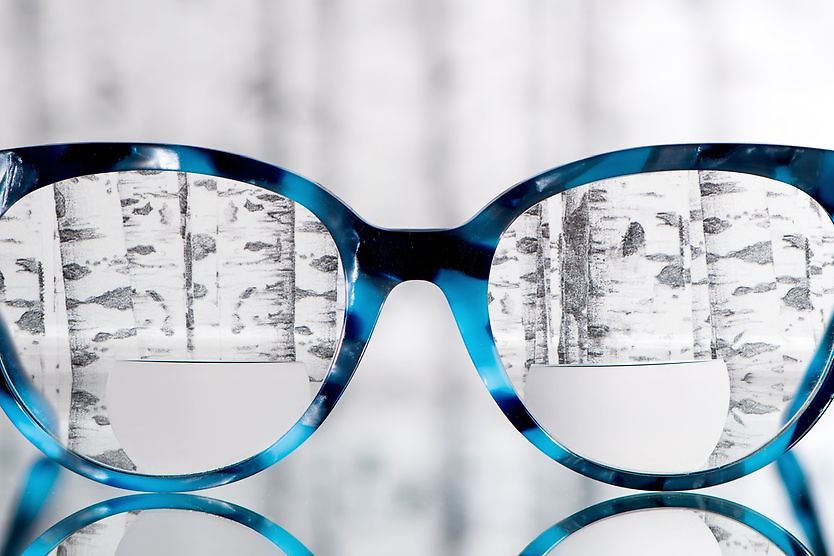
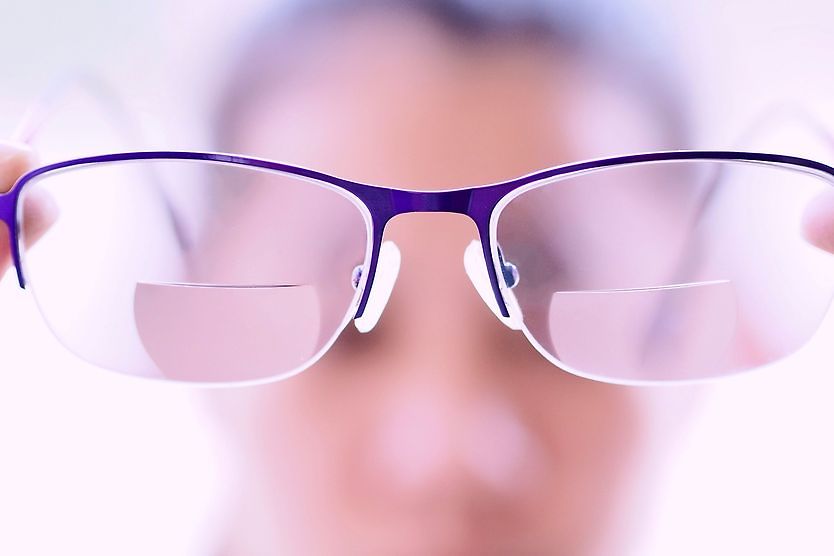
Bifocals correct both near and distance vision in one pair of glasses. The lenses are divided into top and bottom zones, or segments. The top segment is used for distance vision and the bottom segment is for near vision.
Trifocals
Trifocals are similar to bifocals except they offer three power zones. These zones correct for distance, intermediate (arm’s length) and near vision. The intermediate zone can be particularly helpful for people over the age of 50 who have less depth of focus.
Both bifocal and trifocal lenses have faint but noticeable lines separating the segments.
Progressives
Progressives are multifocal eyeglasses that correct for all distances with a seamless progression among zones. Their cosmetic advantage over bifocals and trifocals is that they look like single vision lenses with no visible lines. The power changes across the surface of the lens are also more gradual and blended. This can deliver an enhanced range across your field of vision.
An optician will fit you for your eyeglasses and may suggest enhancements. These may include anti-reflective coatings and polarized or photochromatic lenses to suit your visual needs and comfort.
SEE RELATED: Progressive lenses for vision over 40
Pros and cons of reading glasses
If OTC reading glasses interest you, the following are some pros and cons to consider:
Pros
OTC readers offer a number of advantages like:
- Ready availability in a variety of stores.
- Cost less than prescription glasses.
- No eye exam required.
Cons
Some downsides to OTC readers are:
- Lower quality lenses and frames compared to prescription glasses.
- Generic lenses that magnify only, with no vision correction.
- No eye exam means other vision or eye health problems go undiagnosed.
Pros and cons of prescription multifocal glasses
When choosing prescription eyewear, consider the following:
Pros
Advantages of prescription glasses include:
- Lenses tailored to correct vision in each eye.
- Custom-made lenses and frames.
- Required eye exam can detect other vision problems.
Cons
Potential drawbacks to prescription glasses are:
- Cost of glasses.
- Wait time for delivery.
- Brief adjustment period for multifocal lenses.
The importance of routine comprehensive eye exams
Age-related vision changes are normal, and there are simple steps you can take to handle them. Start with a comprehensive eye exam and go over your options with your eye doctor.
An eye exam is recommended every other year for individuals between the ages of 40 and 64 who are at low risk for vision problems. An annual exam is advised for people at risk, and for everyone 65 and older.
Another important aspect of the eye exam is that it can identify potentially serious eye problems. These include cataracts, glaucoma and age-related macular degeneration (AMD). Staying ahead of these potential issues can help ensure good eye health today and in the future.