Does age affect eyesight after age 40?
Your body changes as you get older, and the same is true for your vision. Some vision changes in your 40s and 60s are natural and aren’t cause for alarm, while others may be more serious.
Here are four vision conditions to be aware of as you age:
Presbyopia
If you find yourself squinting to see and read text as you get older, you could have presbyopia — literally “old sight” in Greek. As you age, the crystalline lens of your eye naturally hardens and loses its ability to change shape, which can make it hard for you to focus on things that are close up.
Presbyopia, or age-related farsightedness, is a very common vision change for people in their 40s through their 60s. There are plenty of ways to correct the condition, including reading glasses that you can pick up (without a prescription) at your local optical store, doctor’s office or online. Refractive surgery is also an option.
If you start to have trouble reading the fine print, schedule an appointment with your eye doctor to find out what treatment options might be suitable for you.
Cataracts
Cataracts occur when the eye's natural lens becomes cloudy. They develop as the tissues in your eye — the ones responsible for focusing your vision — begin to age. Colors may appear less vibrant, and you may see blurry splotches in your field of vision.
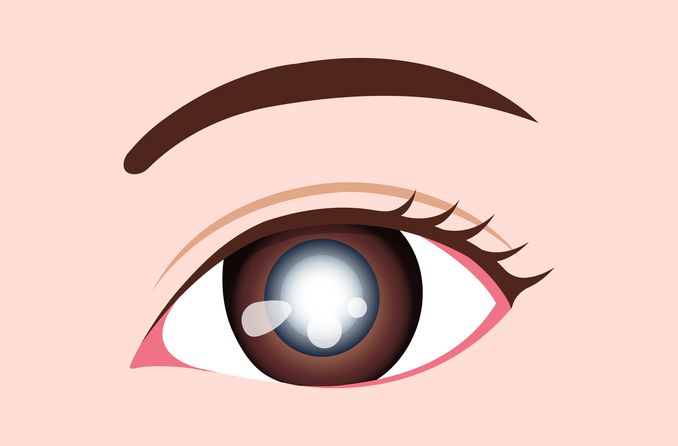
Cataracts are one of the most common vision changes in your 40s. They’re also the most common cause of vision loss in people over age 40, and a leading cause of blindness overall.
The effects of many cataracts can be managed with prescription eyeglasses or contacts, but, if your eyesight seems to be getting worse, eye surgery can be discussed with your eye doctor as a possible treatment option in your care.
During cataract surgery, your eye’s lens is replaced with an artificial intraocular lens (IOL), allowing your cloudy vision potentially to improve after the procedure.
Glaucoma
As you age, pressure within your eye can grow and damage your optic nerve. Glaucoma can make your peripheral vision blurry, and in serious cases, it might make you physically sick.
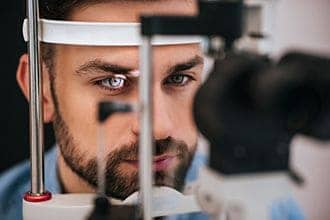
While glaucoma isn’t an uncommon vision change for people in their 40s, the effects can be serious if left untreated. Medication, laser treatments, micro-invasive surgical procedures and other advanced surgeries can keep at bay some of the effects of glaucoma.
Unfortunately, many cases of glaucoma are asymptomatic and often go undetected until noticeable, irreversible vision changes have occurred. This makes routine comprehensive eye exams very important.
If you’re at higher risk for developing glaucoma — if you have a family history of glaucoma, severe myopia, you’re over 60, diabetic, African American, etc. — or your eye doctor finds signs of glaucoma during an exam, schedule annual eye exams and discuss a treatment plan.
WHEN WAS YOUR LAST EYE EXAM? Find an eye doctor near you and schedule an appointment.
Age-related macular degeneration (AMD)
If your vision includes blind spots, see a local eye doctor immediately: Age-related macular degeneration (AMD) may be to blame.
The macula and more specifically, the fovea — the tiny, middle part of the retina — allows you to see fine detail, but its tissues are thin and may deteriorate as you age. This can cause blind spots to form in the center of your vision.
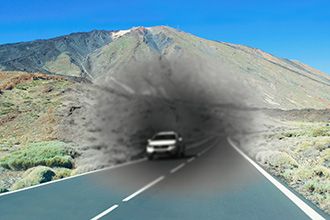
AMD is the leading cause of vision loss among older Americans and should be treated as a significant risk to your eye health.
If left untreated, AMD can cause permanent damage to your central vision. If caught early, weaker forms of the disease may be managed with nutritional supplements and exercise.
More severe cases might require eye injections in your eyes or possibly laser therapy.
There is no cure for AMD.
Annual eye exams can help maintain your vision
Regular eye exams are critical to maintaining your health as you age. Schedule an appointment with an eye doctor near you and make a plan for your continued vision care.