Is reading in the dark bad for your eyes?


Does reading in the dark damage your eyes?
For many people, reading by the dim glow of a bedside lamp is a favorite way to unwind before bed. This common evening ritual can ease the transition to sleep and contribute to a better night’s rest. For children, bedtime reading can create a calming routine and encourage language development.
But when the print becomes harder to see or your eyes begin to feel tired, you may recall being told as a child that reading in dim light could damage your eyesight and wonder whether there was any truth to that warning.
Fortunately, temporary eye strain and lasting eye damage are two very different things. Reading in dim light may cause discomfort, but it won’t permanently damage your eyesight. Taking a short break or adjusting the lighting can often help.
If eye strain, headaches or blurry vision persist despite these changes, a comprehensive eye exam can help identify other possible causes.
The science behind vision and light
Light enters through the eye’s clear front layer, the cornea, and into the pupil. It then passes through the lens, which helps bring what you see into focus.
Small muscles called ciliary muscles adjust the lens’s shape, letting you focus on a book up close or on farther-away objects, like a street sign.
The lens focuses light onto the retina, the light-sensitive layer at the back of the eye. The retina converts this light into signals that travel through the optic nerve to the brain, where the brain interprets them as images.
Detailed vision works better with more light
The retina contains two types of light-sensitive cells called rods and cones. They respond to light in different ways:
- Cones – Work best in brighter conditions, provide color vision and help you see fine details, such as the letters on a page.
- Rods – Are more sensitive to low light and help you make out shapes and objects in dim surroundings, but they don’t provide the same level of detail or color vision.
This explains why you can see objects in a dark room but still struggle to read small print. Even when your eyes adjust to the darkness, detailed vision works better with more light.
What happens to your eyes in dim light?
When you move from a bright room into a darker one, the iris (the colored part of the eye) widens the pupil (called pupil dilation) to let in more light.
In brighter conditions, the pupils constrict to limit how much light enters the eye. This adjustment happens automatically.
As your eyes adjust to darkness for night vision, rods gradually become better at detecting faint light. This process takes time, so it can take a few minutes for objects that were difficult to see at first to become easier to recognize.
Because rods detect fine details and colors less effectively than cones, small print can still be hard to read, even if you can see other objects in the room.
Does reading in dim light cause permanent damage?
No. Reading in dim light may make your eyes feel tired or strained (called asthenopia), but there is no evidence that it causes permanent eye damage or vision loss. When there isn’t enough light to see the words clearly, you may experience temporary discomfort, headaches or blurry vision. These symptoms usually improve when you take a break or adjust the lighting conditions.
Why does it get harder to read in dim light as you get older?
If reading in dim light is getting harder as you age, it’s not your imagination. As you get older, your eyes typically need more light to distinguish fine details, so a lamp that once provided enough light may no longer be sufficient.
Common myths about reading in the dark
Because dim light can make print harder to see, some vision myths may make people worry about lasting visual issues. Here’s what research tells us about two common myths:
Myth: Dim light causes nearsightedness
Reading in dim light may make small print harder to see, but research has not established it as a cause of nearsightedness (myopia). Nearsightedness is when someone can see close-up objects clearly, while distant objects appear blurry.
A study of nearly 1,300 children examined whether reading at night with the lights off was associated with nearsightedness. Although researchers initially found a possible connection, it was no longer statistically significant after accounting for age. Because the findings were based on parent-reported information collected at one point in time, the study could not determine whether reading in darkness contributes to myopia.
Although dim lighting has not been shown to cause nearsightedness, researchers are investigating how everyday factors may influence myopia development. These include close-up activities, such as reading and screen time, as well as time spent outdoors in daylight. Studies have found that children who spend more time outside during the day seem less likely to develop nearsightedness.
Myth: Reading in the dark leads to eye disease
Eye conditions, such as cataracts or age-related macular degeneration (AMD), can make reading in dim light difficult, but reading in low lighting has not been shown to cause eye health problems.
Cataracts
Cataracts develop when the normally clear lens inside the eye becomes cloudy, most often with age. Reading in dim light does not cause cataracts, but the condition can make words appear blurry or hazy and reading more difficult in poor lighting.
Age-related macular degeneration
AMD affects the part of the eye responsible for sharp, central vision, which you use to read, recognize faces and see fine details. AMD develops when age-related changes damage this area.
The condition can make words appear blurry or distorted and make reading harder in low light. While genetics and smoking can increase the risk, reading in dim light is not a known cause of AMD.
Dry eye
Dry eye disease appears to be on the rise, and the condition may make reading at the end of the day more challenging, especially in low light.
Tears help keep the front surface of your eyes smooth so you can see clearly. When your eyes don’t produce enough tears or they dry out too quickly, words may appear blurry or go in and out of focus. This can make reading even harder in poor lighting.
The real effects of reading in the dark
You may find yourself squinting, bringing your book closer or changing positions to see more clearly when reading in the dark. Reading for long periods in poor lighting could also contribute to temporary eye strain.
Symptoms of eye strain
Eye strain can occur during activities that require prolonged visual attention, such as reading, using digital screens or even driving. Poor lighting and glare can worsen the discomfort.
Common symptoms include:
- Tired or sore eyes
- Headaches
- Blurry vision
- Dryness or irritation
- Trouble focusing
Taking a short break or adjusting your lighting, screen settings or position may help. However, if reading is frequently uncomfortable, something other than the lighting may be contributing to your symptoms. Your eye doctor can help identify other possible causes.
Why reading may become harder, even in good light
If reading has become more difficult even in good lighting, one possible cause is presbyopia, a normal age-related change in vision that typically becomes noticeable in your 40s. As you age, the lens inside each eye becomes less flexible, making it harder to focus on nearby words. You may notice yourself holding books or your phone farther away to see clearly.
How to minimize eye strain
A few simple changes to your reading habits can help reduce eye strain and make reading more comfortable.
If your eyes start to feel tired, consider:
- Taking a short break.
- Increasing the print size on screen readers.
- Adjusting your reading position so you can see the words clearly without squinting or leaning forward.
Tips on using e-readers and other digital devices
If you read on a phone, tablet or e-reader, you may also notice dryness or irritation. When you concentrate on a screen, you often blink less frequently or don’t close your eyes completely with each blink. This lets tears evaporate faster, which can cause discomfort or temporary blurry vision.
Blinking fully and regularly can help spread tears across the surface of your eyes and keep them moist. If dryness continues, over-the-counter lubricating eye drops, called artificial tears, may help relieve symptoms.
Digital screens emit blue light, a type of visible light. Blue light from screens has not been shown to damage the human retina. But evening blue light exposure may make it harder to fall asleep. Reading a paper book before bed or using night mode on your device may help.
Best practices for reading comfortably
A few adjustments to your lamp or your position can make life easier, especially when you’re trying to see small print.
Ideal lighting for reading
Choose a reading light that doesn’t create glare. You don’t need to brighten the entire room. Simply direct extra light onto your book while keeping the surrounding area comfortably lit. Below are some other helpful tips:
- Choose a light level that lets you read clearly without making it too bright.
- Direct the light onto your reading material rather than into your eyes to avoid glare.
- Position the lamp to reduce shadows and keep the page evenly lit.
A portable book light or reading glasses with built-in LED lights can provide additional light. If small print is still difficult to see, try a large-print book or increase the font size on your device.
The 20-20-20 rule
Even with good lighting, reading for long periods can leave your eyes feeling tired. Taking regular vision breaks may help reduce discomfort.
One simple way to remember is the 20-20-20 rule. After every 20 minutes of reading or screen use, look at something at least 20 feet away for about 20 seconds. You can follow this advice, whether you’re reading a printed book or using a digital device. The main benefit is a simple reminder to look away from close-up work and rest your eyes.
Separating fact from fiction
Dim light may make reading harder and leave your eyes feeling tired, but it does not cause permanent eye damage.
When to see an eye doctor
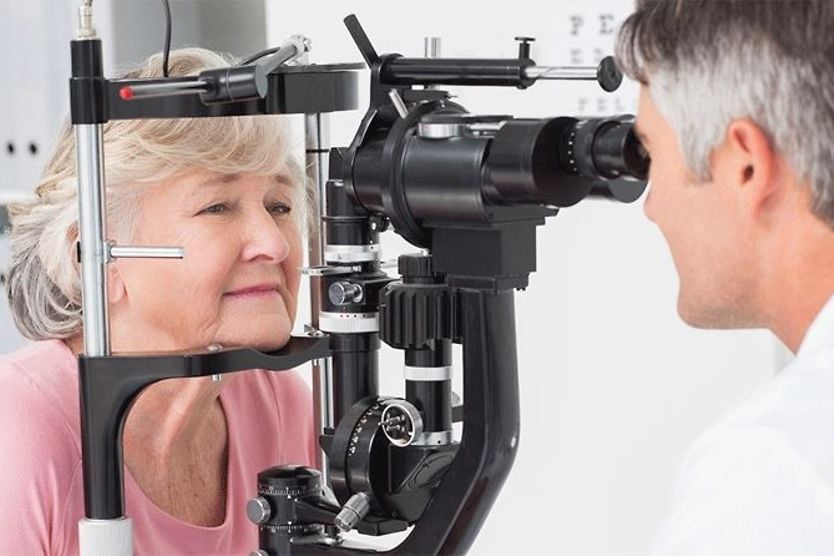
Sometimes, difficulty reading is caused by more than poor lighting. If you frequently experience headaches, blurry vision or eye discomfort that doesn’t improve with better lighting and regular breaks, schedule a comprehensive eye exam.
Your eye doctor can check whether conditions such as dry eye, cataracts or age-related changes in your ability to focus may be contributing to your symptoms.
Sudden changes in vision are different from ordinary eye strain and may require immediate attention.
Seek emergency eye care right away if you notice:
- Persistent eye pain, redness, discharge or sensitivity to light
- New or worsening blurred vision or double vision
- Sudden vision loss, blind spots or distorted vision
- Sudden flashes, new floaters or a dark shadow across your vision
- Severe eye pain, chemical exposure or an eye injury
If you regularly have difficulty reading in dim light, a comprehensive eye exam can help identify the cause. After all, there’s nothing like winding down with a good book under the soft glow of your favorite lamp.