When does my child need an eye exam?


Many pediatric eye doctors have had to share unexpected news with parents: their child has been living with an undetected vision problem. Erin Keim, OD, a pediatric optometrist who practices at Everett & Hurite Eyecare Specialists in Greensburg, Pennsylvania, understands all too well how easily this can happen. She experienced it herself as a child.
At the start of elementary school, her distance vision was so blurry that the leaves on trees looked like green blobs. However, she found ways to adapt and managed to pass school vision screenings by cheating on the eye tests. “I would just listen to the kid in front of me and memorize the letters that they were saying,” she explained.
When she got a comprehensive eye exam in the first grade, her mother was shocked to learn that she couldn’t even read the large E at the top of the eye chart. Once she received prescription glasses, she was able to see the world in detail for the first time.
Today, Dr. Keim is passionate about the importance of catching and addressing vision problems early. “My heart breaks when I see a kid that’s struggling or just got missed or fell through the cracks,” she said. Through the support of vision screenings and pediatric eye exams, many childhood vision conditions can be detected and treated early.
How does vision develop from birth through childhood?
A newborn baby’s world is a blur of shapes in shades of black and white. At first, they can only see faces and objects 8 to 10 inches away. Their eyes are not yet fully coordinated and will sometimes cross or drift apart.
As the weeks pass, an infant typically begins to focus their eyes and appear more aware of their surroundings. They also tend to be more responsive to what is happening around them. By 3 months of age, they can usually follow the motion of objects with their eyes. Throughout the first year of life, a child’s visual acuity, or sharpness of vision, should continue to improve, along with their depth perception, visual tracking, focus and color vision.
Vision development continues throughout childhood. Up until around ages 7 to 9, their depth perception, eye-hand coordination and fine motor skills continue to advance. Their eyes also learn to work better as a team, which supports the visual skills needed for tasks like reading.
If certain vision conditions go unaddressed during this developmental window, some of the effects may become permanent.
One might think it would be obvious to parents if their child has a vision condition, but that is not always the case. Children are often able to compensate for poor vision, especially if the vision condition only affects one eye. In those cases, the brain can adapt by relying on the eye with clearer vision and ignoring the weaker one.
Over time, this can lead to a condition called amblyopia, sometimes referred to as “lazy eye,” where there is reduced vision in an eye that the brain has learned to underuse and that glasses alone cannot fully correct. Amblyopia can develop when the eyes are misaligned (strabismus), when one eye has a much stronger prescription than the other or when something blocks a clear image from reaching the eye, such as a congenital cataract or a droopy eyelid.
“If we don’t have normal development in those first seven to nine years, we can’t fix that down the road,” says Dr. Keim.
When an eye problem, like amblyopia, is caught in time, it is treatable. Treatment usually starts by correcting the underlying cause. For example, prescribing glasses or when needed, removing something that blocks vision, such as a cataract. Eye doctors then encourage the brain to use the weaker eye, most often by patching the stronger eye for part of the day or blurring it with prescription eye drops.
It’s estimated that as many as 1 in 17 preschool-aged children and 1 in 4 school-aged children have undetected and untreated vision issues that can affect their development and learning abilities. These findings underscore the importance of comprehensive eye exams early in life to identify and treat eye and vision conditions before they contribute to long-term challenges.
When should a child have their first eye exam?
Starting at birth, children typically receive periodic vision screenings from their pediatrician. During these screenings, doctors may evaluate the child’s eyesight, assess their eye alignment and movement and perform limited tests to check the health of their eyes. Vision screenings are also sometimes given in a school or childcare setting.
These screenings may be able to flag some of the more obvious issues, but it’s important to understand that they are not as thorough as a comprehensive eye exam performed by a pediatric ophthalmologist or pediatric optometrist.
During a comprehensive eye exam, eye care professionals conduct further testing, which may include dilating the pupils to gain a detailed view inside the eye. These tests can catch vision conditions that may have been missed in a screening, including refractive errors that cause blurry vision, such as hyperopia (farsightedness), myopia (nearsightedness) and astigmatism. They may also help assess whether a child is at risk for developing other vision or eye-related issues in the future.
If a child is found to be nearsighted, the eye doctor may also talk about ways to slow how quickly the nearsightedness progresses over the coming years. Options studied in children include certain contact lenses (including overnight “ortho-k” lenses and multifocal soft lenses) and myopia-control eyeglasses, along with the off-label use of low-dose atropine drops. These approaches can slow the progression of nearsightedness, which may lower the long-term risk of eye problems linked to high myopia, but they do not cure or reverse it.
“A screening tries to determine if there are existing large problems right now,” explained Nathan Bonilla-Warford, OD, FAAO, FIAOMC, a pediatric optometrist who practices at Bright Eyes Family Vision Care in Tampa, Florida. “A comprehensive eye exam is trying to determine: are there reasons to think that there are going to be problems in the future?”
Major medical associations differ on when children should have their first comprehensive eye exam. The American Optometric Association (AOA) recommends that children receive their first eye exam between 6 and 12 months of age, a second exam at age 3, another around age 5 or 6 (before beginning school) and then at least one year annually thereafter. The American Academy of Ophthalmology (AAO) and the American Association for Pediatric Ophthalmology and Strabismus (AAPOS) typically recommend periodic vision screenings with referrals to an eye care specialist if there are signs and symptoms of vision conditions or other risk factors.
Charity Grannis, MD, a pediatric ophthalmologist who practices at Houston Eye Associates in Houston, Texas, suggests that parents consider scheduling a comprehensive eye exam for their children at age 4 or 5, even if they are not high risk, to check for issues that may have been missed during screenings. “If nothing’s been caught before, then at least that one little check there could identify something that could still have a good three or four years to be treated.”
How do I know if my child is at risk for vision problems?
Children with a family history of eye or vision problems, particularly those that appear early in life, may be at a higher risk of developing childhood eye conditions. This includes a family history of:
- Amblyopia
- Strabismus (eye misalignment)
- Retinoblastoma (a serious eye cancer)
- Congenital cataracts
- Glaucoma
Children may also be at a higher risk of developing vision problems if they have certain medical conditions, such as:
- Down syndrome
- Juvenile idiopathic arthritis
- Type 1 or type 2 diabetes
- Neurofibromatosis
- Premature birth
What are warning signs of vision problems?
Signs of vision conditions in children can range from visible issues, such as crossed eyes, to more subtle behavioral or learning difficulties. Parents should raise any concerns to their child’s pediatrician or eye care specialist. Some of these warning signs can include:
Leukocoria (white pupil)
Leukocoria is a condition in which the reflection from the eye’s pupil appears white instead of red. When a person’s pupils appear red in a flash photograph, the effect is known as the red reflex, which is caused by light reflecting off the back of the eye. During vision screenings and eye exams, light is shined in the eye to check this reflex for abnormalities.
If the pupil appears white during this test, it can potentially suggest several conditions. The most important to rule out quickly is retinoblastoma, a serious form of eye cancer. Other possible causes include:
- A congenital cataract that is clouding the eye’s natural lens and reflecting light
- Coats disease
- Persistent fetal vasculature (PFV)
- Retinopathy of prematurity (ROP)
A parent should have their child evaluated if they notice a white pupil in a photograph or video or differences between the red reflex in each eye.
Eye crossing
Occasional eye crossing or uncoordination between the eyes can be normal during roughly the first three months of life. But if eye crossing persists as a child gets older, it may be a sign of strabismus, a condition in which the eyes do not align or move together properly. If the eye crossing is permanent or appears suddenly in an older child, it’s important to consult an eye doctor right away.
Learning delays
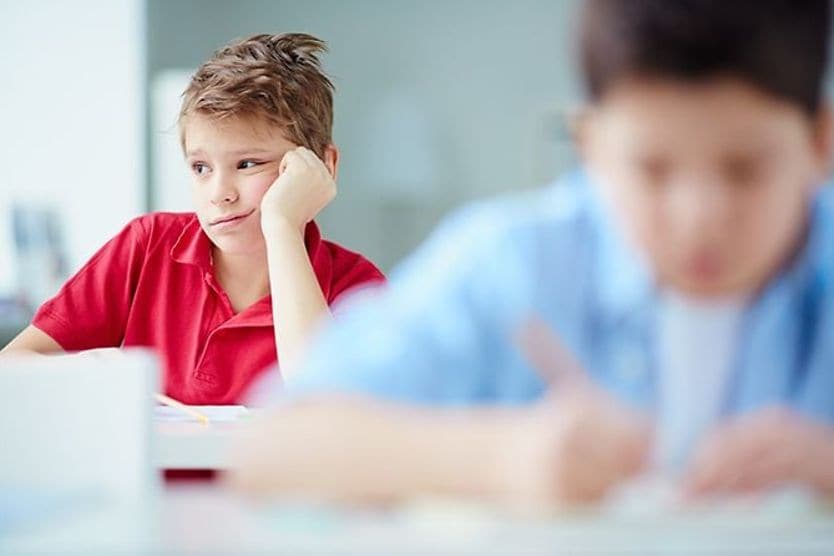
Children diagnosed with learning disabilities, developmental delays or behavioral issues should also undergo comprehensive eye exams. Vision conditions do not cause learning disabilities, but they can delay reading or cause children to avoid certain tasks.
“I think it’s so very important whenever there’s an evaluation for some type of behavioral issue or learning disability, ophthalmology is always a step in that,” said Dr. Grannis.
Other signs of vision problems
Other signs that a child may be struggling to see clearly include holding objects closer to their face than expected, squinting when looking far away, closing one eye when looking at things and frequent eye rubbing or headaches.
How can I prepare my child for a pediatric eye exam?
It’s important to help children understand that a comprehensive eye exam is nothing to fear. “Often, eye exams are fun,” said Dr. Keim. “I have all sorts of toys and games and light-up things, and my technicians and I know how to get your kids to participate.”
Dr. Bonilla-Warford says parents are often surprised by how easily he can evaluate their child. “You can learn a whole lot just by watching them, how they interact with people and with toys and in response to the different flashlights we have,” he said.
Some children may feel apprehensive about having their eyes dilated, but eye care providers who work with kids usually have developed strategies to keep them calm during the process. Parents can help by offering praise and reassurance. Bringing a cuddly toy and scheduling the visit when the child is less likely to be tired or hungry can also help make it a positive experience.
“If they feel like they’re relaxed, then we get much better clinical data and we can make better clinical decisions,” says Dr. Bonilla-Warford.
It can be helpful to bring a photo or video of any issues noticed at home that may not be as obvious during an eye exam. Parents are encouraged to ask questions about anything that concerns them or seems unusual.
What should I look for when choosing a children’s eye specialist?
Both pediatric optometrists and pediatric ophthalmologists provide comprehensive eye exams to children. A pediatric optometrist offers comprehensive care for eye health and vision conditions. An ophthalmologist is a medical doctor who specializes in eye conditions and performs eye surgery. An optometrist may refer patients to an ophthalmologist for more serious or complex conditions.
When choosing a pediatric eye specialist, it can be helpful to consider factors, such as their availability, the age range of patients they treat and the child’s risk for serious conditions.
If cost is an issue, a public health program called InfantSEE offers a list of optometrists who provide eye exams to infants ages 6 to 12 months old at no cost.
How can I help my child adjust to wearing glasses?
Learning that their child needs glasses can be stressful for parents, but children often adjust more easily than expected. Once they can see clearly, many children like wearing their glasses because they can better engage in activities, like playing and learning. To help make the transition as smooth as possible, Dr. Bonilla-Warford suggests:
- Involving children in choosing glasses they like
- Making sure the glasses are the right size and fit for their face
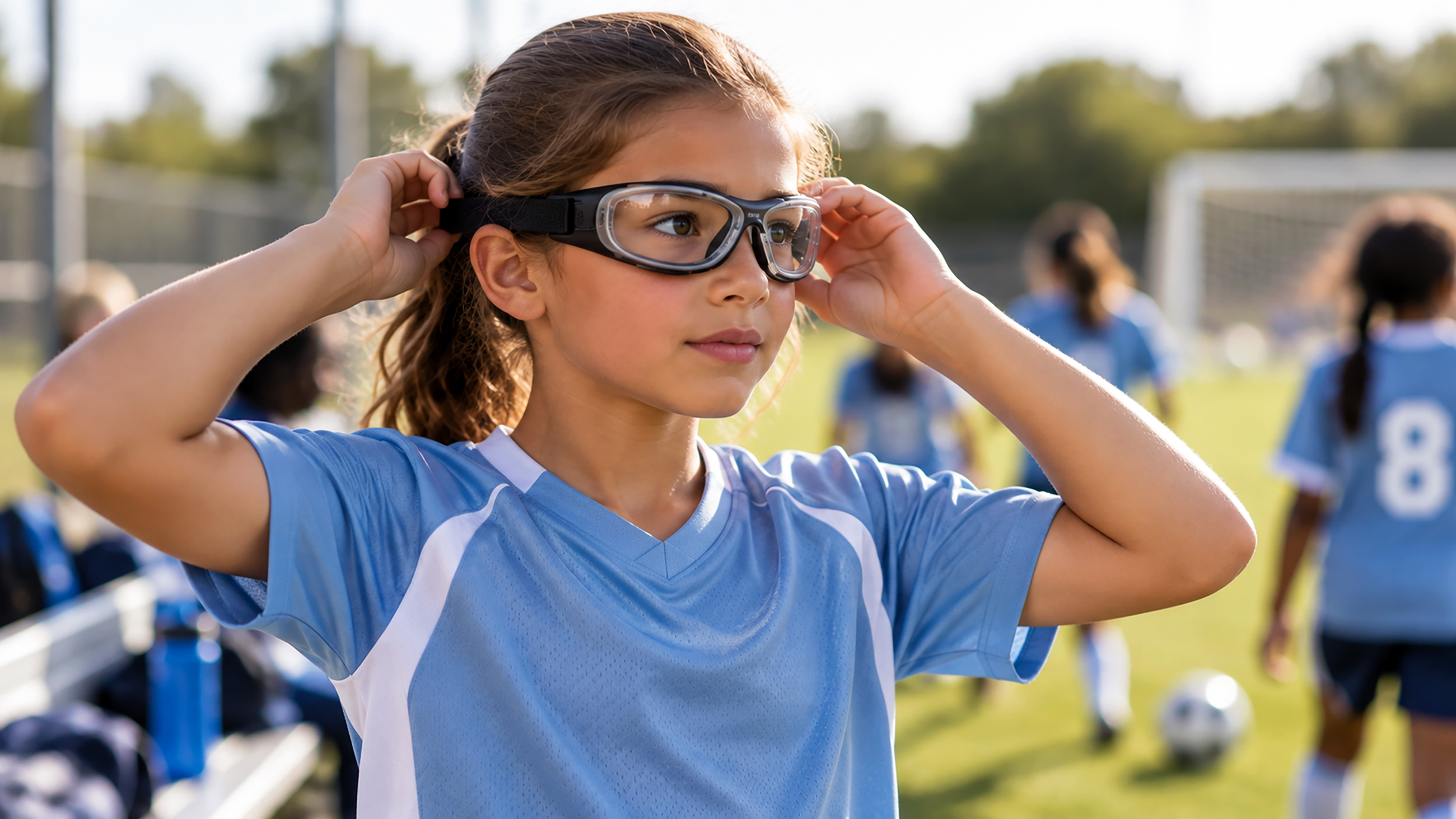
- Using tools, like straps or ear grips, to keep the glasses in place if needed
“Having the optical [team] really make sure the glasses fit well, that they’re snug, that they’re comfortable, that they’re lined up properly is absolutely critical for this age range,” he said.
Treatment of vision issues can be life-changing for children. After vision correction, Dr. Grannis says some parents report noticeable improvements, such as their child is no longer tripping, has started reading and is behaving better in school. She added, “It really does happen where you can put glasses on a kid, and then they can see, and their world kind of opens up for them. And the parents say that they love their glasses, and life is so much better.”