Ultra-widefield retinal imaging exam: Pros and cons

What is an ultra-widefield retinal imaging eye exam?
During a comprehensive eye exam, your eye doctor evaluates the retinas, the light-sensitive tissue at the back of your eyes. To view the full retina, your doctor may dilate your pupils or use ultra-widefield retinal imaging technology.
Traditionally, to view the entire retina, patients are given eye drops that dilate the pupils. But dilating drops can also cause blurry vision and light sensitivity. This may bother some patients.
Fortunately, advanced technology now offers a way to perform the retinal exam without the drops and dilation — through something called an ultra-widefield retinal imaging retinal exam.
Over 20 years ago, a meditcal technology company introduced ultra-widefield retinal imaging. This imaging technology provides a view of up to 80% (200 degrees) of the retina at one time. The exam is typically performed quickly and does not require pupil dilation. Given the wide and detailed view, ultra-widefield retinal imaging imaging may have the potential to provide a more advanced look into the retina than other exams.
How does ultra-widefield retinal imaging work?
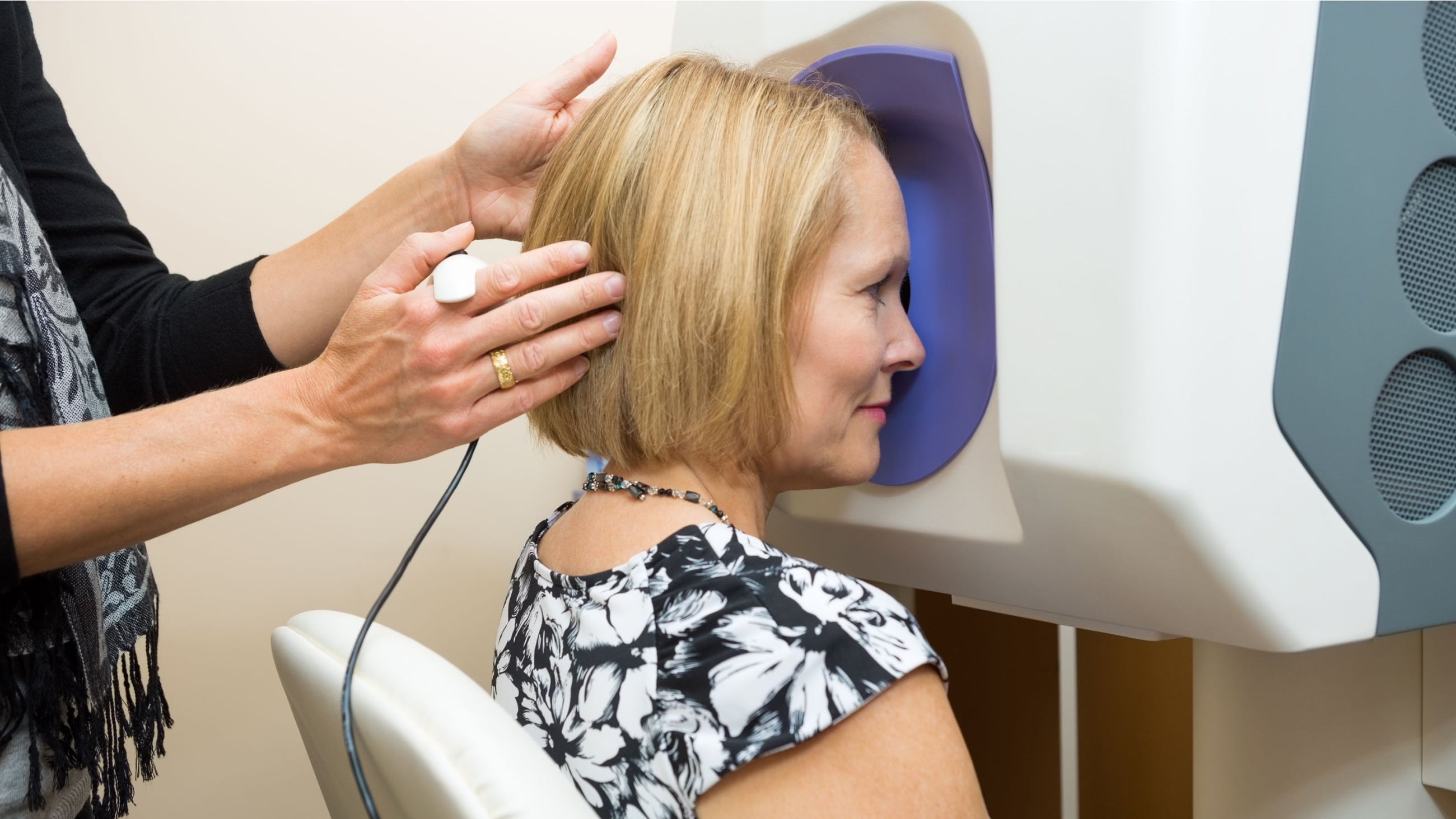
To capture an image of the retina using ultra-widefield retinal imaging technology, the following steps are taken:
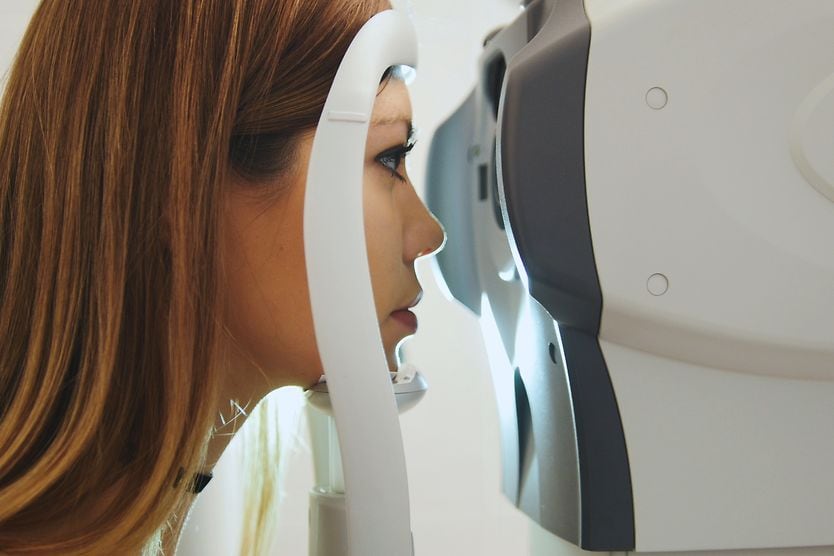
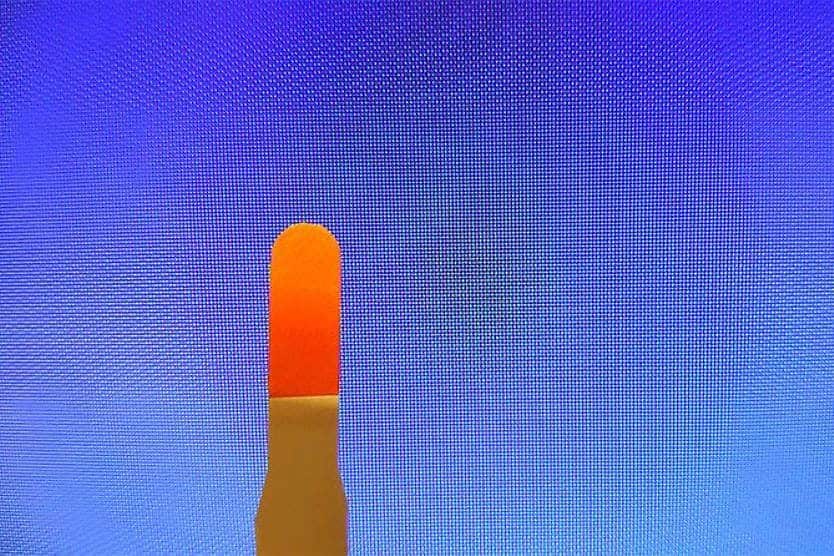
- First, the patient looks into the instrument and looks for an LED target.
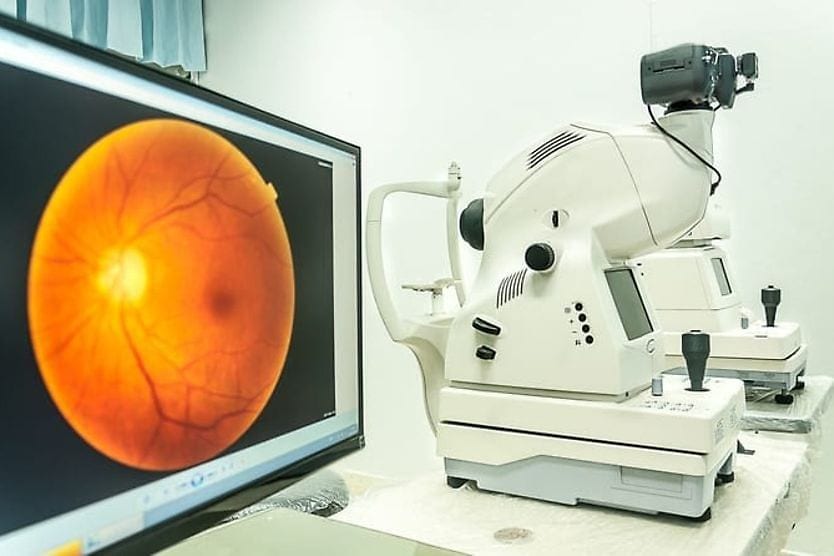
- This action is displayed on a touch screen that the eye doctor sees. The eye doctor touches the monitor to capture an image of the retina, much like taking a photograph.
- The final product provides a wide, high-resolution view of the retina.
- The entire process takes about one minute per eye.
There are numerous machines that provide many of the same imaging capabilities. With this efficient instrumentation, your eye doctor may be able to see up to six different views of the retina.
Ultra-widefield retinal exam vs. dilation
One of the main differences between ultra-widefield retinal imaging and dilation? Ultra-widefield retinal imaging provides a detailed look of the retina without the use of eye drops. Dilation, on the other hand, requires eye drops, which can have irritating side effects like blurry vision and light sensitivity.
That being said, a dilated eye exam is considered the standard among many eye doctors, as it provides a look at the retina and a more magnified view of the optic nerve. Because ultra-widefield retinal imaging is focused on the retinas, it provides less magnification of the optic nerve.
Some claim that ultra-widefield retinal imaging exams can give doctors more insight into the health of the retina, and help identify things that may not have been visible through dilation alone. In addition, the ultra-widefield retinal images can be stored and compared for changes over time. Others argue that ultra-widefield retinal imaging can miss important details, like signs of glaucoma.
For more details about what ultra-widefield retinal iimaging may provide or lack, be sure to continue reading the next section that highlights the advantages and disadvantages of the technology.
READ MORE: Frequently asked questions about eye dilation: What is it, how is it done and why?
Pros and cons of an ultra-widefield retinal exam
Like many special imaging techniques, the ultra-widefield retinal examination comes with both pros and cons:
Advantages of ultra-widefield retinal imaging
- It can give more in-depth imaging and information than traditional pupil dilation.
- It often provides early detection of several eye diseases.
- The imaging acts as a useful tool to detect retinal lesions before an eye surgery.
- Exams are typically quick and painless.
- It can be especially useful in pediatric ophthalmology.
- Images can be saved and used to check for changes at later exams.
Disadvantages of ultra-widefield retinal imaging
- Availability can be limited among eye care providers.
- If a problem is detected through the imaging, dilation is often still needed to investigate the issue further.
- Conditions have been falsely identified through some ultra-widefield retinal imaging.
- Dilation may still be important for conditions that involve the optic nerve, such as glaucoma.
Conditions managed through ultra-widefield retinal imaging
Ultra-widefield retinal imaging exams can be a helpful tool in diagnosing, monitoring and treating a variety of eye conditions, which may include:
- Diabetes/diabetic retinopathy
- Age-related macular degeneration
- Posterior vitreous detachment
- Peripheral vitreoretinal disease
- Uveitis
- Tumors and lesions
- Retinal detachment
- Retinal vein occlusion
- Retinal dystrophies
- Pediatric retinal disorders such as Coats disease
Although Ultra-widefield retinal imaging exams are a helpful tool in the management of these conditions, your eye doctor may choose alternative (or additional) methods. The optimal decision depends on each individual patient and their needs.
Cost of an Ultra-widefield retinal imaging exam
Is ultra-widefield retinal imaging covered by insurance? Ultra-widefield retinal exams may be covered by your vision insurance if there is a problem with your retinas that needs to be further evaluated.
But in most cases of healthy retinas, this type of imaging is not covered by insurance, and is considered an optional test. Cost varies among practices, so it’s recommended to ask your eye doctor’s office about their rates. Many patients may feel the cost of ultra-widefield retinal imaging is warranted in order to forgo the blur and light sensitivity that may come with dilation and last several hours.
In some cases, you may be able to pay for an ultra-widefield exam with your flexible spending account (FSA) or health savings account (HSA) if you have one.
Before you make a decision, you can always talk to your doctor to find out if ultra-widefield retinal imaging is right for you and bring up pricing questions if cost is a concern.
Does your eye doctor offer ultra-widefield retinal exams?
Retinal exams are a very important part of any eye exam, as they help to ensure the health of the retinas and detect any problems that may be present — both in children and adults.
Ultra-widefield retinal exams can offer an advanced look at the state of the retinas and help establish a successful plan of action if one is needed. They also mey help monitor the status of any eye diseases or underlying conditions that affect the retinas.
Some eye care practices may not offer ultra-widefield retinal imaging, so it’s best to ask your eye doctor if they offer ultra-widefield retinal exams and if you may be a good candidate.
Whether or not you decide to have ultra-widefield retinal imaging performed, it is recommended to schedule your comprehensive eye exam on a yearly basis. This is the recommended way to take steps to keep your eyes and vision both healthy and functional.