Photoreceptors and their function in the eye

What are photoreceptors?
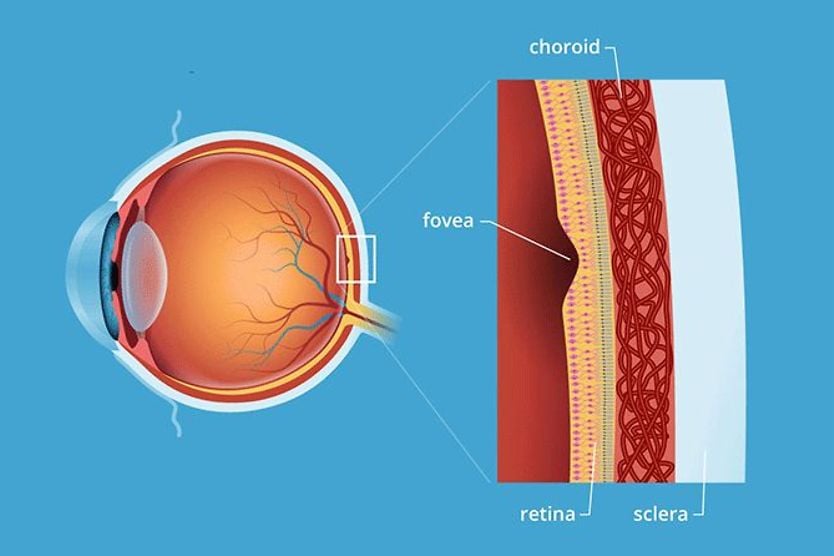
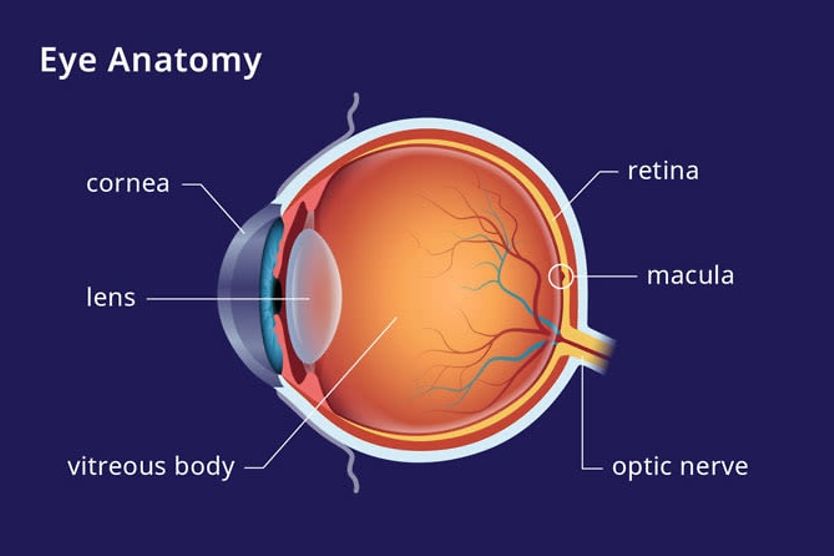
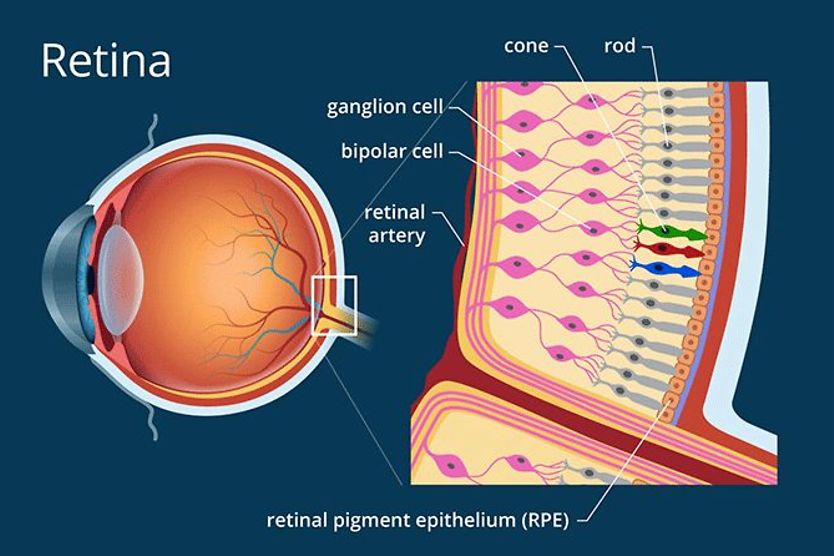
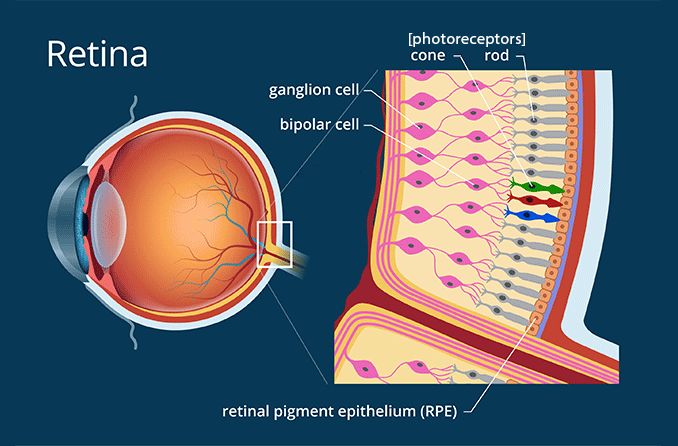
Small cells called photoreceptors in the eye play a vital role in night vision and also affect how the eye sees color. Photoreceptor cells are located in the retina, which is the light-sensitive tissue that lines the back of the eye.
There are two kinds of photoreceptor cells: cones and rods. Each type of photoreceptor works to convert different levels of light into signals that are then sent to the brain to form a visual representation.
Photoreceptor function and types
Rod and cone photoreceptors contain different light-sensitive molecules (photopigments), so they each help with light perception in different ways.
While cones detect color through bright light, rods are sensitive to low-light levels. Rods aid in night vision and identifying black and white hues.
The human eye contains more rod photoreceptors than cone photoreceptors.
Photoreceptor cells work by sensing light and reacting to it. This is a process called photoreception.
The cells' reaction to light is converted into electrical signals. This is called phototransduction. It's one of many forms of signal transduction cells use throughout the body.
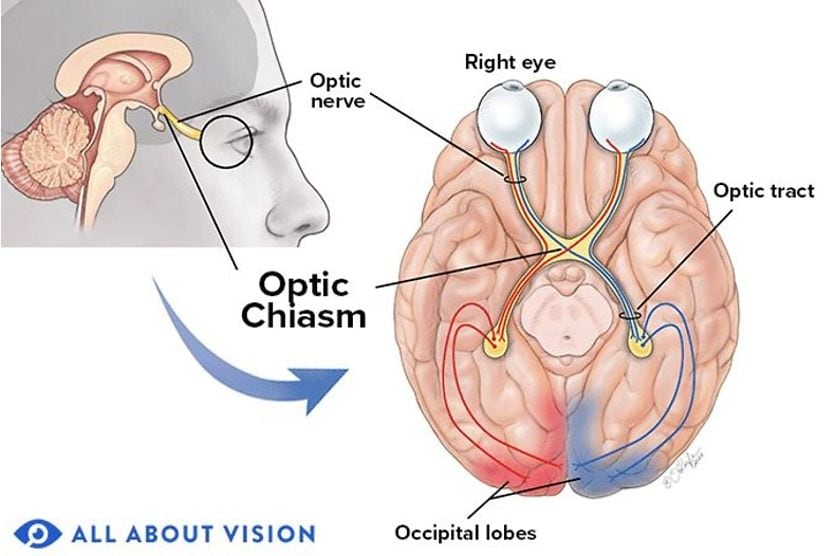
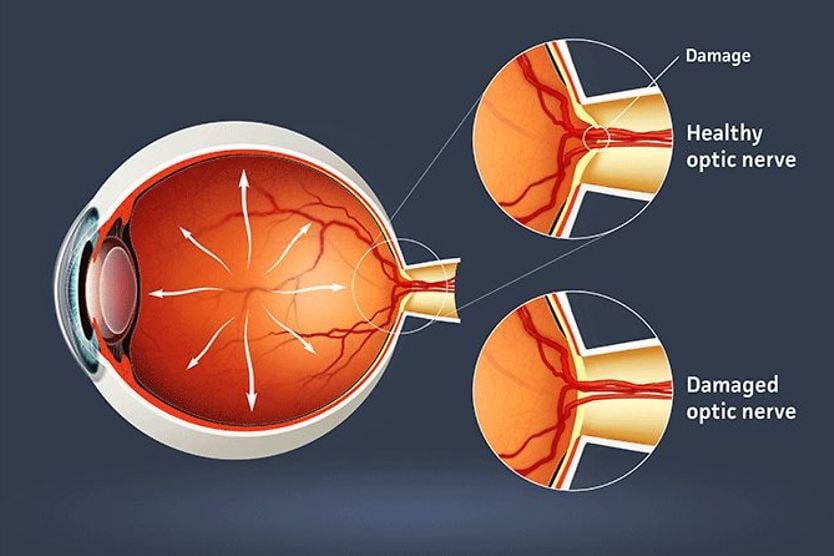
The retina processes this information and sends nerve signals through the optic nerve, which allows you to see.
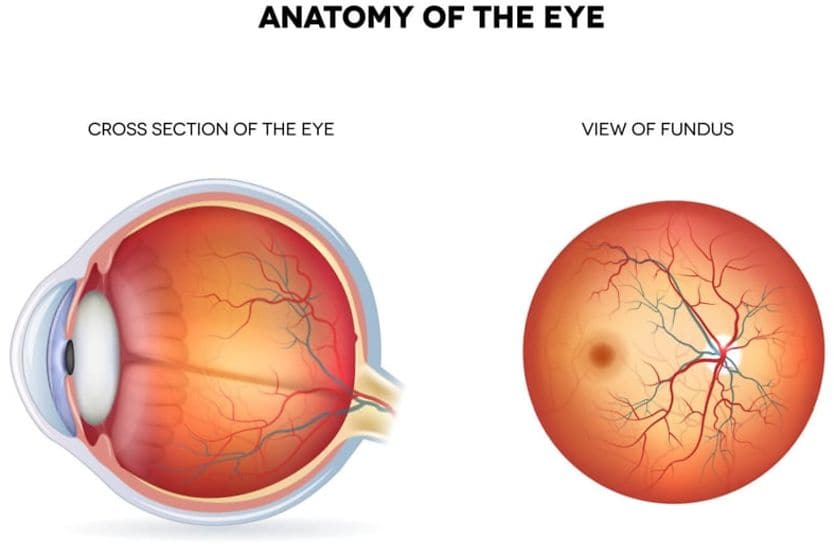
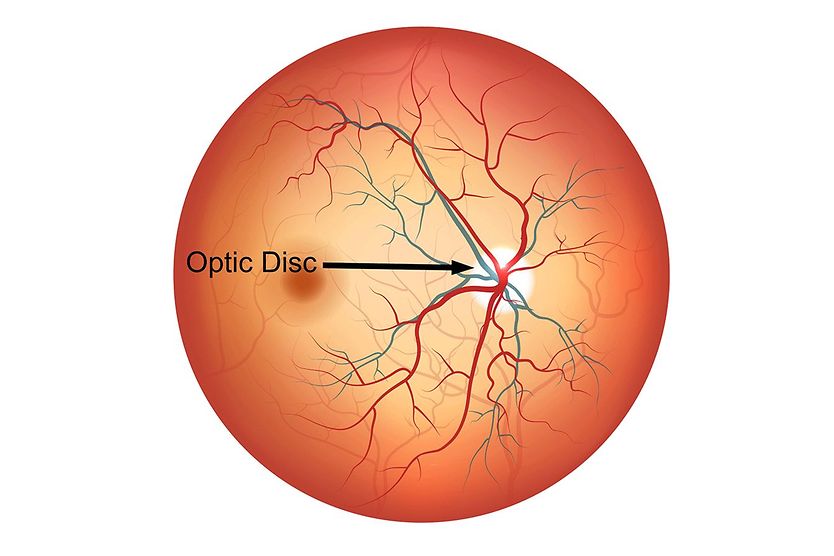
The only part of the retina without photoreceptors is the optic disc, where the optic nerve leaves the eye. The lack of light-sensing cells creates a natural (but hardly noticeable) blind spot toward the side of your view.
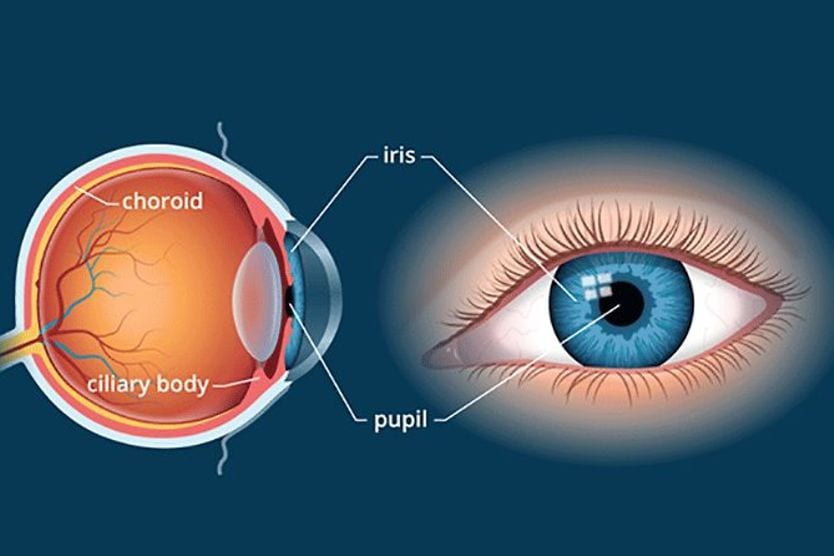
SEE RELATED: Eye anatomy: A closer look at the parts of the eye
Cone photoreceptors
Cone photoreceptors are activated by bright lighting and help the eye to see color. This type of photoreceptor contains proteins called photopsins (or cone opsins) that help create color pigments for the eye to view.
There are three subtypes of cones: blue, red and green cones — each is sensitive to various wavelengths of light, which allows the eye to see multiple colors.
Red light and objects stimulate the red cones, while green light and objects stimulate the green cones and so on. More than one color cone is stimulated to see the colors in between. For example, a yellow object — such as a banana — stimulates the red and green cones simultaneously, as red and green combine to create a yellow hue.
The eye has approximately 6 million cones, which are mostly located in the fovea, a pit-like structure located in the center of the retina. The fovea provides very sharp vision, or high visual acuity, in the center of your view.
Rod photoreceptors
Rod photoreceptors are sensitive in dimly lit environments; they assist the eye in night vision and seeing in black and white. These photoreceptors contain a photopigment called rhodopsin (also called visual purple) that provides the eye with pigmentation in low-light conditions.
This type of photoreceptor does not have any subtypes, and it does not help the eye see color. This is why when you view objects at night (or in otherwise dark environments), everything appears in a gray scale.
There are over 100 million rod cells in the eye. Unlike cones, rods are not found in the foveal portion of the retina.
SEE RELATED: Commotio Retinae
Vision conditions that involve photoreceptors
Various vision conditions involve the photoreceptors — many of which have to do with how light enters the eye. This includes the following:
- Retinitis pigmentosa – A genetic disorder that affects how the retina responds to light.
- Usher syndrome (Types 1, 2, and 3) – A set of rare genetic disorders that affect vision, hearing and balance — it can be associated with retinitis pigmentosa.
- Color blindness – A color vision deficiency that affects the way the eye sees color.
- Photic (solar) retinopathy – A blind spot in central vision due to retinal burn from overexposure to sunlight, laser light, welding torches, etc.
- Tetrachromacy – A condition that results when an additional type of color receptor cell is present in the eye. Tetrachromacy lets some people see more colors than those with normal color vision.
The retinal diseases retinitis pigmentosa and Usher syndrome currently do not have a cure, though there are some genetic therapies and treatments (such as bionic eyes for retinitis pigmentosa) that show promise for treating these conditions.
Color blindness also does not have a cure, but colorblind glasses may help people see color better with the use of special filters in the lenses.
Mild solar retinopathy usually resolves within a few months without treatment. More severe cases can result in permanent vision loss or impairment.
Photoreceptors and vitamin A
Vitamin A is a component of rhodopsin, the protein found in rod photoreceptors. Getting enough vitamin A is important to help you see in low light, as well as for overall eye and body health.
Deficiencies in vitamin A can lead to a number of vision conditions, including the following:
- Night blindness
- Corneal ulcers
- Vision loss
- Retinal damage (which can lead to blindness)
Vitamin A can be obtained through diet, and in some cases a doctor may recommend supplements. This vitamin is also found in many foods, such as beef liver, carrots and sweet potatoes.
Keep eyes healthy with routine eye exams
Retina photoreceptors are vital for the vision system. The best way to keep them (and your eyes) in good health is through regular comprehensive eye exams.
Additionally, because the photoreceptors are located in the back of the eye, a comprehensive eye exam is necessary to detect any problems with the cells that could potentially lead to a complex vision condition.
LEARN MORE about other types of retinal pathologies