Allergic conjunctivitis: Symptoms, causes and treatment

What is allergic conjunctivitis?
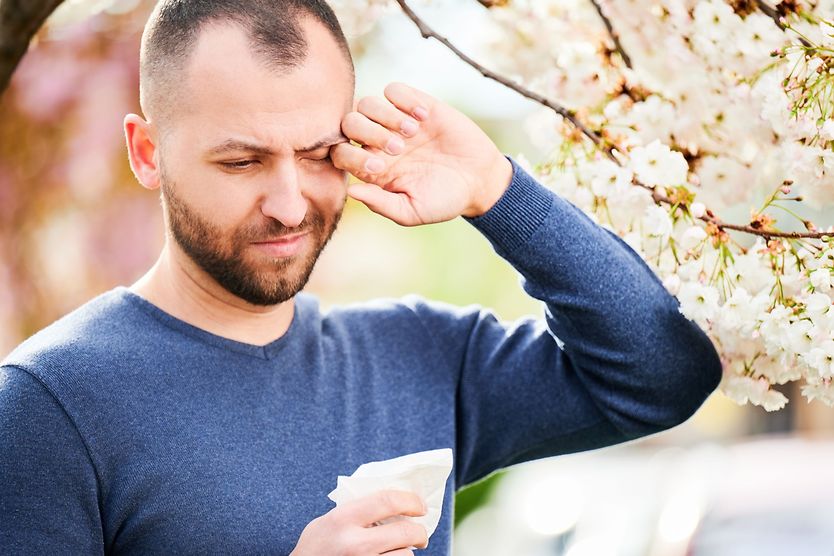
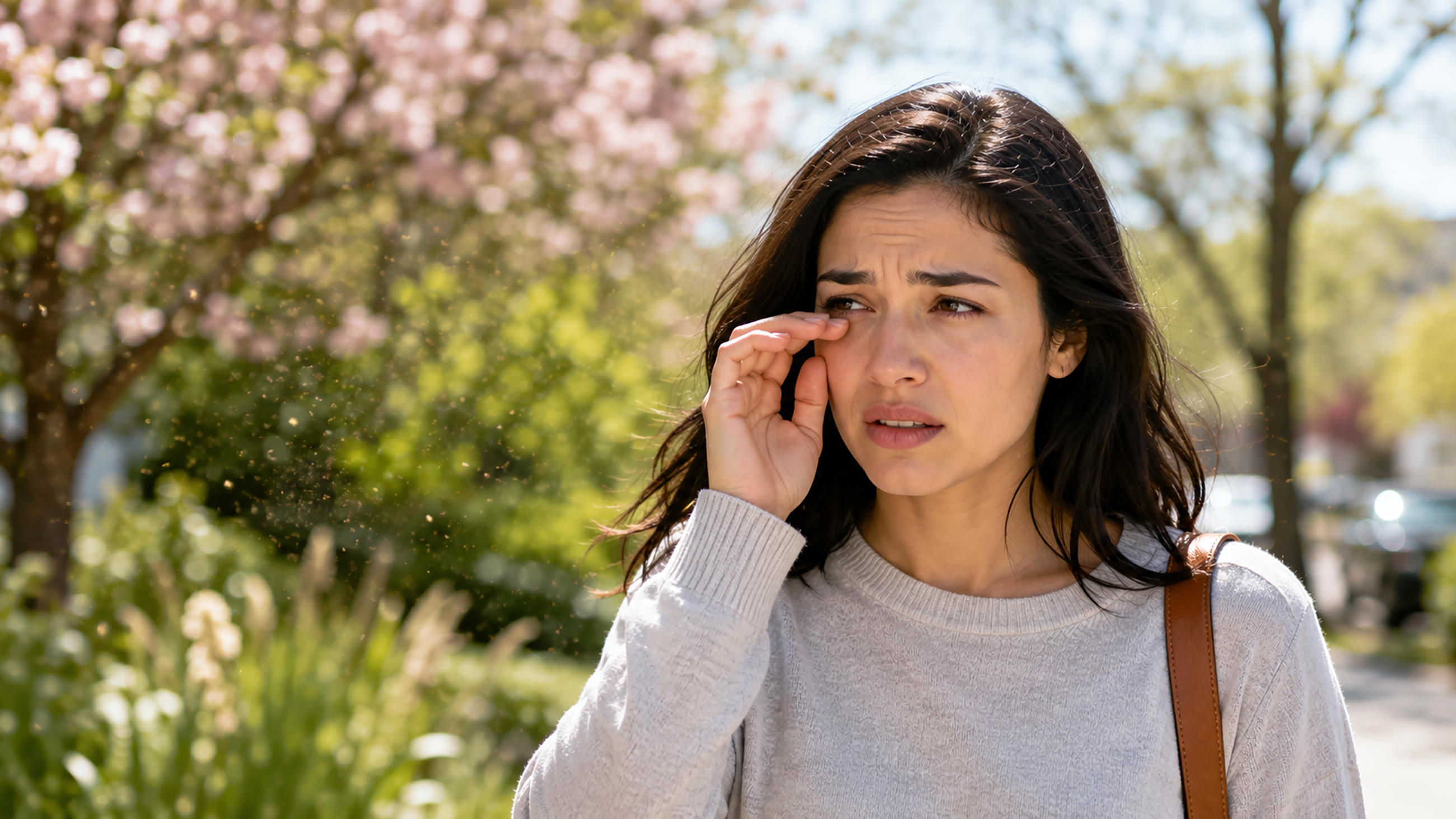
Red, itchy eyes are often blamed on "pink eye," but not every case is caused by an infection. If the itching is intense, affects both eyes, and seems to flare during allergy season or after exposure to pets, dust or pollen, allergies could be the more likely cause.
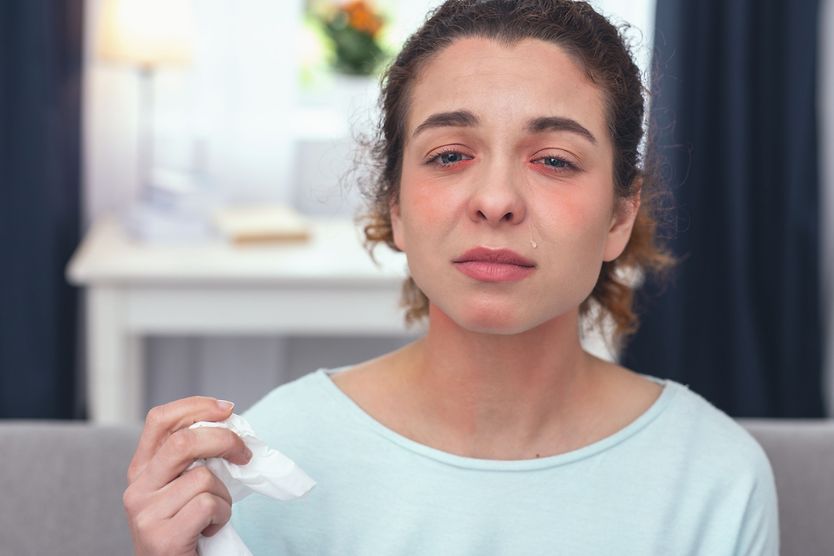
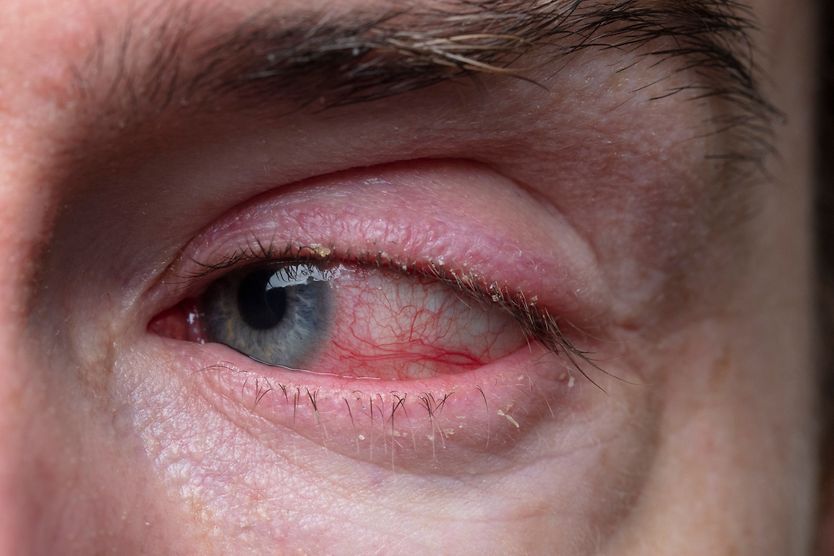
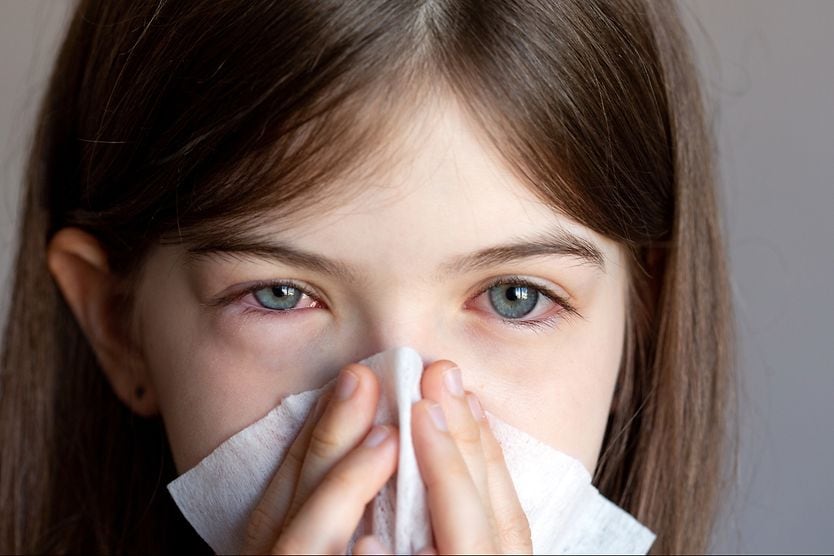
Some people with allergic conjunctivitis (eye allergies) also experience nasal symptoms at the same time, such as sneezing and a congested or runny nose. Allergic conjunctivitis often affects both eyes, usually causing:
- Itching
- Watering
- Redness
- Eyelid swelling
Unlike viral or bacterial conjunctivitis, allergic conjunctivitis is not an infection and is not contagious. While the different types of conjunctivitis share symptoms such as redness and watering, intense itching is especially common in allergic conjunctivitis.
Because different types of conjunctivitis can look similar, an eye exam may be needed to distinguish an allergy from other types.
How does allergic conjunctivitis develop?
Allergic conjunctivitis is inflammation of the conjunctiva, the thin membrane that covers the white part of the eye and lines the inside of the eyelids. It develops when the eyes react to an allergen (something that triggers an allergic reaction), such as pollen.
An allergic reaction develops in stages
The reaction begins when the immune system treats a normally harmless substance (such as pollen) as an allergen and goes into overdrive.
- On the first encounter with the allergen, the body produces an antibody (a protein that identifies and helps fight unwanted substances) called immunoglobulin E (IgE).
- IgE antibodies then bind to a type of immune cell called mast cells, priming them for future exposure.
- When the allergen is encountered again, mast cells are activated and release a compound called histamine.
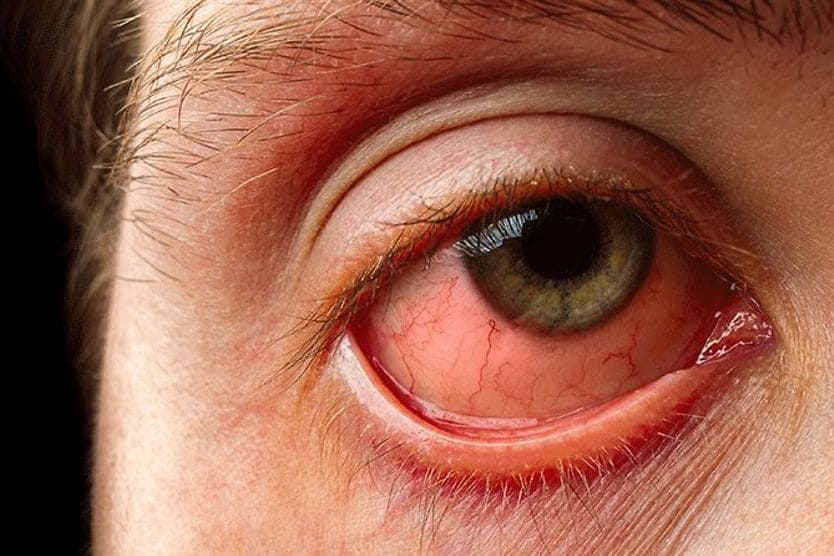
- Histamine causes blood vessels in the conjunctiva to widen, making the eyes look red. It also contributes to familiar allergy symptoms such as itching and swelling.
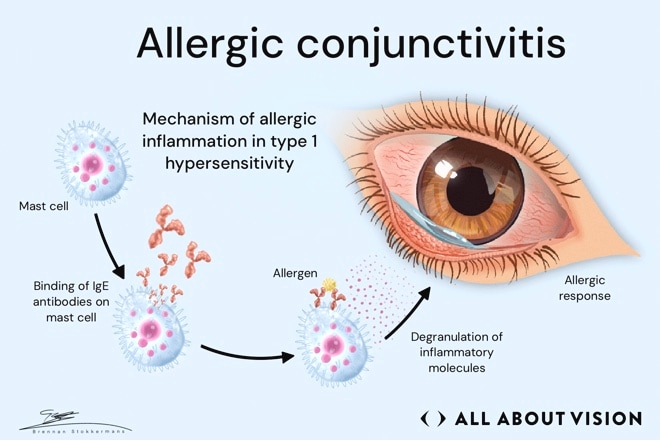
The reaction can occur in two phases:
- Immediate phase – Within minutes, histamine can bring on intense itching, tearing and redness.
- Delayed phase – Several hours later (up to 24 hours later), ongoing inflammation can prolong the irritation.
Antihistamine eye drops block the effects of histamine, while mast cell stabilizers help prevent mast cells from releasing histamine and other inflammatory substances.
Types of allergic conjunctivitis
Not all cases of allergic conjunctivitis follow the same pattern. For most people, symptoms fall into one of two common forms:
- Seasonal allergic conjunctivitis (SAC)
- Perennial allergic conjunctivitis (PAC)
Although they cause many of the same symptoms, they differ mainly in the allergens that trigger them and when exposure occurs.
Seasonal allergic conjunctivitis
Seasonal eye allergies flare up at particular times of year, most commonly spring and summer. They are typically associated with airborne triggers such as:
- Tree pollen
- Grass pollen
- Weed pollen
- Mold spores
People with seasonal eye allergies may also have sneezing, nasal itching or a runny nose. Often, as pollen levels rise or outdoor time increases, so do the symptoms.
Perennial allergic conjunctivitis
Unlike seasonal allergies, perennial allergic conjunctivitis isn't limited to a particular time of year. Symptoms can come and go whenever you're exposed to indoor allergens such as dust mites or pet dander, making flare-ups possible in any season.
These year-round allergies produce symptoms continuously and are usually driven by indoor triggers such as:
- Dust mites
- Pet dander
- Feathers
- Mold
When allergies are more severe
Most people with allergic conjunctivitis have either the seasonal or perennial form. Less commonly, more severe allergic eye diseases can develop.
Unlike the seasonal and perennial forms, these conditions can affect the cornea (the clear front surface of the eye) and increase the risk of vision problems. Because of this, they require closer monitoring and specialized treatment.
These include:
- Vernal keratoconjunctivitis (VKC) – A rare condition that occurs mainly in children and young adults. It is thought to result from a combination of allergic and environmental factors. It affects boys more often than girls and is more common in warm, dry climates.
- Atopic keratoconjunctivitis (AKC) – A chronic allergic eye disease associated with atopic dermatitis (eczema) and other allergic conditions. It is also linked with keratoconus (a thinning and bulging of the cornea), earlier cataract formation and a higher risk of herpes simplex eye infections.
Contact lenses and giant papillary conjunctivitis
Contact lens wear can cause another type of conjunctival inflammation that may feel a lot like an eye allergy. Giant papillary conjunctivitis (GPC) is most often associated with contact lens wear rather than a typical allergic reaction.
Repeated irritation from a contact lens, along with deposits that can build up on the lens surface, can contribute to inflammation and the development of large raised bumps, called papillae, beneath the upper eyelid.
Allergies can make GPC symptoms worse, which is one reason the two conditions can be difficult to tell apart.
Signs and symptoms of GPC can include:
- Increasing discomfort or itching
- White, stringy discharge
- A gritty or foreign-body sensation
- Contact lenses that move more than usual or become uncomfortable
- Reduced tolerance for contact lens wear
- Large raised bumps (papillae) beneath the upper eyelid
Symptoms of allergic conjunctivitis
Red, watery eyes can happen for many reasons, but intense itching is one of the strongest clues that allergies may be involved.
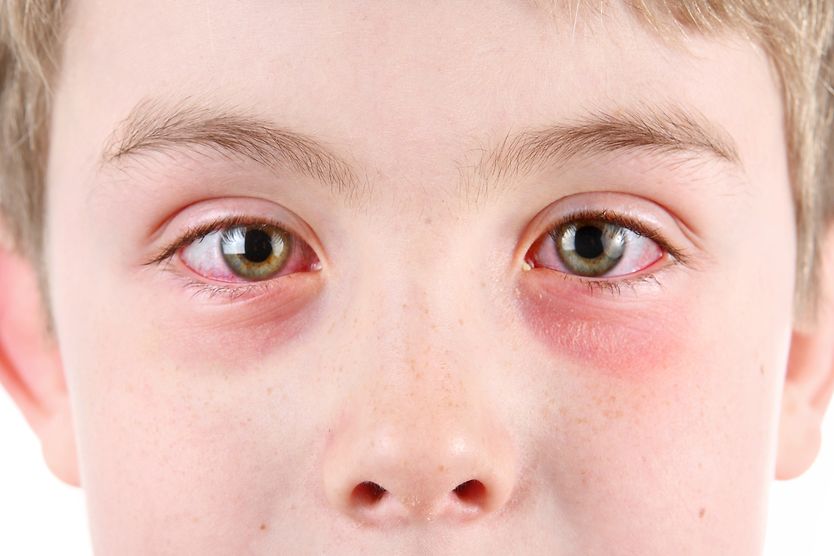
Symptoms usually affect both eyes, although their severity can vary widely. One person may notice mild itching and watering, while another may have severe redness, persistent itching and swollen eyelids.
Common symptoms of allergic conjunctivitis include:
- Itching
- Red or pink eyes
- Watery eyes
- Swollen or puffy eyelids
- Swelling of the clear membrane over the white part of the eye (chemosis)
- Burning or a gritty sensation
- Sensitivity to light in some cases
- Watery or white, stringy mucus discharge
What can the discharge tell you?
The type of discharge can help identify the cause of conjunctivitis. But because the symptoms of different types of conjunctivitis can overlap, discharge alone is not enough to make a diagnosis.
Eye allergies may produce watery tears or white, stringy mucus. Thick, pus-like discharge is more commonly associated with bacterial conjunctivitis.
Why rubbing your eyes can make things worse
When your eyes itch, the urge to rub them can be hard to resist. But it can make things worse. Rubbing stimulates mast cells to release more inflammatory substances, intensifying the allergic response and prolonging the irritation.
So what can you do instead?
Reach for a cool compress to soothe the itching and swelling or use artificial tears to help rinse allergens from the eye's surface and ease discomfort.
Causes
What triggers eye allergies often depends on where you are and what's around you. For some people, symptoms appear only during pollen season. For others, they can flare throughout the year due to dust, mold or other allergies.
Environmental irritants
Not every trigger is an allergen. Several environmental irritants can produce or worsen symptoms by irritating the surface of the eye, making existing allergies feel even more noticeable.
Although these exposures don't cause allergic conjunctivitis, they can make irritated eyes feel worse or produce symptoms that resemble an eye allergy.
Common irritants include:
- Air pollution and smoke – Smog, wildfire smoke, cigarette smoke and other airborne pollutants can irritate the surface of the eye.
- Wind and dry air – Wind can carry dust and pollen, while dry air may leave the eyes more susceptible to irritation.
- Foreign particles – Sand, dust, stray eyelashes and similar particles can irritate the conjunctiva.
- Cosmetics and skin care products – Mascara, eyeliner, eyeshadow, facial creams and lotions may irritate sensitive eyes or cause contact allergy around the eyelids.
- Chlorinated water – Pool chemicals may temporarily irritate the surface of the eye.
- Some eye drops and medications – Ingredients or preservatives in eye drops may sometimes cause irritation, contact dermatitis or hypersensitivity.
If your symptoms begin or worsen after starting a new eye medication, let your eye doctor know.
Risk factors
Some people are simply more likely to develop allergic conjunctivitis than others.
Your risk is higher if you have:
- Hay fever (allergic rhinitis)
- Asthma
- Eczema (atopic dermatitis)
- A family history of allergies
- Frequent exposure to environmental allergens
People with atopic conditions often experience more than one type of allergy because of a shared tendency for the immune system to overreact to normally harmless substances. Genetics contribute to this susceptibility, but environmental exposures also play an important role.
Diagnosis and tests
The pattern of your symptoms can be a first step to understanding what’s causing them. At your eye exam, the eye doctor will want to know whether:
- Symptoms appear during pollen season
- Symptoms appear after exposure to pets or other possible allergens
- Both eyes are affected
- Sneezing, a runny nose or other allergy symptoms occur at the same time
Itching is the symptom that points most reliably to allergy. Redness and watering happen with nearly every cause of a red eye, but significant itching is uncommon without an allergic component.
Viral or bacterial conjunctivitis and other conditions affecting the eye's surface can sometimes cause similar redness, watering or irritation, so an eye exam is needed to distinguish an allergy from another cause. As an example, dry eye and eye allergy can occur together frequently. Treating only one of them can leave symptoms and signs unresolved.
You probably won't need an allergy test just because your eyes are itchy. Testing may be useful when the trigger remains unclear or identifying a specific allergen could help you avoid it or guide broader allergy treatment.
Treatment options for allergic conjunctivitis
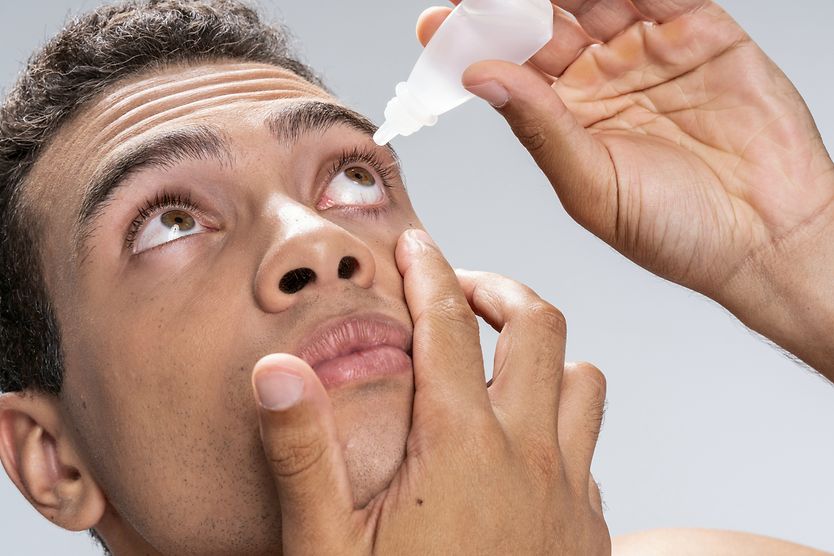
For mild eye allergies, artificial tears or over-the-counter allergy drops may be enough to provide relief. More severe symptoms may need medicated eye drops or treatment from an eye doctor.
Eye allergy treatment starts with two goals:
- Limiting contact with the allergen
- Calming the reaction
Home remedies and lifestyle changes
If you know what triggers your eye allergies, the most effective strategy is to reduce exposure.
- Watch pollen levels – Limit outdoor exposure when counts are high.
- Wear glasses or sunglasses outdoors – Shield your eyes from airborne allergens.
- Wash your face and hair – Remove allergens after spending time outdoors.
- Wash clothing and bedding regularly – Decrease household allergens.
- Reduce indoor dust – Use HEPA (high-efficiency particulate air) filter air purifiers and vacuums.
- Keep pets out of the bedroom – Reduce pet dander if it triggers your symptoms.
- Cool irritated eyes – Use a cold compress.
- Use artificial tears – Wash away the allergens. Keeping the bottle in the refrigerator adds a cooling effect that could ease your itchy eyes.
- Avoid rubbing your eyes – Prevent making the itching worse.
If contact lenses make your eyes more uncomfortable during an allergy flare-up, you may need to leave them out until symptoms improve. Follow your eye doctor’s instructions for cleaning and replacing your contact lenses and case.
As an alternative, switching to daily disposable lenses removes the deposit buildup that may collect on reused lenses and eliminates contact with lens care solutions altogether — both of which can add to surface irritation during allergy season. Ask your eye doctor whether a change in lens type or replacement schedule makes sense for you.
Over-the-counter treatments
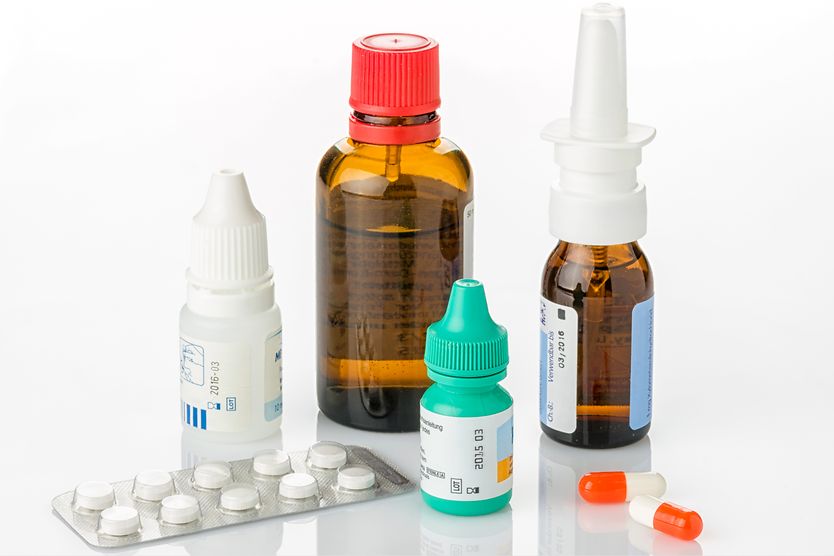
When lifestyle changes aren’t enough, over-the-counter allergy medication may help calm the allergic response. This may include:
- Antihistamine eye drops – Block the effects of histamine and reduce itching.
- Antihistamine eye drop/mast cell stabilizer – Combine an antihistamine with a mast cell stabilizer to help prevent the allergic response from continuing.
- Decongestant eye drops – Temporarily make red eyes look clearer by narrowing blood vessels, but may cause rebound redness and irritation and should not be used for more than a few days.
- Oral antihistamines – Treat other allergy symptoms such as sneezing or a runny nose, as well as eye allergies.
- Nonsteroidal anti-inflammatory drugs (NSAIDs) – Help relieve discomfort.
- Ectoine eye drops – Use ectoine, a natural molecule derived from bacteria, that reduces irritation and inflammation in the eyes.
Prescription medications
When eye allergies are persistent or severe, over-the-counter treatments may not provide enough relief. Your eye doctor may recommend prescription eye drops to better control your symptoms.
For severe inflammation, your eye doctor may prescribe corticosteroid eye drops for a limited period. These medications can be effective, but they require careful monitoring because prolonged or inappropriate use can increase the risk of elevated eye pressure, glaucoma, cataracts and eye infections.
For severe or chronic allergic eye disease, eye doctors could reach for anti-inflammatory drops rather than extending a course of corticosteroids. Cyclosporine eye drops may calm the immune cells driving the inflammation instead of blocking histamine, and are U.S. Food and Drug Administration (FDA)-approved in the United States to treat vernal keratoconjunctivitis. Since they do not carry the eye pressure and cataract risks associated with steroids, they can be used for longer stretches under an eye doctor's supervision.
For people with severe environmental allergies, allergen immunotherapy may be recommended by an allergist as a broader allergy treatment plan. Whether given as injections or as tablets that dissolve under the tongue, immunotherapy gradually reduces how strongly the immune system responds to specific allergens.
Allergic conjunctivitis in children
Eye allergies are common in childhood, affecting about 1 in 5 children. They are also more likely to occur in children with other allergic conditions, such as asthma and eczema.
Because children may not always describe what their eyes are feeling, look for signs such as:
- Frequent eye rubbing
- Repeated blinking
- Squeezing the eyes shut
A few strategies can help relieve symptoms:
- Reducing exposure to known allergy triggers
- Using artificial tears to help rinse allergens from the eyes
- Talking with an eye doctor or pediatrician about allergy medication
When to see a doctor
For most people, eye allergies are manageable with lifestyle changes or over-the-counter treatments.
Symptoms that are severe or persist should be evaluated by an eye doctor. These may include:
- Significant eye pain
- Decreased vision
- Severe sensitivity to light
- Pronounced swelling
- Unusual discharge
Managing allergic conjunctivitis for better eye health
For most people, allergic conjunctivitis is manageable once you identify the triggers and find an effective treatment.
If symptoms persist, worsen or are accompanied by significant pain or vision changes, an optometrist or ophthalmologist can help determine the cause and recommend the most appropriate course of treatment.