Guide to buying low vision magnifiers

What are low vision magnifiers?
Low vision describes a type of visual impairment that can’t be fixed with glasses, contact lenses or other treatment. Low vision makes it hard to see clearly, which can make daily activities difficult. But there are a variety of low vision aids that can help.
Low vision can be congenital (from birth) or from a disease or injury. Having low vision means you have decreased visual acuity (clarity of vision) to the point of it affecting activities of daily living.
Low vision aids and assistive technology can help people with low vision. These aids can be optical (they use magnifying lenses to help you see) or non-optical (they do not use magnifying lenses). Optical aids like low vision magnifiers come in a range of options, including spectacles, handheld magnifiers and telescopes. Some are illuminated and some are not.
These aids can allow people with low vision to use their sight more effectively, helping with daily tasks and leading to greater independence.
READ FURTHER: Low vision aids for reading and daily activities
Magnifiers can also help other people with impaired vision
Magnifiers for low vision can also help people who have vision problems from other conditions. These conditions could include:
- Diabetic retinopathy – Damage to the retina (the tissue at the back of the eye that senses light). Diabetic retinopathy is when this damage is from leaking blood vessels as a complication of diabetes.
- Macular degeneration – Damage to the macula (the center of the retina).
- Glaucoma – Damage to the optic nerve (a nerve at the back of the eye that communicates with the brain).
- Retinitis pigmentosa – A group of inherited retinal diseases where cells in the retina deteriorate over time. It is caused by changes in certain genes that control cells in the retina. It can be syndromic (occurring with another syndrome) or nonsyndromic (occurring on its own).
- Stargardt disease – An inherited disease that affects the macula. It’s a type of juvenile macular dystrophy, which affects special cells in the macula called photoreceptors. It can develop in children or teenagers/young adults.
Sometimes, these conditions can cause visual impairment, even if it’s not specifically low vision. Visual impairment describes a range of visual functions, and even people who have an impairment but not low vision can benefit from a low vision aid or magnifier.
Types of magnifiers for people with impaired or low vision
Magnifiers are devices that make things look bigger. Typically, they use lenses or cameras. Some are stationary and meant to be used for longer stretches of time. Other magnifiers for the vision impaired are easy to carry, so you can use them whenever you need to.
Handheld magnifiers
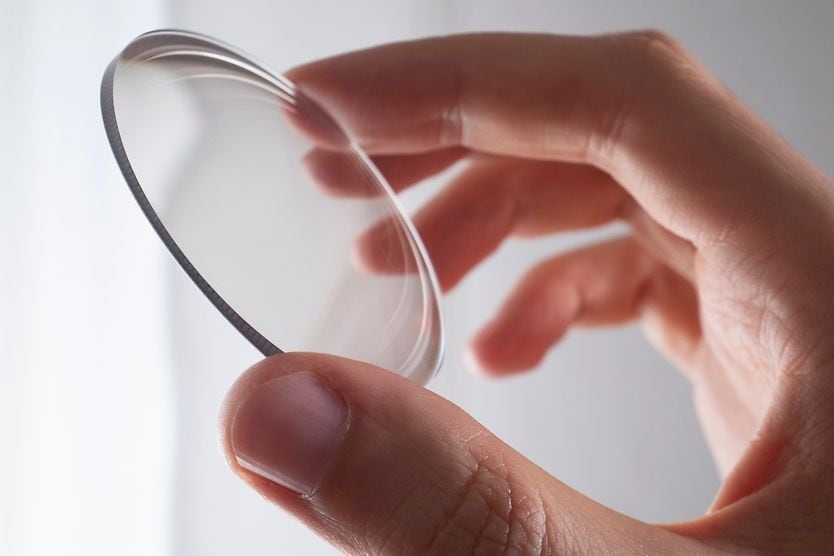
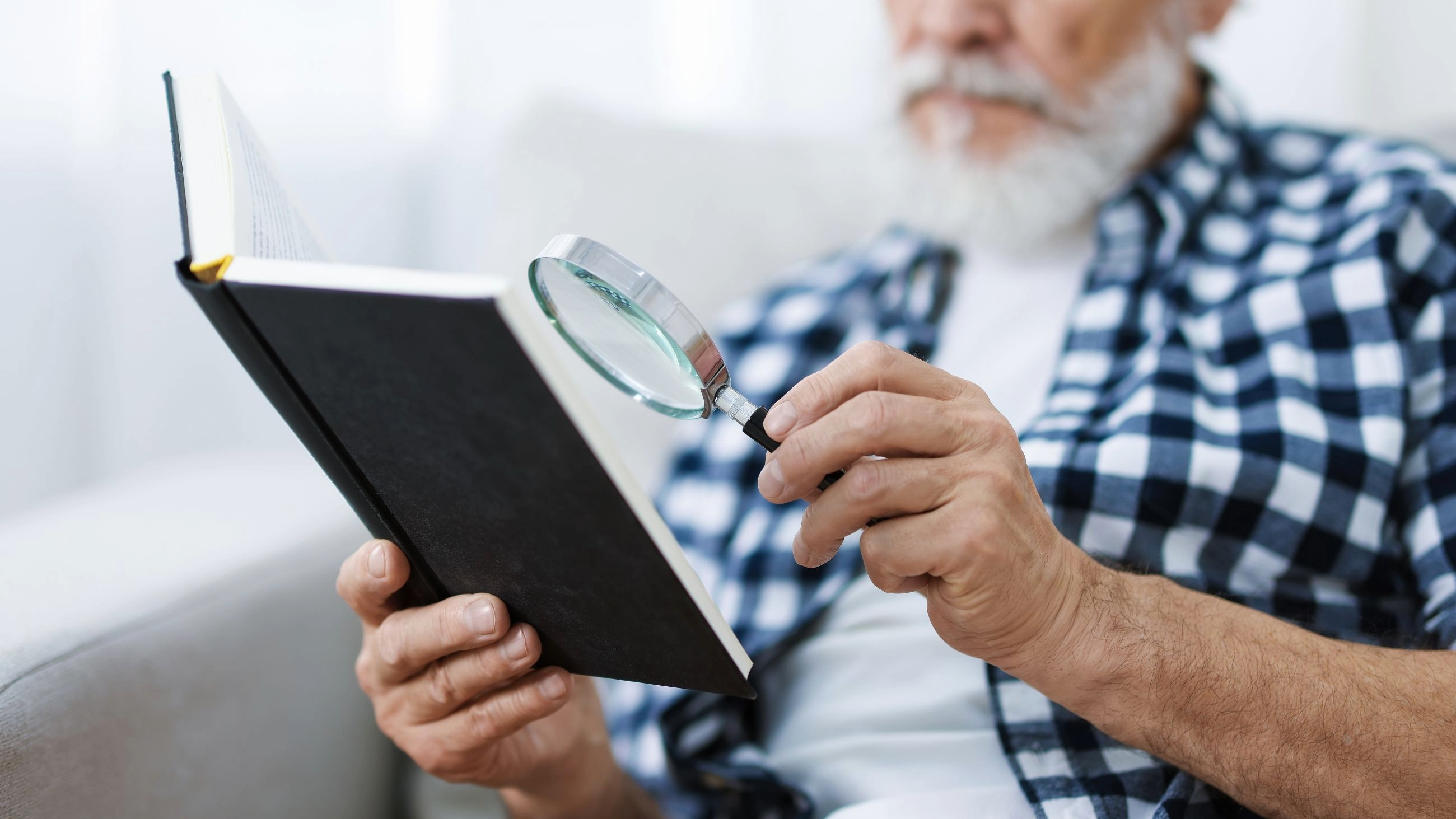
A handheld magnifier lets you hold the lens over or away from an object so you can see it better. These can be portable (pocket-sized) for ease of use. They come in a range of magnification powers (the higher the power, the smaller the lens will be). Some even have an accompanying light.
Telescopes or binoculars are examples of handheld magnifiers. A portable, handheld telescope can make it easier for people with low vision to see or read things that are far away (like signs or a theater performance). If the magnification is for use in just one eye, this is called a monocular. Many monoculars have adjustable focuses, meaning they can be used for both near and distant tasks. They are like traditional binoculars, but just for one eye.
Stand magnifiers
Stand magnifiers do not have to be held. These magnifiers attach to a holder you can set above a page or item to magnify it. The holder is fixed, so the stand is the right distance for magnification. Many also come with built-in lights.
Some stand magnifiers are portable, while others can be used on a desk. They’re good as a reading aid or for other longer-lasting activities, like writing or crafting. They’re also particularly helpful for people who have trouble holding things steady.
Electronic video magnifiers
Electronic video magnifiers are also sometimes known as closed-circuit televisions (CCTVs). With this electronic video aid, the material is put under a camera. The camera connects to a monitor that shows a larger version of the text for easier reading.
Video magnifiers can be put on a desk, handheld or be wearable (like a video headset). Customizable viewing options can include:
- Contrast/brightness
- Black letters on a white background (or white letters on a black background) for easier reading
- Color options (for reading material where color is important, like maps)
- Zoom lenses
- Optical character recognition (OCR)
Wearable magnifiers and smart glasses
Many low vision aids can be worn, like a pair of traditional eyeglasses. They’re mostly used for activities where you need to be hands-free, like sewing or crafting. Wearable magnifiers include:
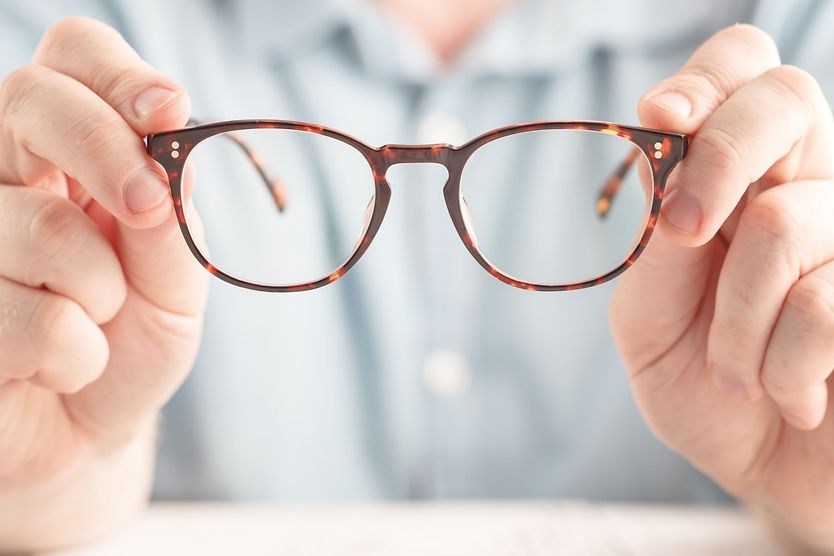
- Magnifying eyeglasses – These devices usually have much higher magnification than typical reading glasses. They may also get darker outside or reduce glare.
- Spectacle microscopes – These devices offer high magnification power in one eye (like the tool a jeweler might use).
Head-mounted digital glasses are a relatively new option for low vision. These have special built-in software to help low vision with features like magnification, contrast and brightness.
READ MORE: Low vision aids: How new tech helps people with low vision
Smartphone and tablet magnifier apps
Smartphones have a lot of abilities to help with daily tasks. The camera and screen allow you to zoom in on material and images for magnification. Camera-based apps can even help recognize objects with features like text recognition and text-to-speech, providing non-optical aids for daily tasks.
Besides magnification apps, apps can also perform other tasks, like:
- Enhance digital images
- Help identify objects or landmarks, like doors or even light sources and windows
- Connect to someone who may be able to help you navigate
Smartphones also keep you connected — if you need them, family and friends can be just a call or text message away. The value of smartphones cannot be understated. They are powerful tools that are often dramatically underutilized.
SEE ALSO: Low vision aids for computer users
How to choose the right magnifier
Many low vision aids are meant for specific tasks, so it’s possible you may need multiple devices. Low vision specialists can help you decide what kinds of aids you need. This can be determined by factors, such as:
- Whether your low vision involves peripheral (side) or central vision loss
- What kinds of tasks you need it for
- How much time you plan to spend on each task
Whether you will need to see close up or far away will also affect the type of low vision you need. A telescope is good for seeing objects that are farther away, like a street sign. But a stand magnifier or CCTV may be needed for reading or writing at home.
Non-electronic aids tend to be more affordable and work well for quick tasks, like reading a label on a medication bottle. Electronic aids are generally better for more extended reading since they offer adjustable magnification, a wider field of view on screen and contrast enhancement.
Both types are often prescribed for people with central vision loss. Peripheral vision impairment is typically managed with a different category of devices, since magnification can narrow the visual field further.
There are a lot of options, so consulting a low vision specialist is important. They’ll conduct a comprehensive low vision exam and help you find the most helpful aids. It will be focused on your visual needs for your specific tasks.
Tips for using low vision magnifiers
Make sure your lighting is good — if your magnifier doesn’t have a built-in light, an adjustable lamp aimed directly at the task can help. If using the magnifier with one eye, use it with the eye that has better vision, if possible.
To get items into focus, start by holding the magnifier close instead of at arm’s length. Move the object closer until focus is achieved. Any movements should be slow and even.
The “steady eye strategy” can be helpful. Once you’ve set a comfortable viewing position, with the first word clear, keep the magnifier steady — move the object instead. Your eyes and head should also remain steady.
Some devices might need additional training to help you use them. A low vision specialist or your vision team can help with this.
SEE RELATED: Low vision: 10 coping strategies for people of all ages
Caring for your magnifier
An important task to do for your magnifier is to keep it clean. The lens of a magnifier should be cleaned with a special lens cloth (microfiber is generally considered best). Although some special lens cleaners may be available, you can also use a cloth that’s been wetted with water and soap. Make sure anything you dry it with is soft and lint-free.
Electronic magnifiers should be turned off when not being used. Careful handling will help keep the camera from getting scratched or otherwise harmed. Storing it in a case or pouch when you’re not using it will help protect it, too.
If you have an electronic magnifier that needs batteries, make sure you’re taking care of them and charging them when needed — but be careful not to overcharge, since this could affect the lifespan of the battery. Make sure you always have spares and can replace batteries as soon as you notice your device is losing power.
Where to get help and support
Signs you have low vision may include:
- You find it hard to recognize faces.
- Reading is difficult.
- Tasks like cooking and fixing things are difficult.
- You find it hard to see, even when the lights are on, or they feel dimmer than normal.
If any of these daily tasks become a struggle, even with glasses or contacts, you should consult an eye doctor for an assessment. Low vision specialists can help you get what you need and even train you on how to use a specific device.
There are many other resources for using magnifiers and other aids. Local societies dedicated to helping the visually impaired may have aids for testing, and some retailers can provide a demonstration or other support if you need it.
READ NEXT: Resources for the visually impaired