We’re here to give you valuable insights into reading glasses — what they are, when you need them, how to pick the right pair for your eyes and face, what the alternatives to reading glasses are, and what some of the common myths are about reading glasses.
What are reading glasses?
Reading glasses, available in over-the-counter or prescription versions, improve the ability to read something up close, such as a book or a computer screen.
Over-the-counter reading glasses — which can be purchased at drugstores, department stores and other general retailers without a prescription — are designed for short-term wear, and are best suited for people who have the same lens power, or strength, in each eye and don’t have astigmatism, a common condition that causes blurred vision.
The lens power of over-the-counter reading glasses typically ranges from +1 to +4 diopters.
Over-the-counter reading glasses are an acceptable option for people who have good distance vision.
However, if you experience eye strain or double vision, or need a different reading power in each eye, then it may be wise to explore prescription reading glasses.
SEE RELATED: Reader sunglasses: Who needs them
When do you need reading glasses?
Just about anyone in their 40s and beyond will, at some point, need reading glasses (or another type of near-vision correction).
Reading glasses help compensate for presbyopia, the normal age-related loss of the ability to focus on up-close objects, such as words in a book or a text message on a smartphone.
You typically realize the need for reading glasses if you encounter trouble reading small print when you’re tired and when lighting in the room is dim, or if you find that it’s easier to read something when you pull it a little farther away from your face.
How do I pick the right reading glasses for me?
Before selecting your reading glasses — even the over-the-counter kind — visit with your eye doctor. Experts recommend a yearly comprehensive eye exam to check for conditions like glaucoma, cataracts and age-related macular degeneration (AMD), even after you’ve gotten reading glasses.
For computer work, most people can get by with low-power reading glasses (+1.25 to +1.5 diopters). For reading things that are closer, stronger glasses might be needed (+2.0 to +2.5 diopters). As you age, the power you need will likely increase.
Some people require one lens power for general up-close reading and another power for extended reading like computer use — meaning that just one pair of reading glasses might not do the trick.
Headaches, eye strain and even nausea can result from putting on reading glasses that don’t have the proper lens power.
Once you’ve determined the right power, then focus on glasses with high-quality lenses and sturdy frames.
Lower-quality, less expensive reading glasses may be made with lower-quality lens materials, which can cause vision distortion, color distortion or glare. This can contribute to difficulty focusing when reading.
When shopping for over-the-counter reading glasses at a store, consider:
- Grabbing a greeting card from the greeting card aisle.
- Heading to the rack where reading glasses are sold.
- Trying on glasses as you’re holding the greeting card at a comfortable distance.
- Selecting the glasses that let you clearly and easily see the greeting card.
- Making an appointment with your eye doctor if you’re unable to decide on a pair of reading glasses.
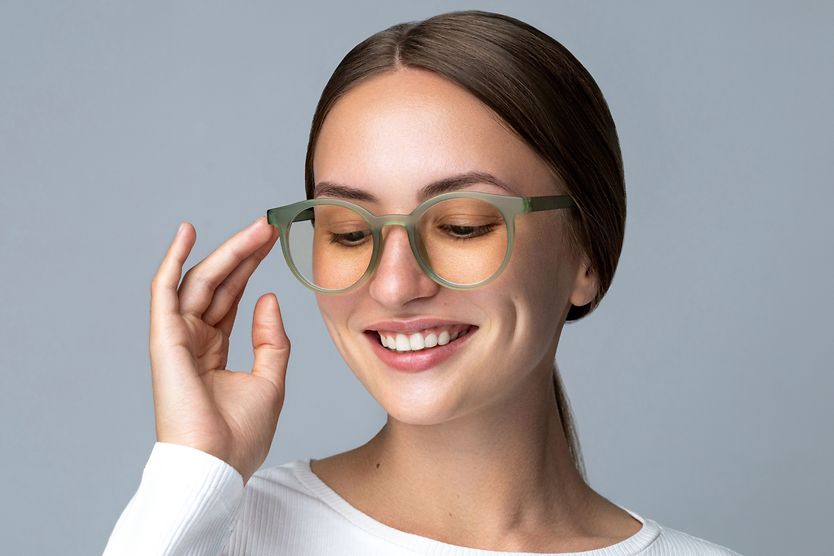
From a style perspective, consider choosing glasses that fit your face shape and your fashion sense.
You might prefer smaller, more traditional reading glasses, while someone else might opt for larger, chunky, outside-the-box frames.
You might even maintain a collection of glasses so you can switch your look whenever the mood strikes you.
If you’re torn about which glasses to buy, solicit an honest assessment — in person or via texted selfies — from a friend or loved one about whether the pairs you’re considering are flattering.
What are the alternatives to reading glasses?
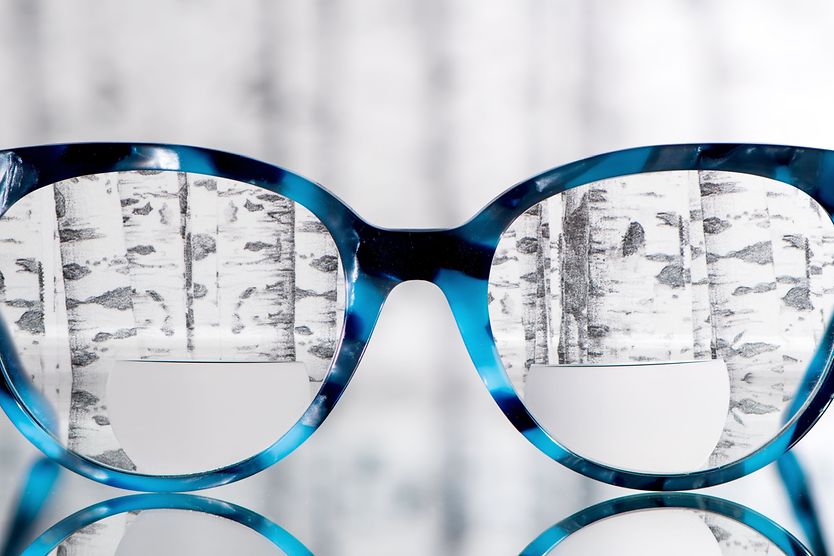
Among the alternatives to reading glasses are multifocal glasses, multifocal contact lenses and surgery (including monovision LASIK and refractive lens exchange).
Of course, you can simply try to wing it without reading glasses, but that puts you at risk of eye strain, which can trigger headaches, double vision and other issues.
What are some common myths about reading glasses?
One of the most common myths: Wearing reading glasses will cause your eyes to weaken. That’s not true.
Yet another myth: Undergoing cataract surgery will “fix” your eyes, meaning you can ditch your reading glasses. That may also not be true.
It’s important to note that you might have underlying vision issues that can’t be corrected with reading glasses.
And then there’s the notion that reading glasses make the wearer look old. Eye care professionals dismiss that as an old way of looking at reading glasses, particularly considering that more than 150 million Americans have a refractive error that may require vision correction.