Are expensive sunglasses actually better than cheap ones?
Expensive sunglasses may look great, but aside from the price tag, is there really that much of a difference between designer sunglasses and that $5 pair at the souvenir shop?
As long as they both provide 100% UV protection, it’s a personal decision you will have to make.
You face a tougher “more affordable vs. pricey” sunglasses question if you’re wearing prescription glasses to correct your vision.
Before you splurge on a new designer style or grab some cheap sunglasses while you’re in line at the checkout counter, let’s take a look at the differences between cheap and expensive sunglasses so you can make an informed decision.
EXPLORE YOUR SUNGLASSES OPTIONS: Shop for sunglasses at an optical store near you or at an online eyewear retailer.
Do cheap sunglasses protect your eyes?
Whether you’re on a budget, you don’t require a prescription, or you’re worried about misplacing or breaking expensive sunglasses, a cheaper option is a choice you will have to decide for yourself.
But do cheap sunglasses actually block harmful ultraviolet rays?
Actually, yes… and maybe not. The FDA tests sunglasses to make sure they block UVA (400–320nm) and UVB (320–290nm) light, and, generally, less expensive sunglasses do effectively block both UVA and UVB light.
However...
The FDA test results are only applicable to light entering through the front of the lenses. Sunlight still manages to hit the eyes from other angles, so more than just that promise of UV protection needs to be taken into consideration.
To effectively protect those baby blues (or browns, greens, etc.) and the sensitive skin surrounding them, the size of your new sunglasses is important.
Plus, the lenses may need an anti-reflective (AR) coating to further shield your eyes from reflections off the back and front of your lenses. Most cheaper sunglasses don’t include this coating.
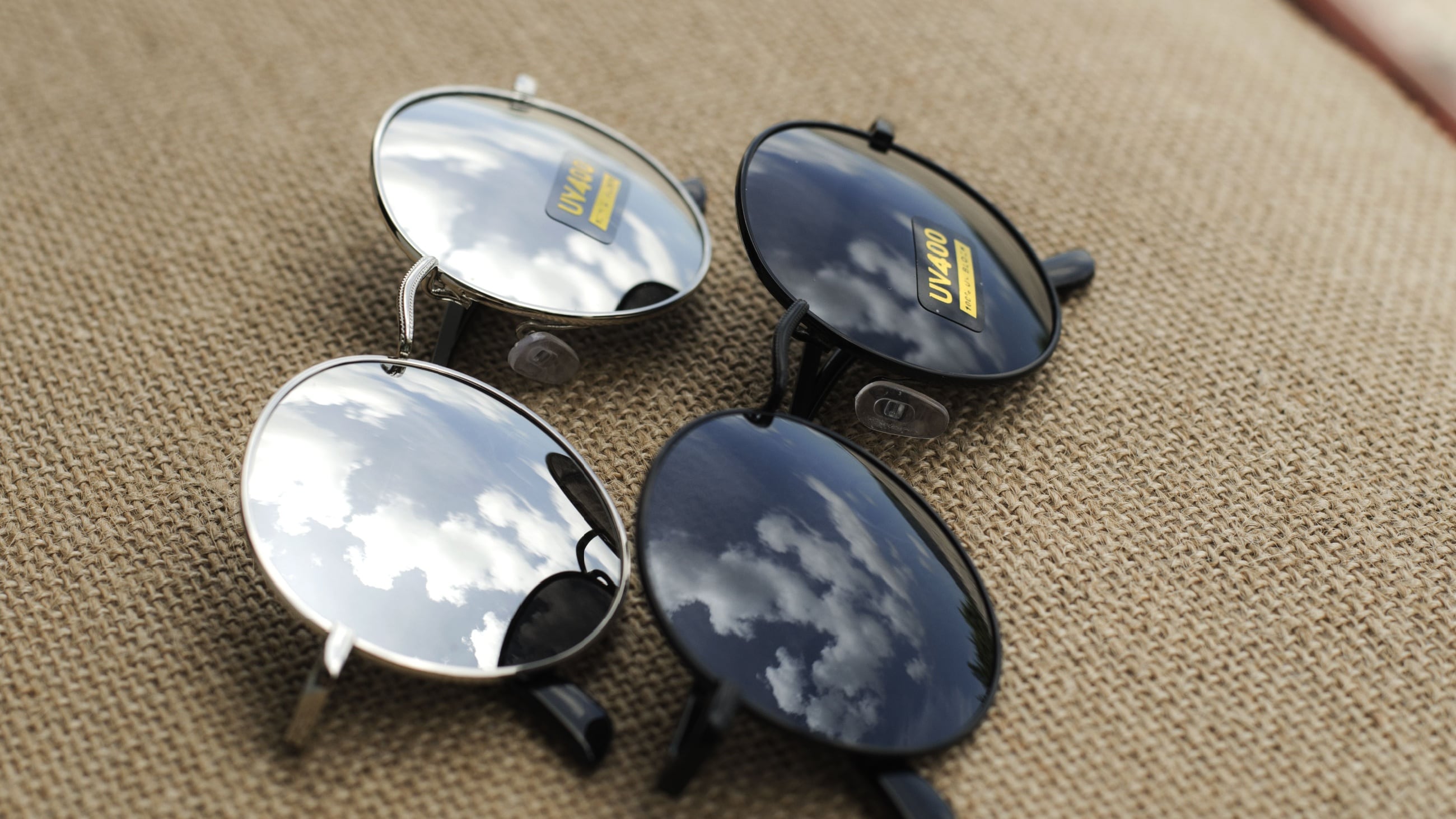
At the end of the day, some UV protection is better than none. So, if you’re looking for some backup sunglasses or an emergency pair, look for a label that says “100% protection against both UVA and UVB” or “100% protection against UV 400.”
If you're not sure how much UV protection your existing lenses provide, take them to an eye doctor or optical store near you to be analyzed.
Are designer sunglasses better?
When you’re paying for fashionable designer sunglasses, you’re expecting to get high-quality frames and state-of-the-art lenses, right?
Not always.
It’s true that expensive sunglasses tend to have more durable frames, better design and a more comfortable fit. But they often offer the same shortcomings as cheaper sunwear.
The trouble is, the price of your fancy sunglasses isn’t always an indication of quality. And sometimes you’re simply paying for the designer name.
It’s up to you to ensure that those pricey sunglasses are also keeping your eyes safe. A true indication of high-quality sunglasses is the lenses and whether or not they offer adequate shade and UV protection.
To ensure your money is well spent, ask your sunwear provider to recommend sunglasses that feature impact-resistant frames and lenses with backside AR coating as well as adequate coverage.
Ensuring your sunglasses include this extra sun protection may raise the price tag, but it’s worth it to safeguard your vision.
Are polarized lenses worthwhile?
Chances are, if you’ve spent time shopping around for quality sunglasses, you’re aware of polarized lenses. But maybe you’re wondering just how effective they really are or if they’re right for you.
Polarized lenses have a special coating that filters reflected sunshine that otherwise intensifies glare and haze. This can help reduce eye strain, improve clarity and make outdoor activities safer and more comfortable for your eyes.
While these coated lenses may be a big advantage for driving and fishing, they’re not the ideal choice for all activities.
For example, the American Academy of Ophthalmology advises against wearing polarized lenses when viewing LCD (liquid crystal display) screens, such as car dashboard controls, ATMs, smartphones and watches. They’re also not ideal for all outdoor activities. Talk to an eye care professional if you’re unsure whether they’re right for you.
Photochromic lenses are another convenient option for keeping your eyes comfortable and shielded from the sun, and there are even photochromic polarized lenses. These lenses are clear (or nearly clear) indoors and darken (and polarize if that’s what you opt for) automatically when exposed to sunlight.
Also, keep in mind that UV protection, polarized and photochromic lenses are separate features, so make sure your sunwear includes both if you decide on polarized and/or photochromic sunwear.
Should you get prescription sunglasses?
If you’re dependent on corrective eyewear, opting for prescription sunglasses can be a great idea if you’re willing and able to spend the money. There are plenty of online options.
Wearing prescription sunglasses helps keep your vision both clear and protected, especially during everyday activities like driving, which can expose your vision to glare and UV rays.
Prescription sunglasses will almost always cost more than plano (non-corrective) sunglasses since you’ll be paying not only for the frames but also the specialty lenses. That, and the cheaper/less durable the frames, the less likely they’ll adequately house your corrective lenses.
And as with cheap, designer, polarized, photochromic and all other sunwear, be sure your prescription sunglass lenses include UV protection and anti-reflective coating, and they shield both your eyes and the skin around them.
Prescription and designer sunglasses don’t automatically mean better sunglasses. So do your research, ask questions and invest in your vision and eye health.
Bottom line: When it comes to sunglasses that offer optimal protection from the sun, your eye safety is worth considering the additional investment.
WANT EXPERT ADVICE ABOUT PRESCRIPTION SUNWEAR: Schedule an appointment with an eye doctor near you.