Finding the best prescription shooting glasses to protect your eyes
For gun enthusiasts who wear glasses, prescription shooting glasses serve double duty — protecting your eyes from harm while keeping your vision clear enough to ensure the sharpest aim possible. Because of the danger inherent in firearm use, safety is of the utmost importance.
Here are some essential factors to consider when selecting and purchasing protective eyewear for use at the range or in the field.
Why are prescription shooting safety glasses necessary?
Protective eyewear is a fundamental part of firearm safety. Not only is sharp vision essential to shooting, but firing a weapon also brings with it its own set of inherent dangers to the eyes. All of that is doubly true for people who usually wear glasses.
It’s not enough to use regular protective eyewear that would suffice for other purposes, such as at job sites or during sports. All prescription glasses for shooting range use must also meet ballistic safety eyewear standards, meaning they can take a hit without shattering into the eye.
Whenever someone is using a firearm — or even observing firearm use — eye and ear protection are crucial.
What are the most important factors when choosing protective eyewear for shooting?
Eye injury from recoil, debris and the elements is a significant concern for firearm users. This danger is present both inside the range and out in the field. Safety glasses aren’t bulletproof but are designed to be able to withstand ricochets and blowback.
Protection isn’t the only concern. Firearm users need to be able to see clearly to aim safely and effectively. Additionally, many shooting range owners and match organizers require a certain level of eye protection that participants will need to meet.
Shooting goggles over prescription glasses vs. safety glasses with prescription lenses
For firearm users who don’t wear glasses, including those who wear contact lenses, non-prescription safety glasses or goggles will suffice.
For those who rely on glasses to see clearly, there are a couple of options:
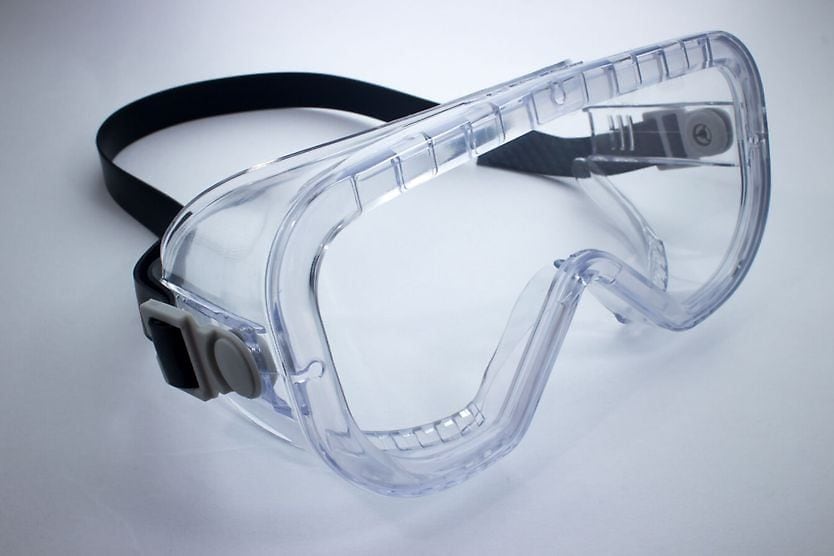
- Wearing safety goggles over prescription glasses. While some wearers find this to be uncomfortable, it’s the simplest solution. Look for shooting glasses that fit over prescription glasses; many manufacturers will note this in the product description.
- Wearing safety glasses or goggles made with your prescription.
Those who decide to wear shooting glasses over prescription glasses will need to ensure that the protective eyewear still fits well, even over the prescription glasses. This is why it’s usually helpful to look for glasses or goggles specifically made to fit over an existing prescription. If the protective gear doesn’t work well on top of the other glasses, it may cause issues with visibility or fail to offer the same protection level.
Bifocal lenses in shooting glasses
What about bifocal lens wearers? Prescription shooting bifocals exist to help shooters make the switch from aiming at targets out in the field to checking sights and equipment. After all, if a shooter can see the target in the field but can’t sight correctly, they might not have an optimum aim.
Firearm users who take advantage of bifocals in their everyday lives could almost always benefit from bifocals while shooting. You can get prescription safety glasses made with a bifocal segment, or choose ready-made bifocal safety glasses that come in common prescription strengths.
SEE RELATED: Special bifocals and trifocals for occupations and hobbies
Safety standards for shooting glasses
Ballistic safety glasses or goggles should meet American National Standards Institute (ANSI) safety standards. Rather than conforming to civilian standards, this type of safety eyewear will need to conform to military ballistic standards.
The ANSI has standards for safety glasses. All shooting glasses should follow ANSI Z87.1 high-impact standards, as well as standards for ballistic resistance. The military standard for ballistic eyewear is MIL-PRF-31013.
These standards include completely covering the eyes and extending how far they wrap around the wearer’s head. Safety eyewear is often made of polycarbonate because of its anti-shattering properties.
How to find the ideal prescription shooting glasses
The appropriate glasses depend on the wearer and the shooting activity. Here are a few features to consider when choosing prescription glasses for shooting:
Selecting the proper lenses
Safety goggles and glasses are usually made with polycarbonate lenses, which resist shattering to protect the eye. For shooting applications, this eyewear type is explicitly designed to protect against bounce-back and blowback that might occur when firing or from a hit target.
Lenses may also have:
- UV protection to shield against harmful rays while outdoors
- Lens polarization to reduce glare, especially from light reflecting off water or snow
- Photochromic properties to automatically darken in sunlight
- Anti-reflective coatings
Picking a tint
Different lens tints can help optimize vision for different shooting conditions and scenarios. Here are a few common choices:
- Yellow and orange are popular choices for filtering out haze and blue light.
- Gray lenses, often found in traditional sunglasses, can help block the bright sun without affecting how colors appear to the wearer.
- Pink lenses can help increase the visibility of orange targets, useful for skeet and trap shooters.
- Some hunters favor purple lenses for the additional contrast they offer against green backgrounds.
- Clear lenses are an excellent, all-purpose choice for maintaining color integrity and working well in low-light conditions.
Shaped with maximum visibility in mind
In many shooting scenarios, maintaining clear peripheral vision is important for safety and awareness. Wrap-around styles not only help keep that peripheral vision clear but also protect eyes from wind, debris and dust coming from the side in addition to the front.
Designed for safety and comfort
If safety glasses are uncomfortable, they’re less likely to be worn, especially when there’s no range safety officer around to ensure compliance. Because safety glasses are essential to wear whenever using a firearm, they should be comfortable with a good fit.
A few features that help ensure glasses stay on comfortably:
- Adjustable nose pads and silicone pads for comfort and fit
- Sweat bar for additional stability
- Padding to cushion the frames against the face
- Rounded edges that won’t cut into the wearer’s face
Prescription shooting glasses for women are often designed with a narrower fit and can help reduce sliding on the face. They can be an optimal choice for anyone who finds that other glasses don’t stay up properly.
Features that add resilience
Some shooting glasses are crafted with spring hinges designed to withstand jarring and impacts without breaking or bending. Additionally, the materials for shooting glasses are often constructed with durability in mind.
Titanium, durable plastic, polycarbonate and other rugged materials help ensure that protective eyewear holds up under the wear and tear of regular use, as well as being able to withstand accidental impact from recoil or debris.
Shooting glasses for professional sporting
At the top levels of competitive shooting, athletes are incredibly aware of how high-quality glasses can help them hit their target. As with other sports, optometrists work specifically to craft prescription safety glasses for shooting sports, especially at the highest competition levels.
How eye care providers design prescription shooting glasses
Local eye care providers can help glasses-wearers outfit themselves with appropriate safety eyewear for their chosen activity, whether that’s target shooting, range practice, trap shooting, hunting or any other activity involving firearms. For example, for prescription pistol shooting glasses, the focus will be on maintaining clear vision of the sight; for prescription trap shooting glasses and prescription skeet shooting glasses, targets in the distance must remain visible.
Eye care providers can adjust factors, including contrast, shooting distance and contrast-maximizing tints, to possibly help enhance shooting performance.
Those who engage in professional or competitive shooting sports will want to work closely with their eye care providers to find the right glasses — or look for a sports vision eye doctor who specializes in optimizing vision for such purposes.
Prescription shooting glasses with interchangeable lenses
Some non-prescription shooting glasses come with a set of interchangeable lenses, which allows the wearer to choose the tint for different shooting conditions or situations — for example, clear for low-light or yellow for a sunny day.
Interchangeable lens sets are generally a less expensive option than purchasing the same number of separate glasses with different tints. Additionally, they also allow the wearer to continually use the same frames, rather than adjusting to different frames all the time.
While it’s less common for prescription glasses to be sold in sets of interchangeable lenses, eye care providers can help pick out the appropriate tints and determine whether swapping lenses or using different sets of glasses would be most beneficial.
How to find prescription shooting glasses
Before people look for specific shooting safety glasses, they’ll need a valid prescription from an eye care provider. Comprehensive vision exams are essential for everyone, of course. However, people who enjoy the sport of shooting, who use firearms as part of their jobs or who practice firearms for self-defense have an extra incentive to stay on top of these annual eye examinations.
Optometrists and ophthalmologists can take an eyeglasses prescription and have shooting glasses made with that same prescription, including any necessary lens modifications. For wearers who need bifocals in common prescription strengths, ready-made options are available online and at retailers that carry safety gear
READ NEXT: Eye protection for sports: How to choose sports goggle