Progressive lenses: One design doesn’t fit all


There’s more than one type of progressive lens
Progressive lenses correct near, intermediate and distance vision. But they’re not a one-size-fits-all solution, and they may provide different visual experiences depending on the lens design.
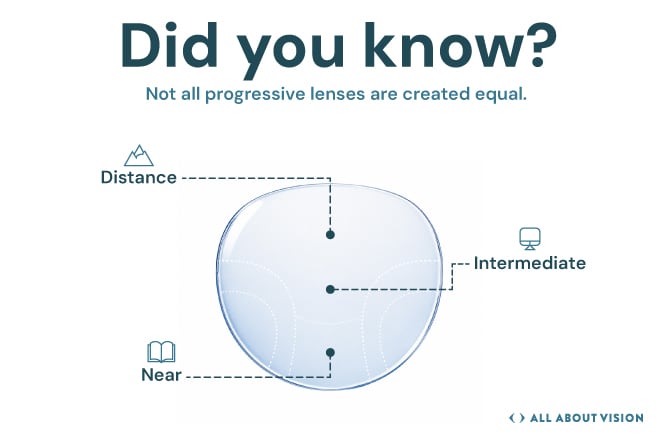
Progressive lenses — also called progressive addition lenses (PALs) — offer a smooth transition between optical zones without the visible lines of traditional bifocals and trifocals. They’re commonly used by adults with presbyopia, an age-related vision condition affecting the eye’s ability to focus on near objects.
There are two broad design categories of progressive lenses:
- Conventional lenses – Made from established, predesigned lens geometries. Optical zone placements are semi-standardized across the lenses.
- Custom (free-form) lenses – Allow for more complex lens options. These lenses are customized based on individual fitting measurements and eyeglass prescriptions.
Progressive lens types can be further broken down into specialty and task-specific designs, including:
Progressive lens type | Description | Designed for |
Computer (near-variable focus) progressive lenses | Feature a larger intermediate viewing area designed for arm’s-length tasks | Office-related activities, such as viewing a computer monitor or gaming |
Short-corridor lenses | Have a narrower vertical space between the distance and near vision zones | Smaller frame styles, into which some standard lenses may not fit |
Ground-view lenses | Feature a lower lens area optimized for downward viewing | Tasks that involve looking downward for extended periods, such as golfing and hiking |
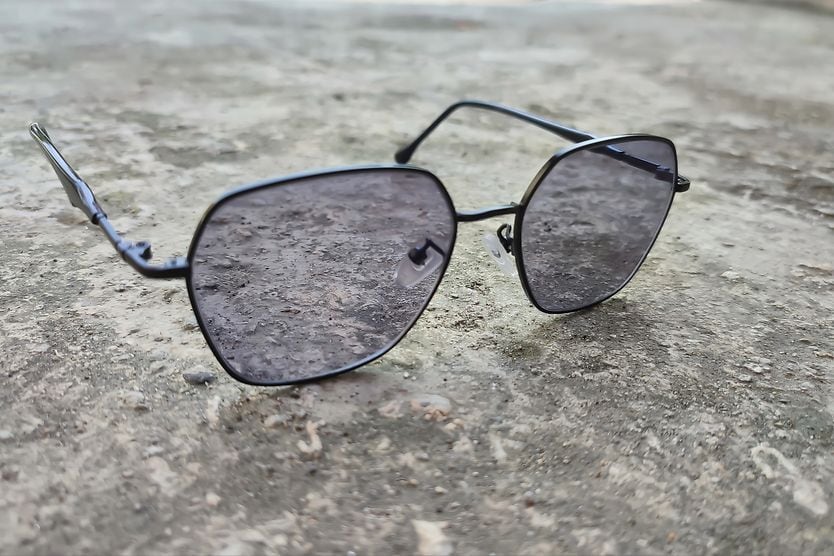
Progressive photochromic lenses | Automatically darken outdoors and return to nearly clear indoors with the added benefit of a progressive lens design | People who frequently move between indoor and outdoor spaces |
Progressive sunglasses | Combine the benefits of progressive lenses with sunglass lenses | Providing clear vision at multiple distances in outdoor settings |
Choose a progressive lens that fits your vision needs
The first step to selecting a progressive lens is to schedule a comprehensive eye exam. Your eye doctor and optician can help you choose the lens type appropriate for your vision needs and lifestyle. This decision may take into account factors like:
- Eyeglass prescription
- Specific eye measurements
- Frame choice
- Occupation
- Daily activities
- Budget
Are you considering progressive lenses? Consult your eye care provider to explore your vision correction options.
READ NEXT: Single-vision vs. progressive lenses