Guide to buying prescription safety glasses


Why choose prescription safety glasses?
From construction sites to outdoor activities, wearing eye protection can be important for safety. While standard eyeglasses may help you see and protect against harmful UV rays and glare, they do not typically offer protection from accidents or impact. Prescription safety glasses can allow for both vision correction and protect your eyes in various environments.
You can avoid the majority of eye injuries by using protective eyewear. Safety glasses can be important when flying debris, sharp tools or fast-moving objects are present. They can provide an important barrier for protection. Everyday eyeglasses usually aren’t made for impact. They can break under pressure, which puts your eyes at more risk.
Knowing when and why to choose the right kind of safety glasses can make all the difference in protecting your vision.
What are prescription safety glasses?
Prescription safety glasses can shield your eyes and enhance your vision. They can keep workers safe from hazards and ensure clear vision. Plus, they can provide comfort features for all-day wear. They may incorporate prescription lenses or fit over regular glasses.
Unlike normal glasses, the purpose of safety glasses is to protect the eyes. Both the lenses and frames provide impact resistance. They must also follow official safety requirements.
Key features to consider
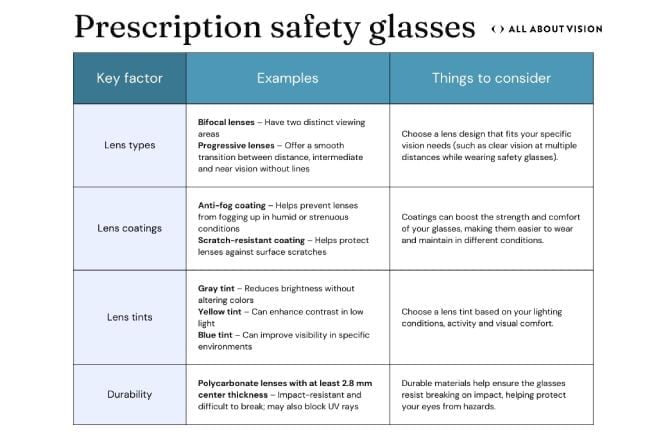
Prescription safety glasses can include materials and features that aid in their durability and enhance their protection.
Lens types
Prescription safety glasses can have bifocal or progressive lenses. These options can allow wearers to choose the lens type that fits their vision needs.
Lens coatings
Prescription safety glasses may have special coatings. These coatings could boost their strength and comfort. Common options may include anti-fog coatings and scratch-resistant coatings.
Lens tints
Safety glasses can come in different tint options, including clear, gray, yellow and blue. Each tint can help improve visibility in different environments.
Material durability
Protective glasses are typically made with polycarbonate or specialized polyurethane-based lenses with a minimum of 2.8 mm center thickness. They are tough and difficult to break. This material may also block ultraviolet (UV) rays from reaching your eyes.
Safety standards for prescription safety glasses
Safety glasses should adhere to safety standards. These are set by the American National Standards Institute (ANSI) and the Occupational Safety and Health Administration (OSHA).
The ANSI Z87.1 standard defines how safety glasses should be tested and labeled. This includes protection from accidents related to:
- Impact
- Radiation
- Liquid substances
OSHA rules often require eye protection that meets ANSI standards for many jobs. These standards also apply to tasks you do outside of work.
Usage scenarios and industry applications
Prescription safety glasses can be useful in many settings where eye protection is necessary. From busy worksites to active sports, they can help reduce the risk of eye injuries.
Occupational safety
OSHA requires safety glasses on job sites where eye hazards are present. The right pair depends on the job type, risks involved and if the employee needs prescription lenses.
Jobs with a higher risk of eye accidents include:
- Construction
- Carpentry
- Auto repair
- Electrical work
- Plumbing
- Welding
- Maintenance work
Outdoor activities
Sports can carry unique risks for eye injuries. This is why protective eyewear standards are often set by sports associations or organizations, like the American Society for Testing and Materials (ASTM). These standards can help ensure athletes and outdoor enthusiasts are using equipment that can handle the impact and conditions of their sport.
Eye protection can be especially important in sports, such as:
- Racket sports
- Baseball
- Basketball
- Soccer
- Ice hockey
- Paintball
- Skiing
- Snowboarding
Safety tips and maintenance
It is recommended to clean and check them every day. Stick to the manufacturer’s guidelines to avoid scratching or damaging the lenses.
Store your glasses in a place where you will not drop, crush, or step on them. You should replace damaged safety glasses or those that no longer fit well right away. Damaged glasses can limit vision and affect their ability to protect your eyes.
FAQs about prescription safety glasses
Common questions about prescription safety glasses include how they work, where to buy them and whether employers are responsible for covering the cost. Keep reading for answers to some of the most frequent topics.
Where can I buy prescription safety glasses?
You can buy certified prescription safety glasses from several eyewear retailers; however, your eye care provider’s office is often the ideal place to purchase them if the service is offered, as they ensure accurate measurements and proper ANSI-rated protection.
How much are prescription safety glasses?
Prices for prescription safety glasses differ by brand and lens type.
Are employers required to pay for prescription safety glasses?
Employers typically must provide and pay for personal protective equipment (PPE) that meets OSHA safety standards. However, prescription safety glasses can be an exception. Check with your employer about which items your employee benefits include.
Are prescription glasses considered safety glasses?
Regular prescription glasses do not count as safety glasses. Even if your lenses are polycarbonate, they may not pass the safety standards. OSHA requires either prescription safety glasses made to meet safety standards or protective eyewear that can fit over prescription lenses.
How to tell if prescription glasses are safety-rated
Prescription glasses are only safety-rated if they are marked with ANSI Z87.1 on the frame or lenses. This marking shows that they can protect against common workplace hazards.
Protecting vision with prescription safety glasses
Prescription safety glasses can help you see and keep your eyes safe. They can be vital for occupational safety or in certain sports. By combining durable materials with safety standards, they can help minimize the risk of serious eye damage.
READ NEXT: How to prevent eye injuries