What parents should know about myopia control and contact lens options

From prescription to proactive myopia care
In the hush of a pediatric clinic, an eye doctor uses a phoropter to measure a child’s refractive error, a common eye problem that causes blurry vision. The cadence of the instrument’s clicking dials punctuates the doctor’s voice as she explains that myopia, the medical term for nearsightedness, affects far more than just eyesight. That’s why early detection in children is critical.
Childhood myopia typically develops because the eye elongates from front to back, a measurement called axial length. This elongation is considered a key driver of myopia progression. As axial length increases, myopia can worsen.
The increased axial length might also stretch and thin the retinal tissue at the back of the eye. This makes it more vulnerable to serious conditions such as retinal detachment and myopic macular degeneration. Due to this, children who develop higher levels of myopia may face a greater lifetime risk of eye health complications.
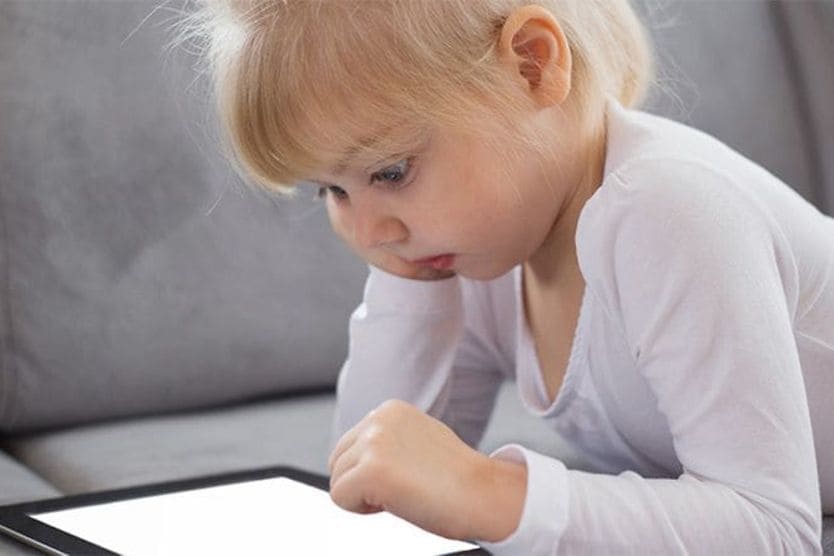
Researchers believe both genetics and environment are contributing factors for myopia development and progression. Several studies suggest that short working distances (less than 30 cm or 12 in) and prolonged near work (more than 30 minutes without a break) may play a role. In contrast, consistent time outdoors, approximately 40 to 80 minutes each day, has been shown to reduce the risk of nearsightedness developing in children.
The growing scale has made childhood myopia impossible to ignore. Global studies reveal that about 33% of children and teens worldwide are myopic, with the highest rates concentrated in East Asia and dense urban areas. Experts predict that childhood myopia could affect more than 700 million young people by 2050.
Historically, the approach to correcting nearsightedness has been straightforward. Distant objects look blurry because light entering the eye focuses in front of the retina rather than on it. Corrective lenses, such as standard glasses or contact lenses, redirect light to the retina, providing the promise of clear vision.
But research has shown that myopia involves far more complex structural changes in the eye than distance blur alone. Eye doctors now use scans and imaging to monitor nearsightedness not only to refine a prescription but also to track structural changes.
With this knowledge, what guidance can experts offer parents whose children have already developed myopia?
Analysis paralysis
The eye care community has responded to the myopia epidemic by promoting management beyond correction alone. The goal of traditional single-vision lenses is to clear blur, but they don't address the signals that may tell the eye to keep growing. Many eye doctors use a comprehensive approach to myopia care that tries to both slow progression and improve vision.
One prominent strategy is peripheral defocus, shifting light so it focuses slightly in front of the peripheral retina to influence eye growth. Researchers believe this approach may reduce the stimulus for axial elongation.
These findings have led to the development of myopia control glasses and contact lenses with multiple focus zones. They provide clear central vision while creating peripheral defocus. Results vary, but randomized controlled trials show that children using these designs tend to have slower prescription changes than those using standard lenses.
Choosing a myopia management strategy while balancing recommendations, cost and their children’s needs can be as stressful for parents as it would be trying to navigate the phoropter themselves. Families are presented with glasses, contact lenses and pharmaceutical options such as low-dose atropine eye drops (off-label treatment in the U.S., however, approved in certain global markets), though the exact mechanism of atropine remains under investigation. As a result, many parents experience analysis paralysis.
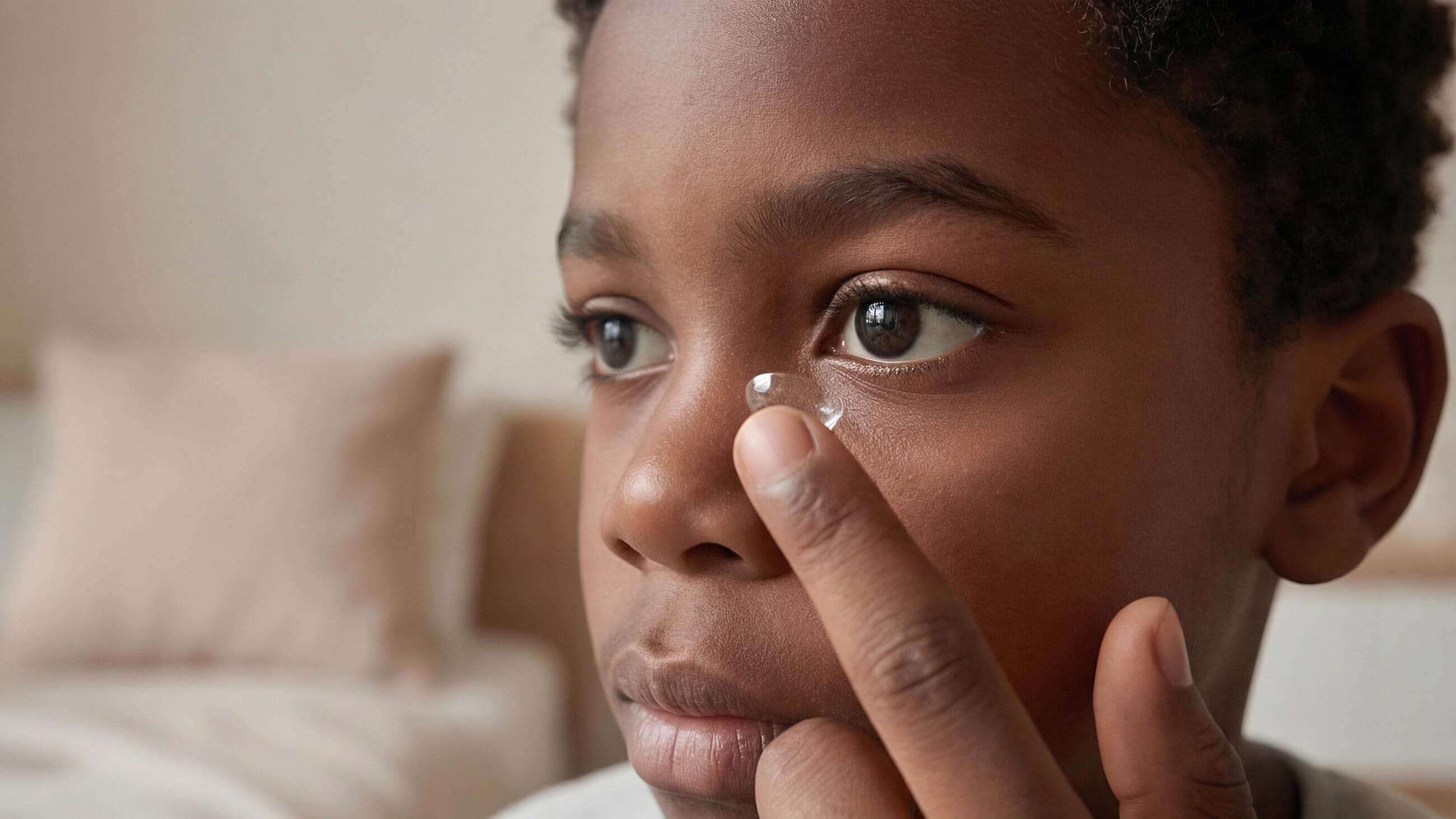
Among available options, myopia control contact lenses hold practical appeal while inducing peripheral defocus. They offer functional and cosmetic advantages for active or appearance-conscious youth who don’t want to wear glasses. They also reduce inconveniences such as slipping frames and limited peripheral vision.
The primary myopia control contact lens options may include:
- Peripheral defocus soft contact lenses
- Multifocal soft contact lenses (off-label in the U.S.)
- Orthokeratology (overnight rigid lenses)
Off-label means the lens is FDA-approved for vision correction but not specifically labeled for myopia control. The intention of these approaches is to alter peripheral retinal focus and reduce axial elongation.
Different approach, same objective
Myopia control lenses share a common function: They change how light reaches the peripheral retina. The methods differ, but the goal is the same.
Soft contact lenses
Soft multifocal lenses use a center-distance design in which the central zone corrects distance vision. Surrounding zones introduce peripheral defocus, meaning light focuses slightly in front of the retina.
Randomized trials show that children wearing these lenses tend to experience less refractive progression and slower axial elongation than those wearing single-vision lenses.
Currently, one FDA-approved soft contact lens in the United States is approved for children ages 8 to 12 with myopia between -0.75 and -4.00 diopters and healthy eyes. In three-year randomized trials, children wearing these lenses showed significantly slower progression than those wearing standard lenses. Follow-up data suggest the benefit continues with ongoing wear.
Other center-distance multifocal lenses have shown similar slowing effects in clinical trials, including large U.S. studies. These are used off-label and may offer additional flexibility in cost and fitting.
Eye care providers consider family history, daily demands, hygiene and maturity when determining candidacy.
Orthokeratology
Orthokeratology, or ortho-k, takes a different approach. Children wear rigid gas-permeable lenses overnight. During sleep hours, the lenses temporarily flatten the central cornea. The goal is that by morning, distance vision would be clear without the need for daytime lenses.
This reshaping also alters the focus of peripheral light, creating relative myopic defocus in the peripheral retina. The effect is reversible. If treatment stops, the cornea gradually returns to its original shape. Research indicates that orthokeratology for myopia control works optimally when continued until the eyes have finished growing, typically in the late teens.
Several designs are FDA-approved for refractive correction. Orthokeratology requires fitting by a trained specialist and typically takes several follow-up appointments to finalize the proper lens fit.
Global contact lens options for myopia
When families look at myopia management options in other countries, they may see a broader menu than what is currently labeled for myopia control in the U.S. Some European and East Asian countries have authorized additional designs.
International developments offer a hint of where the field may be heading, but professional organizations encourage families to focus on options that can be safely monitored close to home. Continuity of care and close monitoring are critical.
Combining techniques
Contact lenses are not the only way to create peripheral defocus. Specialty eyeglasses apply similar principles. One type of eyeglass lens received FDA market authorization in September 2025 and is available in the U.S. and internationally, while another is currently available in Europe, Asia and Australia.
Contact lenses and glasses can involve trade-offs. Contacts may improve comfort during sports but require learning proper handwashing, insertion, removal and handling skills. Glasses are typically easier to manage but may slip, fog or break. Some children may decide to alternate between myopia control eyeglasses and contact lenses. There is no strong evidence that alternating strategies impacts outcomes compared with the consistent use of a single method.
Researchers have also studied combining optical treatment (myopia control glasses or contacts) with low-dose atropine eye drops. Early studies suggest possible additive effects when pairing nightly low concentration atropine drops with ortho-k or the FDA-approved soft contact lens to reduce axial elongation. However, longer-term research is needed.
Rather than recommending a single best option for all children, experts consider age, progression rate, lifestyle and readiness. In some cases, more than one approach might be used at the same time.
Safety, hygiene and readiness
Safety is often the first concern parents raise when they hear the words, "contact lenses" and "child" in the same sentence. This is understandable as one of the most serious complications of contact lens wear is microbial keratitis, a rare but sight-threatening corneal infection caused by bacteria, parasites or fungi.
Parents can be assured that multiple studies show consistently the rate of serious infection in supervised pediatric soft lens wearers is no higher than that of adults. Readiness often depends on maturity, compliance and parental oversight, rather than age.
Orthokeratology involves overnight wear but has a good safety profile when properly fit and monitored by an eye doctor.
As with any treatment, there are risks involved. The chances for infection and complication increase with poor hygiene, overnight wear of non-overnight lenses, water exposure and extended wear beyond recommendations.
Cost of myopia control contact lenses
For many families, cost matters and often informs decisions. Annual expenses for myopia management, including fitting, follow-up visits and lenses, range widely depending on the treatment.
Some soft contact lens products may cost around $1,000 or more per year. Orthokeratology fitting and lenses may cost several thousand dollars initially. Insurance coverage varies considerably, and many plans provide limited reimbursement for myopia control services.
Bending the curve
As research advances, more options will likely continue to become available. Parents are advised to monitor how quickly prescriptions may change and maintain regular follow-up appointments to track their child’s myopia progression. A myopia management specialist can help parents decide on an appropriate strategy for their child and how often to revisit their myopia management plan.
The reality is, myopia management is promising but imperfect. Eye doctors can measure myopic blur with precision, but cannot yet fully measure the disease’s trajectory. Studies show myopia control therapies can slow progression, but each child’s response will vary. Myopia usually continues to increase, but often at a slower rate.
Still, the ability to slow myopia's progression, not just correct it, gives families options that didn't exist just a generation ago. And that beats the option of doing nothing at all.