Is sun gazing safe for the eyes?


What is sun gazing?
Sun gazing is the practice of looking directly into the sun to theoretically support one’s health. Those who partake say solar power helps them find great inner strength.
But despite what you may read about the pros of sun gazing, it poses many dangers to your eye health, including increasing your risk for permanent vision damage.
Is sun gazing safe?
Some alternative practitioners claim that sun gazing is safe when it is done at the right time of day (either sunrise or sunset), as the ultraviolet (UV) index is lower during these times. There is limited to no evidence supporting this practice and it could permanently damage your eyesight.
Doctors warn that looking directly into the sun at any time of day can put your vision at risk for retinal damage, solar retinopathy and other conditions.
In fact, it only takes a few seconds of exposure to put your eyes at risk of permanent retinal damage if you stare into the sun without special eye protection. Even in small increments, looking into the sun every day without appropriate coverage can result in prolonged exposure and damage to your eyes.
But some sun gazing practitioners claim that sun gazing is safe when it is done at the right time of day (either sunrise or sunset), as the ultraviolet (UV) index is lower during these times.
SEE RELATED: Old wives’ tales about your eyes: Is there any truth to them?
Does sun exposure alone improve vision and health?
Sun exposure, in general, can provide some health benefits — as long as the eyes (and the skin) are protected.
- Getting sunlight every day can be a good source of vitamin D, a supplement that helps the body absorb calcium.
- The body’s natural sleep-wake cycle is regulated by sunlight. When you see light outside, it notifies your brain that it is time to be awake, and when the sun goes down, your eyes send a similar message that it is time to rest and go to sleep.
- Studies have shown that exposure to sunlight and spending time outdoors may also help reduce the risk of developing myopia (nearsightedness) in children.
Unlike the claimed benefits of sun gazing, you don’t need to look directly at the sun to achieve these gains; just being outside allows the body to absorb the sun’s rays. Just remember to wear proper eye protection and sunscreen and to stay hydrated while you’re outside.
Dangers of sun gazing and sun exposure
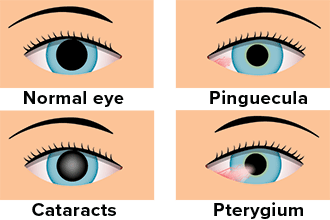
The dangers outweigh the benefits when it comes to sun gazing. Numerous eye conditions can develop due to sun exposure, whether it is brief or prolonged. This includes conditions such as:
- Sunburned cornea (photokeratitis)
- Retina burn (solar retinopathy)
- Cataracts
- Macular degeneration, also called age-related macular degeneration (AMD)
- Pinguecula – growth on the conjunctiva (the thin, clear layer on top of the white part of the eye, called the sclera)
- Pterygium– growth onto the cornea (clear dome at the front of the eye)
Sun exposure can also increase your risk of developing eye cancer. Some of these conditions may be treatable, but if you don’t receive proper care in a timely manner, your eyes may be permanently damaged.
SEE RELATED: Solar eclipse and your eyes: How to view an eclipse safely
Preserving your vision health
With such significant threats to your vision possible, eye care professionals recommend protecting your eyes from the sun as opposed to gazing straight into it. Protecting your vision is important and can be done in the following ways:
- Wear eye protection. Eye care professionals suggest sunglasses with 100% UV protection to block the sun’s harmful rays.
- In addition to sunglasses, wearing a wide-brimmed hat or sun hat can provide shade to the eyes.
- Get your eyes examined regularly to check for any changes to your vision or eye health.
If you experience pain or changes to your vision after possibly looking directly into the sun, contact your eye doctor immediately to have your eyes examined.
READ NEXT: What is solar maculopathy?