How children’s eye exams differ from an adult’s eye exam

5 ways children’s eye exams differ from an adult’s eye exam
Anyone who has ever spent time or worked with young children understands they have different needs than adults do to keep them comfortable and engaged. Eye doctors, in particular children’s optometrists and pediatric ophthalmologists, make certain accommodations to provide kiddos with specialized care and attention.
Curious as to what those accommodations are? From what eye doctors look for in an eye exam to the tools that they use to do so, here are five differences between a child’s eye exam and an adult’s eye exam:
1. Different equipment is used
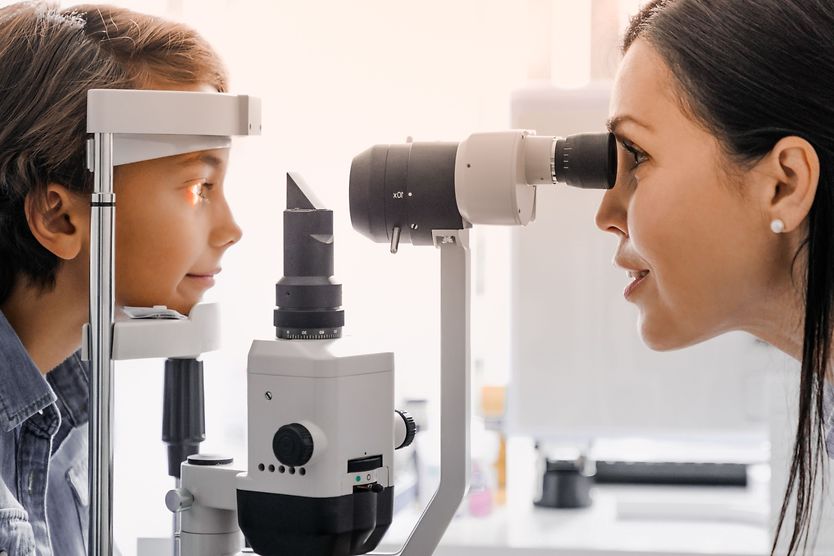
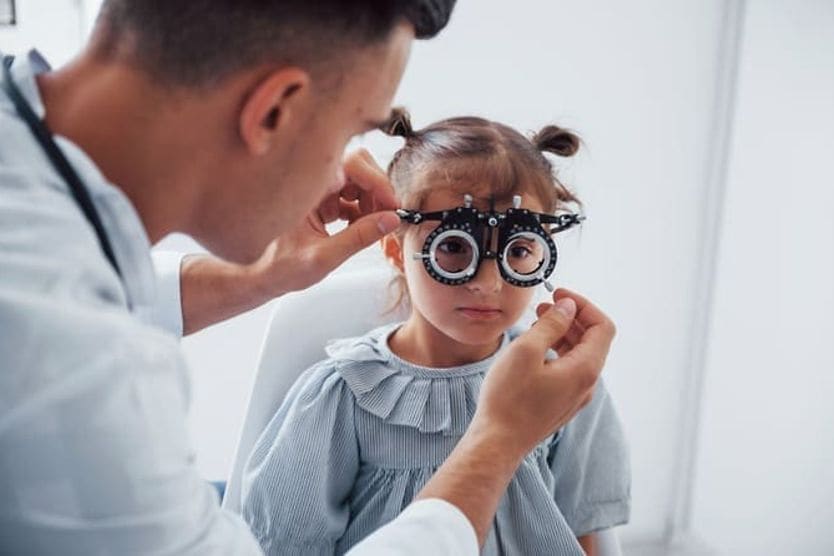
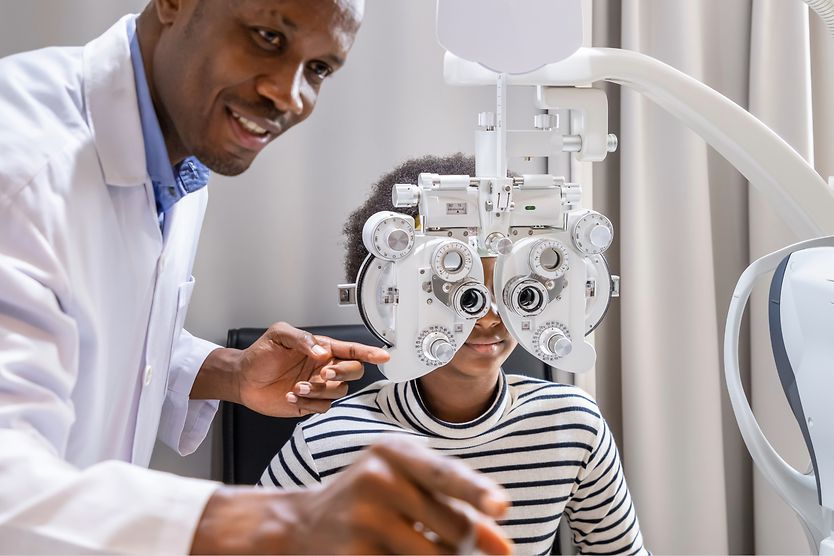
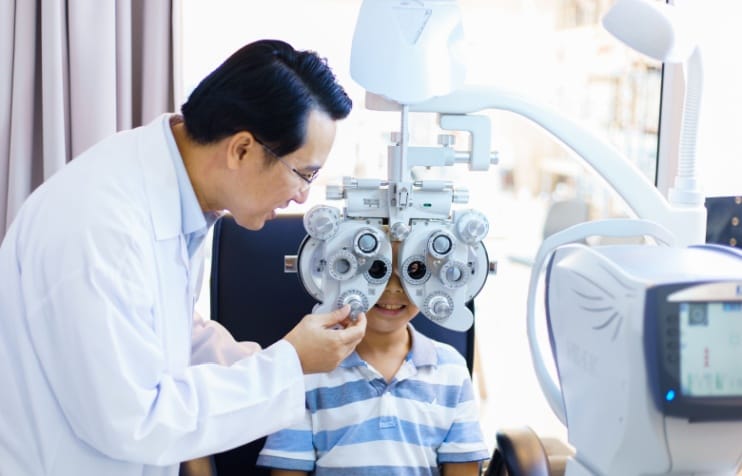
Many of us associate eye exams with a phoropter — the tool that resembles big binoculars and enables you to choose “one or two,” “two or three” as the clearest image. For younger children, verbalizing what is clear or blurry can be difficult, so other tools tend to better determine the clarity of their vision.
An old-fashioned retinoscope can often be an easier method for children. It can estimate the refractive error from a distance, so it may feel less threatening to a child. There are also child-friendly devices for measuring intraocular pressure.
Using different tools allows eye doctors to effectively examine a child’s vision when they have difficulty providing feedback, without overwhelming or stressing the child out. This typically leads to better cooperation from the child and an overall smoother eye exam.
SEE RELATED: Children’s optometrist near me
2. Children are checked for different eye conditions
In an adult eye exam, doctors are on the lookout for signs of conditions, like glaucoma and cataracts. While eye doctors still look for health issues and other red flags in a child’s eye exam, the conditions may present differently and can pose a unique threat to children’s vision.
Eye doctors look for developmental issues in a child’s vision, like strabismus and amblyopia. If the problems aren’t corrected early enough, the child’s vision could be affected for the rest of their lives.
With these conditions, the brain doesn’t learn how to use the affected eye as well as the dominant eye. Waiting too long to correct it can risk losing much of their visual developmental potential.
3. Testing for visual acuity and depth perception varies
To test visual acuity in adults, they are asked to read from an eye chart. However, young children may not feel comfortable enough to do this, so other tactics are required.
Eye charts are too complicated for infants, so eye doctors use preferential viewing to measure their vision. This is done by showing the child a patterned image and a blank image. Children’s natural tendency is to look at detailed images, so a preference for a patterned image can be an indicator of their acuity.
Having a child choose between two different pictures is also used to measure a child’s depth perception.
For example, they may use a test that has one card with a smiley face and one card that is blank. For children with poor depth perception, both cards will appear blank. An eye doctor can recognize a lack of interest in the cards as a potential indicator of poor depth perception.
4. Children receive functional eye exams
Sometimes, when a child has trouble in school, poor eyesight can be a part of the problem. Functional eye exams can pinpoint any issues that may affect a child’s ability to learn.
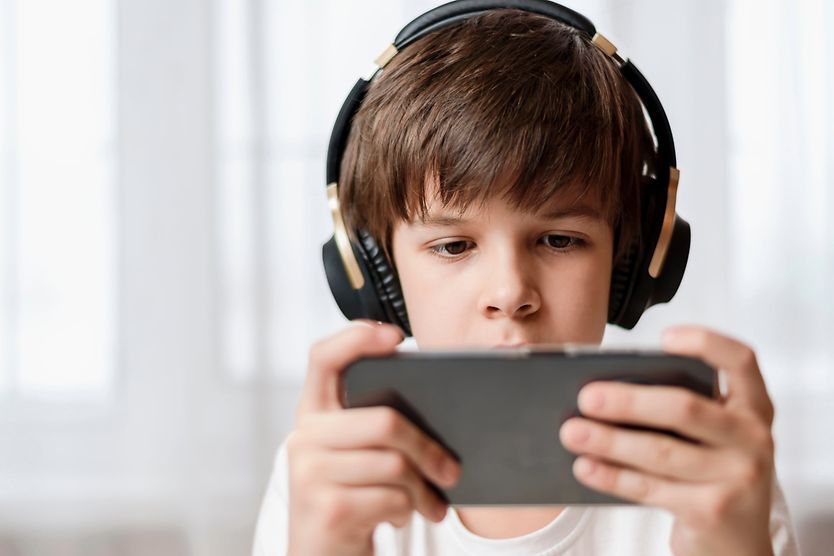
Children spend a great deal of time doing near-vision activities, such as classroom writing, reading, computer learning and playing video games. All of these require other visual skills, such as eye alignment, tracking, focusing and visual-motor skills, beyond adequate vision.
A functional eye exam is beneficial for all children, but for children who struggle in school, it’s critical.
Functional eye exams look at more than visual acuity; they look at how the eyes perform the full spectrum of visual skills. In other words, these exams check how well a child’s eyes can focus, track or work together for learning and daily activities.
5. Games are used to test vision
Eye care professionals recommend that children have their first comprehensive eye exam at 6 months old. Because of the age of their patients, pediatric eye doctors will often play games with the child.
Don’t let the fun and games fool you — eye doctors are trained to carefully observe the child’s eyes throughout the exam. Through “play,” eye doctors are able to examine a child’s eye alignment, tracking, head posture, eye-hand coordination and peripheral vision.
In addition to games, a pediatric exam typically requires eye doctors to cater to their audience.
To get the clinical information they need, pediatric eye doctors generally try to create an experience that is both comfortable and charming for the child. Successful pediatric eye exams often include funny voices, stories, games and toys.
How kids benefit from an eye exam
Vision is a critical part of learning, especially in early childhood. If a child has poor vision from a refractive error or eye misalignment, it can affect their interest in learning and performing certain activities.
Fortunately, early treatment for childhood vision problems often improves eyesight. But proper treatment requires a pediatric eye exam.
Help ensure your child’s vision is developing properly by having their eyes examined at an early age. By doing so, and by continuing to have their eyes checked regularly, you can put them on the optimal path to academic success.
Watch our video on the importance of eye exams for children.