Everything you need to know about reading glasses

What are reading glasses?
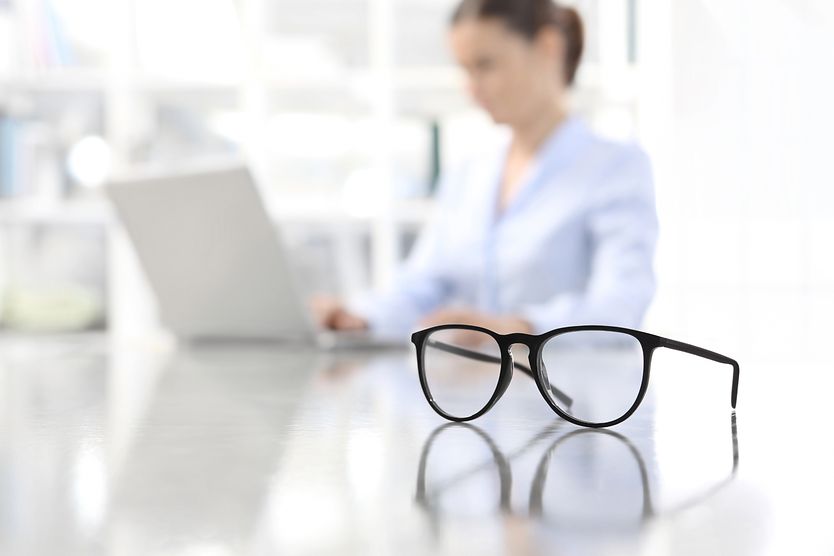
Glasses can help you see up close or far away (sometimes both), but reading glasses have a more specific role. They can help with your near vision, like when you’re reading. You may not always need a prescription for them, especially if your vision is related to natural changes as you age.
Glasses correct refractive errors. A refractive error is when your eyes don’t bend light the right way, meaning you can’t see certain things properly. Different refractive errors can affect your vision in different ways. Common refractive errors are:
- Myopia (nearsightedness) – Difficulty seeing objects that are farther away.
- Hyperopia (farsightedness) – Difficulty seeing objects that are close.
- Astigmatism – Difficulty seeing both close and far away.
- Presbyopia – Difficulty seeing or focusing on objects up close. Presbyopia is when this difficulty gets worse as you age.
How do you know if you need reading glasses?
Reading glasses are typically used to help with presbyopia. Presbyopia happens naturally as you age. It usually starts to become noticeable in your mid 40s.
Signs you might need reading glasses can include:
- Difficulty reading small print
- Having to hold things at arm’s length to read them
Reading glasses can be an optimal solution if you do not normally wear glasses. But, if you needed an eyeglasses prescription before developing presbyopia, you can get glasses with multiple prescriptions in the lenses to avoid needing different pairs.
SEE RELATED: How your vision changes with age
How do you know what magnification strength you need?
The numbers in a prescription are diopters. They describe how much correction your eyes need and in what direction. A positive number means you are farsighted, so you need help seeing up close. A negative number means you are nearsighted, so you need help seeing far away.
How many diopters are needed to correct your vision describes the lens power. An eye care specialist can determine this in an eye exam. The prescriptions of reading glasses can range from about +0.50 to +4.00 diopters (D), although below +0.75 D and over +3.00 D might be harder to find over the counter.
READ MORE: How to read your eyeglasses prescription
How to choose the ideal reading glasses for you
There are several factors to consider when deciding on a pair of reading glasses. You may not need a prescription to get them, but going for an eye exam is still a good place to start. This can give you an idea of the lens power you need and determine whether anything else is causing the trouble with your vision.
Over-the-counter reading glasses
If you need help with near vision only, over-the-counter reading glasses may be a good solution. These work for people who don’t have astigmatism or trouble seeing things at a distance.
Presbyopia usually affects both eyes equally, but most people will need a slightly different prescription between the right and left eye for other refractive errors, like myopia. Over-the-counter reading glasses will have the same prescription in each lens, so they’re ideal for people who don’t have other corrective needs.
Prescription reading glasses
Over-the-counter reading glasses are mass-produced, which means their quality may not be as good as a pair of prescription lenses. And they aren’t tailored to your eyes specifically, so in rare cases, they may cause eye strain.
Prescription readers are optimal for:
- If you need a different lens power for each eye
- If you have myopia or astigmatism
- If your pupils are too close or too far apart from where the prescription is in the lens
SEE RELATED: Everything you need to know about your pupillary distance (PD)
Bifocal, multifocal and progressive reading glasses
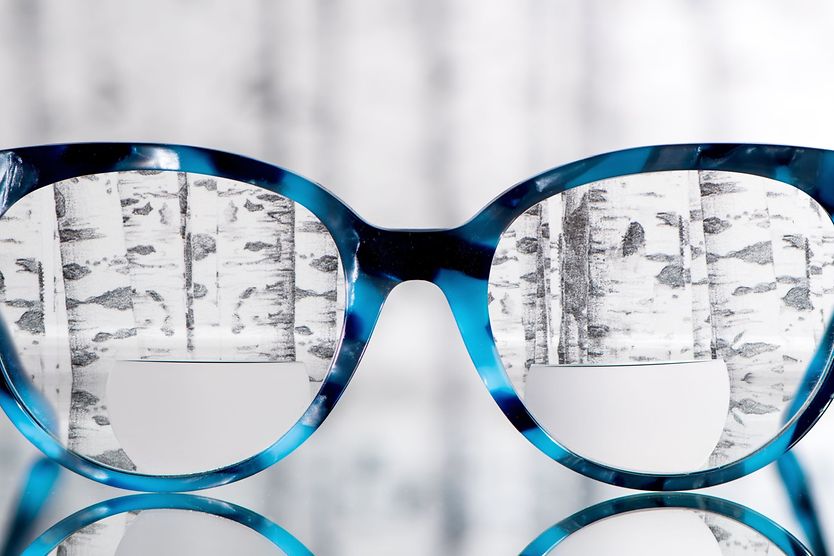
Most over-the-counter readers have single-vision lenses, which help with just one kind of vision. Reading glasses help your near vision. But multifocal lenses have multiple prescriptions in them. This means they can correct multiple refractive errors at once (for instance, if you have presbyopia in addition to a prescription for distance vision). There are specific types of bifocal and multifocal glasses:
- Bifocals – These lenses have two prescriptions, with a visible line separating them.
- Trifocals – These lenses have three prescriptions, with visible lines separating them.
- Progressives – These lenses have three prescriptions, but there is no visible separation.
Multifocals are ideal if you are seeking to correct vision for near, intermediate and distance. Some people prefer having just one pair of multifocal glasses versus having separate pairs with different lens powers.
READ MORE: Reading glasses vs. multifocal glasses: Which ones should you get?
Reading sunglasses
Sunglasses can have prescription lenses, which can help if you are reading outdoors. You could also try photochromatic (or photochromic) lenses. These lenses automatically change their shade based on available light, turning darker in ultraviolet light.
Where can you buy reading glasses?
There are many places you can buy reading glasses, whether you’d like a prescription pair or an over-the-counter pair.
Optical stores and eye clinics
If you’re getting eyeglasses that have multiple prescriptions, like bifocals or progressives, you’ll probably want an in-person fitting. An optician can then help you choose lenses.
If buying a prescription pair in-store gets pricey, your provider may let you get frames somewhere else (like online) and bring them in to add lenses.
Pharmacies and retail stores
Since you don’t always need a prescription for reading glasses, there are plenty of stores where you can pick them up. Over-the-counter readers can be found at bookstores, drugstores and other retail shops.
If you are going shopping for some over-the-counter readers, it’s a good idea to bring some reading material with you — that way, you can test reading with different lens powers.
Online retailers
You can also get reading glasses online. These can range from budget-friendly — around the same price as they might be in a drugstore — to higher-quality glasses that come with a range of available lenses and frames.
READ MORE: Buying glasses online made simple
How to care for your reading glasses
You can protect your glasses from getting scratched by keeping them in a case — or at least in a safe area, away from anything that could scratch them.
For cleaning your glasses, consider using the following techniques. Keep the lenses clean with soap and water (a mild soap is ideal) or a glasses cleaner. Use a cloth that’s lint-free or microfiber to wipe them. Some retailers may give you the option to add a kit for cleaning your lenses that comes with both a cleanser and a cloth.
SEE RELATED: How to extend the life of your eyewear
When to see an eye doctor
Presbyopia is completely normal, but you should see your eye doctor anytime you notice changes in your vision. This is to make sure your prescription is up to date, and there isn’t a separate issue related to your eyesight.
Early signs of several different eye conditions can appear in your 40s. In many cases, these conditions could lead to vision loss if not treated in time. A comprehensive eye exam can detect these conditions early, improving treatment outcomes.
It’s important to have regular eye exams every one to two years, but especially at age 40 and older, regardless of whether you are experiencing presbyopia or not.
READ NEXT: 10 signs of age-related eye problems