Bifocals vs. trifocals: What to know before you choose lenses


What are bifocals and trifocals?
Bifocals and trifocals are types of lenses that help you see clearly at different distances. With multiple optical powers built into a single lens, they allow you to focus on objects up close and farther away without having to switch glasses.
Although most often used by adults with presbyopia — an age-related condition affecting near vision — these multifocal lenses may also be prescribed for children with certain vision conditions.
Presbyopia typically develops after age 40. It occurs when your eye’s natural crystalline lens becomes less flexible, affecting your ability to focus on close objects. While many people wear reading glasses to help with this common issue, those who already use prescription glasses for near or distance vision may need a multifocal lens to see clearly at all distances.

Benjamin Franklin, the early American statesman and inventor, is credited with creating the first bifocal lens for eyeglasses in 1784. Throughout the centuries, his design has been refined and serves as the basis for the wide variety of multifocal lenses in use today.
How do bifocals work?
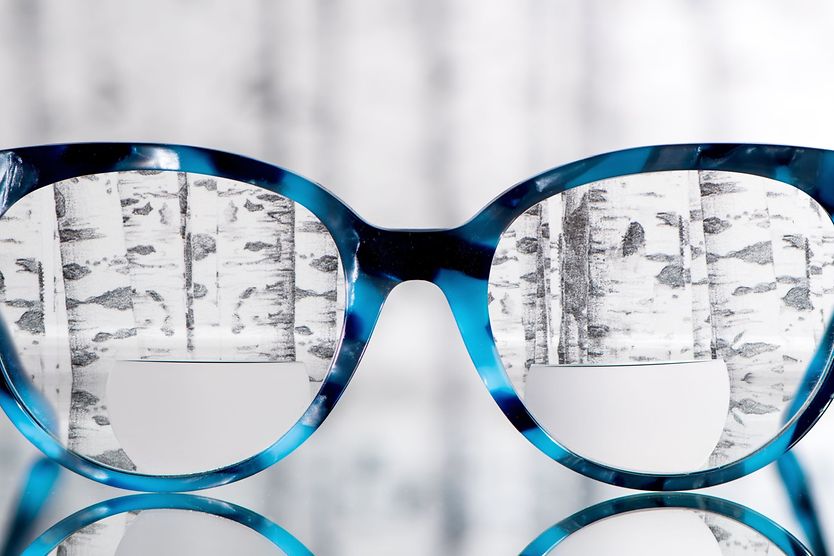
Bifocals correct vision at two different distances. Each lens has two distinct optical zones with separate optical powers (prescriptions):
- Lower zone – Used for near vision, such as reading, sewing or other close-up tasks.
- Upper zone – Used for distance vision, such as driving and watching TV.
In cases where distance vision does not require correction, the upper zone may contain little to no prescription power. These are often referred to as bifocal reading glasses.
These lens zones are usually separated by a visible line. However, some bifocals contain no visible lines and are referred to as blended bifocals.
Note: Blended bifocals should not be confused with progressive lenses, which are special no-line multifocals that incorporate all corrections into one lens without separation of the visual zones by lines.
Types of bifocal designs
Bifocals are available in various designs, which differ based on the shape of the lower (near vision) segment of the lens. The more common types of bifocals include:
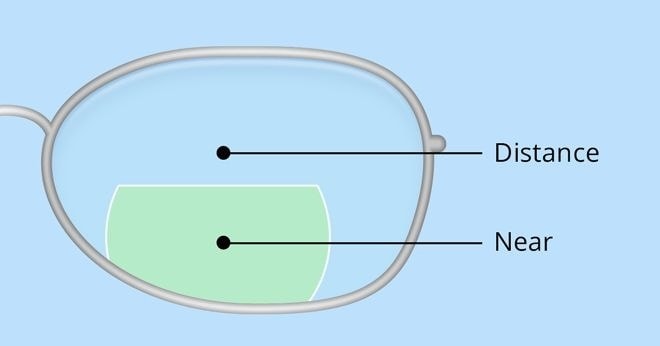
Flat-top bifocal
This type (also called a D-segmented or straight top) features a half-moon or D shape of the lower portion, with the flat part of the “D” facing up.
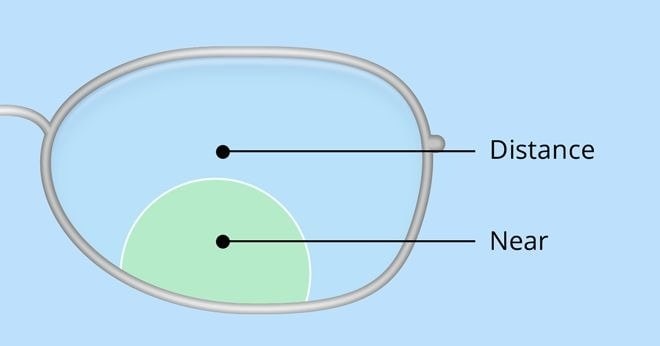
Round segmented bifocal*
In this type, the top of the near vision zone has a rounded shape, allowing the line separating the distance and near vision zones to be less noticeable than other designs.
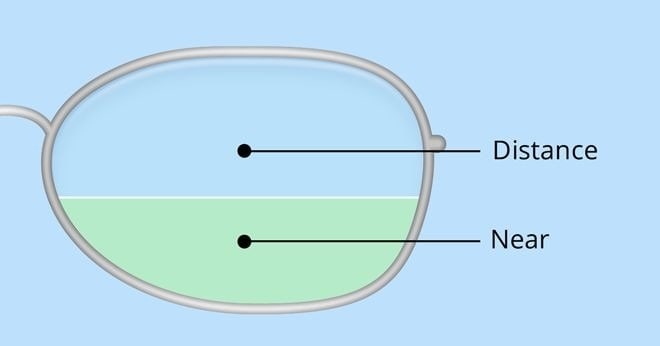
Executive bifocal*
Also called the Franklin bifocal — thanks to its similarities with Benjamin Franklin’s early bifocal lens design — this type features a line extending across the entire width of the lens separating the distance and near segments.
Bifocals are typically fitted so that the top line of the near segment rests at the same height as your lower eyelid.
*As technology continues to advance, these lenses may be less commonly available.
Who might choose bifocals?
Bifocals are most often associated with vision correction for adults, but they may also be prescribed for children in certain cases. Factors, such as prescription needs, lifestyle and daily activities, all help determine who might be a good candidate for wearing bifocals.
Adults who might benefit from wearing bifocals are those who:
- Are over the age of 40 and experiencing blurry near vision due to presbyopia
- Need near and distance vision correction
- Do not require correction for intermediate vision
- Frequently alternate between near and distance vision tasks
- Wish to avoid having multiple pairs of glasses to see clearly at all distances
Children who might benefit from wearing bifocals are those who:
- Require treatment to prevent myopia progression
- Have conditions that affect eye focusing issues, such as strabismus (eye misalignment) or amblyopia (lazy eye)
How do trifocals work?
Trifocals have three distinct zones of vision correction within the lens, each with its own optical power (prescription):
- Lower zone – Used for near vision, such as reading and other close-up tasks.
- Middle zone – Used for mid-range vision, such as computer work and other tasks performed at arm’s length.
- Upper zone – Used for distance vision, such as driving.
Like with bifocals, the lens zones in traditional trifocals are commonly separated by a visible line.
Types of trifocal designs
Trifocals are also available in a few different designs, which are similar to bifocal options:
- Flat-top – This design includes a D-shaped zone for near vision with an intermediate zone right above it.
- Executive – All three zones extend from one side of the lens to the other.
- Double-D – Also called occupational trifocals, this type has a near vision zone in the lower portion of the lens, a distance zone in the middle and a near and intermediate zone at the top.
Trifocals are often fitted so that the top line of the intermediate segment aligns with the lower border of your pupil (the dark circle in the center of your eye).
Who might choose trifocals?
Trifocals may be a good option for adults who:
- Are over the age of 40 and experiencing blurry near vision due to presbyopia
- Need correction for near, intermediate and distance vision
- Frequently alternate between near, intermediate and distance vision tasks, like reading, computer work and driving
- Prefer wearing a single pair of glasses rather than switching between multiple pairs to see clearly at all distances
While trifocals are still an option in many cases, they are less commonly prescribed today due to the rise in progressives’ popularity.
What are the differences between trifocals and bifocals?
Bifocal and trifocal lenses are similar in some respects, but they serve distinct needs for those who use them. The key differences between the two include:
Vision correction and focus zones
As mentioned, bifocals contain two lens zones and correct for near and distance vision. Trifocals contain three zones and correct for near, intermediate and distance vision. Bifocals typically have one visible line across the lens, whereas trifocals have two.
Cost
Since the process of making a trifocal lens is more complex than that of a bifocal, these lenses tend to carry a higher cost.
Tips for adjusting to new bifocal or trifocal glasses
It can take a couple of weeks to get used to wearing new glasses, especially if they have multifocal lenses. One prominent factor to adjust to is the image “jumps” that often accompany bifocals and trifocals. This is where the position and clarity of an object appear to change as you shift your gaze from one viewing zone to the next.
Some people find the following tips helpful during the adjustment period:
- Follow your eye doctor’s or optician’s guidance on how to use these lenses.
- Wear your new glasses as much as possible throughout the day.
- Point your nose where you intend to look rather than moving your eyes. For instance, trifocal and bifocal lenses can make objects at your feet appear blurry if you only move your eyes, so pointing your nose downward helps you see them clearly.
- Be patient with yourself. It may take some time for you to get used to looking through different parts of the lenses to see at various distances.
You might experience eye strain, headaches and other discomfort when you first begin wearing new glasses. If these symptoms do not subside, you have trouble adjusting or your glasses do not seem to fit properly, contact your optician or eye doctor for assistance.
How to choose between trifocals and bifocals
Your vision needs are the key determining factor when it comes to choosing bifocal vs. trifocal lenses. If you need vision correction at the intermediate range, such as to see your computer monitor or the dashboard of your car, trifocals may be the optimal choice.
Your eye care provider can recommend the ideal type of lens based on your vision needs and preferences.
Should you consider progressive lenses instead?
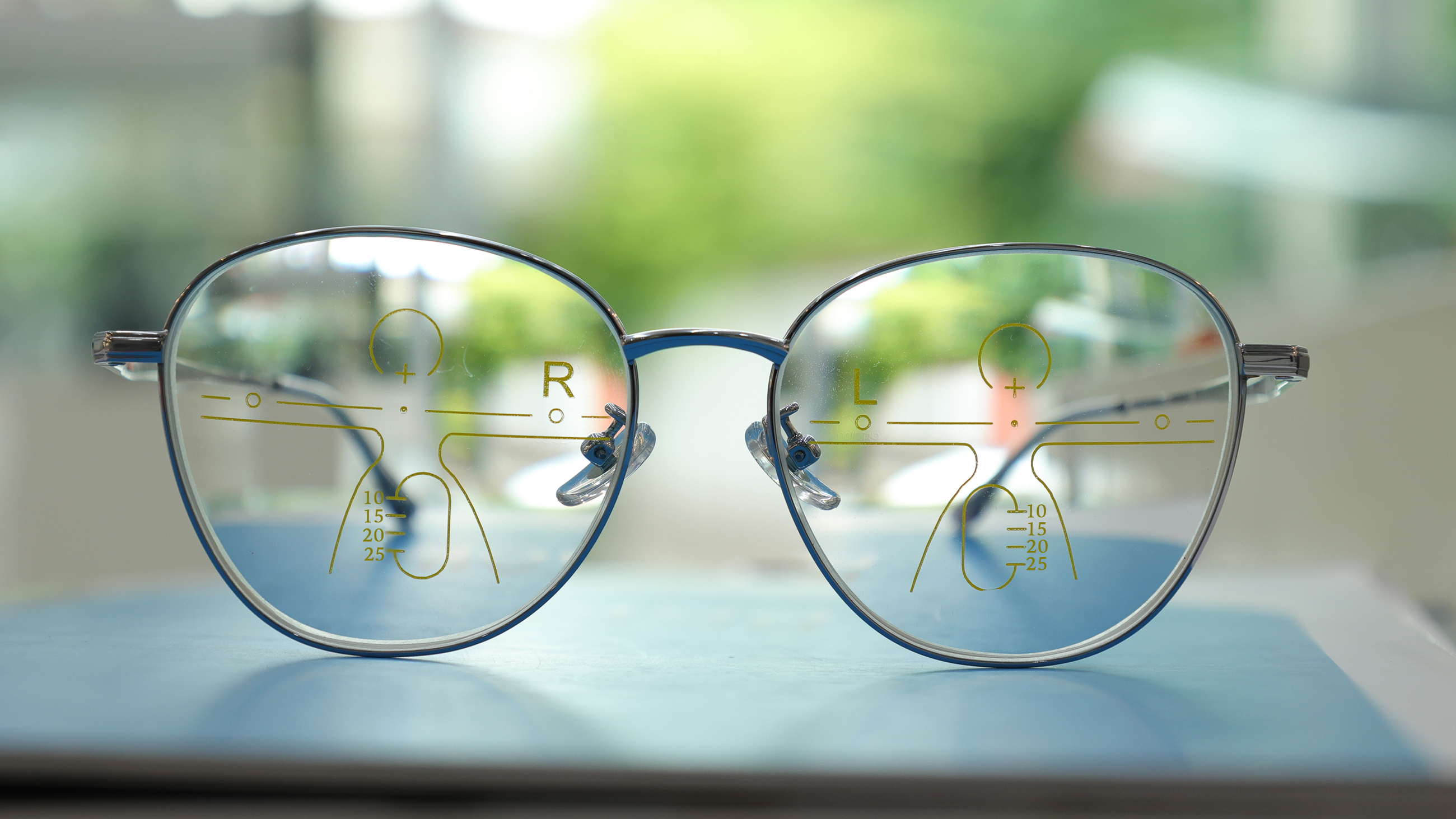
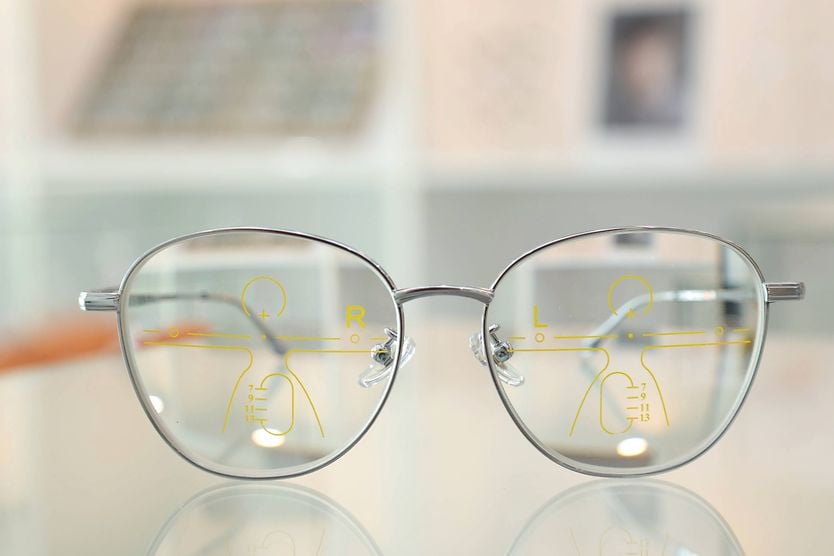
Progressive lenses are another multifocal lens option. These lenses are similar to trifocals in that they contain different prescriptions for near, intermediate and distance vision within each lens. They offer a gradual transition from one viewing zone to the next without visible lines.
Like trifocals and bifocals, progressives come with a bit of an adjustment period, especially when learning to look through different areas of the lens to see at various distances. If you’re exploring options for multifocal lenses, ask your eye doctor if progressives are an option you should consider.
When to talk to your eye doctor or optician
Bifocal and trifocal lenses both offer unique advantages for vision correction. Bifocals may be ideal if you need correction for near and distance vision, while trifocals add an intermediate zone for tasks performed at arm’s length.
If you’re having difficulty seeing clearly at different ranges or considering multifocal lenses for the first time, schedule an appointment with your eye care provider. They can evaluate your vision needs, lifestyle and daily activities to help determine if bifocals, trifocals or another lens option is appropriate for you.