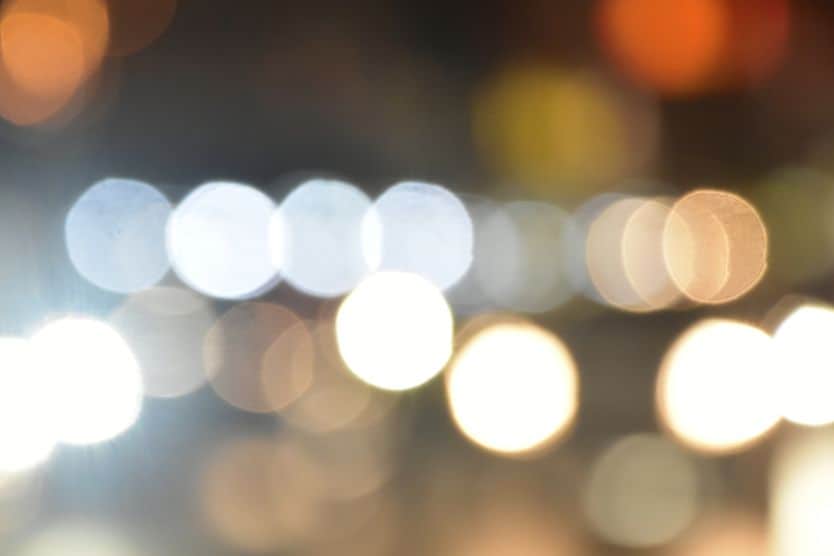
Why do I see a star-shaped glare around lights?
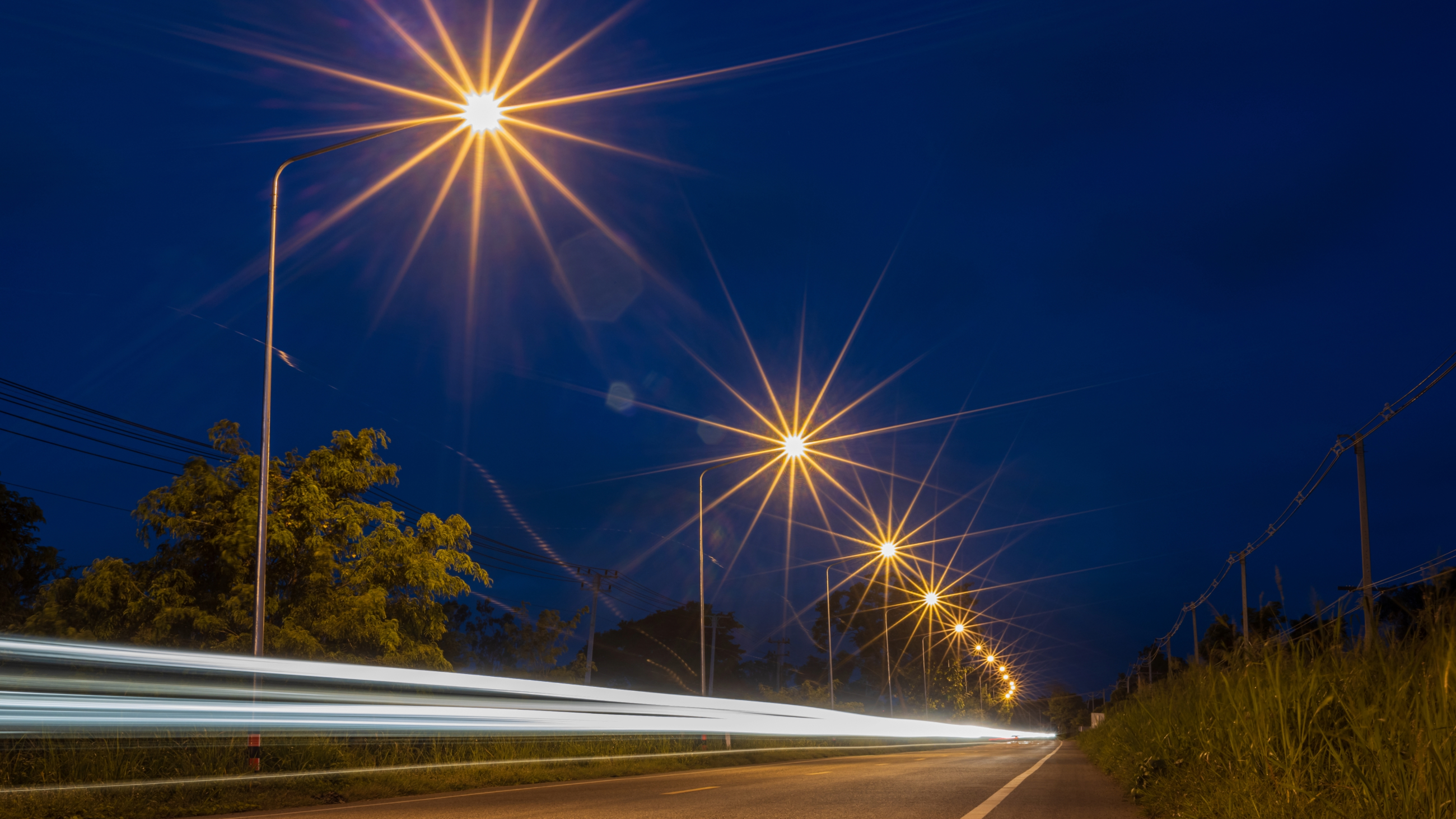

Why are there starbursts in my vision?
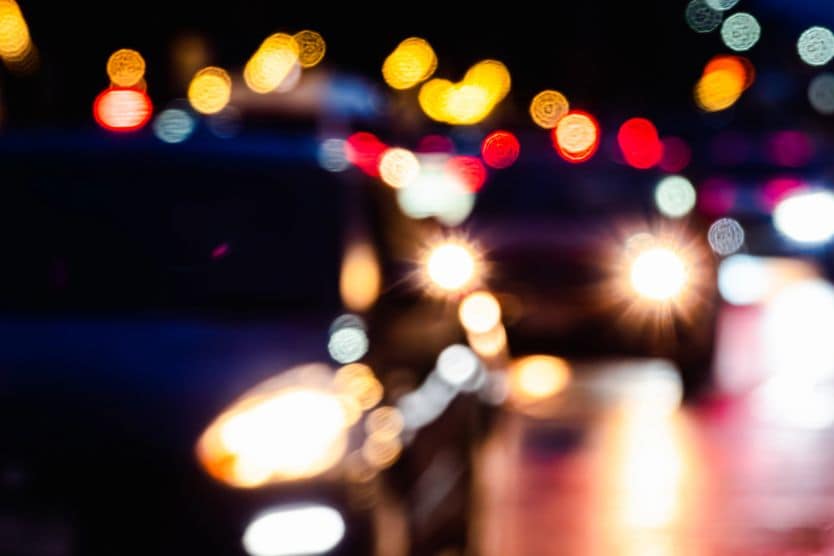
Starbursts can appear in your vision when something changes the way light enters your eyes. When people experience starburst vision, it’s usually most bothersome around bright lights at night, when they cause thin rays of light to radiate from the center of each light source.
At night, this star-shaped glare will appear around each streetlight and car headlight in your field of view, making it harder to drive. They can be distracting and, in some cases, dangerous.
While similar, starbursts look a little different than the halos that sometimes appear around lights.
What causes starbursts around lights?
Many different eye conditions can cause a starburst effect around lights:

Starbursts can make it harder to see cars, pedestrians and signs when you're driving at night.
Cataracts – A clouding of the eye’s natural lens that can become more common with age. In addition to starbursts, cataracts can cause hazy vision and sensitivity to light.
Astigmatism – A vision condition that affects the way the cornea or lens is shaped. Astigmatism causes light to bend the wrong way and can affect your driving at night.
Glaucoma – Irreversible damage to the optic nerve usually caused by high fluid pressure inside the eye. With a timely diagnosis, glaucoma can often be managed before possible damage occurs or worsens.
LASIK eye surgery – Lasik surgery is one of the most common laser surgeries used to correct refractive errors. Starburst vision can be a temporary side effect or, less commonly, a long-term result of a surgery complication.
Photoreractive keratectomy (PRK) surgery – This laser eye surgery corrects refractive errors. These include astigmatism, myopia (near-sightedness) and hyperopia (farsightedness). A temporary side effect is seeing starbursts, though halos are more common after this surgery.
Higher order aberrations – Refractive errors that are more complex than nearsightedness, farsightedness and astigmatism. These conditions can’t usually be treated with traditional corrective lenses.
Multifocal intraocular lenses (IOLs) – Surgically implanted lenses that can be used to replace the clouded lens during cataract surgery. Like multifocal glasses, multifocal IOLs can manage near, intermediate, and far viewing distances.
Keratoconus – A progressive disease that causes the cornea to grow weaker and become misshapen over time. It can lead to vision problems and different degrees of vision loss.
Fuchs’ dystrophy – A degenerative eye disease that usually affects both corneas. Fuchs’ dystrophy can also cause eye pain, light sensitivity and foggy vision.
Why do starbursts often appear at night?
When lighting is dim, the pupil dilates to let in more light. This dilation exposes more optical imperfections, increasing the chance of experiencing starbursts. This is why someone is more likely to see starbursts in the evening or at night.
Can starburst vision be treated?
It depends on which condition is causing the starbursts to appear. If starbursts are caused by cataracts, for example, cataract surgery may be able to help.
However, it’s important to note that immediately after surgery, someone may experience starbursts temporarily. This occurs due to backscatter, light reflecting from the artificial intraocular lens.
If you haven’t received a diagnosis, an eye doctor will need to examine your eyes before they can decide if treatment is needed.
Starbursts aren’t always serious, but they can be a sign of an eye problem that might need to be treated quickly. If you start to notice starbursts in your vision, schedule an appointment with an eye doctor.
READ NEXT: Do night driving glasses really work?
Frequently Asked Questions
Q: Will sunglasses help with starburst vision?
A: Depending on what is causing your starburst vision, it's possible that sunglasses may reduce them. However, at night, when starbursts tend to worsen, darker lenses (whether sunglasses or night vision glasses) decrease vision and are dangerous when driving.
Q: Can dry eyes cause starburst vision?
A: Dry eyes may cause starburst vision. Many things may cause dry eyes, including some medications, laser eye surgery, and certain health conditions, such as lupus.
Q: Can a brain tumor cause starburst vision?
A: Starbursts aren’t a typical symptom of brain tumors, though some brain tumors can lead to changes in vision. If you notice sudden or worsening starbursts or other vision changes, see an eye doctor.