Do eye exercises work for droopy eyelids?


Unfortunately, when droopy eyelids are caused by ptosis, there are no proven eyelid exercises that will help or treat the problem. Ptosis is the more common cause of an unusual amount of drooping in one or both eyes.
With many cases of ptosis, the eyelid’s levator muscle isn’t actually “weak” in the traditional way we think about weak muscles. Instead, the muscle’s function is weakened, due to an injury, an often-benign development before birth, or a separate underlying condition. Attempting to strengthen the levator or other eyelid muscles will not usually improve ptosis and could actually make the condition worse.
When drooping eyelids are present from birth (or shortly after), it’s referred to as congenital ptosis. When they’re caused by a separate condition, it’s called acquired ptosis.
SEE RELATED: What causes ptosis?
Are there eye exercises for droopy eyes unrelated to ptosis?
Aging, or even something as simple as sleep deprivation, can cause bags under the eyes or eyelids (usually both) that rest lower than they used to. Unlike ptosis, you should still be able to open your eyelids normally if you need to.
Although few are scientifically proven, various eyelid exercises have been suggested to improve the appearance of naturally droopy eyes. These can be referred to as face exercises or face yoga.
Some people may have more success than others. Exercises can include the following facial stretching routines:
- Creating a circle around your eyes with your thumbs and index fingers, then repeatedly switching between a squinting and forehead wrinkling.
- Opening your eyes as wide as possible for several short bursts.
- Creating pressure on your forehead with your fingers, then creating resistance by pushing your forehead up using your facial muscles (as much as possible).
- Repeatedly squinting while one finger presses down on each corner of each eye.
- Repeatedly opening your eyes wide while sticking out your tongue, then going back to a resting state.
Always check with your eye doctor before attempting any self-treatment.
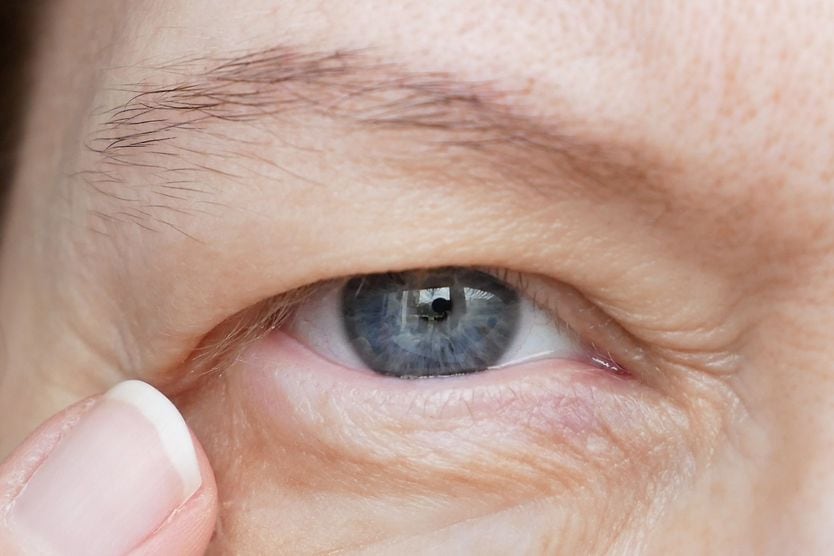
People can also have a common genetic trait called hooded eyelids called dermatochalasis, where the skin below the eyebrows loosens and sags over the upper eyelids and eyelashes. This forms a sort of natural “hood” over the eyes, and it’s typically harmless.
Many people with hooded eyes can be almost indistinguishable from people without them. Other people’s hooded eyes may be more prominent, almost giving the appearance of eyelid drooping. However, unlike ptosis, the eyelids are not actually affected.
While there are no proven exercises to change the appearance of hooded eyes, there is no shortage of suggestions available out there — including massage, resistance exercises and face yoga.
How can ptosis be treated?
In many cases, ptosis is a relatively harmless condition that may even go away on its own. But it can also affect your vision and may be the result of an underlying condition. If a significant condition is at fault, finding the cause is the key to potentially treating the eyelid(s).
In cases of congenital and childhood ptosis that require treatment — or when someone elects to have ptosis repaired — surgery is usually the recommended form of treatment.
During many ptosis surgeries, an incision is made in the upper eyelid so the surgeon can access the levator muscle. The muscle is then tightened to allow for better eyelid opening.
There are other potential forms of ptosis treatment, though they are primarily cosmetic and do not treat the underlying cause of ptosis or “cure” it.
Talk to your eye doctor
There are numerous websites offering exercises and treatments for almost every medical condition out there. While everyone’s case of droopy eyelids is different, some exercises can make the symptoms of diagnosable ptosis worse. Make sure to ask your eye doctor about any new exercises or treatments before you start them.
If you notice your eyelids are droopier than normal, an eye doctor can diagnose your condition and recommend an appropriate treatment plan.