Unshakable focus: A journey through sight loss and self-discovery
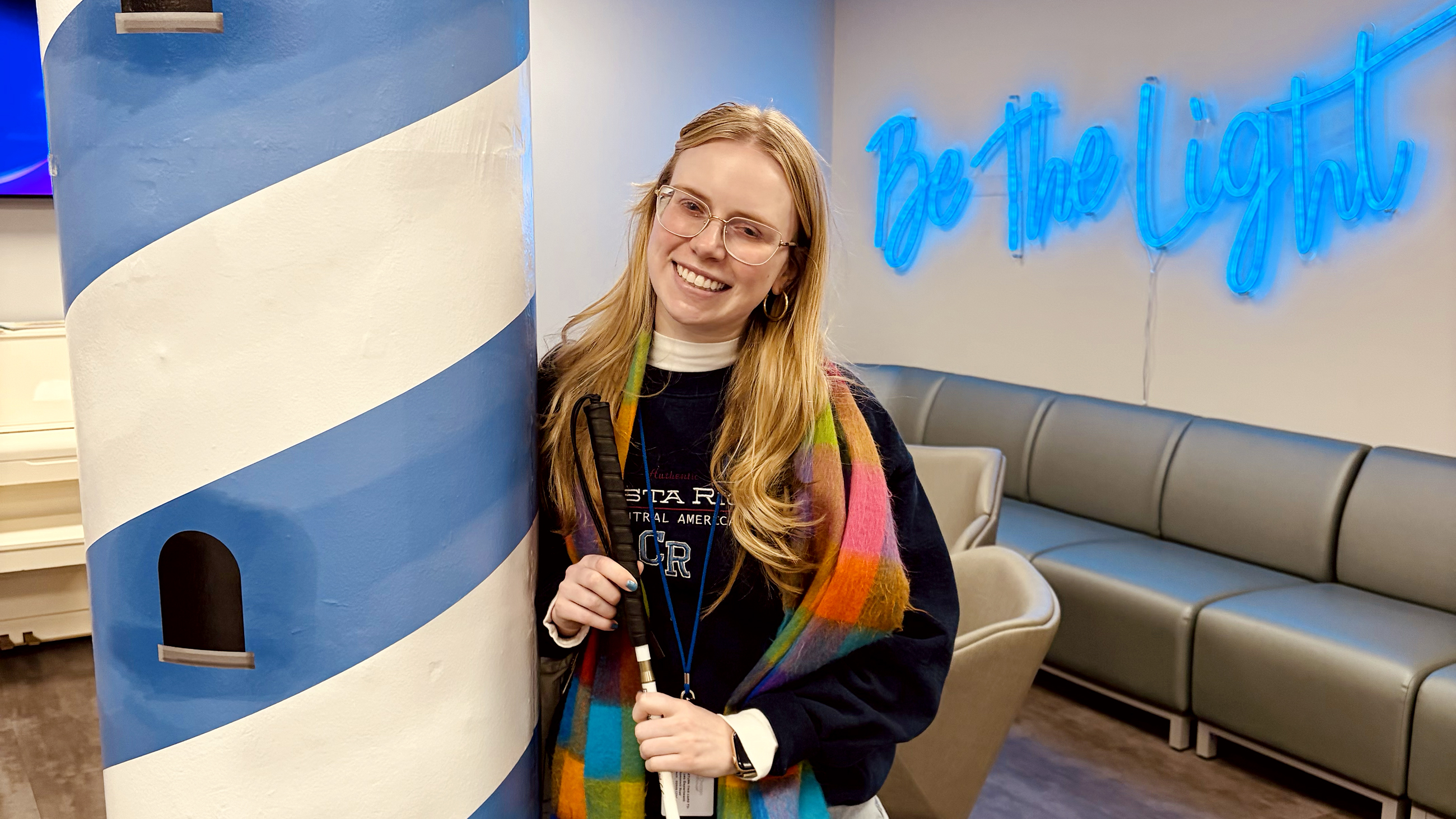
When she looks at someone, McEwen Baker can’t see their face. If you were standing in front of her, you’d register as a fuzzy shape, high on color and low on detail. “How I see is like looking through a fogged-over shower door,” she said.
Friends call her Q. She’s 27 and lives alone in Chicago. She works two jobs, including at a theater, where she wears a pin that reads, “I’m vision impaired.”
Her vision impairment doesn’t stop Q from talking to nearly 50,000 people on her TikTok account about becoming blind in her 20s and recently starting a support group for other young adults struggling with similar challenges.
A long road of 24 surgeries and treatments
Q was just 2 years old when her mom noticed sudden swelling in her knee. Then, she saw Q’s eyes were red and watery. A doctor visit resulted in a misdiagnosis, assuring them all was fine. A subsequent connection through a family friend led them to Johns Hopkins’ Wilmer Eye Institute in Baltimore, Maryland. There doctors identified juvenile idiopathic arthritis (JIA) connected to a severe form of uveitis, inflammation inside Q’s eyes that, left untreated, would have taken her sight before she finished preschool.
What followed were years spent flying back and forth between her home in Kentucky and the hospital in Baltimore — Q underwent 24 surgeries in total. They included two cataract surgeries as a toddler, a glaucoma shunt inserted into one eye at age 6 and a second shunt into the other eye the following year. Then came a shunt revision, numerous laser procedures throughout her early teens to clear debris from her eyes, emergency surgery at 16 to repair a ruptured globe and three surgeries to dissolve calcium deposits that built up on the surface of her cornea.
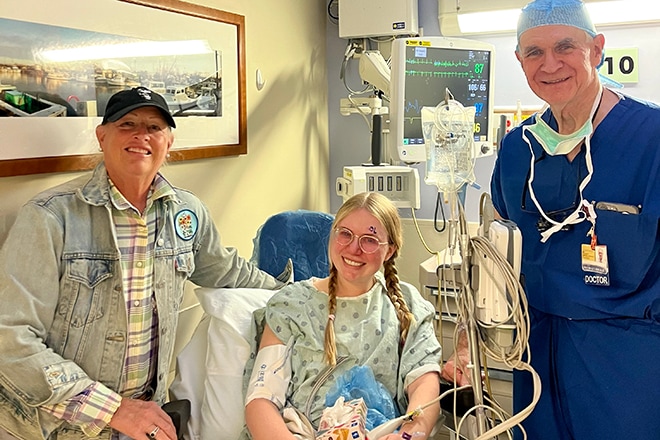
Q has had two cornea transplants, an additional glaucoma surgery, three laser treatments to clear her clogged shunts, countless in-office stitch removals and a procedure to remove scarred vitreous gel pulling on her retina to relieve pressure in her left eye.
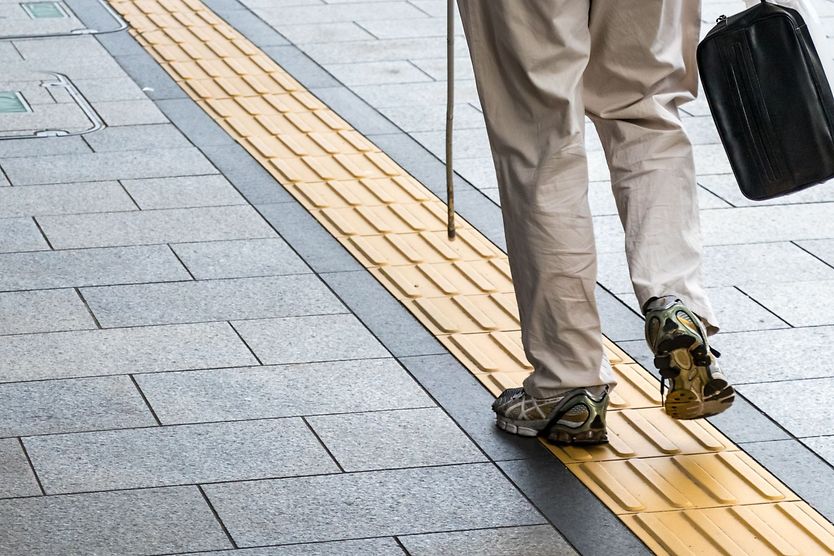
Q recently started orientation and mobility training, receiving her first white cane to help navigate her world safely.
Over time and with therapy, Q has mostly made peace with all that she’s been through. Her innate positivity is the foundation that’s supported her through this journey.
Q holds memories from her childhood of heading into surgery where a nurse handed her a purple surgical glove to blow up like a fun balloon before anesthesia. She remembers suitcases packed for a family vacation, left behind at the doctor’s office due to an issue that required an emergency procedure.
“Looking back, it mainly feels like it was sort of a bummer for me growing up more than anything else,” Q said. “I don’t feel like I was traumatized. That one time, all I could think of as a kid heading on vacation was, ‘I want to go to Maine!’”
Finding herself on stage
One setback, however, hit differently.
Backstage during a high school play rehearsal, a castmate accidentally jabbed his thumb into Q’s right eye, rupturing her eye and knocking her lens out of place. This meant another emergency surgery and weeks out of school. But it didn’t take her dreams of acting away. Instead, it’s when she found herself.
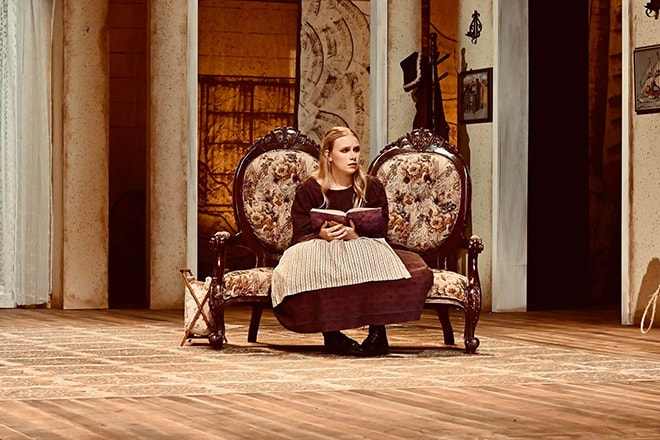
Q headed to Belmont University in Nashville, Tennessee, earning a bachelor of fine arts in theater performance. She describes learning to move through a stage set the same way she learned to ride a horse as a young girl growing up on her family’s Kentucky horse ranch: trusting the muscle memory and spatial cues her eyes couldn’t confirm. The theater community welcomed her and made room for the accommodations she needed.
Now legally blind in both eyes, Q doesn’t allow her vision impairment to define her or prevent her from living a full life.
Determined if not fearless
Ask Q where her resilience comes from, and her answer isn’t therapy or grit, though both have mattered. It’s horses.
She grew up riding competitively as a hunter jumper, a discipline that demands a level of visual precision that she never had. “I sort of learned to trust my ponies and my horses growing up,” she said.
Love of horses and riding runs in the family. Her dad is a retired equine veterinarian and her mom, Terry, is a former equine bloodstock agent. Terry said she never considered holding Q back or preventing her from taking risks. She refused to let potential danger keep her daughter from a fulfilling life, despite her vision impairment.
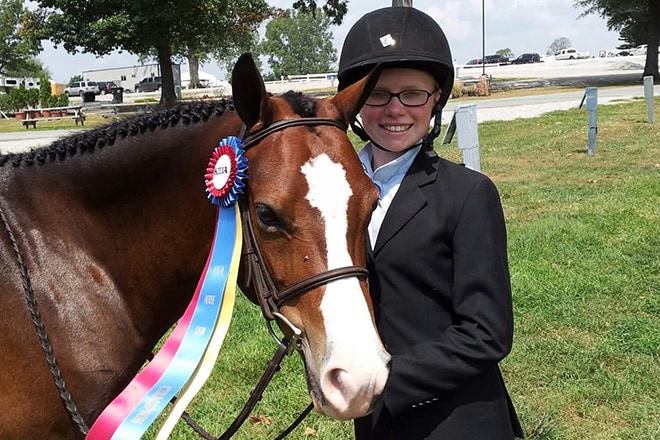
Q inherited her mother’s mindset. “I feel incredibly lucky to have had such a strong mother who doesn’t let things affect her in a real negative way,” Q said. “Being raised by a fearless woman, even though I’m not really fearless myself, has allowed me to keep going forward.”
Choosing independence and connection
While she may not feel fearless, Q has gained confidence, especially regarding her independence and ability to live life on her own terms. It’s what sent Q away to college and later to Chicago to pursue her adult life.
The move to Chicago was intentional. Q wanted a city where sight impairment didn’t mean losing her independence. She needed good public transit, a walkable city layout and a vibrant arts scene, all of which Chicago provides.
Today, Q lives in her own apartment, holds down two jobs and gets herself where she needs to go.
Seeking connection
Independence, though, isn’t the same as connection. For a long time, Q had plenty of the former and almost none of the latter. That changed last August, almost by accident.
She’d just left a particularly difficult and emotional therapy session where she had “major crash-outs” sobbing, working through losing full days to blindness for the first time in her life. Her therapist gently suggested it might be time to look into resources such as orientation and mobility training and find a blind community instead of trying to cope alone.
A frequent TikTok user, Q had never focused her content on her vision loss. This time, though, she filmed a short reel revealing her blindness and raw emotions.
“I was weepy, sappy and feeling sorry for myself, and I thought, ‘I cannot post this. I’m literally snotting on the internet,’” she recalled. Instead, she took a breath and went for a walk.
When she got back to her apartment, Q decided to post her emotional reel and reveal her “little secret of going blind at the ripe old age of 26.” Then she went to bed.
In the morning, there was a flood of notifications but Q didn’t see them because mornings are when her vision is the worst. “I didn’t find out the reality of what had happened until my lunch break at work,” Q recalled. “I hid in the bathroom when enough of my sight had returned to read my phone an inch from my eyes, after hearing notification after notification come flooding in.”
Thousands of people had responded. Other blind social media creators and BlindTok influencers she’d followed for years reached out, including influencers Molly Burke and MatthewAndPaul. Actress Julia Fox reposted Q’s reel.
“The overwhelming response was the biggest light in the darkest moment of my life,” Q said, tears rolling down her cheeks.
That single video has since reached more than 2 million views. Her following on one platform has grown beyond 47,000 people. But ask Q what actually matters about those numbers and it’s not the reach. She says it’s proof that she wasn’t the only 20-something quietly grieving her failing eyes and that people were hungry for someone willing to say so out loud.
Building the room she needed
That moment became the catalyst to put a developing idea into action. Earlier this year, Q founded Blurry Buddies, an in-person social support club in Chicago for blind and visually impaired adults ages 25 to 35. Their first gathering happened in the middle of a brutal summer heatwave and Q says she was blown away by the number of sign-ups. With two friends handling logistics and social media, Blurry Buddies now meets on the last Monday of every month.
“My hope and vision for Blurry Buddies is to create a safe space for visually impaired and blind young adults to connect, share their stories and be vulnerable with one another,” said Q. “I would love to have Blurry Buddies all over the world!”
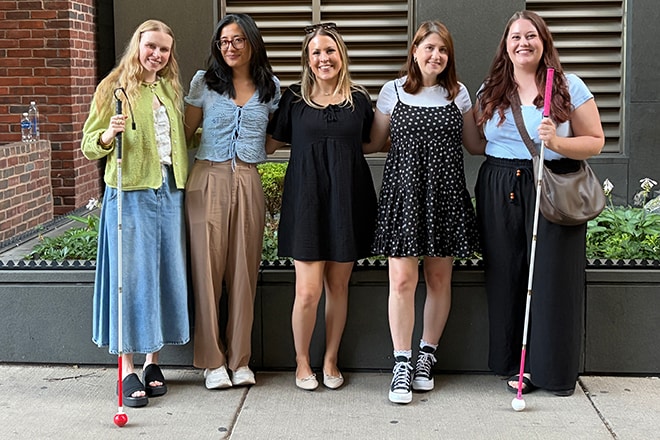
That may well happen. She’s already fielding messages from people in other cities asking how to start a local Blurry Buddies group of their own. While it may seem like a small thing on paper — a group chat, a monthly meetup and a shared afternoon — Q believes Blurry Buddies will help a generation of young adults navigate vision loss, taking them from isolation to real-world social connection and having fun at the same time.
Q’s vision for the future
Glaucoma has been the most devastating part of her vision loss journey, said Q. Over the last year, her blindness has become increasingly worse due to corneal edema and both her cornea transplants failing.
But hope is near and real. Q is heading to Kyoto, Japan, in October for a corneal stem cell procedure not yet available in the U.S., that would start with her left eye, the healthier and more stable of the two. If successful, the treatment could be life changing, potentially restoring partial vision and lasting improvement from a simple cornea injection instead of the risks that come with more surgeries.
Q doesn’t know where her life may head, and she recognizes that she hasn’t finished grieving everything she’s lost.
“I’m hopeful for the future,” she said after a long pause, her gray-blue eyes welling with tears. From her diagnosis at age 2, the multiple surgeries, and the reel she almost didn’t post, Q has built something that outlasts any procedure: a reason for others to feel less alone.
Her message to anyone walking a similar road, with or without a white cane, is simple. “Don’t be afraid to be vulnerable, and please share your story, because there is someone out there feeling alone and isolated who needs to hear it.”