A parent’s guide to low or no vision advocacy

Team USA Paralympic swimmer McClain Hermes was just 8 years old when she underwent four detached retina emergency surgeries. Hermes lives with a rare genetic disorder called Wagner Syndrome that causes progressive vision loss. Retinal detachment occurs at a higher rate for people with this disease. Now completely blind in one eye, she has described her vision in the other eye like “seeing through a straw with wax paper over it.”
She’s also a graduate of Loyola University Maryland, where she earned a master’s degree in emerging media. Hermes is one example of what is possible when visually impaired or partial-vision children receive the support they need to learn and grow. Read any story, and it’s clear that Hermes’s parents had her back as she achieved her goals.
Students who have access to instruction, advocacy, training and emerging technologies can succeed in school and in life — and even play sports, like Hermes. While doctors and educators are important, parents play a critical role in helping their children get life-changing treatment and accommodations.
Technology can change what low-vision children are able to do but only if parents know what to ask for. Indeed, parents are the ones who are best equipped to get the process rolling — and get technology into a child’s official Individual Education Plan (IEP) — by advocating for their children’s needs and rights.
The low vision challenge
Nearly 7% of children under 18 have a diagnosed eye and vision condition, and about 3% have blindness or vision impairment. This means it’s difficult for them to see, even when wearing glasses or contacts.
Legally blind children have vision characterized as 20/200 or worse in their better eye with the best correction, or a visual field of 20 degrees or less, said Maria Richman, OD, FAAO, an optometrist and vision rehabilitation specialist who is on the American Optometric Association’s Vision Rehabilitation Committee. A visually impaired or low-vision child has vision that is measured as 20/70 or worse in their better-seeing eye after correction.
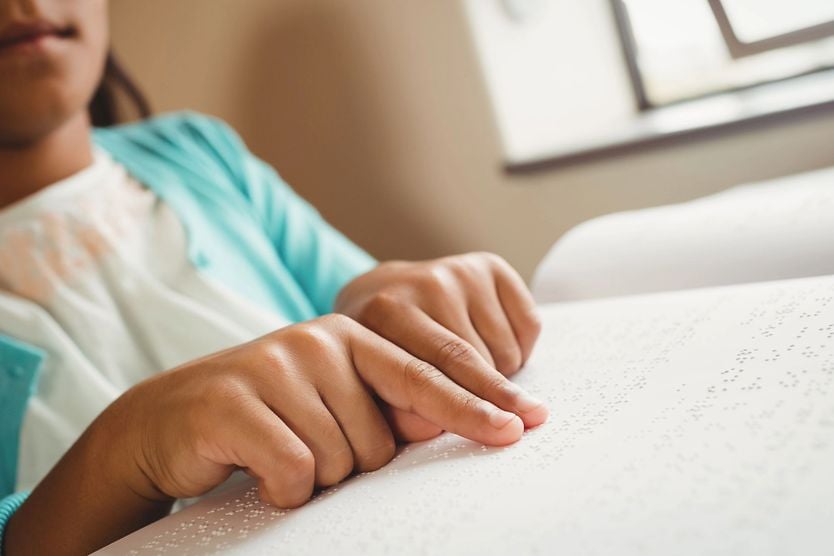
Both designations can be disabling. They may stop kids from learning, playing with other children and participating in outdoor sports and activities. In recent years, children with low or partial vision attended schools designed for visually impaired students. They learned braille there and interacted with children who had similar challenges. In later grades, they may have been steered to a limited number of careers and life choices. It doesn’t have to be that way.
If parents, care providers and educators work together and get children on the right path, Dr. Richman said, everything changes. Because while the number and breadth of tools available to visually impaired children have improved and multiplied, the difference in care comes down to knowing what to ask for and how to integrate that care. What works for one child may not work for another, she says.
“At the end of the day, the child is going to use the tools that they want to use. I feel it’s my job to give them all of the tools that will help them to succeed,” she said. “There’s nothing more rewarding than seeing a child’s face light up when you put on a pair of glasses and they don’t have to struggle as much, or they use a low vision device and start exploring the world around them.”
Understanding low vision and visual impairment services for children
There’s no predictable moment when a child might be diagnosed with vision issues. Parents and doctors may notice something is wrong soon after birth. Vision problems can develop later in childhood, too. That’s why annual comprehensive eye exams and not just in-school vision screenings are important.
The cause and timing matter for planning, too. Some children are born with vision loss. For example, from an inherited retinal disease (IRD), a congenital cataract or retinopathy of prematurity (ROP), while others acquire it later after an injury, illness, or a genetic condition that progresses during childhood. Whether a child’s vision remains stable or changes over time can shape which services and tools will help most. For IRDs, a pediatric ophthalmologist or genetic counselor can assist families and caregivers an understanding of the diagnosis, whether other relatives may be affected, and what to expect.
However, once a child is diagnosed, services should start immediately, says Stephanie Welch-Grenier, PhD, a research associate at the National Research and Training Center on Blindness and Low Vision. Instead, many children are receiving what she calls “piecemeal” offerings because their school districts, especially those outside of big cities, don’t know what to do.
Parents should first approach the school district with the child’s diagnosis, including all medical records. Children have legal rights and are guaranteed accessibility and advocacy to help them learn. “Then, you’re going to advocate for a full functional assessment and for a teacher of the visually impaired to be a part of that assessment team,” Dr. Welch-Grenier said.
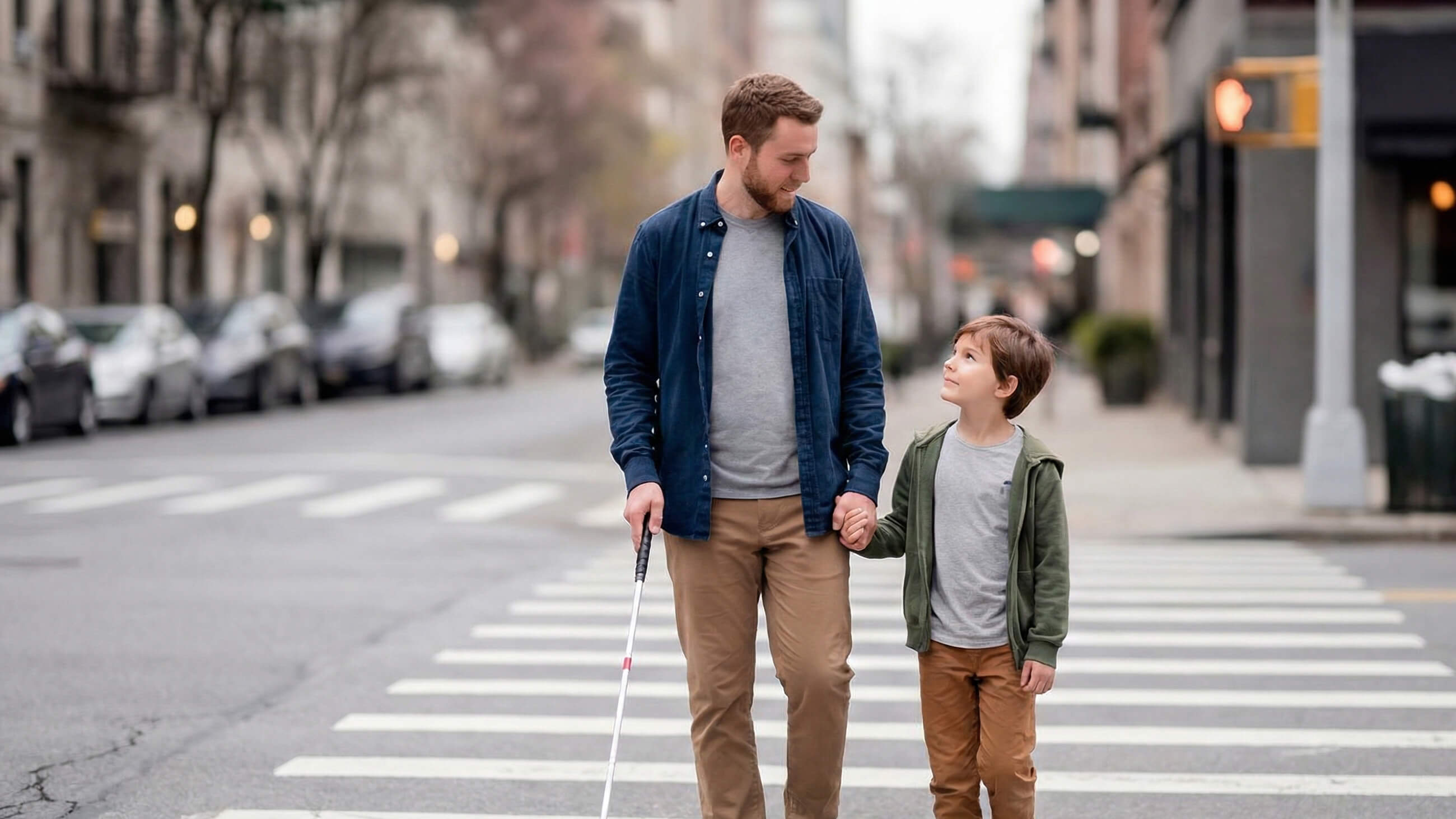
Assessments measure how a child functions on a day-to-day basis, not their vision. For example, how well can they access print at near vision or from across the room? Are they able to navigate from one place to another? “An orientation and mobility specialist might walk with the child through the building. We need to better understand how they’re using the vision they have,” she added.
Children who haven’t entered elementary school still need to go through the process to get services. They will qualify through early intervention programs, available to babies and young children. These programs provide vision services before they even learn their ABCs.
Once assessments are complete, the school district will provide an IEP, a 504 plan or both. An IEP gives your child specialized instruction. This may include learning braille, gaining access to assistive technologies, extra services, and the creation and tracking of measurable goals.
A 504 plan is about access and accommodations. It could include assistive technology and adaptive tools, such as:
- Larger print
- Magnifying lenses
- A seat at the front of the class
- Different lighting
- Extended time for testing
- Text-to-voice screen readers
It’s the balance between these two documents that sometimes trips parents up, said Dr. Welch-Grenier.
“IEPs carry a lot of legal weight for the school district. If I write in an IEP that the child needs a braille display, the district is legally responsible to find a way to make that work,” she said. “If there’s no funding for that, there are times where I have been asked to try to make a 504 work when it wasn’t appropriate.”
Many of the most powerful and newest tools, including screen readers, braille displays, magnification systems, artificial intelligence apps, mobility tools and wearable devices, require more than just a school district’s permission. If a child needs to learn how to use one tool — or many — a parent may need to push to have those skills included in the IEP.
Technology makes it clear
Some of the most important tools that low vision students need require specialized technology. One option is screen readers that read out loud digital text directly to children. A second is braille displays that transform text into bumps a child can touch and read on their own. Both connect to computers and smartphones.
Denise Robinson, PhD, director and founder of YourTechVision, an assistive technology training organization, has worked in the field for close to 40 years. She said low-vision children need access to technologies and devices early to keep up with general education classmates and avoid falling behind. “Life is a competition,” she said. “I want our students to be able to compete at every level with their fully sighted peers, and the only way they can do that is with technology. And the younger you can do that, the better.”
The issue — and the reason that it’s so important to get integration as early as possible — is that the way children do schoolwork is always changing. A general education child might read a workbook, go to a digital resource on the smartboard, write an email to a teacher, create a presentation and take a test in a single morning. Low-vision children need to do all of this, too, but will need to use different technologies and programs. Those skills must be taught.
For example, a low-vision child might use one tool to make the most of the vision they have while another gives them a way to access information that they can’t get on their own. Megan Sumrall Lott, OD, a functional low-vision optometrist, said low-vision devices are often task-specific. A child might need to start with one tool to read a worksheet and transition to another to see the board at the front of the classroom.
A child will need to understand how to use a handheld magnifier or tablet that helps them enlarge print, adjust brightness or even change the background color for close work, then use telescopic lenses to see the board. Those same children may get the most out of braille keyboards and refreshable displays that are light years away from the older, heavy braille machines that were as big as typewriters and just as difficult to use.
New technologies, like digital braille keyboards, high-definition magnification glasses and smart navigation and mobility devices, are hitting the market every day, Dr. Lott said. “I’d bet there are technologies that have come out over the last month that I don’t even know about. They’re coming out so fast, it’s really hard to stay on top of,” she said.
AI ups the ante
Artificial intelligence (AI) is another technology utilized to support low-vision students. Dr. Welch-Grenier said some AI-driven apps are designed to be used in and out of the classroom. The student can scan any text-based document or item, such as a worksheet, paper or juice box, and the app will read it out loud to them. This kind of accommodation can be very powerful in the traditional classroom, where many materials are created for visual learners.
For instance, a handout with photos or images that is invaluable to a sighted child is inaccessible — even with a screen reader — without the use of AI, Dr. Robinson adds.
“AI is phenomenal. It’s been life-changing for these kids,” she said. “Almost all of the teachers are giving out images, but screen readers can’t read that. Every single image needs to have alt text so that a completely blind child can actually know what the images are all about, and AI can do that.”
Dr. Welch-Grenier agreed but said that AI isn’t perfect yet, especially when it’s integrated with glasses or wearable devices. “It isn’t foolproof and does make mistakes,” she said. Since some schools may block the AI platforms or use of AI in the classroom to thwart cheating, there’s still work to be done. A tool that’s available and used at home may not be accessible during the school day, she said.
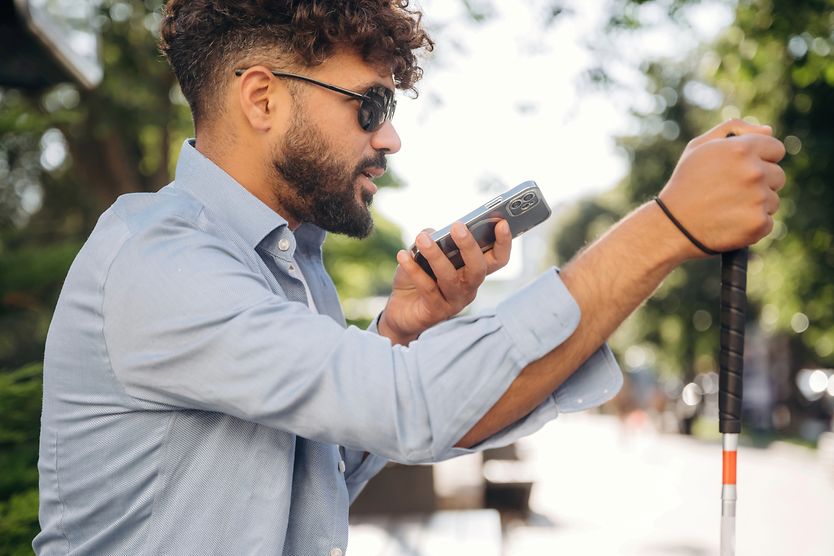
Still, the possibilities are exploding quickly, especially in the wearable category. Many high school students with visual issues wear smart glasses daily, Dr. Robinson explained, since they can be useful outside of the classroom, too.
One service integrates with smart glasses and provides on-demand, remote visual interpreting for people who are blind or have low vision. Using the service’s app, the user can interact with a real person who can tell them what the camera is seeing.
“A college student could say, ‘Get me to my next class,’ and it will tell them where to turn. It really helps the student gain a sense of independence,” Dr. Robinson said.
One size does not fit all
None of these tools solve every problem or help every visually impaired student. That’s why Dr. Richman says parents should avoid thinking about their child’s education as a set-it-and-forget-it process. The right plan will change and depend on the child’s diagnosis, age, remaining vision, school setting and willingness to use a tool. A pre-teen may not be willing to wear bioptic telescope glasses or a device that makes them stand out. “Some of my patients want to look and act and be treated like all the other kids,” and aren’t open to using braille or low-vision devices, she said.
Dr. Robinson agreed. “Vanity plays a pretty significant role, especially with K-12 kids. Some children may embrace the devices because they make it easier to learn, while others may resist anything that makes them feel more different than they already do. That doesn’t mean a tool is a poor fit. It just means that it’s a poor fit at that moment,” she said.
Parents need to straddle a fine line of advocating for their children but doing so in a way that’s not simply chasing the next greatest technology. They need to focus on providing the tools and skills so that their children can be productive adults, Dr. Welch-Grenier said.
“The biggest thing is to not shelter your student, and let them try whatever they’re willing to try,” she said.