The hidden social cost of vision loss in older adults

Imagine a retired teacher who ran a book club, spent time with friends and neighbors, volunteered, and enjoyed family events. Her life was active and full, until she began to lose her sight. Suddenly driving wasn’t safe, faces were harder to recognize, and she stopped going out, isolating at home. This story is all too common. As older adults slow down, perhaps due to mobility issues, vision loss can contribute to social withdrawal, fueling loneliness.
This quiet withdrawal is happening to millions of older adults across the country. Vision loss doesn’t just affect what people see — it can chip away at their social lives, their mental health and their independence. Worldwide, 28% of older adults suffer from loneliness and social isolation. The United States ranks the highest at 30.5%. Sight loss is not the only driver of what experts call an isolation and loneliness epidemic, but it has an impact.
“Loss of vision compounds and makes harder all the other contributors that feed loneliness: emotional, social and physical,” says Kira Baldonado, executive vice president of Prevent Blindness, a volunteer-based nonprofit, focused on fighting blindness and preserving sight. “I see vision health as a keystone issue for any age.”
How vision loss impacts social isolation
The U.S. Centers for Disease Control and Prevention (CDC) report that vision loss ranks among the most common conditions linked to loneliness, anxiety and depression. When an older adult can no longer read a menu, drive safely or recognize a friend’s face across a room, pulling back from social life may feel like the only option. Researchers call this “environmental press.” And when the world around seniors becomes harder to navigate than they can manage, they often start to isolate.
Joshua Ehrlich, MD, MPH, and associate professor of ophthalmology and visual science at the University of Michigan, studies the social determinants of vision health. These are the non-medical factors that shape how vision loss affects people’s lives and ability to function. He notes that most of the world is built for people who can see well. “Without accommodations and spaces that facilitate connection,” he said, “social withdrawal becomes common for those with vision loss.”
In 2024, Dr. Ehrlich’s research helped add vision loss to the life-course model of potentially modifiable dementia risk factors. This is a framework created by the Lancet Commission that maps the risk factors most likely to lead to dementia. Adding vision loss to this list matters because it makes the case for addressing it as a way to also protect brain health.
“One of the first things I emphasize is that vision loss in later life is not normal,” said Dr. Ehrlich. “In many cases, visual decline is fixable and you should see an eye doctor.”
That message alone could change outcomes for many seniors who never seek help, because they may assume declining vision and decreased social activity is just a natural part of aging.
The stigma of sight loss and loneliness
Research shows that visually impaired adults experience nearly three times as much loneliness as sighted adults — about 71% versus 26%. The risk is even higher for those with limited income, poor social support or no one to help them get around. These are common issues for seniors, according to Baldonado.
Even when older adults are struggling, many won’t ask for help. Judith Goldstein, OD, chief of low vision and vision rehabilitation at the Lions Vision Research and Rehabilitation Center at the Johns Hopkins Wilmer Eye Institute, sees this every day. Patients hope for a cure and tell themselves their vision isn’t bad enough to require special help.
“Fear of being labeled and fear that solutions won’t help restore their vision are real barriers,” Dr. Goldstein said. “Some feel they’re too good for rehabilitation help, thinking, ‘my vision’s not bad enough.’ But when asked about how they function, they say they have trouble seeing faces or small print.”
Dr. Goldstein says this denial creates a lag time between people needing help and seeking help. However, “the gap is shorter when a referring physician — usually a retina or glaucoma specialist — says, ‘I really want you to see vision rehabilitation specialist Dr. X. They can really be of help to you.’ It’s that direction that makes vision-loss function rehabilitation more palatable,” she said.
In addition, there’s a gap in how eye care is delivered that impacts the low-vision loneliness and social isolation epidemic. Standard eye exams focus on eye disease and corrective prescriptions. Doctors don’t always ask about function, quality of life, social activity or mental health.
“It’s very rare that an eye doctor asks about other aspects of daily life,” said Dr. Goldstein. “It’s a lot to do with exam time constraints and specialization in medicine, such as ‘I just do glasses’ versus geriatricians, for example, who examine and consider the whole patient. In low vision rehabilitation, we try to get back to that.”
What low vision rehabilitation actually looks like
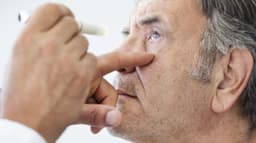
Dr. Goldstein explains that a full low vision evaluation at a center like the Johns Hopkins Wilmer Eye Institute runs at least an hour. It starts with a conversation about the person’s daily life — how they manage getting around, cooking, reading, watching TV and staying socially connected.
It then moves to a physical evaluation that tests not only how sharp the person’s vision is, but their contrast sensitivity. That’s the ability to distinguish between similar shades of light and dark.
“Maybe someone measures 20/30 on an eye chart, but their contrast sensitivity scores low,” said Dr. Goldstein. “It causes haziness, like looking through plastic wrap, and that's not fixed with glasses.”
Understanding that can be the turning point that motivates someone to engage with the rehabilitation process and help them stay socially connected.
The vision rehabilitation team then sets goals specific to each patient. These might include a reading goal, a mobility goal, and in many cases, a social goal. The plan might include magnifying devices, contrast tools, assistive technology, occupational therapy or audio-based alternatives for tasks that used to require sight.
The social component is a large part of vision rehabilitation, too.
“We talk about getting people into support groups,” Dr Goldstein added. “Some patients are worried about not recognizing people in their senior living community, for example, afraid others will think they’re snubbing them,” which can lead to retreating to their rooms and isolating. “We might ask if they’re comfortable doing something simple, such as wearing an ‘I’m visually impaired’ pin. Then when someone walks by, they’ll proactively say ‘Hi, it’s Sally.’”
Resources and programs that can help
A growing number of programs are addressing the social isolation and loneliness aspects of vision loss. Here are just a few that can connect concerned seniors, their caregivers and family members to local resources:
Prevent Blindness ASPECT Program
The ASPECT (Advocacy, Support, Perspective, Empowerment, Communication and Training) Patient Engagement Program brings together people with vision loss to build advocacy skills and peer connections. Through storytelling, coaching and simulations, members learn to speak up for themselves and push for policy change.
“Prevent Blindness has taken efforts to integrate vision and eye health awareness into healthy aging programs at the organization, community and state levels,” explains Baldonado. “We have guidance available on how to consider vision needs as it relates to the four Ms: mentation (mental activity), mobility, medication and what matters for older adults. Additionally, we offer guides for those who are losing vision; peer connections; and advocacy training programs that steer people to a high quality of life even with their vision loss.”
Prevent Blindness also offers resource directories to state agencies that offer help finding local low vision rehabilitation centers. To learn more, visit their website.
AARP Foundation Connect2Affect
The Connect2Affect platform helps older adults and caregivers assess social isolation risk and find local community programs and support networks. It also has a loneliness level risk assessment. For more information, visit their website to learn more about the platform.
The Foundation Fighting Blindness (FFB)
The FFB provides a list of helpful low vision tools, tech and resources, including networks connecting people with low vision to sighted volunteers. It offers a list of accessibility apps and technology, such as digital tools for smartphones and tablets that both magnify and help users see distance. Visit their website to learn more about FFB’s support tools.
State-level rehabilitation services
Minnesota’s MN Aging Eyes Program is a strong example of what states are rolling out to help older residents with low vision. It offers home adaptations and caregiver support, no-cost low vision aids and devices, and transportation services to help seniors with low vision stay engaged in the community.
Each state has a similar agency for these rehabilitation programs through their services for the blind, which can direct seniors, their families or caregivers to the specific division for vision services. A state or county’s area agency on aging can also help.
What caregivers of older adults with low vision can do
Family members and caregivers can make a big difference in helping older adults with low vision overcome social isolation. Baldonado encourages caregivers to approach this as a partnership.
She urges struggling seniors to talk openly about what they’re experiencing and what helps them see best. She suggests the following steps that can make a real difference:
Address transportation early. Losing the ability to drive, take the bus and get around is one of the most isolating moments in a vision-impaired senior’s life. Plan ahead. Look into transportation and free community ride programs.
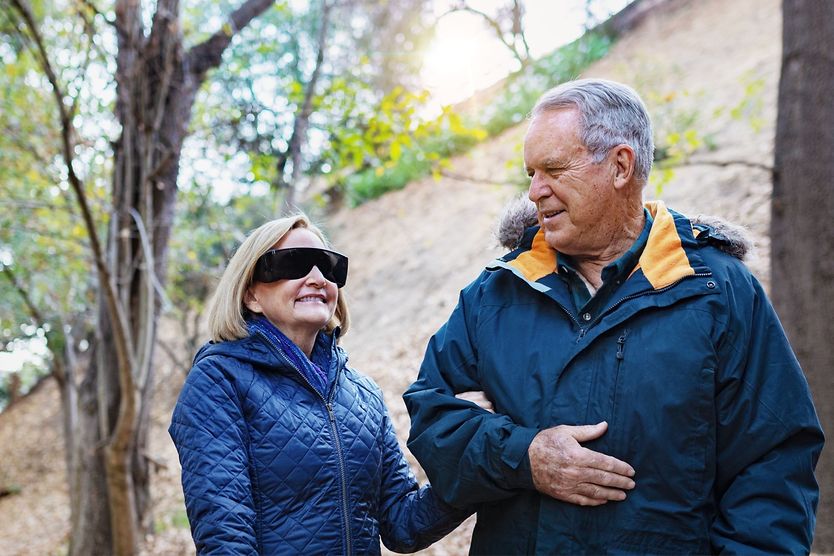
Go with them. The presence of others matters. Attending events with family and caregivers lowers the barrier to getting out.
Encourage a low vision evaluation. Frame it positively — the goal is to improve their daily life and ability to stay socially active and engaged, not to confirm a vision diagnosis. Dr. Goldstein underscores that even one visit to a specialist can open new options and potentially expand a person’s world.
Learn assistive technology together. Screen readers, smart speakers, audio text readers and visual impairment apps can restore a senior’s independence. Figuring them out together reduces frustration and encourages use.
Watch for emotional stress. Keep an eye out for signs of anxiety, low mood or increasing withdrawal. These may be signs of depression that could lead to social isolation and severe loneliness. The National Council on Aging has support resources to help.
Looking ahead
Many scientists and health experts would like eye doctors to check more than just vision. They are pushing for a future where every eye exam includes a check-in on a senior patient’s mood, if they’re feeling lonely and how active they are.
“The goal is for an eye exam to include not just, ‘What can you see?,’ but ‘what can you still do? Who are you connected to? Where do you need support?,’ which all help paint a good picture of being a person and not just a set of eyeballs. It’s about being interested in who they are, what they want to be able to do or did in a prior life, and asking about their goals,” said Dr. Goldstein.
Baldonado sees progress happening as experts try to reduce social isolation, connect patients to help during their regular medical visits, and raise awareness so that fewer seniors struggle alone.
For older adults with vision loss and the people who care for them, the core message is this: Losing some sight does not have to mean losing connections. Visual impairment may change how people see the world, but it doesn't have to shrink it. With the right support networks, community programs, and assistive technology — adapting is possible — and so is living well.