Adapting to an easy lifestyle for seniors with impaired vision

On this page
Understanding the vision problem
How to provide support for a senior with low vision
Getting to know their doctor or specialist
Making lifestyle changes
Adapting home life
Monitoring senior eye health as a caregiver
Other types of visual impairment experienced by seniors
On this page
Understanding the vision problem
How to provide support for a senior with low vision
Getting to know their doctor or specialist
Making lifestyle changes
Adapting home life
Monitoring senior eye health as a caregiver
Other types of visual impairment experienced by seniors
Low vision can make everyday tasks difficult, especially for seniors. Fortunately, making small adjustments to their environment can help cater to the visually impaired senior you care for. Getting familiar with their condition and offering moral support are also recommended practices.
Helping seniors with low vision adapt their homes to accommodate their needs may also make life easier and safer for them.
Understanding the vision problem
To begin, it can be helpful to understand the condition at hand. Helping the senior you care for understand their visual impairment is also important.
What is low vision?
Low vision is a type of visual impairment that affects someone’s visual acuity (sharpness of vision). Those who have low vision have a visual acuity of 20/70 or worse, even after corrective measures such as eyeglasses or contact lenses.
Low vision can also be caused by a severe reduction in peripheral vision. In addition, those with low vision may experience decreased contrast sensitivity. Low vision is sometimes called “moderate visual impairment.” However, a low vision classification can include a range of visual impairment.
Low vision is typically permanent and is usually not correctable with eyeglasses, contact lenses, medication or surgery.
Types of low vision
There are several types of low vision that a senior may experience. The more common are:
- General, uncorrectable blurred vision
- Central vision loss (inability to see objects in the center of your vision)
- Peripheral vision loss (inability to see out of the sides of your visual field/corners of your eyes)
- Night blindness (inability to see things in low or dim lighting)
What causes low vision?
Knowing what causes an individual’s low vision is also important to establishing their eye care routine and precautions.
Seniors may face a number of other vision conditions that contribute to low vision. Some of the more common causes include the following underlying conditions:
- Cataracts – Can cause hazy or blurred vision
- Glaucoma – Can cause the loss of peripheral vision
- Age-related macular degeneration (AMD) – Can cause central vision loss
- Diabetic retinopathy – Can cause vision changes, such as blurred or distorted vision, dark or blind spots, and vision loss
One or more of these conditions can cause a person to have vision impairment. Knowing the symptoms of an impairment can help you recognize challenges and learn how to navigate them.
For example, if a senior has glaucoma and loses their peripheral vision, they will need assistance seeing things to the left and right of their central vision.
It’s worth noting that these vision conditions are not uncommon; as many as 3.5 million people over the age of 40 experience vision loss, usually due to age-related causes.
How to provide support for a senior with low vision
Supporting a senior with low vision can be an important part of managing their condition. Emotional, physical and informational support are some key ways to offer help and support for a senior.
Emotional support
Social and other moral support is crucial when it comes to assisting a senior with low vision. Supporting the senior in your life emotionally can help them understand their condition and potentially ease any anxiety that comes with it.
How can you provide emotional support?
- Remind them that many aspects of the condition are manageable.
- Reassure them that they are not alone.
- Spend quality time with them. Make them feel comfortable and included in group gatherings.
- Never let them feel as though they are a burden.
- Ask how else they would like to be supported emotionally.
Physical support
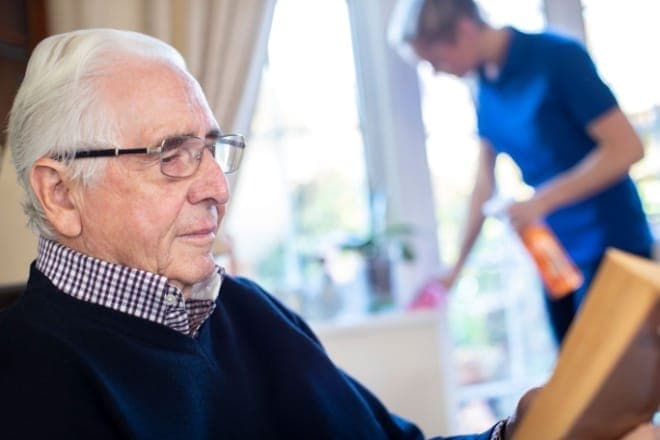
Physical support is very important when it comes to someone who has a vision-related disadvantage.
What can you do physically to help a senior with low vision?
- Join them in games, exercise and other activities they enjoy.
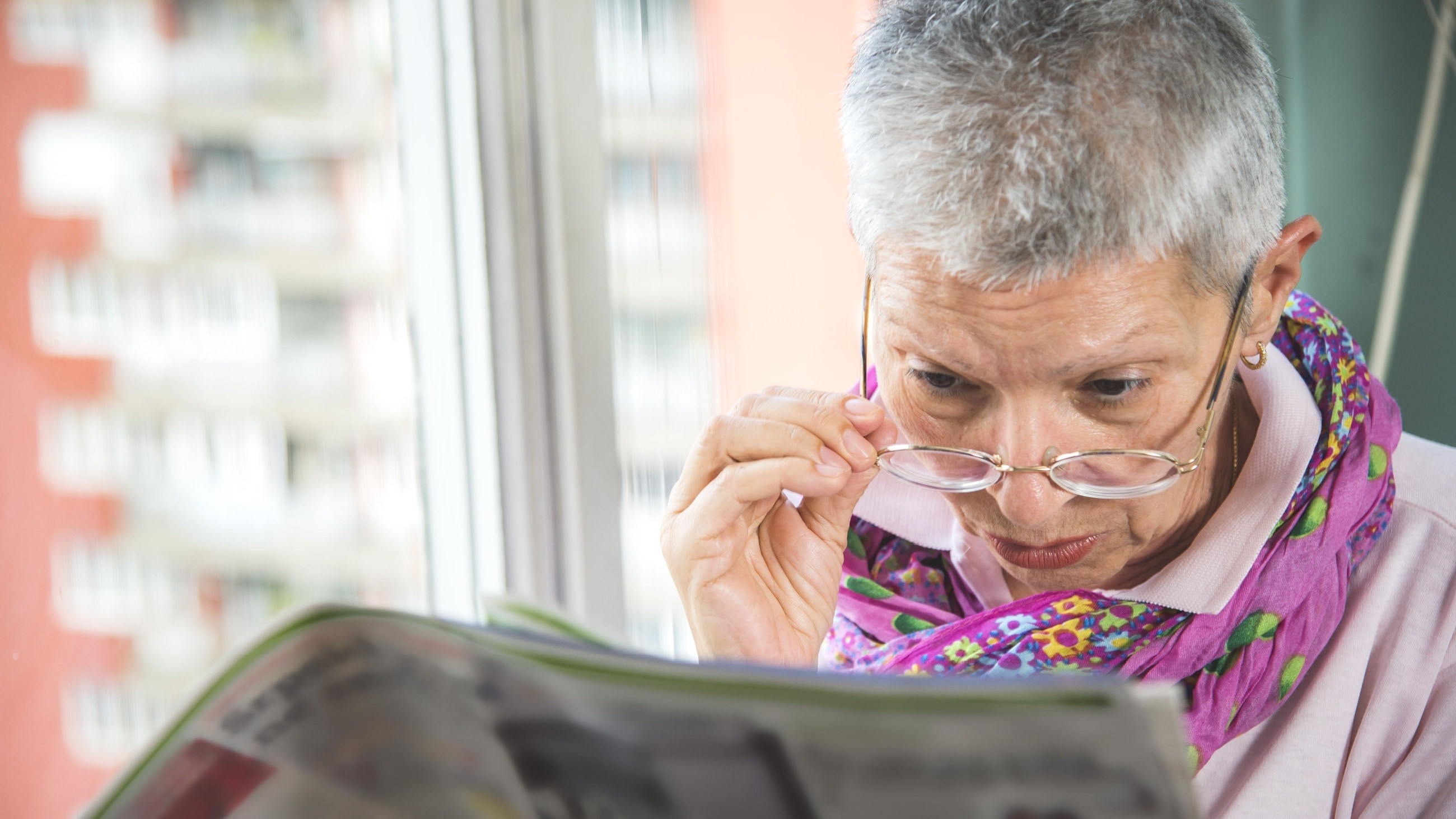
- Assist them in difficult tasks, such as reading or navigating dim environments.
- Help organize their home in a way that is easy to get around. Additionally, offer to help keep their home clutter-free.
- Make the exterior of their home easy to navigate. You can do this by taking care of landscaping and putting away potential hazards, such as water hoses, newspapers, leaves and other outdoor debris, that could cause someone to trip and fall.
- Perform household repairs when needed. If there is a problem too big to tackle yourself, hire an expert to help.
- Drive them to eye exams and to other appointments or errands.
- Everyone’s needs are different, so consider asking how else you can help.
Informational support
You can be an advocate for the senior you care for. Gather as much information as you can about their condition and their personal needs to help make their daily life manageable.
Since seniors may have trouble remembering certain things, it can be helpful for someone to remind them of appointments, routines and other tasks.
What informational things can you do to support a senior with low vision?
- Observe their routines and write them down for reference. This may include what time they take any medicine or how they otherwise manage a condition.
- Learn (and keep learning) about their condition(s). Make a note of new symptoms, struggles or other concerns to bring up at future appointments.
- Get to know their doctors or specialists to access more information and medical support.
- Relay all of this information to other people who may step in to offer their care as needed.
- Ask how else they would like to be supported or helped.
Getting to know their doctor or specialist
Working with their eye doctor or low vision specialist can also provide helpful guidance and support. Low vision specialists are eye doctors who have completed additional training in caring for patients with impaired vision. They may perform a specialized low vision refraction to optimize your loved one’s vision. Additionally, they can often provide devices and resources to help manage daily activities.
Their eye doctor or low vision specialist can help you further understand the condition and become more aware of potential future issues. This can also help you know who to call if there is a serious concern or emergency.
Being an advocate for a senior with low vision can also be a crucial part of their care. During medical check-ups, it can be helpful to record any observations that are made. If you’ve noticed any new or worsening symptoms in the senior you care for, be sure to share them with their doctor.
If the senior you care for is forgetful, it’s important to learn the proper care from their eye doctor (and other specialists). Even if a senior feels that they are perfectly capable of taking care of themselves, it always helps to have an accountability partner.
Making lifestyle changes
You’ve established that supporting a senior with low vision is crucial. But what are the specifics of doing so?
Well, low vision can affect people in several ways. Many of these require adjustments in daily life, and seniors who have low vision may need assistance with certain tasks. This can include:
- Reading books, magazines or labels
- Using the internet
- Grocery shopping
- Driving and other types of travel
- Cooking and other household chores
- Home repairs
- Taking care of their pets
- Assistance getting to and from appointments
- Advocating for themselves at a doctor’s appointment or in other meetings
- Navigating the outside world, at restaurants and in other public places
SEE RELATED: Yes, you can travel if you’re blind or have low vision

Adapting home life
Aiding with tasks and helping a senior adjust to a low vision lifestyle is important. Adjusting their environment can also make their lives easier.
Many people with low vision also suffer from decreased contrast sensitivity. This means they may have difficulty seeing in low light situations or when the contrast between objects is poor. Adapting a home to have brighter lighting and improving contrast in areas such as the kitchen or on the stairway can help improve safety and independence.
From home organization to lighting adjustments, here are some ideas for adapting home life for a senior with low vision.
Embrace organization
- Keep indoor and outdoor spaces clutter-free.
- Place items back where they belong after use.
- Keep power cords neatly tucked away.
- Keep dishes away from the edges of tables and countertops to help avoid spills or breaks.
- Push chairs in under tables and desks when they are not being used.
- Discuss how the senior would like to organize their linens, dishes, products and other belongings, and implement their requests.
Turn up the lighting
- Increase the amount of natural light if possible. Use curtains or blinds to adjust it when needed.
- Make sure dark places (hallways, stairs, closets, etc.) are well-lit.
- Place TVs, computers and other objects with screens in ways that avoid a glare.
- Consider glare-reducing window shades to help prevent glare.
- Place lamps and other light sources so that they illuminate objects directly.
Explore texture and color
- Furniture with textured upholstery can help someone recognize where they are by touch.
- Adding bump pads or puffy stickers to appliances or switches that do not have three-dimensional buttons can help someone identify what they are touching.
- Place padding or non-slip rugs on floors.
- Choose furniture that is a contrasting color from other items in the room.
- Select doorknobs and cabinet pulls that are a different color from the door they are attached to.
- Install light switch plates that are a different color from the wall they are on.
- If needed, use brightly colored tape to outline where stairs or countertops begin and end.
Key items to keep in the home
- A telephone (mobile, landline or both) in case of emergency
- A list of largely printed phone numbers for doctors, emergency contacts and transportation services
- Handrails along stairs indoors or steps outdoors
- Safety bars next to the toilet, tub and in the shower
- Working smoke and carbon monoxide detectors
- A first-aid kit
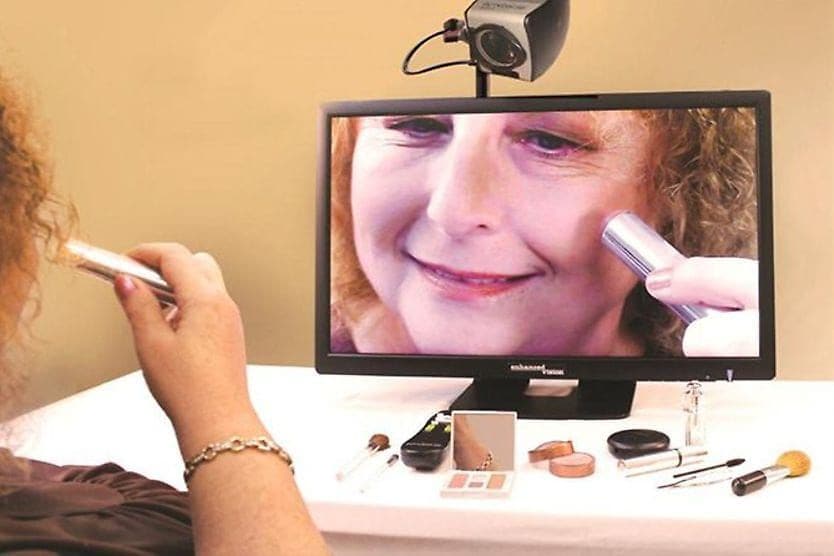
- Large screen computer monitors and TVs or digital desktop magnifiers
- Vision aiding devices, such as a magnifying reader
Remember to review safety risks within each of these categories. Are all chairs pushed in? Are items that could be tripped over picked up off the floor or lawn? Is glassware moved away from the edges of countertops or tables? These are a few things to review to help improve safety.
SEE RELATED: Guide to buying low vision magnifiers

Monitoring senior eye health as a caregiver
Offering your support, a hand around the house and overall assistance are all important ways to make life simpler for a senior with low vision. In addition to these tasks, learning to recognize the signs or symptoms of a worsening eye condition can also be helpful.
It’s important to monitor for changes, such as if the senior forgets part of their everyday routine or if they make odd mistakes during hobbies or activities they do often. Vision impairment could be the cause, which could become more serious and may require additional attention as time goes by.
Some seniors are forgetful or find it challenging to discuss their visual impairment, so it’s crucial that they have someone to support them in times of need. Even if a change in habit seems minor, it’s important to notify their doctor anyway.
Each senior is unique and can have different needs or desires for how they handle their condition. It can help to listen and look for ways to improve their lifestyle. And when in doubt, never hesitate to contact their doctor or specialist for advice, big or small.
Other types of visual impairment experienced by seniors
Beyond low vision, there are different levels of visual impairment that people can experience including:
- Legal blindness – Best-corrected visual acuity of 20/200 to 20/400 in the better eye or a visual field of 20 degrees or less in the better eye. Legal blindness is a “severe visual impairment.” Those who are legally blind may be eligible for disability benefits through the U.S. government.
- Profound visual impairment – A visual acuity of 20/500 to 20/1000 in the better eye. People with profound visual impairment may have severely limited vision, but they can typically still sense the difference between light and dark environments.
- Total blindness – The inability to see or perceive any source of light or object form. Only 15% of people with a visual impairment experience total blindness.
It’s important to understand this information if you are a caregiver, friend or relative of a senior. Knowing the difference between each type of visual impairment can also be helpful for appropriately addressing their needs.
It can be helpful to talk about the condition with the senior you care for so that the two of you have a mutual understanding of the subject. This can help you both transition toward a potentially safer and more manageable lifestyle.
READ MORE: How to help someone who is visually impaired
On this page:
Understanding the vision problem
How to provide support for a senior with low vision
Getting to know their doctor or specialist
Making lifestyle changes
Adapting home life
Monitoring senior eye health as a caregiver
Other types of visual impairment experienced by seniors
On this page:
Understanding the vision problem
How to provide support for a senior with low vision
Getting to know their doctor or specialist
Making lifestyle changes
Adapting home life
Monitoring senior eye health as a caregiver
Other types of visual impairment experienced by seniors