Can LASIK fix astigmatism?


In most cases, LASIK can fully correct astigmatism, and the effect is typically permanent.
Astigmatism is a very common vision problem. Despite having a somewhat scary-sounding name, astigmatism is not an eye disease — it's simply a refractive error like nearsightedness and farsightedness — and it can usually be corrected with eyeglasses, contact lenses or refractive surgery. LASIK is one type of refractive surgery.
Astigmatism typically is caused by the front surface of the eye (cornea) having an asymmetrical shape.
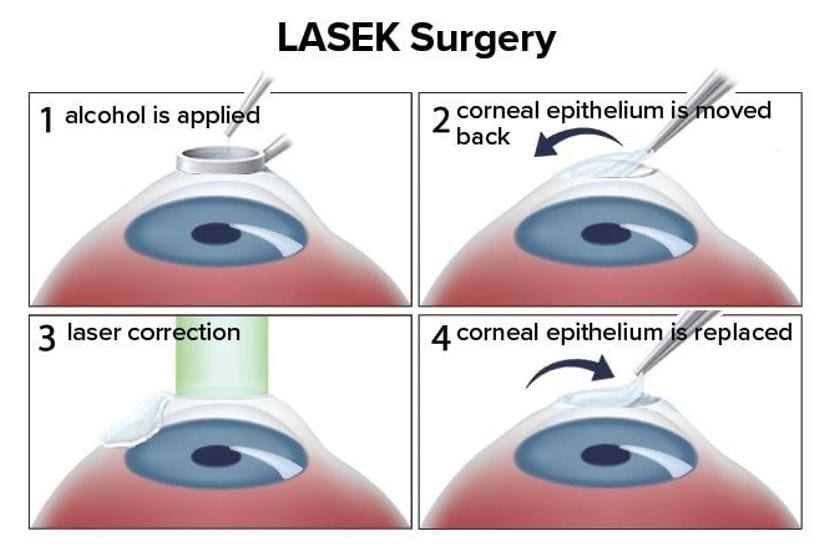
An analogy that's often used to describe this is to say the cornea is shaped like an American football rather than like a baseball. Another is to say that an eye with astigmatism is shaped like an egg or the back of a spoon, rather than like a ping-pong ball. The ultra-precise lasers used for LASIK surgery can be programmed to reshape the cornea so the front surface of the eye is more symmetrical, which may correct the vision problems caused by astigmatism.
Mild astigmatism can often be corrected with a single LASIK procedure.
Higher amounts of astigmatism may also be corrected with LASIK, though this increases the likelihood that a follow-up LASIK enhancement will be needed to fine-tune the correction.
If you have high astigmatism, this may affect your LASIK surgery cost, depending on the policies of the LASIK surgeon or surgery center you choose. This will be discussed with you during your preoperative exam and consultation.