Are eye transplants possible? What’s standing in the way?
It’s largely the optic nerve, which carries visual information to the brain. The optic nerve is small — no more than a couple of inches long and less than one-fifth of an inch thick. But it’s an obstacle to transplantation.
Why? Because a transplant requires severing the optic nerve. That’s like throwing a switch that turns it off — permanently. Some nerves can regenerate and reconnect, but the optic nerve can't.
Heart transplants were once considered beyond reach. Now, hands and faces can also be transplanted. This raises a host of questions about eye transplants, such as:
What are the basic anatomical challenges for eye transplants?
How realistic is the hope of eye transplants in the next few years?
Which parts of the eye can be transplanted?
What are the prospects for synthetic implants or “bionic” eyes?
Let’s take a walk through each of these questions.
Why is the eye so difficult to transplant?
The vision system has three complex components:
The eye, whose cornea and crystalline lens bend light waves and focus them on the light-sensitive nerves of the retina.
The optic nerve, which attaches to the retina and transmits visual information to the brain.
The visual cortex, the brain’s bundles of nerves that translate visual signals into eyesight.
These components make it difficult to restore vision after transplantation. A donor eye could presumably be transplanted — but it cannot restore vision because the optic nerve will not survive being severed. For a transplant to work, the optic nerve would have to regenerate itself in two places: the donated eye and the person receiving the donation.
Scientists are working on ways to get the optic nerve to regenerate. If they can figure that out, eye transplantation might become a reality.
Will we see eye transplant surgery in the next few years?
Human eye transplants are theoretically possible. Indeed, a team of scientists predicted in 2016 that eye transplants might be available in 10 years.
“It is kind of a moonshot,” researcher Kia Washington, MD, said in an interview with PBS News Hour. Washington, a plastic surgeon at the University of Pittsburgh Medical Center, leads a research project aiming to solve the riddle of getting the optic nerve to regenerate.
Washington’s research team has successfully transplanted an eye in a rat by finding a way to make its optic nerve regenerate. It’s much more difficult to do the same thing in humans because our optic nerves are much larger. And our vision system is far more complex.
Moreover, doctors will have to figure out how to address the immune system, which naturally rejects donated tissues. All these challenges might prevent eye transplants from becoming mainstream for years to come. (In a later interview, Washington expanded her prediction to “the next 10 to 20 years.”)
In the meantime, many parts of the eye can already be transplanted.
Which parts of the eye can be transplanted?
The cornea, which is the clear, dome-shaped outer layer on the front of the eye, is among the more commonly transplanted parts of the human body.
Why are cornea transplants relatively common? Well, the cornea is transparent tissue with no blood vessels and therefore no blood. That means no need for matching blood types, which can complicate other kinds of transplants. Moreover, corneal tissue can typically stay viable long enough to be stored in eye banks.
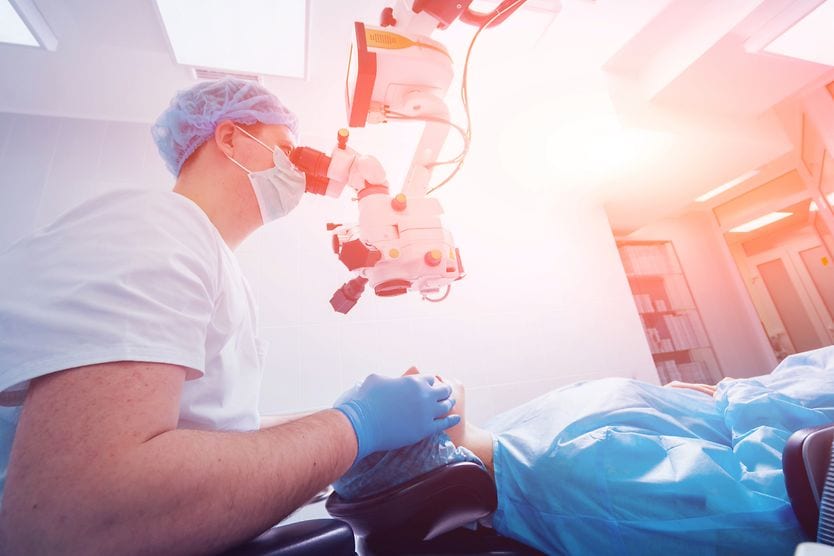
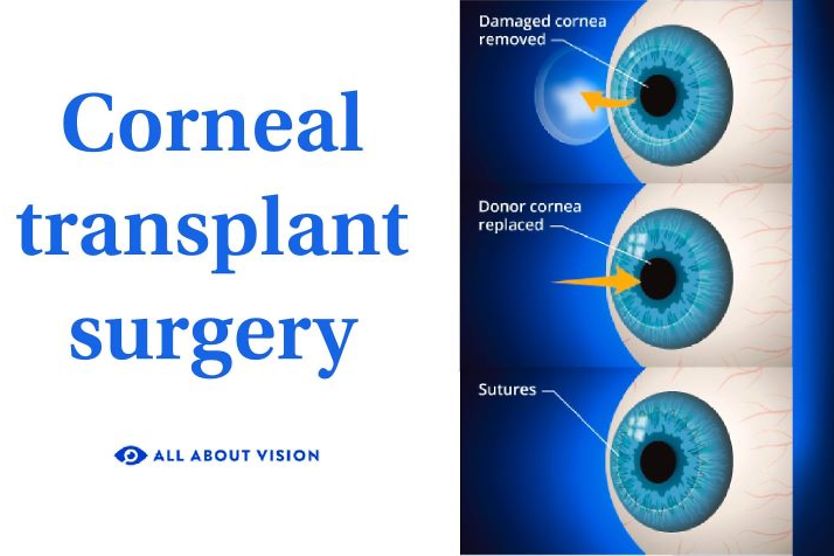
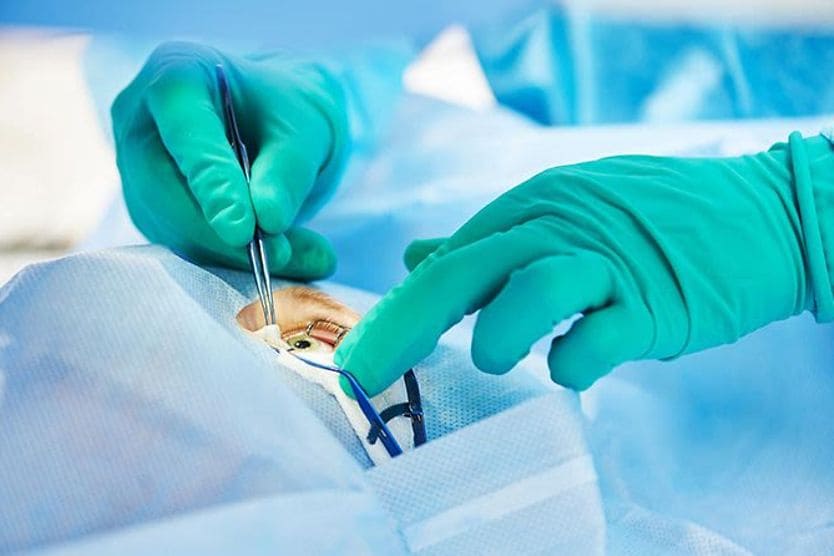
Cornea transplants require considerable surgical skill. The damaged or diseased cornea must be carefully removed and a donor cornea sutured in its place. The patient may need six months to a year to recover from the surgery.
Transplants also have been done in the:
Eye surface – Surgeons may be able to transplant placenta from childbirth to help heal and regenerate eye surfaces, including the cornea, the white of the eye (sclera) and the structure covering the sclera and the inner eyelids (conjunctiva).
Eyelashes – Injuries, burns and other eyelid problems can remove eyelashes. Transplants may be able to replace them.
Eyelids and tear ducts – A facial transplant by French doctors in 2010 included eyelids and tear ducts.
A promising area of research is retinal stem cell transplantation. In theory, stem cells placed directly in the retina can replace damaged or diseased cells, potentially treating a number of vision conditions. The eye is often considered an optimal site for this kind of stem-cell therapy because only a small number of cells would have to be implanted.
Also, it’s easy to study and observe the retina with scanning devices. However, the complexities of the human eye and stem-cell therapies require caution in doctors and patients alike.
Another emerging option for restoring or repairing vision is the implant, which inserts devices, rather than living tissue, into the body.
SEE RELATED: Osteo-odonto keratoprosthesis surgery (OOKP)
How promising are “bionic eye” devices?
The notion of a “bionic eye” has captured the human imagination dating back to a TV show from the 1970s. Scientists and engineers are working on devices that can restore a small amount of sight in humans. Yet they are a long way from building a synthetic device that can match the performance of the human eye.
Consider the precision and efficiency of the eye: It draws all of its power from nutrients in the bloodstream. It needs no batteries, wiring or microprocessors. Light-sensitive rods and cones in the retina help the brain produce clear color images of our world.
While there is some speculation about growing eye tissues in a laboratory, the prospect of designing and building an electronic replica of a human eye that could fit into the human eye socket is still science fiction.
Progress with retinal implants reflects this. Some retinal prostheses systems use a combination of components, such as:
A small camera mounted in a pair of glasses.
An implant that inserts electrodes into the eye.
A transmitter to send vision data to the implant.
This technology has been studied primarily for addressing diseases such as retinitis pigmentosa. While it may restore a fraction of vision, the brain appears to learn how to use the system and adds some visual capacity over time.
Transplant technology is always improving
Children born in the 2020s may raise their families in a world where an eye transplant is as commonplace as a heart transplant is today. But it may not be a 20-year wait for progress. Each new device and partial-transplant technique will likely open new horizons for people with blindness or low vision.
Visiting your eye doctor regularly is the optimal way to stay up to date on breakthroughs in vision restoration.
READ NEXT: Losing an eye: Enucleation and prosthetic eye FAQ