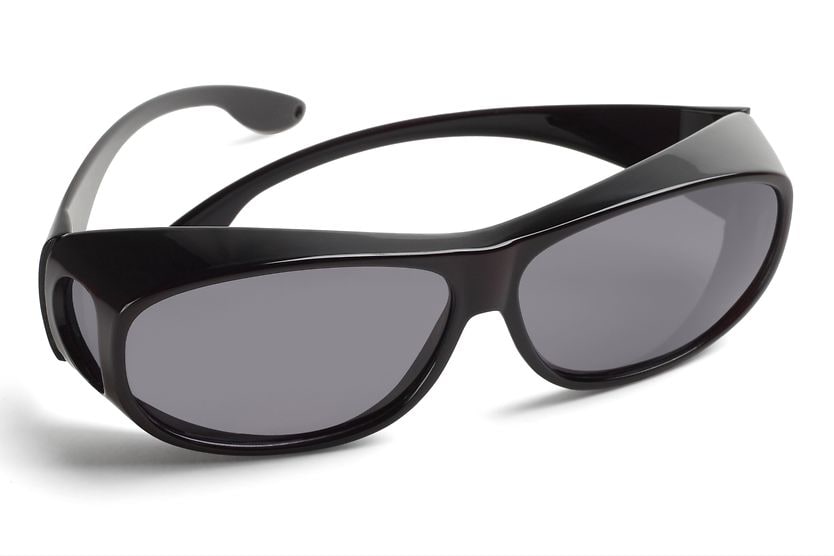
Wraparound sunglasses hug the contours of your face, helping to prevent the sun’s rays from creeping in around the edges. That helps cut down on the glare and bright spots that may obscure your vision when you’re outdoors.
Wraparounds are an alternative to fashion sunglasses, which can make you look cool, detached or edgy. Alas, these virtues usually can’t mask the vices of many fashion shades: they let too much sun in.
Doesn’t that defeat the purpose of wearing sunglasses? Possibly, but since when does fashion have to make sense?
Wraparounds generally serve distinct purposes. Some provide a low-cost alternative to prescription sunglasses. Others help outdoor athletes and workers see the world more clearly.
These answers to frequently asked questions may help you figure out which ones are right for you:
When are wraparound sunglasses over glasses a good option?
Sunglasses that sit on top of a pair of prescription eyeglasses are the most basic and economical variety of wraparounds. Sometimes, they’re called fit-overs or wrapovers.
You’re forgiven for thinking of them as wraparound sunglasses for seniors. Sure, older people are more likely to have prescription eyeglasses because many people’s eyesight fades with age. And perhaps people in their golden years would rather not buy prescription wraparound sunglasses.
It turns out, however, that many people who wear prescription eyeglasses are candidates for fit-over or wrapover sunglasses, which typically don’t cost much and may block more sun than a pair of clip-on sunglass lenses would.
Wraparound sunglasses over glasses may pose a few challenges:
- They add weight, so they might not be comfortable to wear for hours on end.
- Because they sit on existing glasses, they probably won’t stay in place for motion-heavy activities.
- You have to carefully measure your prescription glasses to make sure they’ll fit under these wrapover sunglasses. (This is more of a challenge when ordering online. If you’re buying in a store, you can just try them on.)
Wraparound sunglasses that go over glasses are often available with polarized lenses, so they’re usually good for reducing glare near the ocean or while driving.
From here on in, we’ll talk about the rest of the wraparound sunglasses on the market.
Are wraparound sunglasses better than other styles?
Wraparound shades might not always be better, but they’ll be practical — especially if you need to keep your vision sharp amid bright light.
Celebrities and retired sports stars wear wraparounds for utilitarian reasons: paparazzi flash mobs.
Some wraparound sunglasses lack the subtlety and nuance of more laid-back styles. They might have an aggressive, athletic sensibility that doesn’t mesh with the rest of your wardrobe.
Think of wraparounds as the sensible shoes of the sunglass world. Wraparound sunglasses may look better on people with certain face shapes (oval, diamond and heart), but they’re known for getting a job done.
WANT TO LOOK LIKE A WRAPAROUND STAR? Shop at an optical store near you or online for wraparound shades
Who should wear wraparound sunglasses?
Wraparounds may be essential if you work or play in the direct sun and can’t shade the area around your eyes. If you have a broad-brimmed hat for hiking or a cowboy hat for horseback riding, you’ll probably get enough shade to make do with conventional sunglass styles.
But if you take a dirt bike or an ATV out for all-day adventures, you’re more likely to need a helmet that doesn’t provide much shade. The same holds for working in hard-hat areas on construction sites or any kind of industrial job that exposes you to the sun or intense indoor lights.
Wraparound sunglasses may feel like a lifesaver if you have light-sensitive eyes.
What are shield sunglasses?
Shield sunglasses have a one-piece lens that stretches all the way across the visual field. They’re sort of a crossbreed between sunglasses and ski goggles. Shield sunglasses generally have one lens and two temple arms, while goggles have an elastic band to keep them in place.
Why not just get the goggles? Well, tumbling down a hillside is part of the fun of snow sports. That’s why goggles need an elastic band. If spills are rare (golf springs to mind), then shield-style sunglasses make more sense.
Shopping tips for wraparound sunglasses
Look for styles that fit how you’ll wear them — Make sure you’re getting enough peripheral vision and that the frames won’t block your field of view when you need it most.
Prescription wraparound styles are available — The curves in wraparound glasses may limit your prescription options. Talk with an optician to find sunglasses that are compatible with the refraction your prescription requires.
Polarization is not ideal for every outdoor activity — Polarization can reduce depth perception, which can make it tough to spot a patch of ice on a ski slope, for instance. If you’re not sure, ask an eye care professional.
You can spend hundreds of dollars on high-tech wraparound sunglasses, but you don’t have to. Do your research, ask people you trust and match your purchases with your practical needs.
LOOK COOL BUT BE PRACTICAL: Shop for wraparound sunglasses at an optical store near you or online.