You sit down at your favorite restaurant, ready to order. The server hands you the menu, and your stomach sinks. You forgot your reading glasses. Again. Your friend across the table leans back as you extend your arm to its absolute limit. Nothing. Resigned, you snap a photo with your phone just to make out the entrees, a quiet acknowledgment that reading glasses have become an unavoidable companion. But what if a single eye drop could change that?
The slow blur no one escapes
Presbyopia affects nearly every adult past age 40. It develops gradually as the lens inside the eye becomes thicker and less flexible with age, losing the ability to focus up close. The surrounding muscle still contracts, but the lens no longer responds to that movement as it once did. As this flexibility declines, near work requires more effort, and fine print becomes harder to see.
The numbers illustrate presbyopia’s scale. As the global population ages, the number of people affected is projected to grow from 1.8 billion in 2015 to about 2.1 billion by 2030, roughly one-quarter of the world's population. The most recent U.S. estimate (based on 2020 census data) indicates that approximately 128 million adults have presbyopia, representing nearly 90% of adults in the U.S. aged 45 and older.
Three prescription eye drops are now approved in the United States for managing presbyopia. In October 2021, the FDA approved Vuity, followed by Qlosi in 2023 and VIZZ in 2025. A fourth drop awaits regulatory decision in early 2026, and a fifth has posted positive late-stage trial results, potentially expanding options further.
Together, these drops represent the first major shift in presbyopia management in decades. What has surprised many clinicians is how rapidly presbyopia treatments are entering the market, fueling optimism that there will soon be multiple options for managing the condition.
From glaucoma drug to reading aid: Pilocarpine's 150-year journey
The journey to presbyopia management began in 1875 when German chemists Hardy and Gerrard isolated pilocarpine from Brazilian jaborandi leaves. One year later, the Austrian ophthalmologist Alexander Weber introduced it as a treatment for glaucoma, a group of conditions that damage the optic nerve. Left untreated, glaucoma can cause permanent vision loss.
Weber recognized that pilocarpine could lower elevated pressure inside the eye, a primary risk factor for glaucoma. It worked by contracting the ciliary muscle and constricting the pupil to improve fluid drainage. For many years, it was a standard treatment for glaucoma, although patients had to endure frequent dosing, stinging, headaches and persistent eye redness.
When newer glaucoma medications emerged with fewer side effects, pilocarpine use declined. But researchers observed a striking pattern in patients who continued pilocarpine: their near vision was better than expected for their age. This sparked speculation that pupil constriction itself may provide enhanced near vision. This led to the hypothesis that pilocarpine's effects extended beyond the use doctors had focused on for years.
Harnessing pilocarpine’s power
Pilocarpine works through the pinhole effect, an optical principle long understood by experts in the field.
Dr. Thomas Stokkermans from University Hospitals of Cleveland, Ohio, who recently co-authored a review on how pupil size affects vision, explains: "Essentially, when the pupil gets smaller, it works like a camera opening that squeezes shut, blocking peripheral light rays and allowing only central rays through. In bright light, this extends the depth of focus and makes reading small print easier. Think of it as squinting without squinting."
Transforming pilocarpine into a presbyopia treatment required solving problems that earlier formulations had created. These mixtures were acidic and stung on instillation (application), required frequent dosing, and used concentrations for glaucoma rather than near vision. Perhaps more significantly, no approval pathway existed for a lifestyle use like reading enhancement.
The breakthrough came when Allergan developed a buffering system that eliminated the burning sensation. Additionally, the company optimized the concentration to 1.25%, which was enough for meaningful pupil constriction with fewer side effects. Studies have found that reducing the pupil to about 2 millimeters produces a noticeable improvement in near vision.
This led to the approval of the first presbyopia drop, Vuity, in October 2021. The drop could work within 15 minutes and last six hours, transforming a former glaucoma drug into a modern presbyopia treatment. This milestone opened the door for different medications that lasted even longer.
The eye drops coming for your reading glasses
As of December 2025, there are three presbyopia eye drops approved only in the United States:
- Vuity (pilocarpine 1.25%) – Approved October 2021
- Qlosi (pilocarpine 0.4%) – Approved October 2023
- VIZZ (aceclidine 1.44%) – Approved July 2025
A fourth eye drop, BRIMOCHOL PF, which combines two active ingredients, has been submitted for review with a decision date set in early 2026. Another product, phentolamine 0.75% from Opus Genetics, posted positive late-stage trial results in June 2025, with a decision pending in late 2026.
Choosing your presbyopia management means choosing trade-offs
Presbyopia drops aren’t right for everyone. The approach works best for people with mild to moderate presbyopia, especially those who've worn single-vision glasses or needed no correction at all. Individuals with more advanced presbyopia may need additional strategies. While these eye drops offer short-term near-vision improvement without glasses, experts note that many people will still need to rely on glasses.
Drops differ in how they affect the eye and how long they last. All three constrict the pupil to improve near vision, but Vuity and Qlosi also engage the muscles around the lens to help bring close objects into focus.

Cost is another important factor. Because they’re classified as lifestyle treatments, most insurance plans provide limited or no coverage, leaving many users to pay out of pocket. Doctors identify the best fit for patients by reviewing drop performance, effects and accessibility.
Vuity (pilocarpine hydrochloride 1.25%): The drop that changed near vision
In October 2021, Vuity (pilocarpine hydrochloride 1.25%) became the first FDA-approved prescription eye drop for presbyopia. The formulation was engineered to adapt to the tear film, eliminating the stinging that had plagued earlier versions. It marked a turning point in how near vision could be managed: not as a side effect of glaucoma treatment, but as a primary therapeutic goal.
For most people, the drug's profile is practical. Effects begin within 15 minutes of application and can last six to 10 hours. Many use it once daily, though some add a second dose three to six hours later, depending on their needs. The drops store at room temperature and, once opened, remain stable until their labeled expiration date.
A 2.5 mL bottle, sufficient for roughly 30 days of once-daily use, typically costs around $80, while a 5 mL bottle lasting approximately 60 days averages $120.
How effective is it?
Vuity’s clinical trials set early expectations. About one in three adults gained three lines of near vision on an eye chart. Fewer than 10% of people using placebo drops hit that mark. Most users noticed the effect within 15 minutes, and it generally lasted for several hours.
Qlosi (pilocarpine hydrochloride 0.4%): A lower-dose alternative
Approved in October 2023, Qlosi offers a lower-concentration option. It contains 0.4% pilocarpine hydrochloride, about one-third the strength of Vuity. It’s made without preservatives, making it appealing for those concerned about chemical additives or eye sensitivity.
For this lower-dose option, the effects begin within 20 minutes of instillation and can last up to eight hours. Most patients use it once daily, though some add a second dose two to three hours later. Qlosi comes as single-use vials that must be stored in the refrigerator. Once opened, individual vials can be kept at room temperature and remain stable for 30 days.
Cost is competitive with Vuity. A 30-dose pack typically costs around $79, while a 60-dose pack averages $99 — comparable pricing, but some people prefer single-use over bottled drops.
How effective is it?
Qlosi works the same way as Vuity but with a lower dose. In trials, roughly half the participants gained three lines of near vision. Most felt the improvement within about 20 minutes, and the effect lasted for several hours.
VIZZ (aceclidine hydrochloride 1.44%): A long-haul option
Approved in July 2025, VIZZ is the first aceclidine-based eye drop for presbyopia, offering a different approach from pilocarpine-based options. It provides the longest duration among currently approved presbyopia drops and has no preservatives.
The dosing differs from other options. Individuals must instill one drop in each eye, wait two minutes, then instill a second drop. Dr. Stokkermans recommends a practical strategy to his patients: Place the first drop, brush your teeth, then place the second drop — a simple way to ensure proper spacing between doses.
Effects begin within 30 minutes of instillation and can last up to 10 hours with once-daily use. VIZZ comes as single-use vials stored in the refrigerator until the expiration date. Once removed from refrigeration, vials remain stable at room temperature for 30 days.
Cost varies by supply size. A 25-dose supply typically costs around $80, while a 75-dose supply averages $200.
How effective is it?
In the FDA’s review, VIZZconsistently improved near vision for up to 10 hours after dosing, the longest duration reported for a single dose among the three drops.
The fine print of seeing better up close
For many people, presbyopia drops deliver on their promise of sharper near vision and restored reading ability. But outcomes vary. Some experience modest improvement, while others notice much better near vision. And as with pilocarpine years earlier, side effects remain part of the equation.
Both the American Academy of Ophthalmology and the American Optometric Association recommend presbyopia drops as a reasonable option, but with the critical caveat that patients must be properly screened and monitored. Before starting treatment, a comprehensive eye exam is essential. It can reveal underlying conditions that might compromise safety or efficacy of the drops, ensuring that the benefits outweigh the risks for each individual.
What patients experience
Like any medication, presbyopia drops deliver benefits alongside potential drawbacks. Mild side effects are common across all three drops. Headache, eye irritation, blurry vision and dim vision may occur frequently but are usually temporary.
The three drugs differ slightly in their side effects. Pilocarpine-based drops like Vuity may also cause brow pain, while Qlosi, which uses a lower pilocarpine dose, occasionally triggers eye soreness. Both Vuity and Qlosi can cause systemic effects in some users, such as increased sweating, tremor or stomach- and breathing-related symptoms. VIZZ, the newer aceclidine-based option, most commonly causes eye irritation during instillation, reported in about 20% of users.
Since all three drops narrow the pupil, users report dim vision in low-light settings, making night driving difficult. These effects are temporary, but they shape how and when individuals choose to use the drops.
Understanding the risks
A rare but serious concern has emerged from careful post-market monitoring. Pilocarpine-based drops carry a heightened risk of retinal detachment, a separation of the tissue lining the back of the eye. An observational study found that patients using pilocarpine drops had higher rates of this complication than those using a placebo. The risk appeared at three months and continued to rise at six months and one year.
Certain people face an even higher risk. Those with retinal thinning (lattice degeneration), a history of cataract surgery with an intraocular lens, myopia or age-related changes in the vitreous (the gel-like substance filling the eye) should approach pilocarpine-based drops with particular caution and close monitoring.
Users of presbyopia eye drops should watch for warning signs such as flashes, new floaters or sudden vision changes and get prompt medical care if they occur. They should also seek immediate attention for signs of a severe allergic reaction, such as hives; difficulty breathing; or swelling of the face, lips, tongue or throat.
Life, briefly, without the search for readers
For years, worsening near vision meant reading glasses tucked into every pocket and scattered across bags or desks. Now, for many adults, a single, carefully timed eye drop offers a return to the freedom and simplicity of pre-presbyopia vision, if only for a few hours at a time.
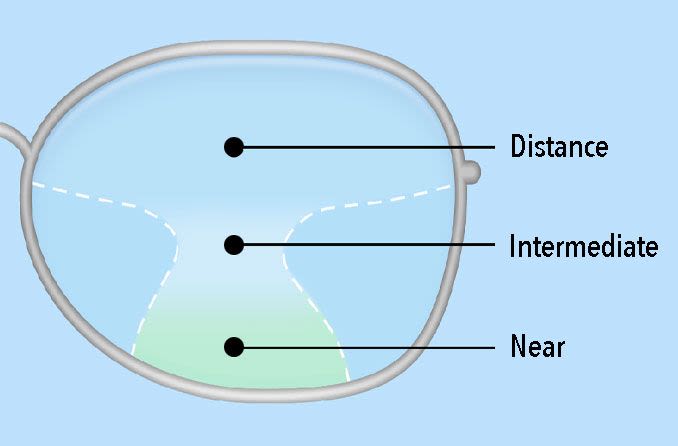
Yet presbyopia drops join, rather than replace, an established arsenal of correction options. Glasses remain the most common solution, with hundreds of progressive addition lens (PAL) designs available to suit different needs and lifestyles. Multifocal contact lenses and monovision treatment, where one eye is corrected for distance and the other for near, offer additional alternatives, each with advantages and trade-offs. An eye care provider can help determine which approach, or combination of approaches, best matches an individual's needs.
Comprehensive prescription statistics for presbyopia drops in the U.S. have not yet been confirmed. However, the research pipeline suggests this is just the beginning for these innovative eye drops. Several investigational drugs act only on selected eye muscles, potentially reducing side effects.
Other drops in the pipeline soften the aging lens to restore some lost flexibility, though long-term evidence is not yet available. Combination drops take a different approach, pairing drugs that trigger pupil constriction with drugs that help keep it constricted for longer periods.
No drop promises to undo presbyopia, but together these options signal a quiet reshaping of how the condition is managed. For anyone who has strained to read a label or resorted to a phone camera at dinner, that shift is both meaningful and welcome.