The National Optometric Association: Making optometry more accessible
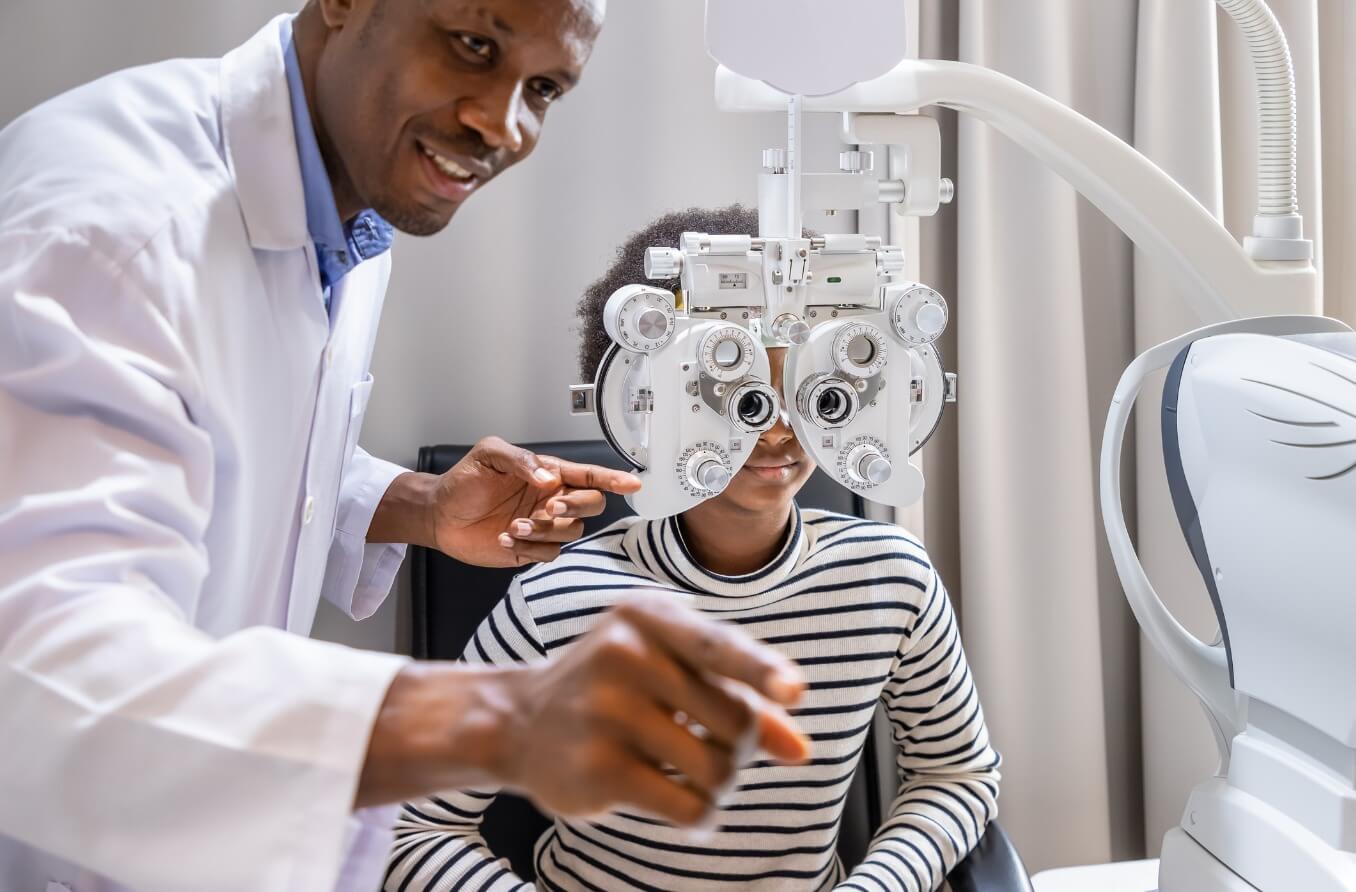

Making optometry more accessible for over 50 years
There are approximately 60,000 eye care professionals in the U.S. today. Of those, only 2%, or about 1,200, are Black/African American. Groups like the National Optometric Association (NOA) are working to grow this diversity. Supporting underrepresented people who wish to practice optometry is one part of the initiative.
The organization also helps provide care for communities with minimal eye care.
The NOA is the largest professional organization for optometrists and optometry students from minority groups. There are more than 800 members in the U.S., Puerto Rico and Canada. It’s spread out among a variety of clinical settings and 23 schools and colleges of optometry.
History of the National Optometric Association
John L. Howlette, OD, and C. Clayton Powell, OD, felt that minority eye doctors needed a national organization of their own.
They wanted something separate from the American Optometric Association (AOA) that would focus on issues that were important to minority, but particular Black/African American eye doctors. This meant recruiting minority students for optometry school. It also meant supporting optometrists in minority communities.
After working to generate support for the idea, in 1969, Drs. Powell and Howlette invited 25 Black/African American eye doctors around the U.S. to meet in Richmond, VA. There, they would launch the National Optometric Association (NOA).
At the time, Powell and Howlette were both members of the AOA, a national organization whose members were predominantly white. The AOA supports optometrists and increases access to eye care. Because of this, some AOA members didn’t think the NOA was necessary. Black/African American eye care professionals could be AOA members, and many already were.
But while Black/African American optometrists could join the national AOA, they had to belong to their local AOA chapter first. At the time, they were often not accepted.
Some feared the NOA would compete against the AOA. But the intention was to give Black/African American optometrists a louder voice, both within the AOA and outside of it.
How the NOA fulfills its mission
The NOA’s mission statement is: “Advancing the visual health of minority populations.” The organization works to achieve this through the following objectives:
Minority recruitment
The NOA has established relationships with optometry schools across the country. Doing so continues to increase the number of minority students and minority graduates.
Assistance to optometric organizations
The NOA works with other organizations to highlight optometry as a profession. It also aims to advance the career path of minority students.
Assistance to graduates and practitioners
The organization helps minority optometrists in many ways. Some of these include:
- Finding jobs
- Staying up to date with their knowledge and skills
- Getting financial aid
The NOA has awarded over $750,000 in scholarships and travel grants to optometry students.
Delivery of care
The NOA uses resources to deliver and expand eye care services. The goal is to increase these services in communities with little to no eye care.
“Three Silent Killers” initiative
The top diseases that cause blindness in racial and ethnic minorities are:
- Diabetes
- Glaucoma
- High blood pressure (hypertension)
They are often called “silent killers” because most people don’t have any symptoms in the early stages. The NOA’s “Three Silent Killers” initiative raises awareness about these diseases. It also provides information on the importance of getting annual comprehensive eye exams.
Diabetes
Black/African American adults are 60% more likely than white adults to receive a diabetes diagnosis. This chronic condition can affect a person’s blood sugar levels and lead to various eye problems. Some include diabetic retinopathy and diabetic macular edema.
Along with controlling blood sugar levels, routine diabetic eye exams play an important part in protecting vision.
Glaucoma
Glaucoma is a group of eye conditions that can damage youroptic nerve. The optic nerve is the pathway at the back of each eye that connects the eye to the brain. High eye pressure is a major risk factor for glaucoma.
Black/African Americans develop glaucoma at significantly higher rates than other groups in the U.S. On average, the disease happens about 10 years earlier in Black/African American people, progresses faster, and leads to blindness more often.
Hypertension
High blood pressure (hypertension) happens when the force of the blood flowing through the blood vessels is too high. High blood pressure affects 58% of Black/African American adults in the U.S.
Hypertension can cause serious eye problems, including hypertensive retinopathy, choroidopathy and optic neuropathy. It’s also linked to cataracts, age-related macular degeneration and diabetic eye complications.
READ MORE: Eye disease prevalence in African American communities
NOA programs
The NOA has a mission of expanding eye health services for minorities. This mission is supported through dedicated programs, such as:
ACHIEVE campaign (All Children’s Health Initiative for Eye and Vision Excellence)
ACHIEVE helps minority parents understand how vision impacts child development and learning. It also explains why regular vision screenings and children’s eye exams are important.
HBCU (Historically Black Colleges and Universities) Visioning the Future mentorship program
This program identifies and supports Black/African American HBCU students interested in optometry. Mentors in the program are trained to:
- Aid students through the optometry school application process
- Foster retention
- Promote graduation
- Provide networking opportunities
- Ease professional development and career advancement
National Optometric Student Association
The National Optometric Student Association (NOSA) is part of the NOA. NOSA connects students across optometry programs and other health science programs. These connections can be social, professional or both.
NOSA has more than 1,000 optometry students members. It works to make it easier for minority and underserved communities to get eye care.
The National Optometric Foundation
The National Optometric Foundation (NOF) is the philanthropic arm of the NOA.
The NOF finds long-term solutions for eye problems that affect minorities through:
- Student scholarships
- Matriculation initiatives
- Ocular health education and awareness programs
Since 1975, the NOF has provided more than $500,000 for student scholarships and programs. Each of these supports eye health education and awareness.
Future of the NOA
Since the NOA was founded, the number of minority students, graduates and optometrists working in the profession has increased. The association has since shifted more efforts to bringing vision services to communities that have little or no eye care. The NOA also continues to educate people about the importance of regular eye exams and treatments to help prevent vision loss.