What’s the difference between single-vision and progressive lenses?

What’s the difference between single-vision and progressive lenses?
Single-vision lenses have one prescription throughout the lens. Progressive lenses have a prescription that changes from top to bottom, offering vision correction at all distances. Progressive glasses look like single-vision glasses because they do not have a visible line like bifocals.
Both types of lenses can help you see the world more clearly. Each has advantages and disadvantages. The type that’s most suitable for you will depend on unique factors such as age, lifestyle and budget.
If you are unsure whether to get single-vision or progressive lenses, we’ll explain the key features of these lenses and how they work. An eye care professional can provide personalized recommendations based on your needs.
Overview of single-vision lenses
Single-vision lenses have the same prescription across the entire surface. They are ideal for correcting vision issues such as nearsightedness, farsightedness and astigmatism. This lens type has one power that remains constant throughout the lens.
Many people use single-vision glasses for tasks like driving or using the computer. Reading glasses with single-vision lenses are also quite popular.
Single-vision lens pros and cons
Single-vision lenses provide an appropriate solution for correcting refractive errors such as nearsightedness, farsightedness or astigmatism.
Pros
- Suitable for most people – Single-vision eyeglasses are an ideal choice if you have only one vision problem and do not need different prescriptions for distance and near vision.
- Easy adaptation period – These corrective lenses are comfortable and easy to use, even if you’ve never worn glasses.
Cons
- Limited vision correction – Single-vision lenses correct a refractive error so that your vision is clear at one distance. Younger people can use their natural accommodation to see clearly at all distances. But if you have age-related vision changes, such as presbyopia, you may require multiple pairs of glasses to see clearly at both distance and near.
LEARN MORE: What is eye accommodation?
Overview of progressive lenses
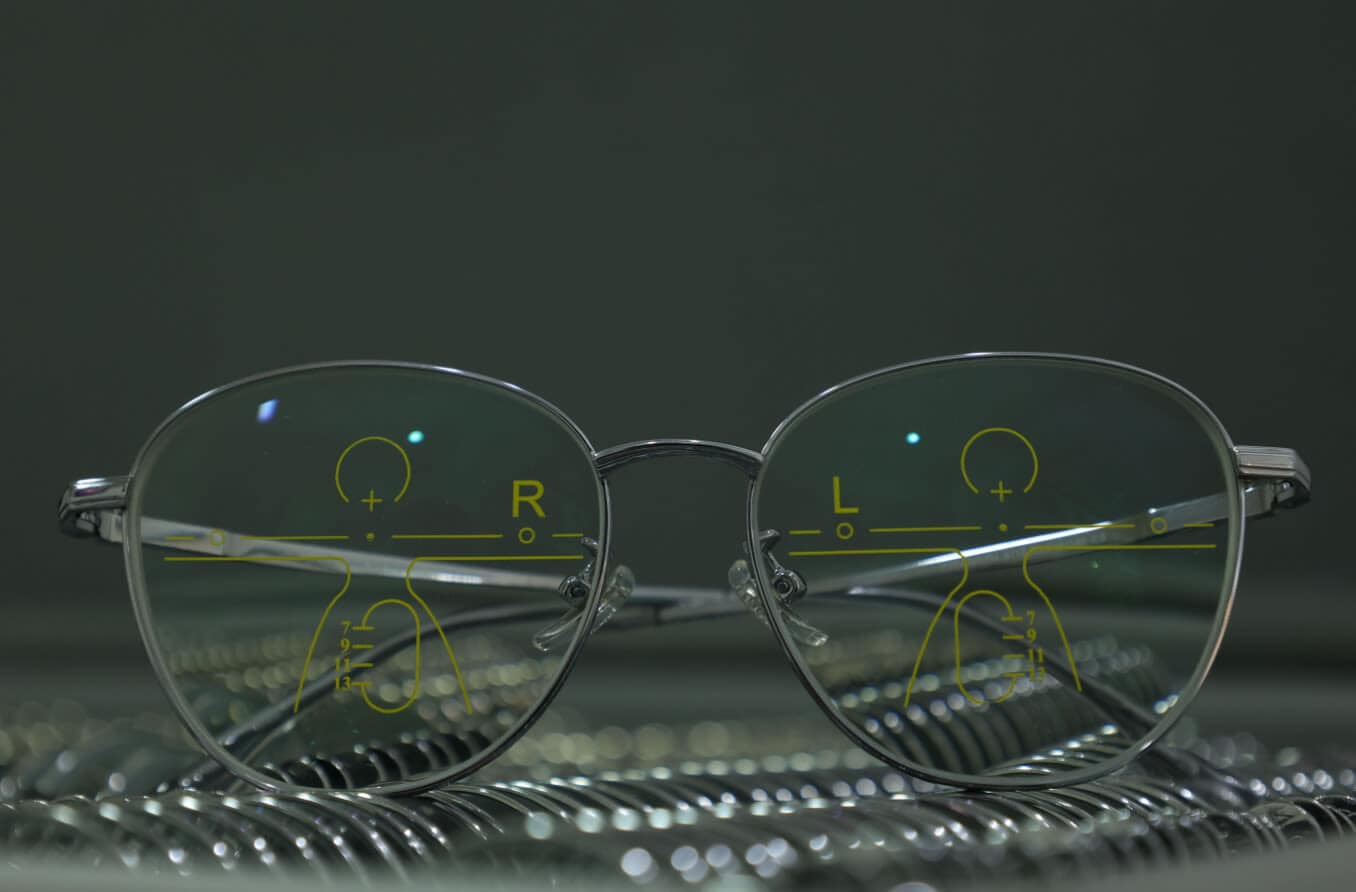
Progressive lenses are considered multifocal lenses. This means they have a near, intermediate and distance prescription with the goal to provide clear vision at all distances. This kind of lens is unique because it gradually changes in power from the top of the lens to the bottom. In general, the progressive lens design has the top for distance vision, the middle for intermediate vision, and the bottom for near vision. This can allow you to see clearly without switching between two or more pairs of glasses.
Progressive lenses vs. bifocals
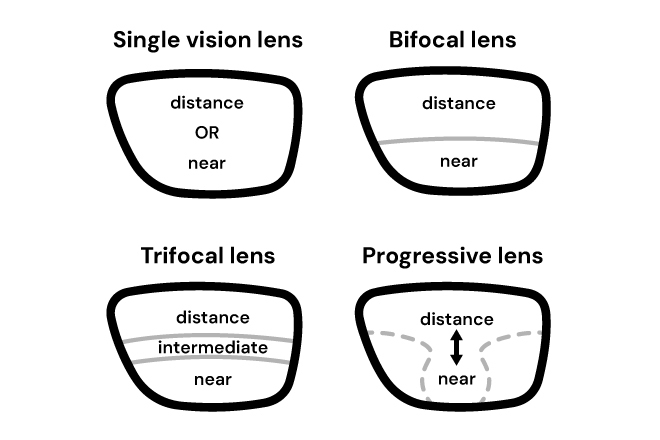
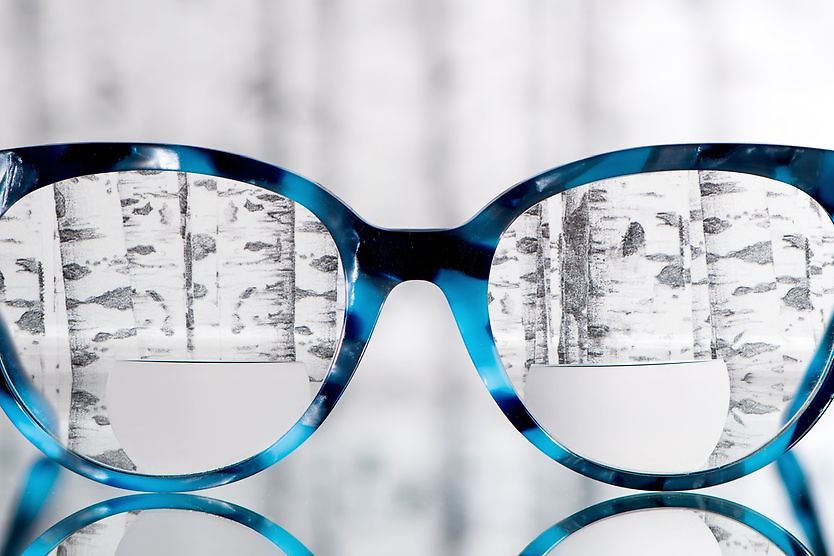
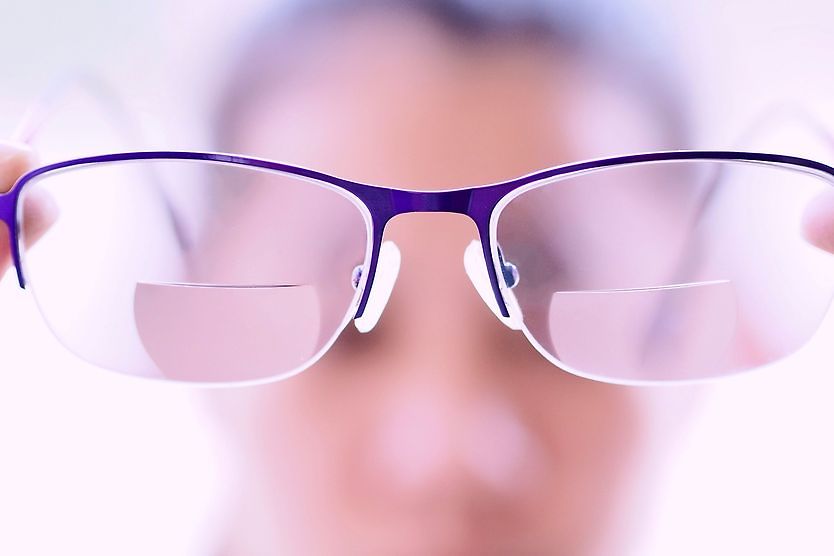
Progressive glasses are sometimes confused with bifocals. This is because they both correct for distance and near vision in one pair of glasses. Traditional bifocal lenses have a visible line that separates the distance and near prescriptions.
Progressive lenses, on the other hand, have a seamless transition between each section. There is no visible line, giving the appearance of single-vision glasses. They also have the additional benefit of providing clear vision at intermediate distances.
Progressive lens pros and cons
Progressive lenses are a convenient option for people with presbyopia, an age-related loss of the ability to see clearly up close.
Pros
- Convenient – You can see clearly at all distances with a single pair of progressive glasses. There is no need to carry around multiple pairs during the day
- Seamless – There is no visible line on progressive lenses.
- Gradual change in power – The gradual shift in prescription may be more comfortable for the eyes.
Cons
- Longer adaptation period – Getting used to multifocal glasses may take time, especially if you have never worn them before. First-time wearers should be cautious when navigating their surroundings, such as steps or stairs.
- Limited options – If you have a stronger prescription, you may not be able to get certain frame styles.
- Peripheral distortion – Due to the design of progressive lenses, your peripheral vision may sometimes appear distorted. This can be minimized with high-quality lenses and a proper fitting by an eye care professional.
How to know which lens type is right for you
Here are a few factors to consider when choosing the type of lenses for your glasses:
Age
Single-vision lenses may be the preferred option if you are under 40 and have no issues other than nearsightedness or farsightedness. Those with additional age-related vision changes may benefit from progressive lenses.
Lifestyle
Consider your daily activities. Single-vision glasses may be the practical choice if you only need glasses for one specific task, like driving or reading. Progressive lenses could be beneficial if you switch between pairs of glasses frequently.
Budget
A multifocal lens tends to be more expensive compared to other options. However, investing in one pair of progressive eyeglasses may be less costly than buying several pairs of single-vision glasses.
Recommendation from an eye care professional
Single-vision and progressive lenses both have several advantages and disadvantages. If you are still unsure about your options, an eye doctor or optician can recommend the eyewear that fits your needs. During the eye exam, the eye doctor will check the health of your eyes, update your prescription, and provide appropriate recommendations to optimize your vision.
Remember, regular comprehensive eye exams are crucial for maintaining good eye health.