How anti-reflective coating can improve your glasses

On this page
What is anti-reflective (AR) coating for glasses?
How an anti-reflective coating can improve your vision
How to choose the right anti-reflective coating
How to clean and care for anti-reflective coated lenses
Is an anti-reflective coating worth it?
Frequently asked questions about anti-reflective coating
On this page
What is anti-reflective (AR) coating for glasses?
How an anti-reflective coating can improve your vision
How to choose the right anti-reflective coating
How to clean and care for anti-reflective coated lenses
Is an anti-reflective coating worth it?
Frequently asked questions about anti-reflective coating
What is anti-reflective (AR) coating for glasses?
Anti-reflective (AR) coatings are treatments that are applied to the surface of the lens of glasses that reduce glare and let in more light. By reducing reflections on both sides of the lenses, this coating can make night driving and screen use more comfortable.
AR coatings work by applying very thin layers of metal oxides to the lens, increasing the amount of light transmitted. This helps support clearer vision in changing lighting conditions and reduces the visual distractions that can occur when bright light hits the lens.
How an anti-reflective coating can improve your vision
Modern anti-reflective coatings allow around 99.5% of available light to pass through the lenses. This higher level of clarity can make daily tasks feel easier on your eyes.
Reduces glare for safer night driving
Anti-reflective coatings can address night driving challenges by reducing the reflections that form on lenses, which do not have this type of application. Benefits of AR coatings for nighttime driving can include:
• Fewer halos and ghost images from lens reflections
• Less discomfort from blue-tinted headlights
• Shorter glare recovery time
Improves your screen and computer comfort
Extended screen time can cause eye strain and discomfort. The symptoms may worsen the longer you use digital devices. This discomfort can include headaches, blurry vision, dry eyes and more.
Glare from reflections and screens can increase this strain. Reducing glare with AR coatings help maintain visual performance and can lessen symptoms of eye fatigue during extended computer work.
Makes your vision look clearer
Anti-reflective coatings may help some wearers experience sharper vision. They can help you to see small text and objects with greater ease.
In a research study conducted under glare or stray-light conditions, participants wearing AR-coated lenses reported increased visual clarity and comfort, along with fewer perceived reflections, compared with uncoated lenses.
Makes your glasses look better in photos
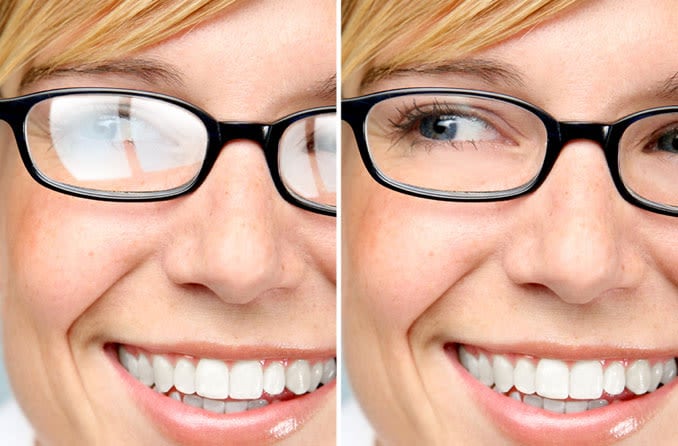
Anti-reflective coatings can make your glasses clearer. They reduce shiny reflections on your lenses. This can allow your eyes to be more visible behind your lenses.
With stronger minus prescriptions, lenses can sometimes show faint circular reflection patterns near the edges. These patterns happen when light reflects inside thicker lens edges, which can make the lenses look more prominent. Anti-reflective coatings can reduce both internal and surface reflections, helping soften this effect.
How to choose the right anti-reflective coating
Each AR coating manufacturer has a unique formula. Typically, anti-reflective coatings are made of many thin layers of metallic oxides. These layers modify how light passes through the lens. Every layer blocks reflections from different wavelengths of light. When a coating has more layers, it can reduce more reflections. Some of the higher-quality AR coatings use up to seven layers.
Even with all the layers, these coatings are very thin. All the layers together are usually about 0.2 to 0.3 microns thick, which is about 0.02% of the thickness of a standard eyeglass lens.
Your optician might recommend a specific type of anti-reflective coating based on your lifestyle and needs. For example, if you spend a lot of time working at a computer, you might benefit from an AR coating that filters out blue-violet light.
Factors to consider
When deciding whether to add an anti-reflective coating to your glasses, it helps to think about how and where you use them most. It's also important to consider your prescription. Certain lenses, including polycarbonate and high-index lenses, can produce greater glare than plastic or glass, so they often benefit from AR coating.
Some eyeglass lenses have factory-applied AR coating on both lens surfaces. Other lenses, particularly progressive lenses and other multifocal lenses (including trifocals), have the coating applied after the lenses have been customized to your eyeglass prescription by an optical lab.
Questions to ask your eye doctor or optician
Talking with your optician can help you decide if an anti-reflective coating fits your needs. You might ask:
- What benefits will AR coating give me with my prescription?
- Can you show me how coated lenses look compared to uncoated ones?
- Are there any disadvantages I should know about before choosing AR coating?
- What is the expected cost of AR-coated lenses?
How to clean and care for anti-reflective coated lenses
Only use products recommended by your optician to clean AR-coated lenses. Harsh chemicals in lens cleaners can harm the anti-reflective coating.
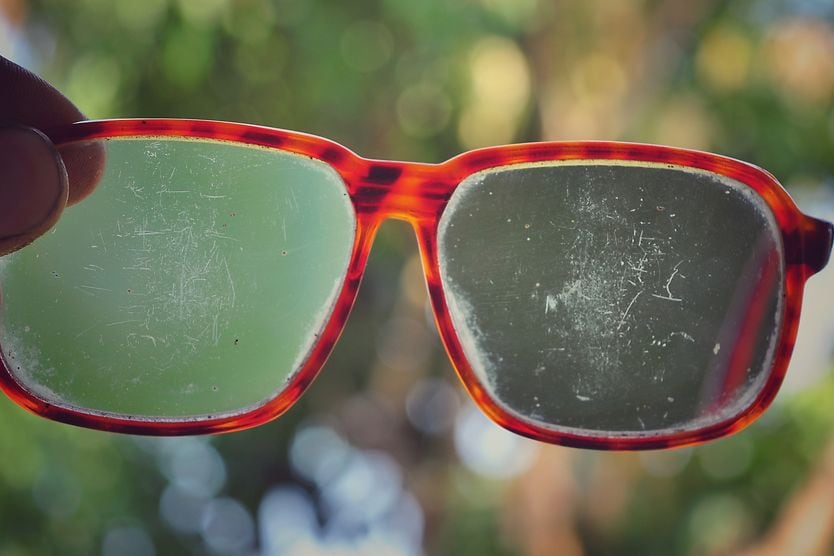
Also, don’t attempt to clean AR-coated lenses without wetting them first. Using a dry microfiber cloth on a dry lens can cause lens scratches. Even small scratches are often more visible on AR-coated lenses than on uncoated lenses.
Is an anti-reflective coating worth it?
Deciding if AR-coated lenses are worth it often comes down to what you need from your glasses. While the coating can wear down over time, proper care tends to support longer performance.
Premium AR coatings may offer added value for people who want stronger durability. Upgraded formulas often include features, such as scratch resistance and anti-fog properties. These enhancements can support more consistent performance throughout the life of the coating. This is why many wearers consider premium AR coatings worth the investment.
Frequently asked questions about anti-reflective coating
Here are answers to some of the top questions about anti-reflective coatings.
How can I tell if my glasses already have AR coating?
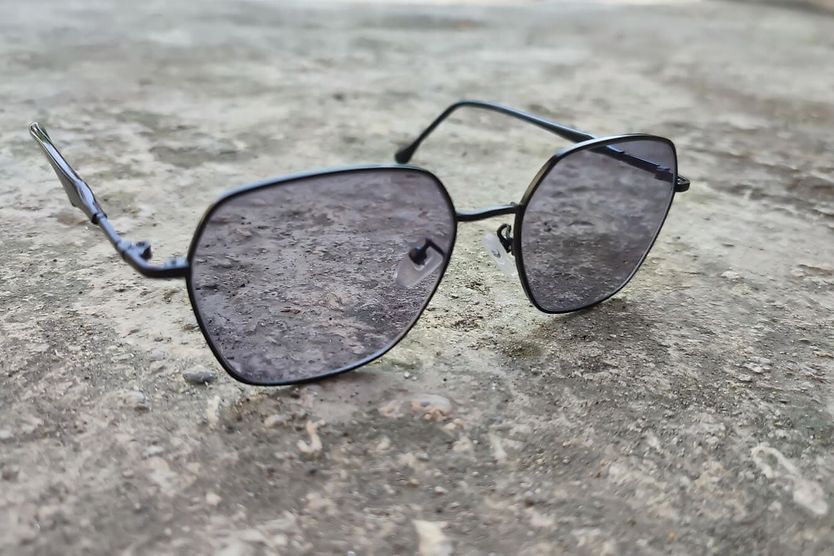
You can usually tell if your glasses have an anti-reflective coating by looking at them from an angle. The lenses won’t produce a strong glare. Instead, they will reflect a soft color, like green, blue or yellow-green. This is a normal effect of the coating.
Does an AR coating filter blue-violet light?
Some anti-reflective coatings include blue-violet light filtering as an added feature. Though their everyday benefits are not yet fully established, optometrists typically consider blue-violet light-filtering AR coatings safe and beneficial to use for patients who are interested in this feature.
How long does AR coating last?
The majority of AR coatings are made to last the entire lifespan of your glasses. However, it is important to remember that your prescription typically only lasts one to two years, which is why regular eye exams are still necessary.
READ NEXT: Choosing the right lenses for your glasses
On this page:
What is anti-reflective (AR) coating for glasses?
How an anti-reflective coating can improve your vision
How to choose the right anti-reflective coating
How to clean and care for anti-reflective coated lenses
Is an anti-reflective coating worth it?
Frequently asked questions about anti-reflective coating
On this page:
What is anti-reflective (AR) coating for glasses?
How an anti-reflective coating can improve your vision
How to choose the right anti-reflective coating
How to clean and care for anti-reflective coated lenses
Is an anti-reflective coating worth it?
Frequently asked questions about anti-reflective coating