How can I tell if my eyeglass frames fit?

The right pair of glasses can help you see, boost your self-confidence and allow you to express your unique sense of style. To ensure your new glasses will be as comfortable, flattering and functional as you would like, it’s important that you choose frames that fit your face properly.
Key measurements for determining your fit
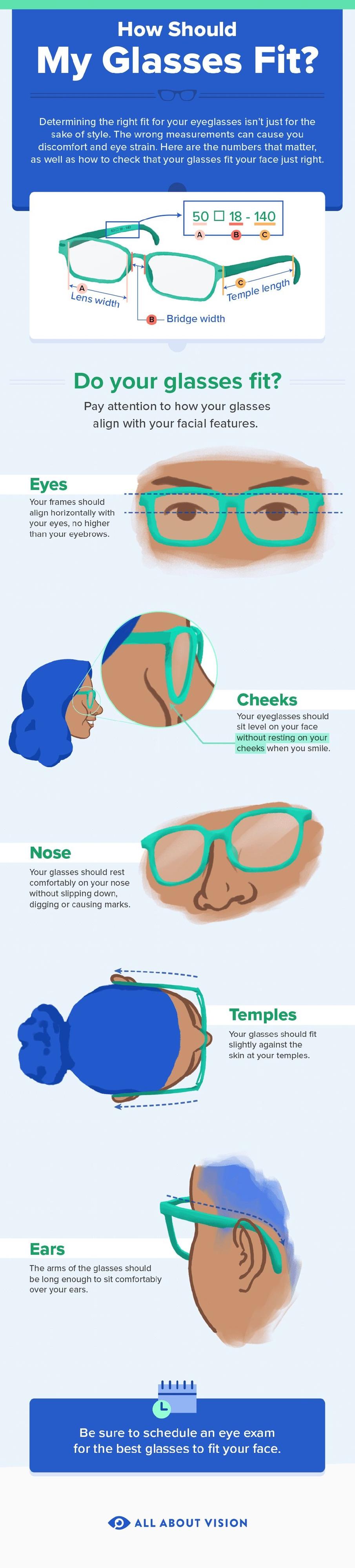
Many eyeglass frames have three numbers stamped inside them. These tell you:
- Lens width — horizontal length of each lens
- Bridge width — distance between the lenses
- Temple length — length of each temple, or arm, starting at the hinge
When you order glasses in your eye doctor’s office, your optician takes these measurements, checks the fit and adjusts them for a comfortable feel. If you plan to buy online, knowing how to check these measurements yourself will make it easier to buy properly fitting glasses and avoid eye strain, headaches, dizziness and nausea.
How glasses should fit your face
Knowing how your glasses should align with your features can make a huge difference in determining the right fit. Consider the following:
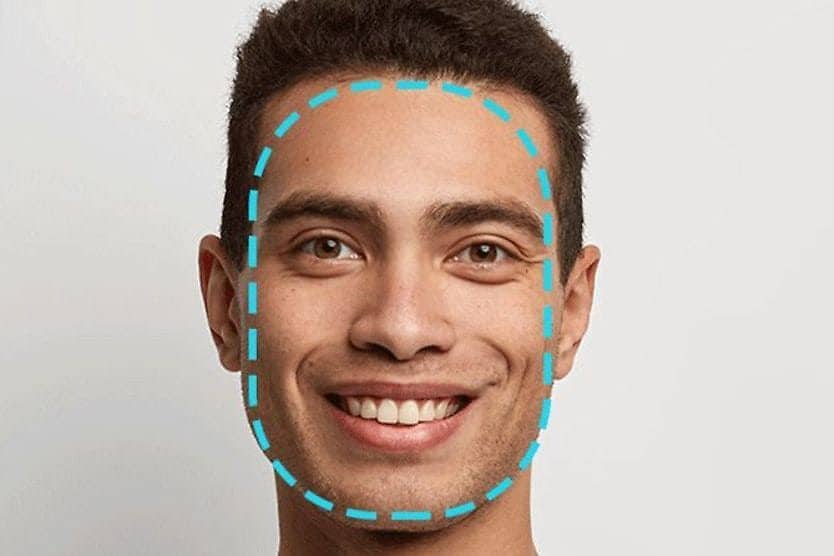
Face shape and size, skin tone and hair color
Look for frames in shapes and colors that complement your face’s unique shape and suit your skin tone and hair color.
Your glasses should sit in the middle of your face, no higher than your eyebrows. The total width of your frames should match the width of your face at the temples, leaving enough room on the sides to avoid digging in or leaving marks. Well-fitting glasses may create a sense of visual balance.
Eyes
When gazing straight ahead, the center of each of your pupils should align with the optical center of each lens — you’ll need to measure your pupillary distance to get this right. The distance between the corner of the eye and the lens edge should be the same on both sides.
Nose
The weight of your frames should be balanced evenly across the bridge of your nose or equally distributed on the frame’s nose pads. They shouldn’t leave a mark or dig into your nose — if that happens, you may need to have your nose pads adjusted for a preferred fit or find frames with a larger bridge width.
Temples
The temples, or arms, of your frames should be long enough to fit around your ears securely and comfortably. You should be able to move, bend and shake your head without your glasses slipping out of place or sliding down your nose.
Next steps
While there are plenty of ways to gauge which glasses will work for you, a visit to an eye doctor may help you get an accurate frame and lens measurements and making sure your eyeglass prescription is up to date. Find an eye doctor near you to get started.
When you’re ready to shop, try on multiple pairs in a variety of styles — the frames that you prefer may surprise you.
READ NEXT: Asian fit glasses