How do I get 20/20 vision?

How can you improve your vision to 20/20? The simple answer is that eyeglasses, contact lenses or laser eye surgery can potentially correct your vision to 20/20.
But what is 20/20 vision anyway? While most people think 20/20 means “normal” or “perfect” vision, it actually indicates someone’s ability to identify letters and numbers on a standardized eye chart while sitting still and at a specific viewing distance.
For example, 20/20 is a visual acuity measurement that indicates someone’s ability to read the “20” line near the bottom of the eye chart from 20 feet away.
And just how many people are in need of vision correction? According to researchers, about 75% of adults use some sort of vision correction.
The breakdown? About 64% of people with some form of vision correction wear prescription eyeglasses, and about 15% wear contact lenses, either exclusively or with glasses. Women are more likely than men to wear glasses, with roughly half of all women relying on them for vision correction.
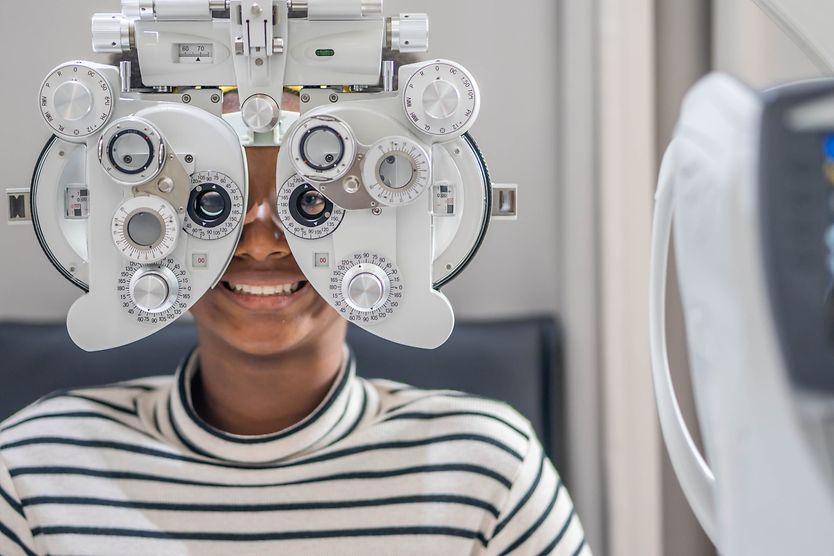
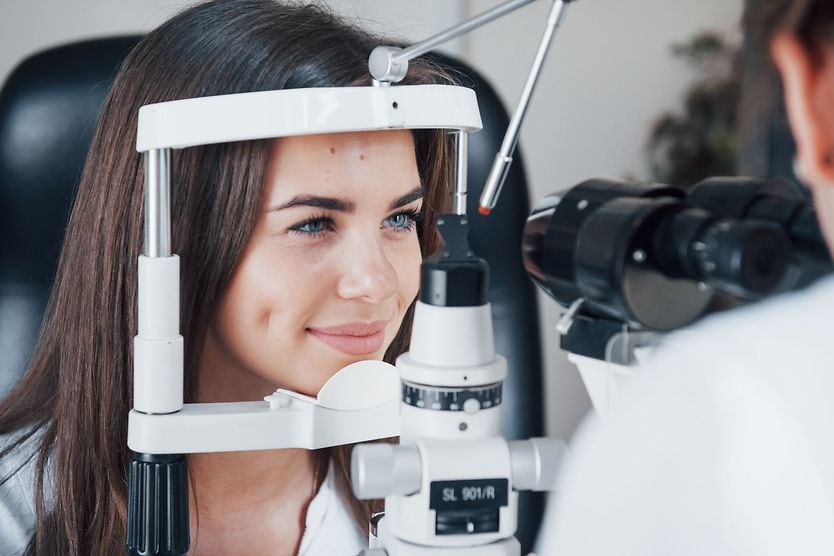
And how do people discover that they need glasses, contacts or vision surgery? It all starts with an eye exam, either booked routinely or to find out why you are experiencing issues like blurry vision, double vision or sudden vision loss.
So what’s the optimal way to improve your vision to 20/20 and can glasses, contact lenses or vision surgery help you to see more clearly than 20/20? We’ve got the answers to your frequently asked questions about how to get 20/20 vision:
How can you improve your vision to 20/20?
Eyeglasses, contact lenses and LASIK can help improve your eyesight because they all compensate for refractive error.
Refractive error is an imperfection in your eyes’ natural shape that causes your eyes to blur or distort images, often by focusing the light rays that enter behind or in front of your retina, instead of directly onto the surface.
These corrective options can change how or where light rays bend so that your eyes can produce a clear, crisp image on the correct focal point on the retina.
Can glasses give you better than 20/20 eye vision?
Prescription eyeglasses can potentially improve your vision to a visual acuity sharper than 20/20, with some glasses wearers reporting acuities of 20/15 and even 20/10, and there are many benefits, some of which go beyond improved vision.
Eyeglasses have been around in some form since the time of the Roman Empire. They’re widely available and usually easy to put on and take off, which can make them well-suited to use when you’re performing specific tasks, such as reading or driving. They’re usually the least expensive option for vision correction.
Eyeglasses, as well as sunglasses, can also provide additional protection for your eyes from environmental pollution, dust or accidental injury. They can shield against glare and damaging ultraviolet (UV) radiation. Specialty prescription eyeglasses are available to help optimize computer screen viewing and relieve eye strain.
Eyeglasses are a non-invasive form of vision correction and don’t carry risks such as infection or surgical complications, but they can be inconvenient to wear at times. They may get scratched or broken or even fall off during certain activities. In addition, you must purchase replacement lenses or additional pairs of glasses each time your vision changes.
Can contact lenses give you better than 20/20 vision?
Contact lenses, like eyeglasses, can potentially improve visual acuity beyond 20/20, with some contact lens wearers reporting acuities of 20/10 when wearing their contacts.
Approximately 45 million Americans wear contact lenses, making them the second most popular form of vision correction. Contacts are more versatile than ever, with options like toric and bifocal contact to correct conditions like astigmatism and age-related presbyopia.
Contact lenses can also offer more accurate vision correction than eyeglasses since the lens that focuses light sits much closer to the cornea and retina than eyeglass lenses do. Contact lenses also offer clear peripheral vision, while glasses provide optimal correction only when you’re looking straight through the center of the lens.
Unlike eyeglasses, contact lenses are less likely to shift when the wearer performs strenuous activity, making them an optimal choice for many who play sports.
However, contacts do carry a significant risk of eye infection, especially among users who don’t properly follow lens care and hygiene instructions. Wearers may also find contacts uncomfortable or may experience dry eyes, irritation or even pain.
The costs of contact lenses can add up over time, especially when you factor in regular contact lens exams, cases, lens cleaning solutions and other related products, plus the price of the lenses themselves.
Can laser eye surgery give you better than 20/20 vision?
Some people may achieve higher visual acuity after surgery than would be possible for them with glasses or contacts, with many patients reporting visual acuities sharper than 20/20. Surgical vision correction (including LASIK, PRK and SMILE), like contact lenses, can allow patients to see well in their peripheral field of vision.
LASIK is a frequently performed laser eye surgery procedure, but several other laser eye surgery options also exist. The upfront costs associated with this surgery are higher than the initial costs of eyeglasses and contact lenses, but LASIK can produce permanent changes in your vision that can eliminate your need for glasses or contacts.
LASIK is considered to be a minimally invasive procedure, but complications from the procedure can occur, which may worsen a patient’s vision or necessitate a “touch up” surgery afterward.
Some vision surgery patients also report increased light sensitivity in the weeks and months after LASIK, which may be reduced when wearing sunglasses with UV protection or eyeglasses with an anti-reflective coating. Increased dry eye is also a known side effect of vision surgery.
Not all eye conditions are suitable for surgical correction. To learn more about the vision correction options that fit your needs and lifestyle, speak with your eye doctor.