What parents need to know about choosing kids’ sunglasses

Why children should wear sunglasses
Sunglasses for kids are more than just a cute accessory. They’re a crucial part of children’s vision health and a sun-healthy habit kids can learn at any age.
Outdoor play is excellent for kids. It can boost sleep, offer fresh air and provide exercise. Plus, it may help reduce risk of nearsightedness (myopia). But, just as kids need to protect their skin from harmful ultraviolet (UV) rays during time spent outside, they also need to shield their eyes from the damaging effects of the sun.
According to the American Academy of Ophthalmology, when unprotected eyes are exposed to the sun’s UV rays, especially over a long period of time, it can cause:
- Increased risk of eye disease (cataracts, macular degeneration, etc.)
- Increased risk of rare eye cancer
- Eye growths, including pterygium
- Photokeratitis, also called snow blindness (a painful type of sunburn caused by the sun’s reflection off water, snow or sand)
All of the above are preventable with the consistent use of sunglasses when you and your children are outdoors. Parents can choose the best ones by knowing how they work. This way, they can enjoy the sunshine safely.
Protect your child’s eyes year-round
Kids should wear sunglasses whenever they’re spending time outside in any season. This is even true in winter climates. Snow reflects even more than water, and sunglasses can help protect your child from snow blindness.
UV rays can reach your child’s eyes throughout the year, even when it is cloudy. Keeping sunglasses available for different weather conditions or extended outdoor time can help protect their eyes.
What’s the best age for kids to start wearing sunglasses?
Protecting your child’s eyes from the sun can start earlier than many parents realize. Here is what to know about when and how kids can begin wearing sunglasses:
- Start early – Children can begin wearing sunglasses as soon as they are willing to keep them on. Sunglasses are appropriate, even for babies under a year old. The American Academy of Pediatrics (AAP) also advises keeping infants younger than six months out of direct sunlight whenever possible.
- Choose safety-focused designs – Little kids’ sunglasses should be designed with safety in mind. Watch out for small parts and rigid, breakable plastic.
- Supervise younger children – If your infant or toddler is prone to chewing on things, you may want to take the sunglasses away when you aren’t able to supervise closely. This could include when your child is in their car seat while you’re driving. A fun motto to teach children is, “Glasses stay on your face or they go in your case.”
- Follow your child’s readiness – Some kids will naturally wear sunglasses more readily than others. If you have sunglasses on hand, you can keep trying them with your young child. As they grow, they’ll likely be able to wear their sunglasses more consistently.
What to look for when you choose kids’ sunglasses
There are a few factors to consider when buying sunglasses for your kids. UV protection and durability are among them. Things to look for in children’s sunglasses include:
Effective UV protection
This is the most important element to consider. You’ll want shades that offer broad-spectrum coverage, blocking 100% of both UVA and UVB radiation. (This is sometimes also marked as UV400.) Avoid kids’ toy sunglasses or novelty sunglasses that are tinted but don’t offer adequate UV protection.
Frame size
Bigger is better when it comes to sunglasses. Not only do these shield the eyes most effectively, but they also protect the delicate, thin skin around the eye itself. Look for a pair that covers more of the face, which offers better coverage to protect eyes and skin alike. Kids’ oversized sunglasses are appropriate for this, as are kids’ wraparound sunglasses.
Comfort and fit
Related to size, sunglasses should also fit well (snug without being too tight) and offer a good amount of coverage over the face. Your local eye care provider is a great resource for finding sunglasses that have the right fit for your child.
Durability
Kids tend to be rough on all their possessions. Look for sturdy, impact-resistant sunglasses that won’t snap or shatter easily. While truly unbreakable kids’ sunglasses might not yet exist, there are many options for lens materials that can take a beating and withstand the regular wear of daily use. Polycarbonate lenses and specialized polyurethane-based materials, for instance, are specially crafted to avoid shattering. Some manufacturers also create flexible frames for kids that can bend without breaking.
Frame style
When kids like their frames, they’re much more likely to wear them. For some kids, this means colorful character frames. Others might like designer sunglasses with a cool vibe or just frames in their favorite color. Letting your kids choose from a few options can help them feel involved. This can encourage them to wear their sunglasses when they’re outside.
Lens color
It’s important to note that darker lenses really don’t offer more protection from sunlight. In fact, lens color and tint don’t matter as much as that all-important 100% UVA and UVB protection. When it comes to color, brown or rose-colored lenses may offer greater contrast.
Different types of children’s sunglasses
When identifying the best type of sunglasses for your child, take into account their everyday activities. There are also options available for your child if they already wear prescription eyewear.
Everyday sunglasses for kids
For routine outdoor activities, like trips to the park, standard sunglasses designed for children can help support eye comfort in bright light. The most important feature to look for is clear labeling that the lenses block 100% of UVA and UVB rays.
A lightweight frame that fits securely without pinching can make kids more likely to keep them on. Wraparound or slightly oversized styles can also help limit light from entering at the sides, but special performance features are not necessary for everyday wear.
Kids’ sports sunglasses
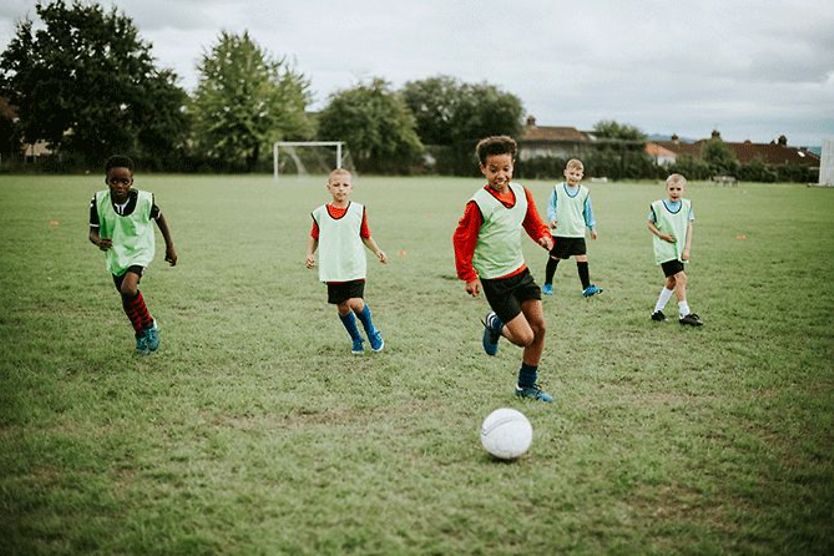
Children who play sports can benefit from wearing specialized, kid-sized sports sunglasses, which may be polarized to reduce distracting glare and tinted to maintain the correct amount of contrast needed.
Sports goggle sunglasses can also be designed to help prevent sports-related eye injuries during sports, like basketball or soccer. They offer protection against cuts and bruises, as well as UV protection.
Additionally, snow goggles often incorporate UV protection in order to shield against snow blindness. Kids who engage in winter sports, like skiing or snowboarding, should always wear snow goggles. This is especially important at high altitudes.
Kids’ polarized sunglasses
In general, kids’ polarized sunglasses are most helpful if you’re looking to reduce glare, which occurs when light bounces off reflective surfaces.
If your kids are playing near water, spending time in the snow or participating in sports where glare could be distracting, polarized sunglasses are a smart choice.
Prescription sunglasses for kids
Children who wear prescription glasses may also benefit from kids’ prescription sunglasses. These options can blend your child’s prescription with UV protection.
If your child does opt for prescription sunglasses, be sure to update the sunglasses prescription whenever their regular eyeglasses prescription changes. Kids’ eyes can change rapidly, so check with an eye doctor near you to make sure they have the right prescription.
You can also buy kids’ clip-on sunglasses, which attach directly to their regular prescription eyeglasses and add sun protection that way. These allow kids to take advantage of the glasses they’re already wearing, while also potentially reducing the chances of losing their regular eyeglasses or their sunglasses.
Another option for kids is photochromic lenses. These become darker when exposed to UV light. Check with your eye doctor for more information and to see whether these lenses might be a good choice for your child.
SEE RELATED: What are polarized sunglasses?
Where to buy kids’ sunglasses
Where and how you select and purchase sunglasses will largely depend on which type of eye protection is right for your child.
An optical store is often your best bet for prescription sunglasses and kids’ sports sunglasses that can be properly fitted to the face. Ask about sunglasses during your next appointment or stop by to browse the options in stock. If your child already has glasses with prescription lenses, your vision care provider should be able to use their prescription for their sunglasses.
An optician can help ensure sunglasses fit well. This fit is important so kids will actually wear them and keep them on.
Alternatively, if you’re looking for cheap kids’ sunglasses that you won’t mind accidentally leaving behind at the beach, you can shop at local retailers or online. This is an optimal choice for non-prescription sunglasses. Just be sure to check those labels for 100% UVA and UVB protection.
Consider buying extra pairs to keep in the car, diaper bag, pool bag or with outdoor toys. This way, they’ll be ready when the kids are playing outside.
Choosing safe and reliable sellers
It is recommended to buy from trusted sellers who clearly show lens details and UV protection information. Low-quality sunglasses may be tinted but fail to block harmful UV rays. Look for clear labeling so you know exactly what you are purchasing.
How to keep kids from losing their sunglasses
Sunglasses are small and can be easily lost. People often take them on and off as they move between indoor and outdoor spaces. After you pick out sunglasses to help protect your child’s eyes, it is also important to think about how to keep them from getting misplaced.
One solution is kids’ sunglasses straps. These can help keep glasses from falling off during play. This is helpful for active kids who are outdoors or at the playground. Straps can be purchased separately, or you can look for kids’ sunglasses with straps already attached. Some flexible straps are adjustable to “grow” along with your child.
Kids’ sunglasses cases can also help ensure that sunglasses make it back home. You can affix a label to the case, as well as to the inside of the earpiece, so that pairs misplaced at school make it back to you.
Sunglasses help support healthy vision in children
Teaching your child good sun safety and eye protection early on can lead to healthy vision for life.
Ultimately, the best kids’ sunglasses are the ones they will actually wear. Adults need sunglasses just like children do. When kids see you wearing them, it helps make sunglasses feel normal. Help establish the habit, and give kids the tools they need for safe play outside, too.