Potential effects of GLP-1s on vision and eye health


GLP-1 medications and vision: A closer look
The weight loss drugs shrinking America’s waistlines might be affecting the country’s eyesight — in both positive and negative ways.
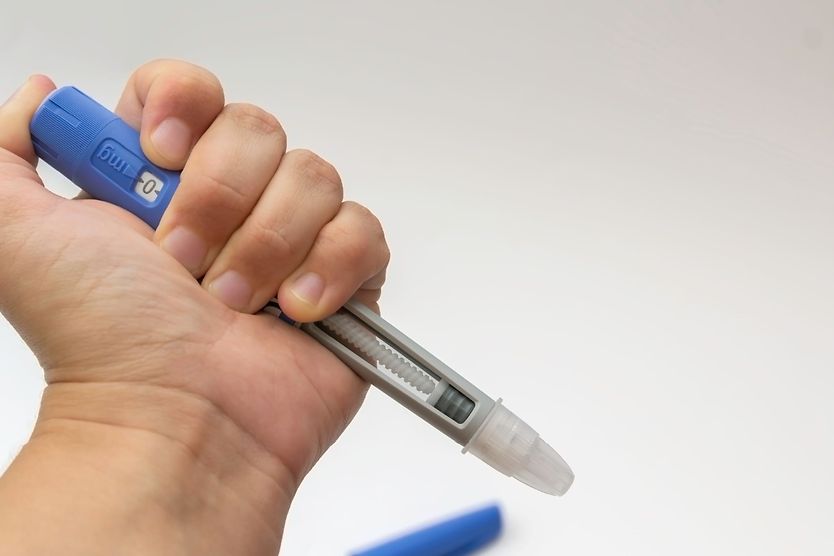
In 2024, about 1 in every 8 adults in the U.S. had taken a glucagon-like peptide-1 (GLP-1) receptor agonist medications— for the treatment of type 2 diabetes or, increasingly, for weight loss.
Once available only by prescription injection, GLP-1s are now also sold through commercial companies as pills and patches. As demand, accessibility and affordability increase, it’s likely the number of users will rise — and it’s important for them to be informed.
Like most medications, GLP-1s have potential side effects. These include nausea, fatigue and dizziness. Lesser known is their impact on eye health and vision, which ranges from mild blurriness to rare and more serious conditions. But there may be positive effects as well. In some cases, GLP-1s might even improve a patient’s eye health.
To help navigate the science and available data, three ophthalmologists weighed in about how GLP-1 medications may impact vision and eye health, and why it’s important to visit the eye doctor for a comprehensive eye exam both before and during GLP-1 use.
What are GLP-1 medications?
GLP-1s are a specific type of medication first launched in 2005 for the treatment of type 2 diabetes. They mimic a naturally occurring hormone that alerts the body that it’s full and reduces a person’s appetite. GLP-1 medications also may assist in managing blood sugar levels, which in turn slow down the body's digestive system.
Over the last few years, GLP-1 medications have been approved with indications strictly for weight loss and chronic weight management by the U.S. FDA, including semaglutide in 2021 and tirzepatide in 2023.
Common but temporary effects on vision
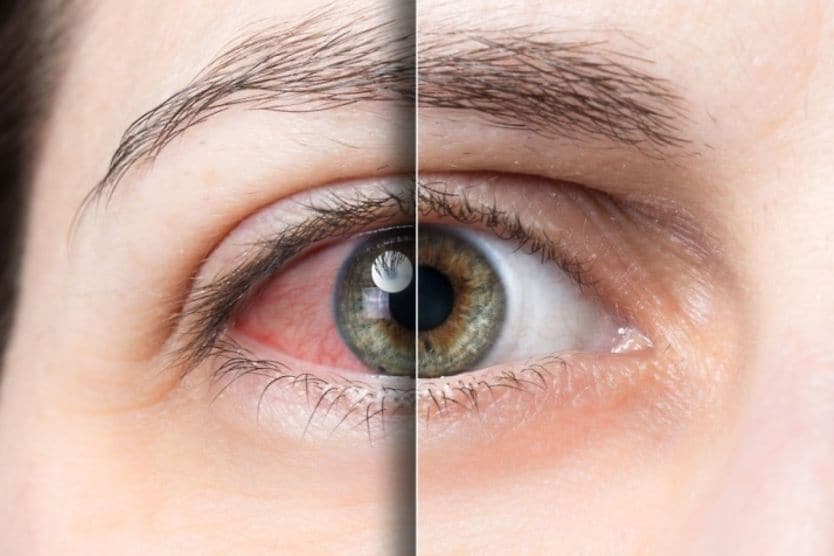
Vision changes are a known potential side effect to taking GLP-1 medications. For example, can tirzepatide cause blurry vision? Quite possibly, yes.
According to Sunir Garg, MD, professor of ophthalmology at Wills Eye Hospital in Philadelphia and spokesperson for the American Academy of Ophthalmology, any sudden change or reduction in blood sugar can cause blurry vision. This is particularly the case for people who have diabetic retinopathy, which is damage to the eye’s blood vessels caused by diabetes.
Benjamin Bert, MD, a board-certified ophthalmologist at MemorialCare Orange Coast Medical Center in Fountain Valley, California, added that as GLP-1s help with controlling blood sugar, their use may also lead to changes in vision prescription.
“High blood sugar can cause the lens inside the eye to swell or become more compact, which can change the refractive error (the need for glasses or contact lenses),” Dr. Bert said. “And so for patients who've had their blood sugar out of control and now it's getting into control, that can cause a shift in their prescription. This means they may need to have their glasses or contact lenses updated.”
Do the benefits outweigh the risks?
Early research suggests that taking GLP-1 medications may be beneficial to a person’s eye health and vision, possibly lowering risk for glaucoma, dry age-related macular degeneration (AMD), diabetic retinopathy and cataracts.
“Semaglutide medications release a hormone in our bodies that makes us feel full while eating (called GLP-1), causing people to eat less and therefore lose weight and lower their blood sugar levels,” Dr. Garg explained. “Disease progression is complex and often multifactorial, but we do know that maintaining overall health — including controlling blood sugar levels — lowers risk of developing eye disease.”
“There’s some data that lowering sugar and weight loss reduce inflammation in the body,” Dr. Garg continued. “Inflammation has been shown to play a role in AMD and diabetic eye disease.”
“The GLP-1 medications that help control blood sugar and lead to weight loss also help to reverse what we call the metabolic syndromes that can affect our overall health,” Dr. Bert added.
Metabolic syndromes can increase a person’s risk of cardiovascular disease, stroke and type 2 diabetes. They include excess abdominal weight, high blood pressure, high blood sugar levels and high cholesterol.
“So anything that can help to regulate blood sugar and also lead to meaningful weight loss can truly help to protect these patients long-term from those conditions,” Dr. Bert said.
Less common, more critical
The serious side effects listed in the safety warnings for semaglutide and tirzapetide include changes in vision, while tirzapetide lists the possibility of diabetic retinopathy complications.
In addition, recent studies suggest that GLP-1s may be linked with a rare yet serious condition called nonarteritic anterior ischemic optic neuropathy (NAION). NAION occurs when blood flow to the optic disc is blocked, causing swelling which could lead to vision loss.
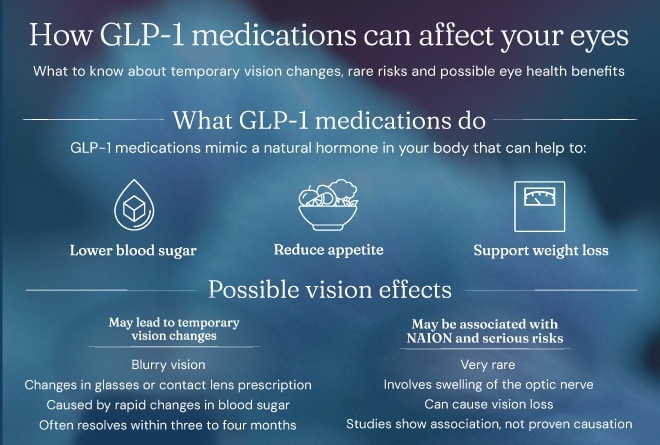
Dr. Bert said that multiple studies show that there is potential for an increase of NAION. “Even so, the chance of it happening is still very, very rare. And there's not really anything that we've discovered that makes us aware of who would be at risk. So for NAION, knowing that by taking this medication you are putting yourself at a slight increase of that happening, though again, the chances are extremely rare.”
While some studies have shown a possible concern for the development of NAION, Dr. Garg said that practitioners still need more data to understand the connection between GLP-1 medication use and these cases.
“There is not enough research to confirm causation,” he continued. “The best way to keep patients safe is education and communication. Keep in contact with your medical team, show up to your routine exams and discuss any new symptoms.”
Jonathan S. Williams, MD, clinical assistant professor in the Department of Ophthalmology at NYU Grossman School of Medicine, says it’s important to note that no current study shows direct causation between GLP-1 use and NAION — only an association.
“And it's also easy to forget that though a lot of people are using this for weight loss, most are using it for diabetes and may have other comorbid conditions that make them more susceptible to some of these rare side effects,” Dr. Williams added.
Start with an eye exam
When considering a GLP-1 medication, Dr. Garg said to make sure to talk to an eye doctor who can help weigh the pros and cons of these medicines against ocular health and determine what is optimal based on individual health needs and priorities.
"We’re still learning about these medications, so maintaining consistent communication with a medical team is the best way to stay informed," he continued. "It’s also important to remember that starting a GLP-1 medication is not a substitute for taking care of overall health. It should be viewed as a medical intervention for patients with high blood sugar levels and to reduce cardiovascular events."
For people with diabetes, Dr. Bert emphasized the importance of having a dilated eye exam before starting a GLP-1.
"All patients who have diabetes should be having a routine annual eye exam to make sure they're not having any eye complications from their diabetes," he said. "And certainly if they're going to be starting a GLP-1, it's always safer to have an exam prior to and shortly after starting treatment if there's any changes in the vision."
For people worried about potential vision complications or wondering if a GLP-1 can cause blindness, Dr. Williams recommends a conversation between an eye doctor, primary care doctor, and, if pertinent, a neurologist or other subspecialist, to decide how to proceed with the medication.
Ultimately, each person needs to be their own advocate and work in partnership with their providers to decide whether GLP-1 treatment is the appropriate path forward — for their eye and overall health.