Botulinum toxin FAQs

Disclaimer
The following information is intended for general educational purposes and does not constitute medical advice, diagnosis, or treatment recommendations. Botulinum toxin is a prescription medication, and treatment decisions should always be made in consultation with a qualified healthcare provider who can evaluate your individual health, goals, and medical history. If you are experiencing side effects or have concerns about a recent treatment, contact the provider who performed your injections or seek medical attention.
This article was originally developed in consultation with Charles Slonim, MD, a board-certified ophthalmologist, and has been updated by the All About Vision Editorial Team. Dr. Slonim is Adjunct Professor of Ophthalmology & Affiliate Professor of Surgery, Division Plastic Surgery at the University of South Florida College of Medicine and Associate Clinical Professor of Ophthalmology at the University of Florida College of Medicine.
Botulinum toxin FAQ
Do you have a question about botulinum toxin? We’ve answered the most frequently asked questions below.
Botulinum toxin basics
Q: How does botulinum toxin work? — A.C.A.
A: Botulinum toxin works by weakening the muscles into which it is injected. As facial muscles contract, the loose skin above those muscles wrinkles. By weakening the muscles, the wrinkles are reduced.
Q: How long do results last? — L.S.
A: The effects of botulinum toxin injections usually last up to three months.
Q: How safe are wrinkle-relaxing injections? How can you lengthen the effects of botulinum toxin? How often should you get botulinum toxin after your first injection? How many times can you have botulinum toxin? — K.
A: Botulinum toxin is considered very safe when injected by experienced physicians.
Some oral zinc supplements have been shown to lengthen the effect of botulinum toxin injections.
As soon as your wrinkles return, you can have botulinum toxin again. There is no defined limit to the number of injections one can have. However, the body's immune system is capable of developing antibodies to the botulinum toxin molecule, which can render it ineffective at some point in the future.
Q: Is there a rebound effect when botulinum toxin wears off and one does not go for repeat injections? — P.T.
A: No, the muscle activity should return to its original state when the botulinum toxin wears off.
Q: Is botulinum toxin painful? I have a very low pain threshold. — A.S.
A: Botulinum toxin, itself, is not painful. The pain is associated with the needlestick. The smaller the needle, the better it is tolerated. When a volume of fluid is injected under the skin, it temporarily stimulates some of the nerve fibers. Everyone's threshold for these occurrences differs from person to person.
Q: How many botulinum toxin treatments are needed before you see results, does it hurt, and what is the healing period and aftercare? — E.
A: When injected appropriately, the results are typically seen after the first treatment. Botulinum toxin takes two to four days before the muscle weakening effect takes place. The maximum effect usually occurs at about 10 to 14 days. The effect then lasts up to three months.
Pain and discomfort depend on one's tolerance for needle injections around the face. There is typically no "healing period and aftercare." A majority of physicians suggest that the areas of injection should not be rubbed or manipulated for a few hours after the injections.
Q: Who can perform botulinum toxin injections? — L.J.
A: Botulinum toxin is a prescription drug. It is administered* by a physician or their designee (e.g., nurse, physician assistant, aesthetician).
*Botulinum toxin is a prescription medication that must be administered by a licensed healthcare provider or, in some states, by trained professionals under the direct supervision of a physician. Regulations vary by state — your provider's office can clarify who will be performing the injections.
Q: I'm 62 years old and botulinum toxin isn't achieving the same results on me as it did in the past. At what point does botulinum toxin become ineffective in treating deep-set wrinkles and skin sagging? — C.S.
A: There is no defined limit to the number of injections one can have. However, the body's immune system is capable of developing antibodies to the botulinum toxin molecule which can render it ineffective at some point in the future.
Q: Is it true that the more I have botulinum toxin injections, the less I need? — G.H.
A: This has been a topic of discussion among many physicians. Muscles that are not used tend to atrophy and weaken over time. Muscles that have been continually injected with botulinum toxin may actually fall into this category and produce a similar effect. This might result in using less botulinum toxin.
Q: Is anesthesia used for the procedure? I'm a bit of a chicken when it comes to needles! — R.W.
A: Some doctors will anesthetize the surface of the skin with a topical anesthetic cream. This makes the stick of the needle much more tolerable.
Q: I'm getting married and want to have botulinum toxin injections to "freshen" my face. How far out do I need to have it? I don't want to be bruised or swollen on my wedding day! — J.S.
A: Botulinum toxin takes about two to four days to take effect. Its maximum effect occurs around 10 to 14 days and lasts up to three months. A bruise from a needlestick usually lasts five to seven days. With an impending event, such as a wedding, it’s usually recommended that patients get their botulinum toxin injections one month before the event.
Q: Does botulinum toxin always have to be performed in a doctor's office? Who is certified to inject botulinum toxin? — N.B.
A: Botulinum toxin is a prescription drug. It is administered* by a physician or their designee (e.g., nurse, physician assistant, aesthetician). It does not have to be injected in a doctor's office.
*Botulinum toxin is a prescription medication that must be administered by a licensed healthcare provider or, in some states, by trained professionals under the direct supervision of a physician. Regulations vary by state — your provider's office can clarify who will be performing the injections.
Q: If one undergoes electronic impulse treatment to supposedly encourage collagen production and activate muscular activity in facial areas prone to wrinkling, does this negate the muscle relaxant effect of botulinum toxin injections in same area? — K.L.
A: There is no research that compares the effects of "electronic pulse treatments" with botulinum toxin treatments. The muscle relaxant effect of botulinum toxin injections occurs directly in the muscle into which it is injected. Whether or not electronic impulse treatments affect this activity needs to be studied scientifically.
Q: What happens if I discontinue botulinum toxin after the first time or after several times? Will my forehead look worse than before I started treatment? Some people tell me once you start using it, you can never stop. — M.H.C.
A: The wrinkles of your forehead should return to their original appearance when the botulinum toxin wears off. Discontinuing the botulinum toxin will not worsen your wrinkles.
The reason "you can never stop" using the botulinum toxin is because after seeing the disappearance of your wrinkles, you "never want to see the wrinkles" again. You can stop anytime you want without consequences (other than the return of the wrinkles).
Q: I am 47 years old and dislike the aging appearance of my neck. When I talk, I see these long "stringy" protruding muscles. I read that botulinum toxin injections along the problematic muscles can reduce this. Is this true?
How can I find an experienced doctor to do it? What are the possible side effects? — D.M.
A: Yes, botulinum toxin has been used to reduce some of the cosmetic effects of the aging appearance in the neck region. This is an off-label use of the botulinum toxin, which is specifically indicated by the FDA for the reduction of frown lines (wrinkles between the eyebrows) and crow's feet. Your injection should be done by someone who is experienced in giving these injections.
You can find an experienced doctor either by word-of-mouth from other patients or by calling the office directly and specifically asking about the doctor's experience in injecting necks for cosmetic purposes. A possible side effect is weakness in the neck muscles that were injected, which will last three to four months until the botulinum toxin wears off.
Are you a candidate for botulinum toxin injections?
Q: Is it considered safe to have botulinum toxin injections around your eyes shortly before or after LASIK surgery? Thanks in advance for an answer. — R.
A: The decision to have botulinum toxin injections before or after LASIK surgery should be left up to your LASIK surgeon. The injections should be safe. However, the effect of botulinum toxin around the eyes can reduce the strength of the blink reflex, which might create a sense of dryness of the eye. This might affect the healing process of the LASIK surgery. LASIK surgery is known to create temporary dry eyes immediately after the procedure.
Q: I'm 25 years old and am starting to notice fine lines around my eyes. Am I too young to have botulinum toxin? — C.M.
A:There's no strict minimum age for cosmetic botulinum toxin. Some providers offer preventive treatments for patients in their mid-to-late twenties who are beginning to develop fine lines. A consultation with a qualified provider can help determine whether treatment is appropriate for your situation.
Q: I have high blood pressure (hypertension). Is botulinum toxin safe for me? — T.
A: When injected appropriately, botulinum toxin should not have a direct effect on blood pressure. Always consult with your physician prior to considering botulinum toxin injections.
Q: I have fibromyalgia and use pregabalin medication. Is fibromyalgia a contraindication to botulinum toxin? — D.A.
A: There are reports of patients with fibromyalgia getting some relief of their tender points with botulinum toxin injections.
Fibromyalgia is not a known contraindication to cosmetic botulinum toxin use. Some research has explored botulinum toxin injections for pain management in fibromyalgia, though this remains an off-label use with limited evidence. If you're considering botulinum toxin for any purpose and are taking medications for fibromyalgia, discuss this with your provider to ensure there are no concerns with your specific treatment plan.
Q: Is botulinum toxin injection safe for patients with lupus erythematosus? What are the possible risks for these patients? — E.
A: Lupus patients are known to have some skin conditions. Botulinum toxin must be used very cautiously in any area where the skin is not completely normal.
If you have lupus or any autoimmune condition, it's important to discuss this with both your treating physician and your injection provider before considering botulinum toxin treatment.
Q: In the United States, the FDA has approved botulinum toxin for people aged 18 to 65. Why is the age limit cut off at age 65? Just wondering if botulinum toxin or filler would help deep wrinkles on my upper lip? — B.R.
A: The FDA-approved labeling for cosmetic botulinum toxin products is based on the age range of patients included in the original clinical trials, which typically enrolled adults between 18 and 65. This doesn't mean the product can't be used in patients over 65 — it means the formal safety and efficacy data in the labeling comes from that studied population. Many providers treat patients outside this age range based on their clinical judgment.
Botulinum toxin and dermal fillers are used in the upper lip for a variety of reasons. Fillers will not weaken the muscles around the lips as botulinum toxin will. The side effects of botulinum toxin injections around the lips can be bothersome to some patients.
Q: I would like to get botulinum toxin injections, but I have retinitis pigmentosa (RP). Is this a contraindication for botulinum toxin? Will it make my condition worse at all? — K.V.
A: Retinitis pigmentosa is not a contraindication for the use of botulinum toxin. When injected into the muscles that surround the eye, it should have no effect on your condition.
Q: I have a two-year-old daughter who was recently diagnosed with strabismus. Her doctor said that she needs to have strabismus surgery, however, he did not give me other options. I read that botulinum toxin injections can be used to treat strabismus. How safe are botulinum toxin injections for a two year old? What major side effects can they cause that may affect my daughter later on? Also, are there any other options such as glasses or treatments that may be available besides surgery? — A.P.
A: Botulinum toxin is FDA-approved for the treatment of strabismus in patients aged 12 and older. The safety and effectiveness in pediatric patients below the age of 12 have not been established by the FDA in the treatment of strabismus; however, botulinum toxin has been used safely and effectively in children below the age of 12.
Botulinum toxin has its effects directly on the muscle into which it is injected. Its effects only last about three months. In strabismus, the goal is to weaken the affected muscle on one side of the eye so that the muscle on the opposite side of the eye can work better.
The two major side effects are that the muscle wasn't weakened enough (undercorrection) or weakened too much (overcorrection). In both cases, the botulinum toxin will eventually wear completely off so the side effect goes away in two to three months. As your ophthalmologist will probably inform you, the eye muscles are positioned against the eye so there is always a small risk that the needle could penetrate the eye. This has a very rare occurrence.
The different treatments for strabismus depend on the type of strabismus that your daughter has. Sometimes a simple pair of glasses will correct a small strabismus and, occasionally, glasses with prisms will be required. Botulinum toxin injections and strabismus surgery are other options.
Q: My 4-year-old daughter suffers from paralysis on the left side of her leg and hand. Would botulinum toxin injections help? — B.P.
A: It all depends on the cause of her paralysis. Botulinum toxin reduces the strength of contraction of the muscles (paralysis-like) into which it is injected. Botulinum toxin has been used (off-label) to reduce the contracture (or spasm) of the opposing muscles associated with neurologically paralyzed muscles.
For example, when a muscle like the bicep (which flexes the arm) is paralyzed, the tricep muscle (which extends the arm) will contract and keep the arm extended. Reducing the muscle contraction of the tricep muscle with botulinum toxin could possibly help the mobility of the arm, prevent permanent contracture and allow it to assume a more comfortable position.
Botulinum toxin indications and uses
Q: I have heavyset brows and am after an eye lift, but I don't want to resort to surgery. Can botulinum toxin be used for a "mini-lift"? — A.L.
A: When injected in the correct areas under the eyebrows, botulinum toxin can raise the eyebrow ("mini-lift") to a certain degree. There is a relative risk, however, that the same injection could inadvertently cause the upper eyelid to fall.
Q: I've heard botulinum toxin can stop excessive perspiration on the palms and feet. Is this safe and are there any side effects? — Z.N.
A: Yes, botulinum toxin has been successfully used to reduce excessive perspiration (hyperhidrosis) on the palms and feet. The side effects are related to the number of muscles that are injected. Weakening muscles in the palm of the hand can affect the strength of one's grip. The same can occur in the foot; although gripping with the foot is not a normal function, walking may have an unusual sensation.
Q: Does botulinum toxin diminish horizontal forehead wrinkles? — W.F.
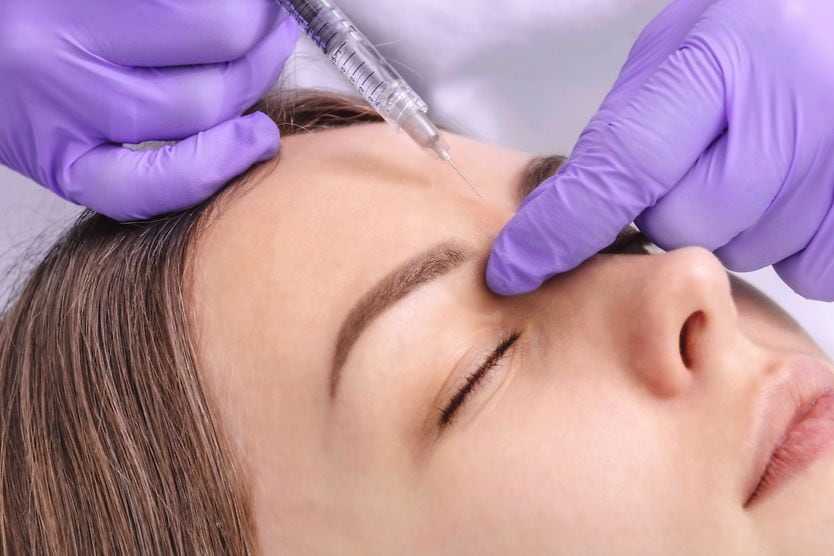
A: Yes, when injected into the frontalis muscle of the forehead (the one that lifts your eyebrows), the horizontal wrinkles can be diminished.
Q: Can you get botulinum toxin injections in your lips? — K.P.
A: Yes, but the side effects can affect the ability to hold a straw or to sip from a cup. These injections should be performed by someone very experienced in these kinds of injections.
Q: Can you use botulinum toxin to increase your lips and buttocks? — M.H.
A: No, botulinum toxin is not a filler.
Q: Can you have botulinum toxin in numerous places at the same time, i.e., both forehead lines and crow's feet? — J.
A: Yes, botulinum toxin is frequently given in multiple sites at the same time.
Q: Which areas of the face can you get botulinum toxin injections? And can it be used on the body? — J.O.
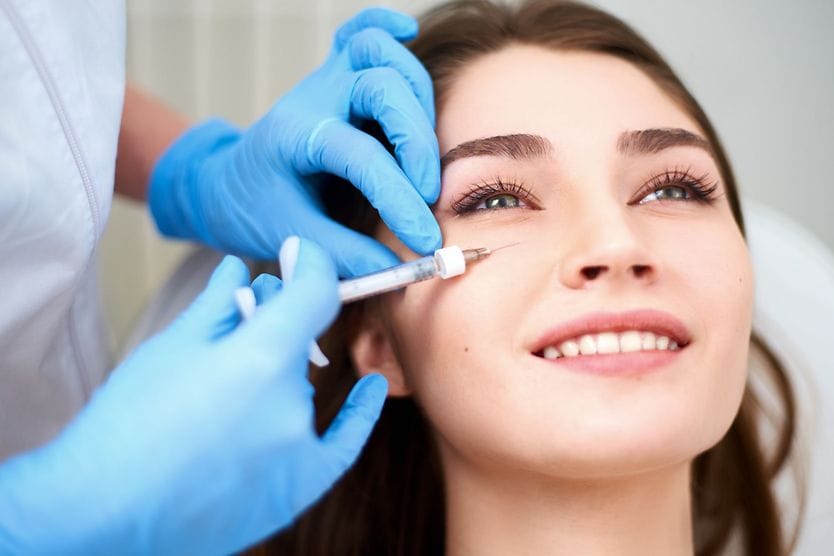
A: The most common areas of the face that are injected with botulinum toxin are the frown lines between the eyebrows, the forehead wrinkles and the crow's feet. It can be injected into any muscle in the face. The cosmetic use of botulinum toxin is FDA-approved for the frown lines (glabellar lines) and crow's feet. Injection in areas beyond a product's specific FDA approval is considered off-label use.
Botulinum toxin can be injected into other muscles in other parts of the body.
Q: I'm 28 years old and would like to have botulinum toxin injections on both sides of my face to make my face look smaller. How does this work? What are the side effects? I often hear people say that a side effect is an unnatural smile as well as trouble chewing food.
How long can the effects of botulinum toxin when administered around the jaw last? My doctor says that after the fifth injection (within five years), the facial shape will be quite permanent. Is this true?
Lastly, I want to have smaller arms and my doctor suggested botulinum toxin injections for this area as well. I have never heard of this before — can it be done? — J.L.
A: Botulinum toxin is being used by some physicians to make the face appear thinner. The masseter muscle, which is used for chewing, is sometimes enlarged, causing a squaring of the facial shape. When botulinum toxin is injected directly into this muscle, it can cause some flattening of the muscle and possibly some narrowing of the jaw, creating a thinner facial appearance. The obvious side effect could be difficulty chewing and facial asymmetry. It should be performed by someone very experienced in these kinds of injections.
The effects would last the same as the injections anywhere else. Botulinum toxin effects can last up to three months.
Muscles that are not used constantly can begin to atrophy and shrink physically. There are theories that muscles that are continually injected with botulinum toxin and weakened may have a similar effect.
Botulinum toxin is not used for reducing arm size. If you're interested in body contouring, your provider can discuss other options that may be appropriate.
Other neurotoxins and fillers
Q: What's the difference between botulinum toxin and fillers? — T.M.
A: Botulinum toxin weakens the muscles that cause wrinkles in the skin that overlies those muscles. Dermal fillers are injected directly into the wrinkle to plump up the skin and smooth the surface. Botulinum toxin can last up to three months and fillers can last up to a year.
Q: What else would you recommend instead of botulinum toxin for a deep line between my eyebrows that makes me look very tired and unhappy, and also lines around my mouth? — B.
A: Lines that are not helped by botulinum toxin can frequently be filled with dermal fillers such as hyaluronic acid, calcium hydroxylapatite and poly-L-lactic acid. These substances are injected under the wrinkle to alleviate the line and smooth the surface. Their effects, depending on which filler is used, can last six to eight months and longer.
Botulinum toxin cost and units needed
Q: How much do botulinum toxin injections cost for frown lines? — E.C.
A: Prices vary from doctor to doctor. Some doctors charge a single price for a single zone. For example, the frown lines would be one zone, the forehead would be one zone, and the crow's feet would be one zone. Some doctors charge based on the number of units of botulinum toxin injected and, therefore, have a price per unit of botulinum toxin. Botulinum toxin vials come in two different sizes: 50-unit vials and 100-unit vials. The number of units injected depends on the number of wrinkles to be alleviated.
Q: How many units are required to treat a male armpit? — J.
A: This varies from doctor to doctor. A typical case could be 25 injections per armpit and two units of botulinum toxin per injection site for a total of 50 units per armpit. A bigger person with a bigger armpit might get more injections and a smaller person might get less.
Q: Where can you buy botulinum toxin? — L.Y.
A: Botulinum toxin is a prescription drug and is not available for sale directly to the public. Be cautious of any source offering botulinum toxin outside of a licensed medical practice — counterfeit or improperly stored products pose serious safety risks.
Botulinum toxin side effects and complications
Q: I had 40 units of botulinum toxin injected two months before I had cataract surgery. I now have a very droopy eyelid on the inner corner of the operated eye, as well as very blurred vision. Could the botulinum toxin have caused any of this?
I am praying it will improve, but it has been two and a half months since the cataract surgery, and my doctor will not comment. Help! I wanted more botulinum toxin after these injections wore off, but now I am scared! — F.
A: It all depends on where the botulinum toxin was injected (e.g., near the upper eyelid). If the droopy eyelid was the result of some botulinum toxin that accidentally found its way into the muscle that raises the eyelid, then this will wear off when the botulinum toxin wears off (usually three to four months after the injection). Your eyelid should resume its original position.
A droopy eyelid after botulinum toxin can occur if some of the product migrates to the muscle that raises the eyelid. In that case, the droop is temporary and should resolve as the botulinum toxin wears off, typically within a few months. However, ptosis (a drooping eyelid) can also occur as a complication of eye surgery. Because you've had both botulinum toxin and cataract surgery in close proximity, determining the cause is important — and that's a conversation to have with your eye doctor or surgeon.
Q: Will I have a frozen appearance after botulinum toxin injections? I fear I won't be able to move my forehead. — A.H.M.
A: It all depends on where and how much botulinum toxin is injected. There are those persons who want their foreheads "frozen." Your desired botulinum toxin effects should be discussed with your doctor prior to the injections. The "where and how much" can be individualized to your wishes.
Q: What are the risks and complications of botulinum toxin? Can I have botulinum toxin injections when I'm pregnant or nursing? — L.J.
A: The main risks and complications of botulinum toxin are associated with weakening a muscle that was not intended to be injected. This can include a myriad of symptoms depending on which muscle was inadvertently weakened.
Botulinum toxin is not recommended for use during pregnancy or while nursing. There are no adequate studies establishing its safety in pregnant or breastfeeding women. Anyone who is pregnant, planning to become pregnant, or nursing should discuss this with their physician before considering treatment.
Q: I had botulinum toxin injections two weeks ago. After one week my left eyelid began to droop. How long will it last? — N.P.
A: Occasionally, some of the botulinum toxin can migrate beyond the targeted area and affect another muscle. It sounds like the muscle that lifts your eyelid was affected in this way. Typically, a drooping eyelid as a side effect of botulinum toxin will last a couple of weeks, depending on how much of the botulinum toxin migrated into that muscle. As with the intended effects of botulinum toxin, this side effect will eventually wear off as well.
Q: I had botulinum toxin injections two weeks ago and I've had continuous headaches ever since. Is this a side effect and how long will it last? The botulinum toxin was injected in my forehead and it actually hurts behind my eyeballs as well as my forehead. — D.W.
A: It is not unusual for patients who have had botulinum toxin injections in the forehead to experience a temporary headache depending on how many injections they've received. "Continuous headaches" for two weeks would be an unusual side effect and should probably be addressed with the doctor that injected them. This would apply to the discomfort behind the eyes as well.
Q: I have read that muscle spasms can be a side effect of botulinum toxin injections. I experienced three different episodes of painless forehead muscle spasms, each preceded by a feeling of fullness in my forehead.
I had received botulinum toxin in my forehead about one and a half months prior to the first one. My daughter thought I was having a stroke. My eyebrows contracted intensely towards each other, creating deep lines in my forehead and between my eyebrows.
It hasn't happened since the botulinum toxin wore off completely. Is it common for this to happen? — B.
A: This is not a common side effect of botulinum toxin. It is possible that the "muscle spasms" were occurring in the muscles that did not receive botulinum toxin injections while the surrounding muscles that did receive the botulinum toxin injections appeared "calm."
These muscles might be overcompensating. This could potentially enhance your frown lines if they were not injected when your forehead was injected.
Q: I had botulinum toxin around my eye and three days later I had an eye floater. Could botulinum toxin have caused this? Or is it just coincidental? — S.
A: No, this would be highly unlikely and probably coincidental.
Q: Three weeks ago I had sinus surgery and my ENT suggested botulinum toxin injections at the time of surgery for twitching under my eye. My face is now drooping — from my eye to my chin. I am very upset and believe it is because I had a severe reaction to the botulinum toxin. How long will the droopiness last? — P.B.
A: You seem to be describing a side effect of botulinum toxin rather than a severe reaction to it. If the botulinum toxin was injected into muscles that typically support the facial structures, then these muscles were weakened. This weakening will cause the facial structures held up by those muscles to droop. This muscle weakening effect is the desired effect of botulinum toxin unless, of course, it affects a muscle that wasn't intended to be weakened. Botulinum toxin effects can last up to three months.
Q: I had botulinum toxin around my eyes just where my cheek bones are about four weeks ago. Ever since, my cheeks have been red. Could I have an infection, or will it eventually go away on its own? It's starting to worry me! — M.E.
A: Without actually observing your condition, it’s not possible to make a diagnosis.
Persistent redness at or near injection sites lasting four weeks is not typical and should be evaluated by the provider who performed the injections. Without an in-person examination, it's not possible to determine the cause.
Q: Are there reports of botulinum toxin causing double vision and blurry vision and at what time after the injections? — N.H.
A: This would depend on where the botulinum toxin was injected. Double vision and blurred vision are known temporary side effects of botulinum toxin injections around the eyes.
Q: I had botulinum toxin injections a few days ago and don't like the results. What can I do? How do I reverse the effects of botulinum toxin? — K.J.B.
A: All you can do is wait for the botulinum toxin to wear off. The effects of botulinum toxin can last up to three months.
Q: Would dizziness be a side effect as the botulinum toxin is wearing off? It's been about four months since I had it done and I've started to feel dizzy. — N.
A: It depends on where the botulinum toxin was injected. Dizziness is not a typical side effect as the botulinum toxin is wearing off. Your symptom of dizziness should be brought to the attention of your physician.
Q: I have been getting botulinum toxin injections on my forehead, crow's feet and the lines between my eyes for two years. Recently I was told by my ophthalmologist that the glands in my eyes are blocked. Can botulinum toxin cause this? I have swelling and itchiness, too. — D.
A: No, botulinum toxin only affects the muscles into which it is injected. There are different kinds of glands in the eye that combine their secretions to produce the tears that moisten the eyes. There are water glands, oil glands and mucous glands. Blockage of each of these glands can have a different effect on the eye.
Q: I had botulinum toxin injections about a week ago in my forehead and crow's feet (44 units). I now have extreme pain in my left armpit where I think my lymph nodes are. Could this be caused by the injections or is it coincidental and something else is wrong (I also have a sore throat and extreme fatigue)? — L.A.
A: Your symptoms should be brought to the attention of your physician. Your left armpit pain would be a very unusual side effect of botulinum toxin injections in the face. While the timing may be coincidental, your doctor can determine whether further investigation is warranted.
Q: I had botulinum toxin injections several months ago between my eyebrows. Ever since, I have had itching in this area. Is this a side effect? Will it continue if I get botulinum toxin injections again? — S.E.
A: As with the injection of any medication, there can be itching as a side effect. Itching is typically short-lived unless there is a true allergic reaction to the medication. If the itching does not subside, this should be brought to the attention of your physician.
Brief, mild itching at the injection site can occur with any injection. However, itching that persists for months is unusual and should be discussed with your provider before any future treatments. If the itching is due to an allergic reaction, subsequent injections could trigger a more significant response.
Q: Will a droopy eye caused by botulinum toxin go back to normal? How long would that take? Is there any way to correct it sooner? — R.
A: A droopy eyelid should typically return to normal as the botulinum toxin wears off. The effect of botulinum toxin can last up to three months.
There are some eye drops that are used to treat glaucoma. One of the side effects of this specific class of eye drops is that the drop can occasionally and temporarily raise the upper eyelid. The drops are occasionally prescribed to patients whose eyelids droop after botulinum toxin injections.
Q: I had botulinum toxin injections three times and after each session I looked and felt great. But when I had the injections for a fourth time, I developed blurry vision. After the botulinum toxin wore off, so did my blurry vision. I really want to get botulinum toxin injections again but I'm scared my vision will be blurred again. Do you think it's safe for me to try a small dose again? — C.
A: It depends where the botulinum toxin was injected. This should be discussed with your physician. Your blurry vision side effect that occurred during your fourth injection may have been caused by some botulinum toxin that went beyond the intended area of treatment. This could have been an isolated event that will not occur in future injections. Although, there is a possibility that it may occur again.
Q: I had botulinum toxin injections done around two months ago and for the first two weeks I had a fever and general lethargy, accompanied by a phlegmy cough. Was this a botulinum toxin side effect? — Z.
A: Fever, fatigue, and cough are not recognized side effects of botulinum toxin injections in the face. These symptoms suggest a separate illness and should be evaluated by your physician. Be sure to mention your recent botulinum toxin treatment so your doctor has the full picture.
Q: I had a dose of botulinum toxin injected in my forehead five days ago and on the third day I have puffy eyes and my eyelids feel "tight." How long will this last? — L.R.
A: Your eyelids may feel tight as they overcompensate for the weakness in your forehead muscles. The puffiness of your eyelids would be an unusual side effect of botulinum toxin injections in the forehead. This should be discussed with your physician prior to receiving any future botulinum toxin injections. A lot depends on where the injections were given and how much botulinum toxin was given.
Q: I had botulinum toxin injections and now have bumps at the injection site. They are very painful. Is this a common side effect? Is there something I can do to make them go away and keep them from becoming infected? — J.H.G.
A: Without actually observing your condition, it’s not possible to make a diagnosis. These bumps should be seen by your physician to make sure that they are not localized infections.
Q: Since I had botulinum toxin injections, I have had double vision in my left eye. The left side of my mouth will not move and the left side of my face is droopy. I'm most concerned about the vision. Will it get better? It's been one month today. My doc doesn't seem too worried, but I am. — J.H.G.
A: While these symptoms can occur as side effects of botulinum toxin — particularly if the product migrated beyond the intended treatment area — unilateral facial drooping and double vision can also be signs of other conditions that require prompt medical attention. If you haven't already, contact your provider or seek medical evaluation to rule out other causes. If the symptoms are related to the botulinum toxin, they should resolve as the product wears off, typically within two to three months.
Q: If you correct strabismus by injecting botulinum toxin into the eye muscles, I've heard that the eyeball can collapse. Is this true? — L.R.
A: It is possible that the needle could inadvertently perforate the eye because the muscles injected for strabismus are against the eye. A single needlestick in the eye will not collapse the eye, but it can cause a serious problem inside the eye, including hemorrhage and infection. This treatment should be performed by someone very experienced in these kinds of injections.
Globe perforation (accidental puncture of the eye) is a rare but recognized risk.
Q: Is botulinum toxin toxic? Will it affect your health after several treatments? I want to use it only for cosmetic purposes on my forehead. — M.C.
A: All drugs and/or medications, when taken at certain high dosage levels, can produce toxic effects. When used appropriately, botulinum toxin has not been shown to have a toxic effect on your general health, even after several treatments. The amount required to effectively reduce the wrinkles on your forehead is far below any toxic level of the drug.
Q: I had botulinum toxin injections for blepharospasm, and since the treatment I have felt discomfort in my chest. I've had three botulinum toxin sessions for my condition, but I seem to feel worse after this last treatment. Should I continue using botulinum toxin? — I.G.
A: The amount of botulinum toxin required to effectively treat your blepharospasm is far below any toxic level of the drug. It would be unusual for botulinum toxin to cause the symptom that you are experiencing.
Nonetheless, the discomfort in your chest should be thoroughly investigated by your primary care physician as soon as possible, to rule out any other possible causes. Your physician may want to discontinue your botulinum toxin injections until a correlation between the botulinum toxin and your chest discomfort has been ruled out.
Botulinum toxin and other medications
Q: I had botulinum toxin injections today, and six hours later I took some acetaminophen. Will this lessen the effects of the botulinum toxin? — C.S.
A: Acetaminophen should not have any effect on the botulinum toxin. However, pain relievers with blood-thinning properties, such as ibuprofen or aspirin, may increase bruising at the injection site. Check with your provider if you have questions about specific medications.
Botulinum toxin and supplements
Q: Which supplements interact with botulinum toxin injections? I take lots of fish oil, vitamin C and zinc. Would these be a problem? I also suffer from severe dry eyes and high eye pressure in my left eye. — C.K.
A: The one supplement that has been shown to interact favorably with botulinum toxin is zinc. In fact, there is a prescription product that has shown an enhanced effectiveness of botulinum toxin injections when taken four days prior to and on the day of botulinum toxin injections. This high concentration of this zinc formulation is claimed to assist the botulinum toxin in binding to the nerve receptors.
Q: What vitamins and herbs affect botulinum toxin treatment? — S.S.
A: No vitamins or herbs have been shown to have a direct effect on the effectiveness of botulinum toxin. Certain zinc supplements have been studied as products that might enhance the effects of botulinum toxin. There are many vitamins (e.g., vitamin E) and herbs (e.g., clove, garlic, ginger, ginkgo biloba, ginseng, licorice) along with fish oil that have anticoagulant, or blood-thinning, effects. Since botulinum toxin is injected, avoiding these products prior to injections may help reduce possible bruising associated with injections.
Please note: If you have an urgent question about your eye health, contact your eye care practitioner immediately. This page is designed to provide general information about botulinum toxin and cosmetic enhancement procedures in general. It is not intended to provide medical advice. If you suspect that you have a vision problem or a condition that requires attention, consult with an eye care professional for advice on the treatment of your own specific condition and for your own particular needs. For more information, read our Terms of Use.