7 times when you must see an eye doctor ASAP

1. Traumatic eye injury/accidents
“Eye emergencies can cover a range of incidents and conditions, but the most common are due to accidents.,” says Barbara Horn, OD and former president of the American Optometric Association (AOA).
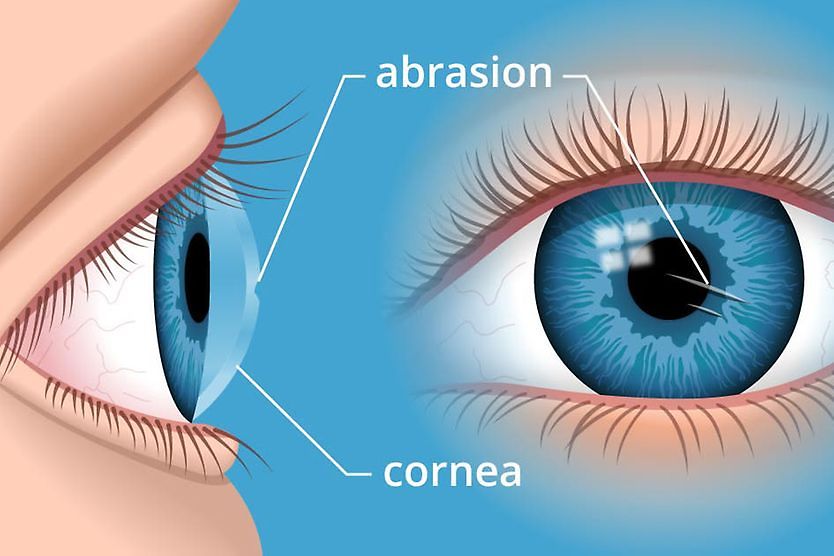
[Accidents](https://www.allaboutvision.com/eye-care/safety/eye-injury-prevent/ ) usually mean something has gotten into the eye, but an injury or burn affecting the eye area is also worth getting checked by an eye doctor. Serious injuries can cause swelling, redness, light sensitivity, double vision or pain.
“Without proper treatment, eye injuries can lead to partial or even permanent loss of vision,” Dr. Horn says.
After any trauma to the eye, apply a cold compress without putting pressure on the eye to reduce pain and swelling. Severe pain or reduced vision requires immediate care from an eye doctor.
If you cut or puncture your eye or eyelid, it is recommended to not wash out the eye and do not attempt to remove any object penetrating the eye. Cover the eye with a rigid shield, like the bottom half of a paper cup, and see an eye doctor immediately.
2. Foreign body or chemical burn
If you get chemicals in your eye, it is suggested to flush out your eye with sterile eye wash solution (preferably) or water for 15 minutes. If you’re wearing contact lenses, attempt to remove them first.
“Do not try to neutralize the chemical with some other chemical or substance,” says Dr. Horn. And don’t bandage it. Flush thoroughly, then get to an eye doctor.
If you get a particle in your eye, avoid rubbing it. Try to let your tears wash out the speck or irrigate the eye with eye wash or artificial tears. A forceful steady stream from the eye wash bottle directed at the foreign particle may be able to dislodge it from the front surface of the eye.
If the particle does not wash out, keep the eye closed, bandage it lightly and seek medical care.
“Some particles, particularly metallic ones, can cause rusting spots on the eye if left untreated for several days,” Dr. Horn warns. “If you are unsure if the object is gone, do not delay medical care.”
3. Noticeable vision changes
Sudden or noticeable change in the quality of your vision should be addressed quickly. Vision changes may indicate a retinal or corneal defect that could cause vision loss if left untreated.
One such defect is retinal detachment. If you’re seeing flashing lights and spots and/or a shower of floating spots from within the eye, you may have a detached retina. This is a medical emergency.
Changes in vision could be a symptom of stroke, nerve damage or other neurological issues. It is advised to call 911 and seek immediate medical attention at an emergency facility.
Pain in the temples, headache, pain after chewing, hip pain and fever combined with blurred vision may indicate temporal arteritis, a serious condition where the temporal arteries supplying blood to the head and brain become inflamed or damaged.
Corneal swelling or infection can also cause sudden vision loss. For any of these conditions, it is critical to have an accurate diagnosis and treatment plan.
4. A red eye
If you have red eye accompanied by discharge, you should have it evaluated by your eye doctor as soon as possible.
Most urgent care or ER centers will automatically prescribe an antibiotic. That is appropriate for bacterial conjunctivitis. Conjunctivitis (pink eye) is quite common in young children and is often viral and contagious.
A condition called corneal infiltrates (opaque spots on the cornea) may develop a few weeks after pink eye; it should be treated to avoid affecting vision.
Pink eye can sometimes be confused with the more serious uveitis or ocular herpes. Whenever possible, eye redness should be evaluated by an eye doctor who can make a proper diagnosis and prescribe the appropriate treatment.
4. Different size pupils (pupil anisocoria)
If your pupils are not the same size, you may have anisocoria. You can be born with this condition (which is often benign) or it can develop later in life due to direct eye trauma or an underlying condition.
Anisocoria can be a symptom of several maladies, including head trauma or other neurological causes such as a stroke or brain tumor.
So, if you see a noticeable difference in pupil size, whether constant or intermittent, you should be evaluated by your eye doctor.
5. Bulging eyes (proptosis/exophthalmos)
Bulging eyes or proptosis (also called exophthalmos) may be caused by numerous conditions, some more serious than others.
An injury to the eye socket or abnormal blood vessels behind your eye could cause it to bulge. Bulging eyes can also indicate a thyroid condition called Graves’ disease or eye socket problems such as inflammation, tumors or bacterial infections.
A bacterial infection that causes an eye bulge is an emergency. If not treated properly, a condition that presents as a very swollen lid (preceptal cellulitis) could allow the infection to spread from your eye socket and possibly affect the brain (orbital cellulitis). Orbital cellulitis may be sight-threatening.
6. Acute angle-closure glaucoma
Acute angle-closure glaucoma is a sudden-onset form of glaucoma that requires urgent medical care. Vision loss can start within hours if not treated immediately.
Symptoms may include:
- Intense eye pain
- Headache
- Blurred vision
- Seeing multicolored halos around lights
- Feeling nauseated or throwing up
If you experience these symptoms, see your eye doctor right away.
7. You experience these warning signs
In addition to the first six conditions above, you should see your eye doctor or health care provider if you experience:
- Eye burning or stinging
- One eye not moving like the other
- Decreased or double vision
- Light sensitivity
- Bruising and/or bleeding around the eye
- Blood in the white of the eye
- Discharge from the eye
- Severe itching
- New or severe headaches
It’s also important to see your eye doctor for routine comprehensive eye exams to maintain your vision prescription and get your eye health assessed regularly.
READ NEXT: Poison ivy in the eye