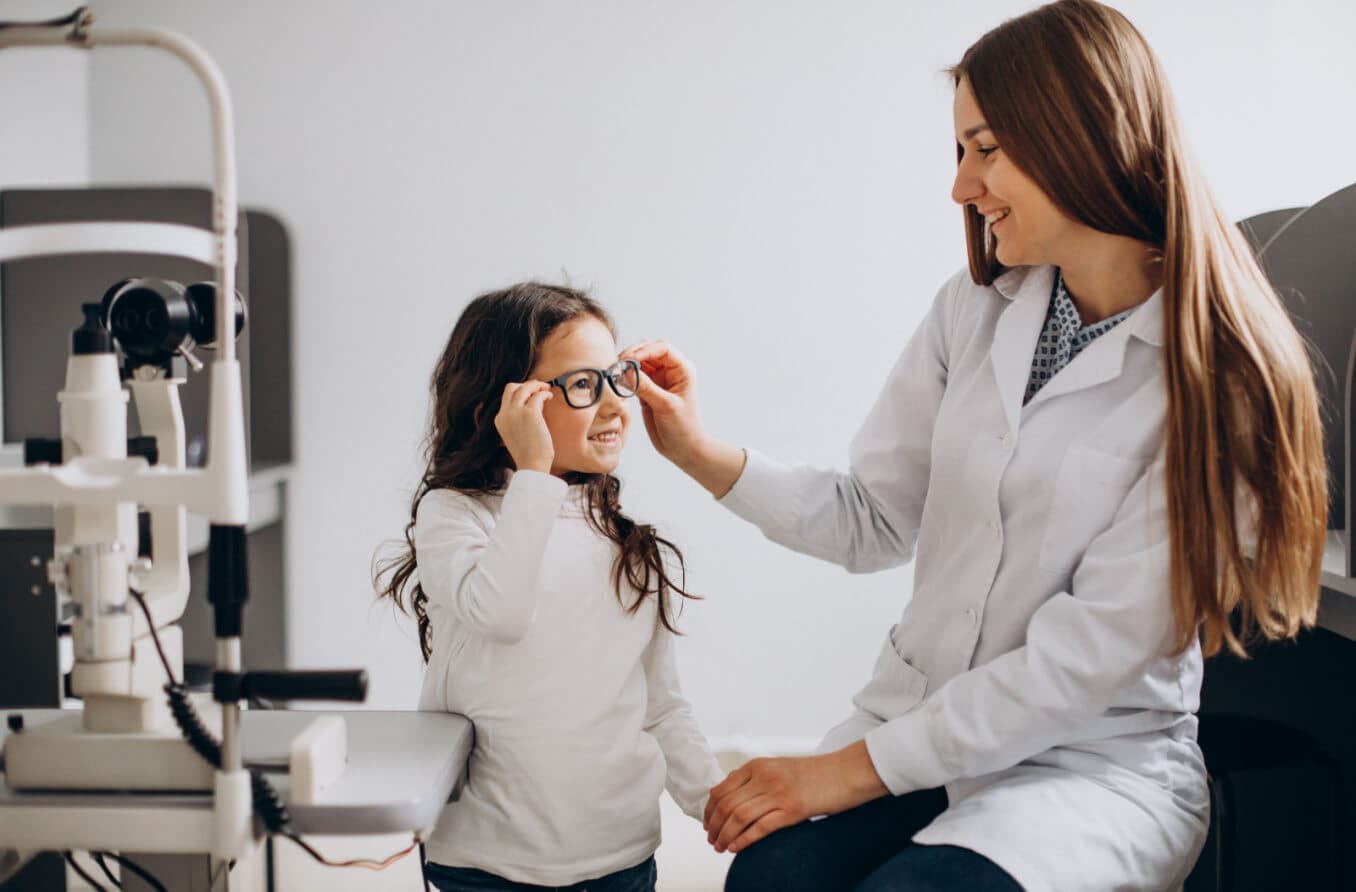
Myopia overview video


Myopia is a common vision problem that makes far away objects look blurry while close up objects remain in focus. It usually develops in childhood and can progress as your child grows.

Myopia is a refractive error, which means light doesn’t focus on the right spot in the eyeball.

In most cases of myopia, the eyeball grows a little longer than it should. This makes it difficult for light to focus on the retina when looking at a distance. The retina, which is located at the back of the eye, uses light to create a sharp image. When light can’t come to focus on it, it results in blurry distance vision.

Myopia can be low, moderate or high. Having high myopia can increase your child’s risk of developing serious vision complications later in life, like retinal detachment and glaucoma.

Some things that may contribute to myopia development include genetics, not enough outdoor time and extended periods of focusing up close without vision breaks.

Regular eye exams can help diagnose myopia in your child, and provide corrective lenses that allow them to see clearly. An eye doctor may also offer myopia control strategies to help slow the progression of myopia.

To learn more about myopia, visit AllAboutVision.com.
More Articles
A young boy wearing glasses gets help with his homework

What Are Myopia (Nearsightedness) and Myopia Progression?

Myopia is often called nearsightedness. If your eyes are myopic, this means distant objects look blurry. Learn more about myopia progression and management.

a person getting an eye exam to check for myopia

What Is Progressive Myopia?

Progressive myopia is nearsightedness that worsens year after year. Learn about the risk factors for progressive myopia and its potential complications.

Young girl wearing glasses for myopia standing in front of a Snellen eye chart.

What Is Myopia Control? - All About Vision

Find out how myopia control eyeglasses, contact lenses, eye drops and habit changes can reduce children’s risk for myopia development and progression.

person with night myopia driving at night

What Is Night Myopia?: Causes, Symptoms and Treatment

Night myopia causes eyes to become nearsighted in dark conditions, such as nighttime. It can be corrected with glasses or contacts.

What Are All the Options for Myopia Correction?

Myopia correction includes prescription glasses, contact lenses and refractive surgery. Learn which type of myopia correction is best for you or your child.

girl staring at computer screen

What Causes Progressive Myopia In Children?

Studies investigating what causes myopia progression in children cite a child’s genetics, underlying medical conditions, outdoor time, near-work time and correction type.

Girl wearing glasses

What Is Myopia Control? Can Myopia Really Be Controlled?

Myopia control refers to methods eye doctors use to slow myopia progression. Learn about myopia control contact lenses, eyeglasses and atropine eye drops.

girl with book

Why Progressive Myopia Is a Concern for Children and Adults

Progressive myopia is when children’s and teenagers’ nearsightedness gets worse every year. Learn why this is a concern and what you can do.

Correcting Myopia (Nearsightedness) Video

Learn about temporary myopia correction, like eyeglasses or contact lenses, and long term correction like ortho-k or LASIK surgery.

kids playing in autumn leaves

Myopia and Myopia Control Video

Learn how eye doctors can help control the progression of your child's myopia and give them a better chance of having lifelong, healthy vision.