Is nearsightedness more common than farsightedness?

Nearsightedness is the most common distance refractive error among children and young adults. It occurs in around 30% to 40% of adults in the U.S. and Europe and up to 80% to 90% of young adults in parts of Asia. The medical term for nearsightedness is myopia.
The prevalence of myopia has been increasing rapidly in recent decades. Researchers predict that by the year 2050, about half of the world's population will have myopia.
People who are nearsighted see close objects more clearly than they see distant objects. This is because when light enters their eyes, it comes to a focal point in front of the retina instead of directly on it.
The exact cause of the global increase in nearsightedness is unknown, but genetics clearly play a role. Studies have identified nearly 200 genetic factors for refractive error and myopia. When one or both parents have myopia, there is a higher chance that their children also will be myopic.
Another factor is that today's children tend to get less exposure to sunlight. The sun stimulates a neurotransmitter called dopamine, which is believed to affect the elongation of the eyes. Eyes growing too long from front to back is a predominant cause of nearsightedness.
The chances of developing myopia also appears to be influenced by how a person uses their eyes. For example, children who spend long periods of time doing close-up visual work may be more likely to develop nearsightedness.
Early diagnosis and management of nearsightedness is important. Myopia usually starts in childhood and can worsen year after year until early adulthood. In some people, this can lead to high myopia, which may raise the risk for other serious eye conditions, some of which can be vision-threatening.
READ MORE about when to have eye exams.
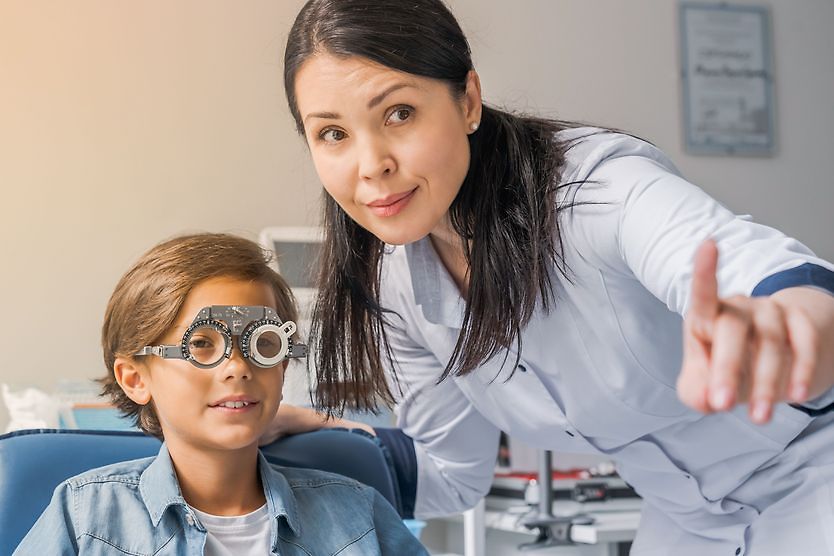
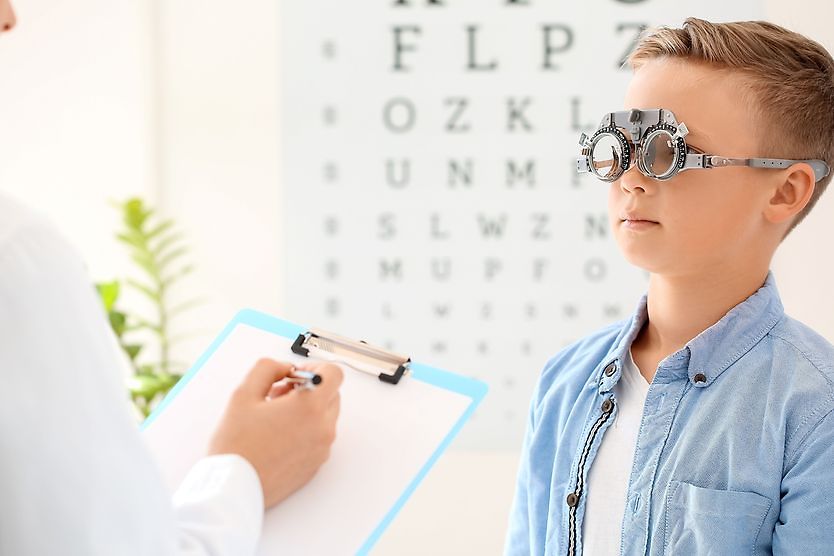
Pediatric eye exams are play an important part in detecting myopia and other vision development issues early. Eye doctors often recommend that children have their first eye exam at 6 months of age, another exam around age 3, and then another when they start school.
If your child is due for a check-up, schedule an eye exam with an eye doctor. They can check your child's eyes and vision, prescribe glasses if needed, and tell you how often to schedule exams. These routine eye exams help your child see as clearly as possible and support their future eye health.
Amber McManes also contributed to this article.