Types of eye floaters


Wavy, squiggly or cobweb-shaped
The most common floaters look like wavy or squiggly lines in your vision. They can be referred to as “cobweb” floaters, because they tend to drift around your vision like broken pieces of a cobweb.
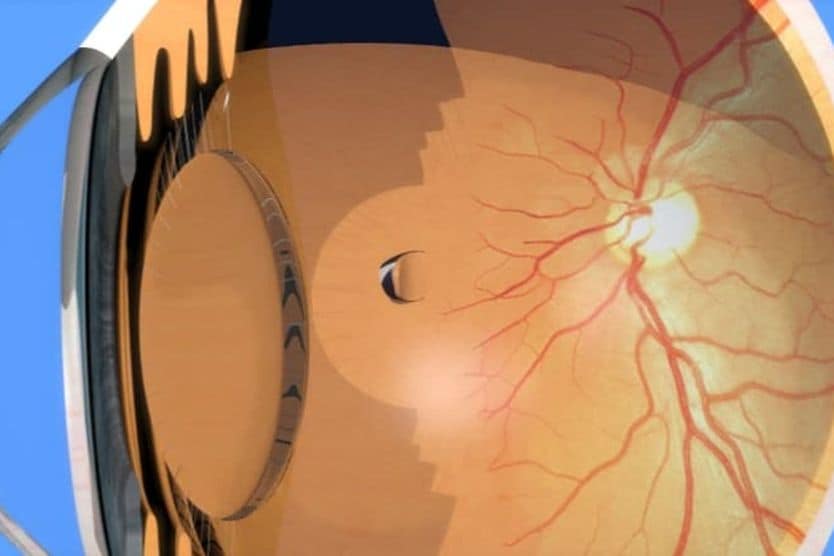
These eye floaters, like the others listed below, often form when the gel-like fluid inside the eye (vitreous humor) shrinks. This causes tiny fibers to bunch together and cast shadows onto your retina, causing visible eye floaters.
Spots and other rounded shapes
Some floaters might look like little rounded spots or oblong ovals. Rounded floaters are technically the same type as wavy floaters — the only difference is the shape of the vitreous fiber formation.
Ring-shaped
Larger ring-shaped floaters are called Weiss rings. Weiss rings form when the vitreous detaches from the part of the retina that surrounds the optic nerve in the back of the eye.
Like other shapes of floaters, ring floaters are usually harmless. But they can also be a symptom of a serious condition.
SEE RELATED: Do eye floaters go away on their own?
Transparent, shadowy or black floaters
The color of someone’s floaters can vary just like their shapes. Eye floaters can look nearly transparent, slightly shadowy or almost completely black.
While some floaters are longer and more wormlike in appearance, other floaters can look like black spots or dots in your vision.
Regardless of their color, floaters tend to be most visible when you’re looking at a single-colored object in bright light. A clear, daytime sky or a light-colored wall are common examples.
Seeing “stars” in your vision
It’s common for people to see “stars” or little flashes of light in their vision from time to time. These flashes (photopsia) aren’t physical formations like floaters, but they can be related.
Floaters occur when small fibers of collagen (protein) in the vitreous clump together, forming “floating” strands in our vision. When the thicker portion of the vitreous that’s attached to the retina starts pulling away from it, the traction (pulling) on the retina causes the sensation of a flash of light.
Flashes of light also can be a symptom of a retinal detachment or tear. If you suddenly see flashes of light, it is advised to see an eye doctor immediately.
SEE RELATED: Phosphenes (seeing stars)
Check with your eye doctor
Schedule a comprehensive eye exam if you have floaters that bother you. The eye doctor can rule out eye problems and recommend ways to help make the floaters less visible. They might suggest wearing sunglasses more often, using a computer screen filter or other options.
Floaters themselves usually don't need to be treated and may get less noticeable over time. Eye doctors often only consider treatment if the floaters are severe and make it hard to do daily activities. In these cases, laser vitreolysis or vitrectomy surgery may help reduce or remove floaters.
An optometrist or ophthalmologist can check your floaters and look for possible causes. If you're looking for an eye doctor who specializes in treating floaters, a type of ophthalmologist called a retina specialist could be a good starting point.
Eye floaters are common and usually aren't a cause for worry. Many are caused by age-related changes like posterior vitreous detachment, but younger people can have floaters, too. Most of the time, these changes aren't dangerous for your eye health.
However, seeing a lot of new floaters can be a sign of a serious eye condition that needs to be checked and treated quickly. Talk to an eye doctor right away if you suddenly see many new floaters or other visual disturbances.
READ MORE: Can you reduce floaters naturally?