What are eye floaters?
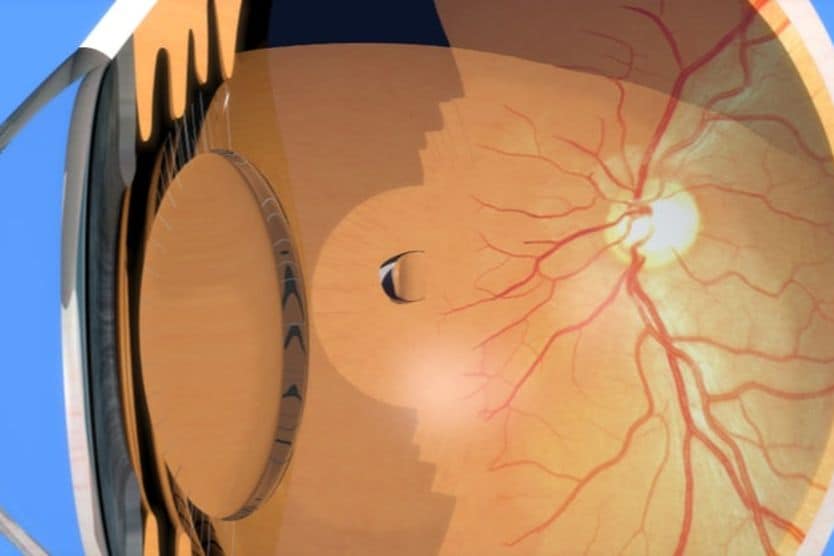
Eye floaters are tiny clumps or fibers of collagen (protein) that are suspended and move around within the gel-like fluid inside the eyes, called the vitreous humor. When these bits of collagen float close to the back of the eye, they can cast shadows on the retina. These shadows are what are perceived as “floaters.”
When you have an infection or inflammation inside your eye (uveitis), the “floaters” are more likely symptoms since they are composed of inflammatory cells and debris.
They usually look like transparent, squiggly lines or tiny moving dots that slowly float across your field of vision. They often have the appearance of visual “cobwebs.”
Floaters are more noticeable when you’re looking at a bright area with one color, like a white wall or a clear blue sky. Since the vitreous humor shifts when you move your eye, floaters will appear to move away as soon as you try to look at them.
Are eye floaters dangerous?
Usually not. Eye floaters can point to a potentially dangerous underlying condition, but more often than not, they’re harmless.
Most eye floaters occur as people age, or as the result of common conditions like nearsightedness.
In rarer cases, floaters can signal a serious eye infection, injury, retinal detachment or inflammation (uveitis) or bleeding inside the eye. These conditions can potentially threaten your eyesight and should be treated as a medical emergency. Older adults and those with certain underlying conditions, like diabetes and previous cataract surgeries, can be more at risk for these complications.
So, should you worry about eye floaters?
If you notice new or a sudden increase in floaters — especially if the floaters are accompanied by flashes of light — see an eye doctor immediately.
SEE RELATED: What causes eye floaters?
What are eye floaters a sign of?
Most of the time, eye floaters gradually appear due to normal changes in the eye. When this happens, they typically aren’t a sign of any larger illness or eye condition.
But in some cases, they can be a sign of an underlying condition. These can include eye infections, injuries, retinal detachment, uveitis and hemorrhaging, along with others. These are typically serious problems that require emergency treatment. They often occur with other symptoms alongside floaters, but not always.
Some conditions are believed to cause floaters, when in fact, they do not.
High blood pressure (hypertension) is one such condition. Untreated high blood pressure can cause problems with the optic nerve, but it does not directly cause eye floaters.
Multiple sclerosis (MS) can cause various eye-related symptoms, such as eye pain on movement and difficulty focusing, but eye floaters are not typically one of them. Rarely, MS can lead to uveitis. Uveitis symptoms can include what appears to be eye floaters (they are actually inflammatory material and debris which have entered the vitreous), along with pain, light sensitivity, vision problems and eye redness.
While floaters are not a sign or symptom of cataracts, they can develop or become more noticeable after cataract surgery. Additionally, cataract surgery will not remove existing floaters.
SEE RELATED: Floaters after eye surgery
Are eye floaters permanent?
Yes, eye floaters are usually permanent. But that doesn’t mean they’ll always be bothersome.
After you first notice them, floaters often become less noticeable over time, In part, this is because as the vitreous continues to liquify with age, suspended floaters tend to move out of view. Also, floaters can be annoying at first, but most people get used to them as time goes on — only noticing them on a clear, bright day or under similar conditions.
While certain home remedies have been suggested, the only effective treatment for floaters is to remove them with a laser procedure called laser vitreolysis or an eye surgery called a vitrectomy. Because laser vitreolysis is less invasive and has fewer risks, it's sometimes used for large and persistent floaters.
However, eye doctors typically don't recommend either procedure unless eye floaters are severe and significantly affect vision.
What causes flashes of light in the corner of your eye?
Most flashes in vision are caused by one of two things:
Vitreous fluid – The same fluid that relates to floaters. When the jelly-like substance gently tugs on or rubs against the back of the eye (retina), it can cause a visual sensation that looks like a flashing light. They often seem to appear in the corner of your eye and could be a signal that you might have a retinal tear or detachment.
Ocular migraines – Episodes that cause visual symptoms in one eye for a short period of time — usually less than 30 minutes. Ocular migraines can even cause temporary vision loss in one eye. Migraines with aura can also cause visual disturbances that resemble flashing lights. The two can be easily confused, and the symptoms can be related to a serious condition, so talk to a doctor if you develop new or unusual migraines or migraine-like symptoms.
How are eye flashes and eye floaters different?
Floaters are caused by bits of protein in your vitreous that cast a shadow on your retina, whereas flashes are a neurological sensation caused by traction (or pulling) on the retina.
While they both usually relate to the vitreous fluid, eye flashes relate to the way your brain perceives a stimulus inside your eye.
Should I see an eye doctor?
If you develop new floaters or flashes, or notice a dramatic increase in them, see an eye doctor immediately to rule out a possible tear in the retina or a retinal detachment.
Also, have routine comprehensive eye exams to make sure you are not at risk for serious eye health problems.
READ MORE: Can you reduce floaters naturally?