PresbyLASIK: LASIK for presbyopia correction
LASIK for presbyopia: What to expect from presbyLASIK
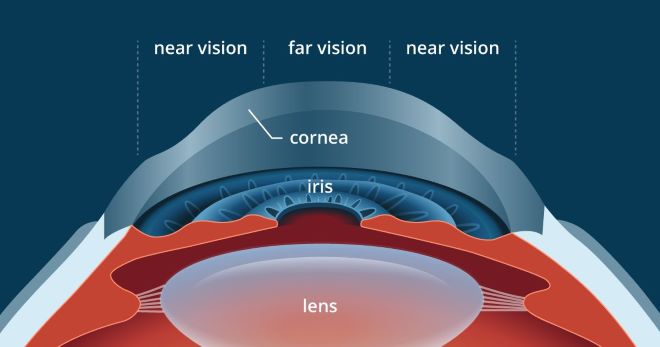
Multifocal LASIK — sometimes called presbyLASIK — is an advanced type of laser vision correction surgery. It changes the shape of the eye's cornea to create different power zones for seeing at varying distances.
Like progressive lenses and other multifocal eyeglasses and contact lenses, multifocal LASIK corrects presbyopia. Presbyopia causes near vision to blur as the eye's natural lens begins to lose its focusing flexibility later in life. Generally, this begins soon after age 40.
LASIK for presbyopia: How it works
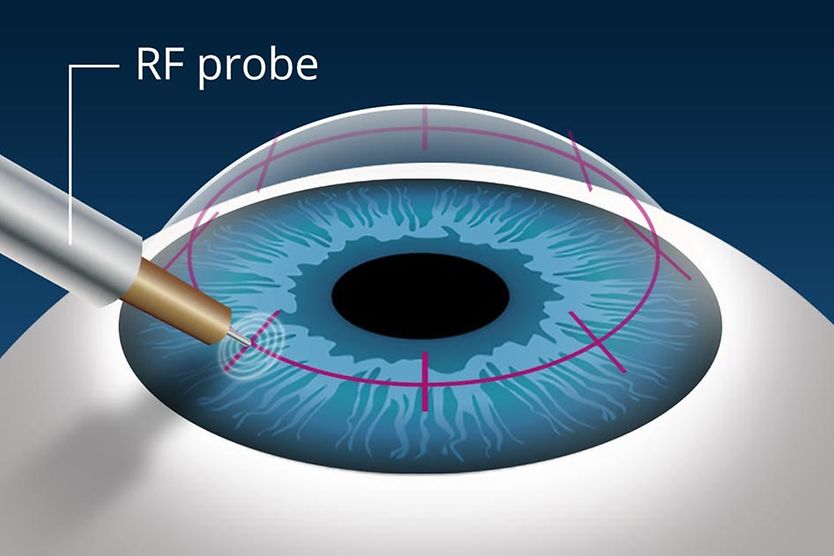
Ophthalmologists use excimer and femtosecond lasers to perform multifocal corneal treatments. These procedures can allow people with presbyopia to see clearly at all distances without reading glasses, bifocals or other multifocal eyeglasses.
Multifocal LASIK corrects presbyopia like this:
- An excimer laser reshapes your cornea into different zones for near, far and intermediate vision. Your brain then selects which zone it needs to see through to get the sharpest vision, depending on whether an object is near or far away.
- Each zone bends or refracts light differently. This allows people with presbyopia to regain good vision at all distances — similar to how multifocal contact lenses correct presbyopia.
However, multifocal contact lenses rest on the surface of the eye, so they can move and cause vision distortions. Multifocal LASIK provides fixed, stationary zones directly on the eye's surface.
Just as there are different designs for multifocal contact lenses and progressive eyeglass lenses, there are various approaches to multifocal LASIK. This allows a surgeon to determine exactly how the cornea should be shaped to achieve the best correction for presbyopia.
PresbyLASIK with distance vision in the center
This method is called peripheral presbyLASIK. It shapes the peripheral cornea for near vision and leaves the central zone for distance vision.
This approach tends to have the best results for people who are farsighted. For some people, it may also allow an easier reversal to pure monofocal distance correction, should it be needed.
PresbyLASIK with near vision in the center
This method is usually called central presbyLASIK. The procedure creates a multifocal ablation with the center of the cornea shaped for near vision. The peripheral zone is shaped for distance vision.
This approach can provide a stronger correction for reading and other near vision tasks. It may also cause fewer aberrations than distance-center ablations.
LASIK for presbyopia that is based on refractive error
The best multifocal LASIK design for you may depend on what kind of refractive error you have. For example, a near-center multifocal LASIK design may be preferred for people who have nearsightedness and presbyopia. A distance-center multifocal LASIK design may work better for someone who has farsightedness and presbyopia.
During your LASIK consultation, your eye surgeon can discuss which design is best for your specific refractive error and vision needs.
PresbyLASIK with modified monovision
Straight monovision typically provides only two focal points (one eye at near distance and one eye at far). Modified monovision with multifocal LASIK adds a third intermediate focal point. Typically, presbyLASIK is performed on the non-dominant eye. The dominant eye is corrected for distance vision.
In the past, modified monovision typically involved a full-distance correction LASIK procedure on the dominant eye.
A newer approach is to have a presbyLASIK procedure on one eye and a "micro" or "mini" monovision procedure on the other eye. This is sometimes called laser blended vision.
Today, surgeons tend to prefer the newer "micro" methods. Rather than full distance correction, the dominant eye receives a slight undercorrection. This still provides adequate distance vision, but it also improves tolerance and visual comfort for patients.
Traditional "modified monovision" might give you sharper distance vision for driving than having multifocal LASIK in both eyes. However, you may need to use reading glasses more often. You may also notice some loss of depth perception and contrast sensitivity.
While the newer approaches to presbyLASIK with modified monovision don't completely eliminate these issues, they do reduce them. It's also much easier to adapt to the milder difference in correction between the eyes. Tolerance for modified monovision can easily be tested. It's a critical part of consultations before a procedure is ever done.
Can presbyLASIK be reversed?
If you’re unhappy with your driving vision after multifocal LASIK, it may be possible to use a LASIK enhancement procedure to fully correct your distance vision. But be aware that this may also make your near vision less clear without reading glasses.
Or, instead of a surgical "enhancement," a pair of glasses for select uses can be a less invasive solution.
In most cases, presbyLASIK is also fully reversible. However, in some eyes, it may be more difficult to reverse presbyLASIK with a central zone designated for near vision than for a central zone designated for distance vision.
How effective is multifocal LASIK?
Studies of presbyLASIK outcomes have shown good results. Most patients were able to see 20/20 or 20/25 in the distance and read newspaper print up close without glasses.
If your vision was normal except for presbyopia prior to multifocal LASIK, it's possible your distance vision may be blurry immediately after surgery. This problem may not necessarily go away, either. It's also possible you'll have reduced contrast sensitivity and/or see halos around lights at night.
Reduced contrast sensitivity means difficulty seeing objects against backgrounds of similar brightness and colors. But some research indicates that reduced contrast sensitivity associated with multifocal LASIK may only be temporary. It tends to disappear in three to six months.
Another possible complication is an inability to see as well as you once did, even with the help of glasses or contact lenses after surgery.
Cataracts after multifocal LASIK
If you develop cataracts after multifocal LASIK surgery, you will still be able to have cataract surgery. However, it will be more challenging for your cataract surgeon to determine the correct power for your intraocular lens (IOL) to provide an optimal visual outcome.
It's possible you may need to wear eyeglasses or have additional LASIK surgery after cataract surgery. They may be necessary to regain acceptable vision for driving and/or reading without glasses.
Finally, there is no guarantee that results of your multifocal LASIK surgery will be permanent. If your eyes change in the years following your LASIK surgery, you may need future surgical enhancements.
See an eye doctor
The best way to know if you’re a good candidate for presbyLASIK or another type of presbyopia surgery is to see an eye doctor for a comprehensive eye exam.