Combining presbyopia options

How presbyopia affects vision
After age 40, the single pair of glasses or contact lenses you once needed may no longer give you clear vision at all distances. At least not without some compromises. Near focusing problems that start around this time are often caused by presbyopia. This is also known as age-related farsightedness.
Presbyopia affects everyone beginning in middle age, and it reduces the ability to see at all distances. But many vision correction options are available. Presbyopia surgery, multifocal contact lenses and eyeglasses are some examples. If you need cataract surgery, you may be able to choose multifocal intraocular lenses (IOLs) to restore your ability to see at all distances.
In some cases, you may need to consider a combination of options to fully address problems caused by presbyopia.
Removing your eyeglasses to read
If you’re nearsighted, you may have an advantage when you reach your 40s.
Once presbyopia occurs, nearsighted eyes still tend to see well up-close — if you remove your eyeglasses. Of course, with your glasses removed, distance vision is blurred. So you will need to put your glasses back on to see clearly across the room.
The amount of nearsightedness you have determines how close or far away you need to hold an item to see it clearly without your glasses on.
If you are mildly nearsighted (with a prescription of -1.50 D or -2.00 D), you will likely see very well at a normal reading distance of around 16 inches from your face.
But if you're highly nearsighted (-6.00 D or higher), you'll probably have to bring items much closer to your eyes to see them clearly. If that's the case, you may want to consider the next option.
Multiple eyeglasses with single-vision lenses
Many people over age 40 deal with presbyopia by purchasing two or more pairs of eyeglasses with single-vision lenses. (Though it's less convenient than wearing just one pair of progressive lenses, bifocals or trifocals.)
One pair of glasses contains lenses prescribed for distance vision (driving, watching television, etc.). A second pair may contain single-vision lenses for reading or other near-vision tasks.
Some people find that using different lenses is the ptimal solution for presbyopia. For example, sunglasses with distance correction for nearsightedness can work well for driving. And glasses with intermediate correction can be ideal for computer work.

This option can offer several visual advantages:
No adjusting to your lenses
Single-vision lenses are prescribed specifically for distance vision or near vision. And they may be more suitable if you need to look upward or downward. Ever tried to sit back on your recliner or watch TV in bed while wearing progressive glasses? If so, you know that the near part of the lens tends to interfere with your ability to see clearly across the room when your head is tilted back.
Similarly, single-vision lenses prescribed for near work can be ideal for performing car repairs or other tasks where you need to see close-up objects above your head. So there's typically no need to crane your neck back or prop your glasses up to get into that near zone as you would with a bifocal, trifocal or progressive lens.
Computer work made easier
Single-vision lenses can also offer advantages for computer work and reading. Your eye doctor can customize the prescription for the exact working distance you prefer. And you can get an unrestricted field of view at that distance.
This is particularly important for sustained computer work. Standard bifocals and some multifocal lenses can cause posture problems. And these problems can contribute to computer vision syndrome.
Another option for computer work is a second pair of glasses with progressive lenses rather than single-vision lenses. These progressives are called office lenses, occupational lenses or computer PALs (progressive addition lenses). They are specifically designed to help avoid posture problems. The top half of the lens is prescribed for intermediate vision while the lower half corrects for near vision.
Enhanced peripheral vision
Multiple pairs of eyeglasses with single-vision lenses can enhance your peripheral vision (and therefore, your mobility). When you enter your 60s and 70s, normal age-related changes can reduce your peripheral vision. Progressive, bifocal and trifocal lenses can actually worsen this problem.
Wider view
Single-vision lenses provide a wider zone of clear vision than progressive lenses. This can give you a much clearer view of your feet as you look down to step off a curb or onto an escalator or a flight of stairs.
(It's very possible that some seniors who have fallen may not have done so had they been wearing single-vision lenses.)
Multiple contact lens options for presbyopia
If you wear contact lenses, a simple solution to restoring your near vision when you become presbyopic can be to wear reading glasses with them. With this solution, there's no compromise in distance vision — only a need to carry reading glasses with you.
If you can't adjust to multifocal contact lenses, the combination of single-vision contacts and reading glasses may be ideal for you.
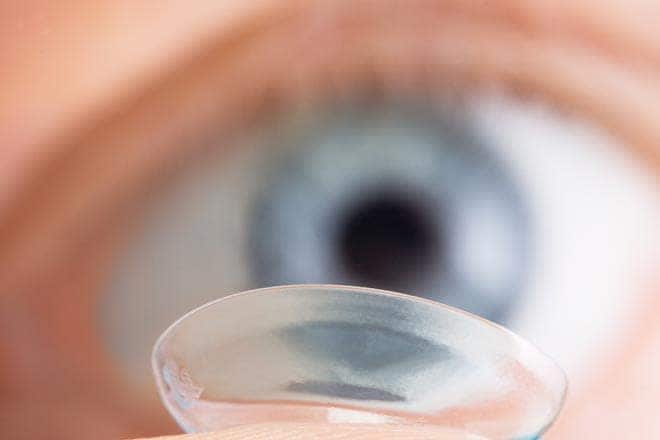
Other combination options involving only contact lenses may include:
Monovision or modified monovision using contact lenses
Your eye care practitioner can tell you about the contact lenses available for sharper near vision in one eye, and distance vision in the other. This approach compensates for focusing problems related to presbyopia. It creates monovision or modified monovision, depending on the type of lens used in each eye.
Your eye doctor may choose to use single-vision lenses for both eyes (monovision contact lenses). Or they may choose a multifocal lens for one or both eyes (modified monovision). With modified monovision, one lens is "weighted" toward distance vision. The other is “weighted” for near vision.
You may still need reading glasses on a limited basis. But monovision or modified monovision contact lenses may give you sharper distance vision than multifocal lenses alone. And you’ll likely still have adequate near vision for the majority of your routine daily activities.
Different contact lenses at different times
You may have success and satisfaction if you use different options at different times.
For a round of golf, regular contacts (with full distance correction) on both eyes can give you the sharpest distance vision. In bright sunlight, your near vision should be adequate enough for you to see your scorecard without the need for reading glasses.
But for dining out in the evening, you may find that monovision or modified monovision lenses are more effective. They can enable you to read a menu or bill without reading glasses. They usually also give you sharp vision across the table and even across the room.
You may find that monovision contacts give you sharp indoor vision. But they may not offer sharp enough visual acuity for driving at night. Your eye doctor can prescribe eyeglasses with single-vision lenses that you can keep in your car. You may be able to wear these over your contacts to optimize your vision for the nightly drive home.
Multifocal options (soft contacts and GP lenses)
Contact lenses can also be made with multiple optic (or focal) zones. Bifocal lenses have two zones: one for distance vision and one for seeing up close. Multifocal contacts have two or more zones, just like multifocal glasses.
Another type of multifocal contact lens is called varifocal power or progressive power contact lens.
Multifocal lenses are available as soft contacts. Rigid gas permeable (RGP or GP) lenses and toric lenses are also available in multifocal prescriptions in many cases.
Some people with presbyopia may not adapt well to multifocal contact lenses. Speak with your eye doctor for more information, and to find out if multifocal contacts are a good fit for you.
Combination presbyopia solutions
In some cases, a combination of surgical and non-surgical solutions is the ideal way to go when presbyopia sets in.
The more common combination solution is LASIK and reading glasses. Even if you have LASIK surgery when you are in your 20s or 30s, you'll probably need readers when you hit your mid-40s.
Other combination options may include:
LASIK with a single contact lens for near vision
This may be a good option for social events, where you want optimal functional vision both far away and up close without having to carry your reading glasses.
You should be able to see in the distance with one of your LASIK-corrected eyes, while using the eye with the contact lens for near vision. This combination creates monovision. (One-day disposable contact lenses can be ideal for this: You can just throw the lens away at the end of the night.)
Monovision LASIK combined with single-vision eyeglasses
Many people who have monovision LASIK benefit from eyeglasses with single-vision lenses. The lenses enhance their near vision for close-up activities. Monovision LASIK is when one eye is corrected for distance vision and the other is corrected for near vision.
Your eye doctor can also prescribe lenses to balance the vision in your eyes so they’re both corrected for the same specific distance. The distance to your computer screen or to the book you’re reading, for example.
For the optimal results, measure how far away you like your computer screen. Also check how far from your nose you’re more comfortable holding a book when reading. Take separate measurements for reading in your favorite chair and reading in bed. They’ll probably be different!
Bring these measurements to your eye exam. Your eye doctor can tailor different prescriptions to optimize your vision for each activity. Though this may sound cumbersome, you'll likely find that the proper lenses may make reading and working on your computer less tiring.
LASIK combined with wavefront eyeglasses
After LASIK, nighttime glare and halos around headlights and street lights may still bother you. An option to consider is a high-definition eyeglass lens technology called wavefront lenses.
These lenses use computerized measurements of your eyes to detect any optical imperfections that remain after LASIK surgery. These imperfections are called higher-order aberrations (HOAs). Regular eyeglass lenses can't correct HOAs, but wavefront lenses can, and they may therefore be able to sharpen your night-driving vision. Ask your LASIK surgeon or eye doctor to tell you more about wavefront lenses.
Multiple vision correction surgeries
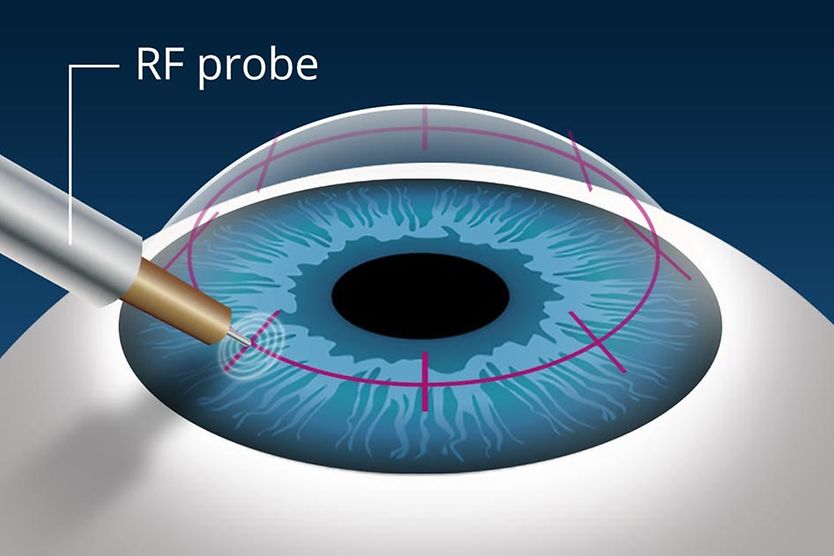
Sometimes a combination of surgical procedures is the ideal choice for addressing presbyopia. If you had LASIK in your 30s, your near vision may be getting fuzzy in your mid-40s. PRK (photorefractive keratectomy) or CK (conductive keratoplasty) in one eye could help you see more clearly up close. This strategy creates a monovision condition.
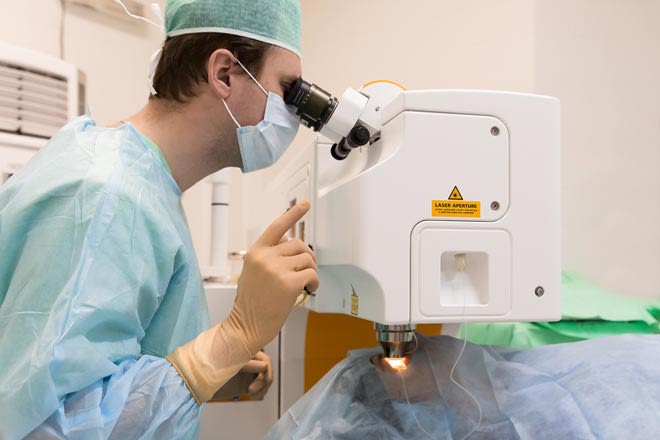
LASIK can be used in combination with CK to create monovision for correcting presbyopia.
Corneal refractive surgeries like LASIK, PRK, SMILE and CK can also be performed after cataract surgery to sharpen both distance vision and near vision. These follow-up procedures can be especially helpful if some astigmatism remains after cataract surgery and you’re a good candidate for monovision.
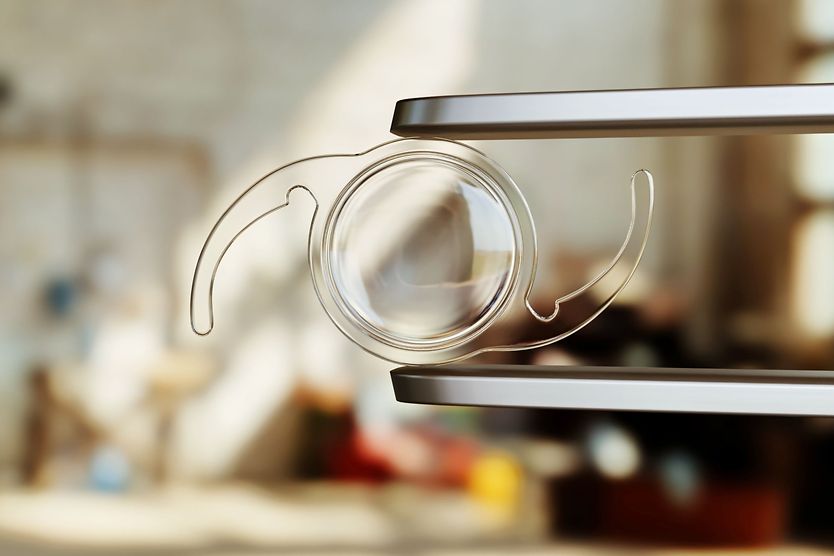
If you have cataracts, your eye surgeon may recommend one or more types of refractive intraocular lenses (IOLs) to help manage your vision at all distances after cataract surgery. In some cases, an accommodating IOL may be recommended for one or both eyes to help you regain near focusing ability.
In other cases, a multifocal IOL that provides distance vision may be used for one eye. One that provides near vision may be recommended for your other eye. Your eye doctor may also recommend an extended depth of focus (EDOF) IOL. Unlike multifocal IOLs, EDOF IOLs enhance visual range by creating an elongated point of focus.
If you’re contemplating cataract surgery, ask your eye surgeon for more information about these premium refractive IOLs and which solution might be ideal for you.
Manage your expectations
Whatever choices you make, know that all presbyopia solutions involve some degree of compromise. No currently available corrective lenses or surgical techniques can completely restore the dynamic focusing flexibility your eyes had before presbyopia.
But that doesn't mean you have to subscribe to a one-size-fits-all mentality. Being adaptable is the key — and understanding that multiple solutions exist for your over-40 vision needs.