How to clean glasses the right way

How to clean your glasses
Cleaning your eyeglasses frequently is a great way to keep them looking like new and avoid scratched lenses. For optimal results, there are a few recommendations to consider when cleaning your glasses.
Follow these steps to clean your eyeglass lenses and frames to keep them in top condition. These cleaning tips will also help you keep your sunglasses, safety glasses and sports eyewear in great shape.
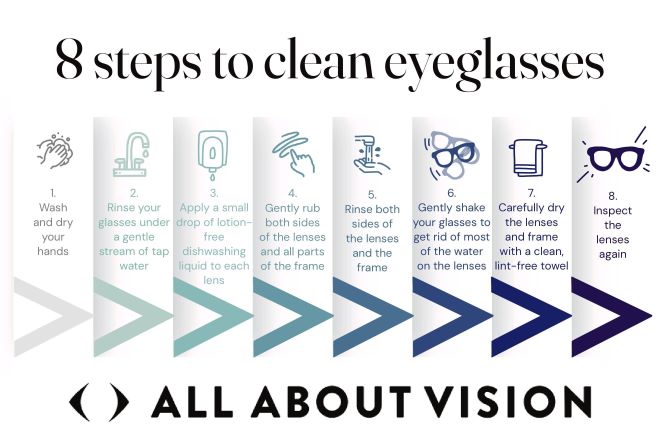
1. Wash and dry your hands
Before cleaning your eyeglasses, wash your hands thoroughly. Use lotion-free soap or dishwashing liquid and a clean, lint-free towel.
2. Rinse your glasses under a gentle stream of tap water
This will remove dust and other debris, which can help avoid scratching your lenses when you’re cleaning them. Avoid hot water, which can damage some eyeglass lens coatings, including anti-reflective coatings.
3. Apply a small drop of lotion-free dishwashing liquid to each lens
Most dishwashing liquids are very concentrated, so use only a tiny amount. Or apply a drop or two to your fingertips before touching the lenses. Use only lotion-free brands and avoid soap labeled ultra, grease-cutting, antibacterial, citrus degreaser, or including moisturizer or essential oils. These can damage your lens coatings.
4. Gently rub both sides of the lenses and all parts of the frame
Make sure you clean every part of your glasses, including the nose pads and the temples of the frame. Also, clean the area where the edges of the lenses meet the frame — dust, debris and skin oils frequently accumulate there.
5. Rinse both sides of the lenses and the frame
Failing to remove all traces of soap will cause the lenses to be smeared when you dry them.
6. Gently shake your glasses to get rid of most of the water on the lenses
Inspect the lenses carefully to make sure they are clean.
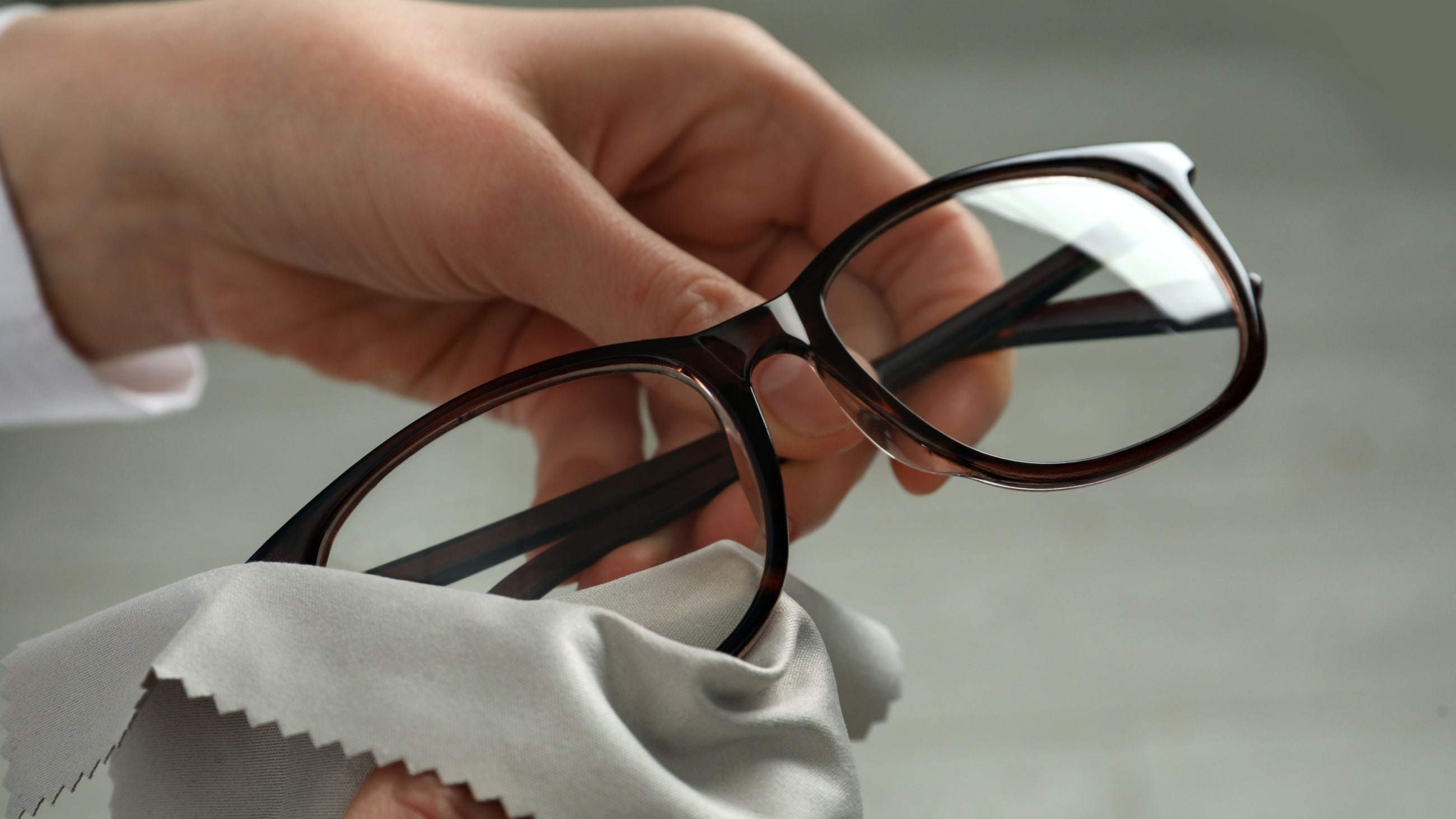
7. Carefully dry the lenses and frame with a clean, lint-free towel
Use a clean dish towel that has not been laundered with a fabric softener or dryer sheet (these substances can smear the lenses). A lint-free microfiber cloth is also a good choice.
Make sure the cloth is perfectly clean. Dirt or debris trapped in the fibers of a towel can scratch your lenses. Also, any cooking oil, skin oil or lotion on the towel can smear your glasses.
8. Inspect the lenses again
If any streaks or smudges remain, remove them with a clean microfiber cloth — these lint-free cloths are available at most optical shops and photography stores.
For touch-up cleaning of your eyeglass lenses, use disposable lens cleaning wipes. These are formulated specifically for use on eyeglass lenses.
Which brings us to a very important topic — what to avoid when you clean your glasses.
Cleaning glasses: What to avoid
- Avoid using your shirttail, blouse or other clothing to clean your glasses, especially when the lenses are dry. This can scratch your lenses.
- Steer clear of using saliva to wet your lenses.
- It is not recommended to use household glass or surface cleaners to clean your eyeglasses. These products have ingredients that can damage eyeglass lenses and coatings.
- Avoid using paper towels, napkins, tissues or toilet paper to clean your lenses. These can scratch or smear your lenses or leave them full of lint.
- Refrain from trying to “buff away” a scratch in your lenses. This only makes the situation worse.
Eyeglass cleaners and cleaning cloths
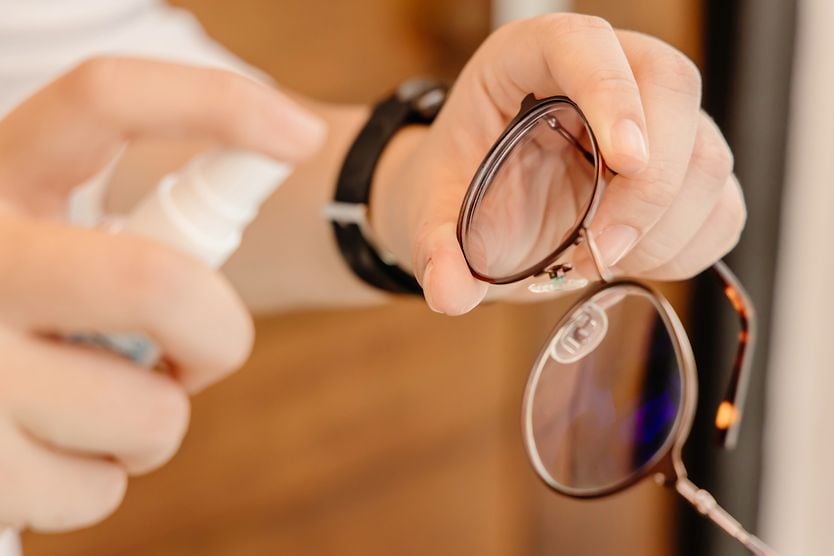
Spray eyeglass lens cleaners are available where you purchase your glasses and at your local drug or discount store. These can be helpful if you are traveling or don’t have dishwashing soap and clean tap water available.
If tap water isn’t available, use plenty of the spray eyeglass cleaner to flush away dust and other debris from your lenses before wiping them dry.
If your lenses have anti-reflective (AR) coating, make sure the eyeglass cleaner you choose is approved for use on anti-reflective lenses.
When using disposable lens cleaning wipes, first inspect the lenses for dust or debris. To avoid scratches, blow any debris off the lenses before wiping them.
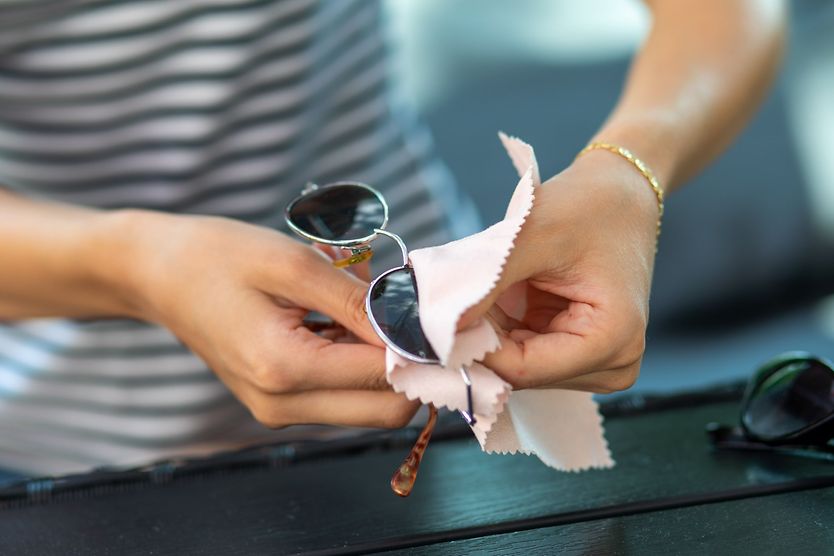
Microfiber cleaning cloths are ideal for cleaning glasses. These cloths dry the lenses very effectively and trap oils to avoid smearing.
But because they trap debris so effectively, make sure you clean the cloths frequently. Hand-wash the cloths using lotion-free dishwashing liquid and clean water, then allow the cloths to air dry.
READ MORE: DIY eyeglass cleaner: Homemade recipe for clear vision
How to remove scratches from glasses
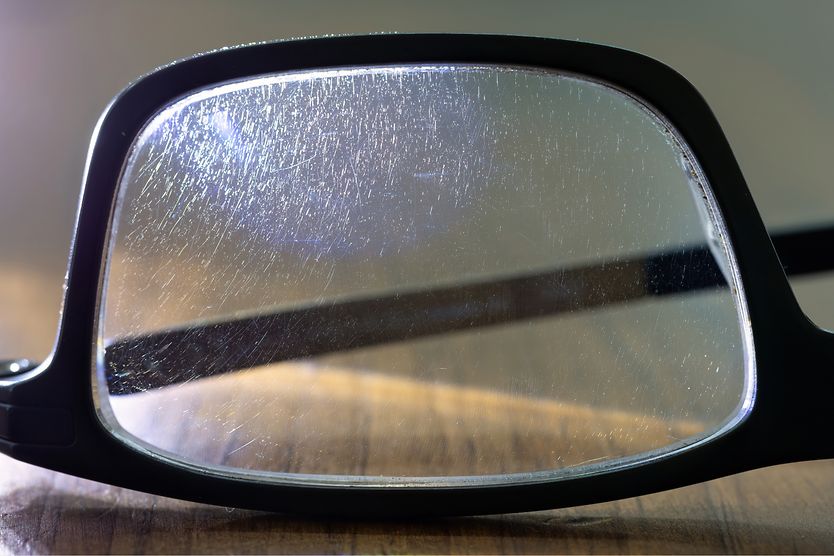
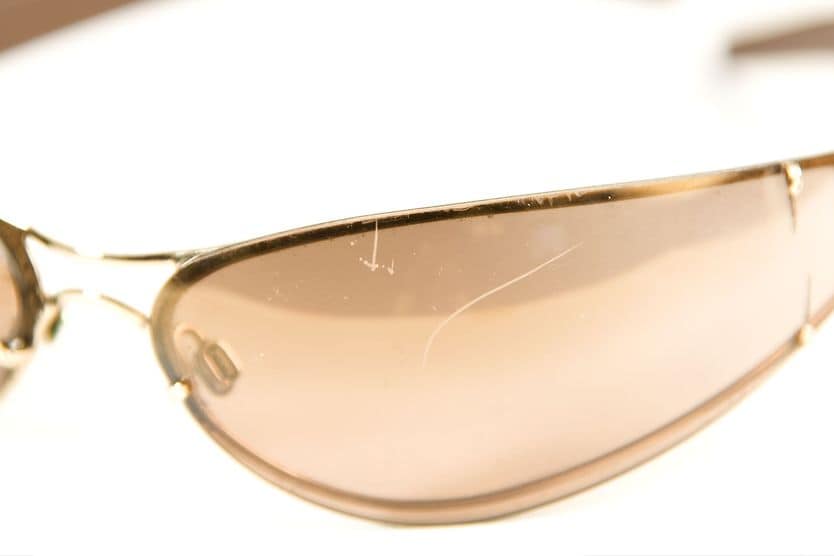
Unfortunately, there is no magic cure for scratched lenses. Once your glasses are scratched, they’re scratched.
Some products are designed to make the scratches look a little less visible. Many of these products are just waxy substances that wear off easily and can interfere with the clarity of vision your glasses are designed to provide. Results with these products are mixed, depending on the location and depth of the scratches. Also, they could smear anti-reflective lenses.
Besides reflecting light and interfering with vision, scratches can affect the impact resistance of your eyeglass lenses. For optimum vision and safety, it is recommended that you replace your lenses if they become scratched.
When purchasing new lenses, consider those that have a durable scratch-resistant coating. And ask your optician if your purchase includes an anti-scratch warranty — especially if scratched lenses have been an issue for you in the past.
Professional eyeglass cleaning
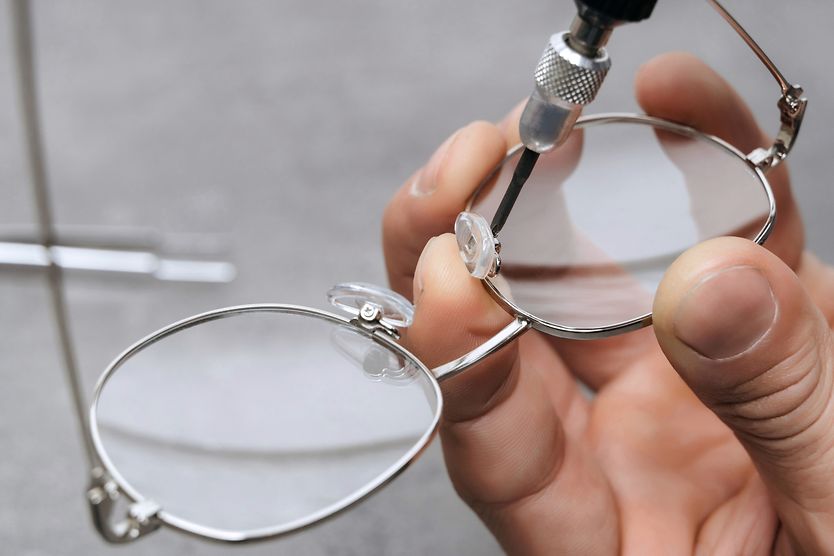
If your lenses are in good shape but the nose pads or other parts of the frame have become impossible to keep clean, return to where you purchased your glasses.
An eye care professional may be able to deep-clean your glasses with an ultrasonic cleaning device. They can also replace yellowing nose pads with clear new ones.
Store your glasses in a case
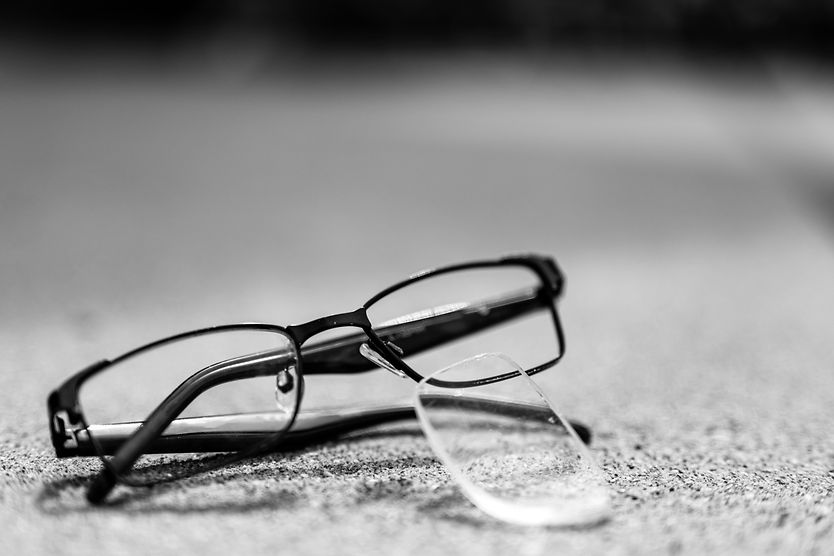
Eyeglass lenses can easily get scratched (or broken) if you fail to store them somewhere safe. This includes when you take them off at bedtime.
Experts recommend storing your eyeglasses in a clean storage case and avoiding placing them on a table or counter with the lenses facing down.
If you don’t have a glasses case handy, try placing your glasses upside down with the temples open — somewhere safe, where they won’t get knocked off a table or countertop.
Glasses don’t last forever
Eyeglass lenses will eventually get a few scratches. They may be scratch-resistant, but they aren’t scratch-proof.
When purchasing glasses, ask about anti-scratch warranties for your lenses. This is especially important for children’s eyeglasses or if you wear glasses in dusty conditions.
Consider following the above tips to keep your glasses clean and scratch-free for as long as possible.
If your lenses are badly scratched and your eyeglass prescription has expired — or you simply want new glasses — schedule an eye exam with an eye doctor near you.