The work meeting that changed everything: One young mom's journey with glaucoma

Tarryn Dean was two weeks back from maternity leave when she noticed during a meeting that the whiteboard looked a little fuzzy. It wasn’t alarming, just annoying. It was the kind of blur that makes you think, “Maybe I need reading glasses.” She'd had perfect vision her whole life. She’d never squinted or needed glasses before. So Tarryn booked a comprehensive eye exam, expecting to leave with a prescription for glasses and then get on with her day.
She didn't get on with her day.
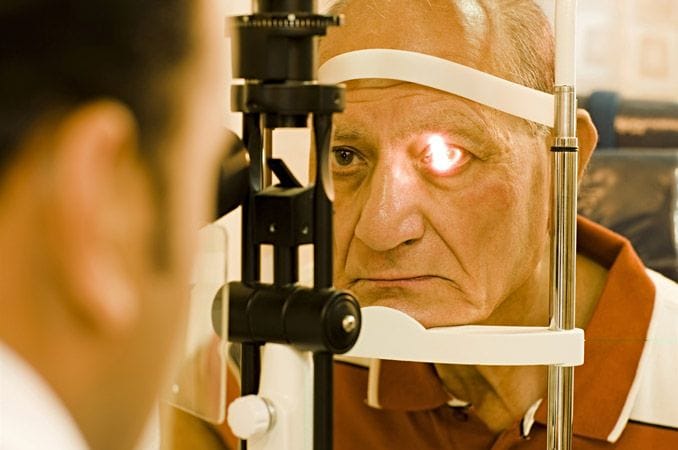
During the exam, the optometrist noticed changes to the optic nerves in Tarryn's eyes. Her eye pressure was also dangerously high — 51 in one eye and 48 in the other. Normal eye pressure is generally in the teens to low 20s.
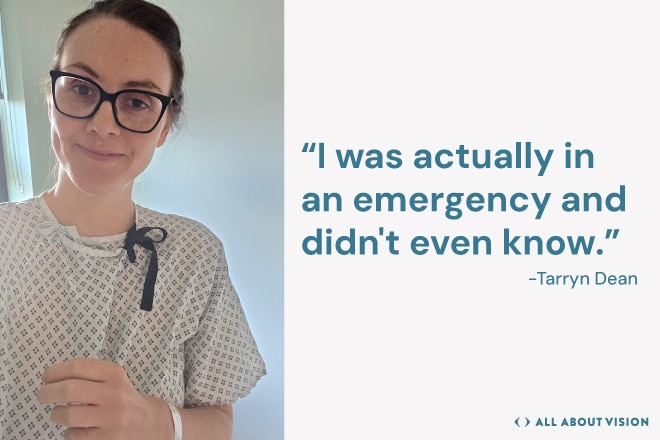
Doctors immediately sent Tarryn to an eye hospital. "I was actually in an emergency and didn't even know," said the former store manager from Lancashire, England. Within hours, she had been diagnosed with glaucoma. "It was a complete shock, and it was terrifying," she said.
That was in 2022, when Tarryn was 31, and she knew very little about the condition. She'd always thought of glaucoma as something that happened to older people, and she wasn't wrong. Glaucoma is most commonly diagnosed in adults aged 40 and older, with the highest age-related risk occurring in people 60 and older. Besides her young age, there was another complication she hadn't expected. Some of the medications she needed meant she would have to stop breastfeeding her 14-month-old baby.
It was a lot to take in while adjusting to being back at work and figuring out life with two young children. What Tarryn didn't yet understand was how much managing glaucoma would become part of her everyday life.
In the four years since her diagnosis, Tarryn has had laser surgery in both eyes and two trabeculectomies, a type of glaucoma surgery. She uses prescription eye drops daily. Her vision has changed too. She now wears glasses and is much more conscious of what she asks her eyes, and herself, to do.
But perhaps the biggest adjustment has been less visible. Tarryn has had to rethink what she wants from work, how she spends time with her children and how she thinks about the future.
Am I going to go blind?
The first days after her diagnosis were filled with questions. Would she be able to drive? Would she lose her vision? "Even something as simple as 'Am I going to be able to drive home?' was in question," she recalled.
The fear was amplified because Tarryn didn’t think she had experienced the obvious vision problems she associated with serious eye disease. But looking back, there had been clues.
Shortly before her diagnosis, she had been getting severe headaches that she assumed were migraines. At the time, she was breastfeeding and blamed hormones. She had always been prone to headaches, so they didn't seem unusual. Often she would lie down when her babies slept to try and sleep off the pain.
Tarryn’s official diagnosis was narrow-angle (or angle-closure) glaucoma, a form in which the eye's iris bulges and narrows or blocks the drainage angle, causing pressure to rise. She paid an eye specialist out of pocket for a second opinion, and he showed her the damage to her optic nerve, explaining that the areas of damage seen in her optic nerve scan matched episodes of angle closure. Those episodes likely caused her headaches. "He said I must have been in excruciating pain," she said.
Glaucoma treatment begins
Just weeks after her diagnosis, Tarryn underwent laser surgery in both eyes. The procedure, called laser peripheral iridotomy (LPI), creates tiny openings in the iris with a laser to help fluid move through the eye and reduce the risk of eye pressure spikes. Tarryn was given numbing drops for her eye but remained awake during both LPI procedures.
The surgeries helped, but not enough to bring her eye pressure down to the level her doctors wanted. It was upsetting. Christmas felt different as she adjusted to the news. “I had a lot of guilt, as I felt like my health issue was having an impact on my children,” she said.
Her pressure had come down after the laser surgeries, reducing the concern that the angle could close and send her back to the emergency room. Tarryn continued using prescription eye drops and undergoing extra monitoring, including hospital visits where her intraocular pressure was checked every two hours to see if it fluctuated. She quickly learned that stress, exhaustion and even strenuous movements, such as picking up her young children, could cause her pressure to spike.
Two more surgeries nearly two years apart
Before long, Tarryn's doctors decided she needed more aggressive treatment. She had a trabeculectomy in her left eye in December 2023, followed by one in her right eye in July 2025. The surgery creates a new route for fluid to drain from the eye, relieving the internal pressure.
The long gap between the two operations was deliberate. "Surgeons prefer to operate on one eye at a time, so patients can still see while they recover," she said.
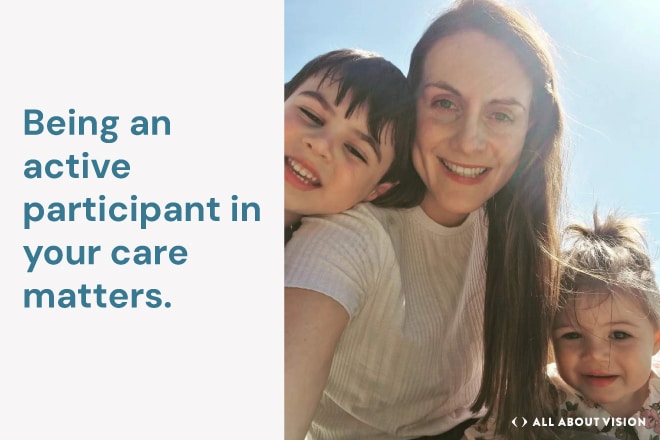
They began with her left eye, which had the least nerve damage but responded least to drops, and its pressure fluctuated more. Tarryn was anxious that she might be awake for both procedures like she was during the LPIs. The first time, she stayed calm with sedation and lying down, rather than sitting up face-to-face with the surgeon. Before the second, she asked for more sedation and to lie down again. It may seem like a small thing, but it reflects something Tarryn has learned throughout her glaucoma journey — being an active participant in your care matters.
Learning to speak up
Early on, Tarryn pushed for answers and appointments. After her emergency visit, she was initially told she'd have to wait six months to see a glaucoma specialist. That wait seemed too long when she was trying to understand a condition she'd never considered before. She called the hospital and pushed for an earlier appointment. Eventually, she secured one.
Today, Tarryn is considered more stable and sees her glaucoma specialist every three to six months. She continues to use prescription eye drops and monitor how she feels. She will likely need more surgery in the future (so regular checks are essential), but she hopes the trabeculectomies will last at least 10 years each. Many of them do.
One landmark 20-year study suggested that a trabeculectomy is a highly effective long-term solution. The study found that the trabeculectomy success rate at 20 years post-op is approximately 60% with no supplementary medication. It reaches about 90% if qualified success includes the use of additional glaucoma eye drops.
While her general outlook is sunny, treatment hasn't always been as simple as applying eye drops and moving on. Some of Tarryn’s medications cause occasional headaches and eye irritation, which she manages with moisturizing eye drops. One medication temporarily made her pupils smaller, which affected her ability to see in the dark and made her more sensitive to light. Still, Tarryn said these are things "I can absolutely live with."
Her overall vision is worse than it was before because of the glaucoma, the treatment and its side effects. "I’d much rather choose that than have not had the surgery and still be dealing with that level of eye pressure,” Tarryn said.
Glaucoma changed more than her eyesight
The ripple effects go beyond her eyesight. Tarryn used to enjoy intense exercise and roller coasters, especially upside-down rides. Today she sticks to moderate exercise and avoids anything she believes could put her at risk. Her children may think she's the boring parent, but she's okay with that. Under UK rules, even her driver's license is different, and her visual field must be checked every three years.
Not surprisingly, Tarryn’s career was affected. Before her diagnosis, she was a store manager and ambitious about her career. Now she works part-time in a lower-level role. After seeing her eye pressure rise during a particularly stressful period, she decided work-life balance had to become a priority. The decision came with a financial cost for her family, but it fit with her shifting priorities. "I feel like since the diagnosis, I can't tell you how much I appreciate time and experiences," she said.
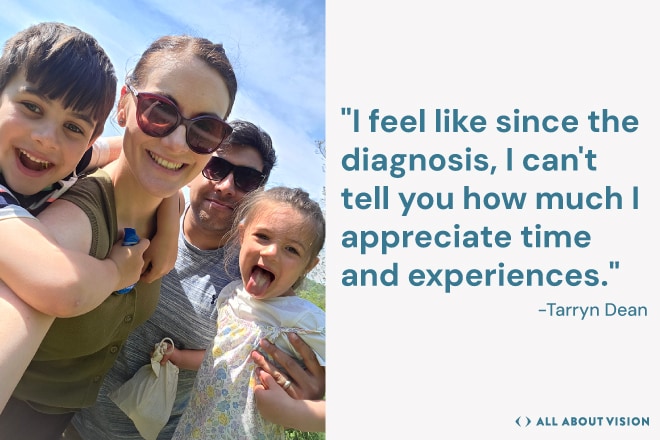
Tarryn remembers a family trip to a theme park in 2025, shortly before her second trabeculectomy. Standing with her children watching the fireworks explode overhead, she was overwhelmed with gratitude simply for having the opportunity to see it. "It felt magical, and I appreciated it so much more than I think I would have before," she said.
Maintaining stable pressure after her various surgeries aren't expected to last forever, and she’ll likely need further treatment. There's another worry too. Since eye doctors don't know the cause of her glaucoma, it’s possible it could be genetic. This means her children will need annual eye exams from their teenage years onward. That's upsetting, she said, but Tarryn hopes that if they ever receive a glaucoma diagnosis, it will come earlier and their care will be easier.
For someone who went from what she considered perfect vision to an emergency diagnosis seemingly overnight, the uncertainty is scary. But Tarryn has learned not to let the fear of what might happen steal too much of the life she has now.
Glaucoma has changed a lot of things, but the lessons she's learned about self-advocacy and gratitude are lessons she'll carry forever.
"If I could go back to the beginning, I'd tell myself, 'Four years from now, you will still be enjoying life.'"